2023 state assembly polls will set field for 2024 Lok Sabha polls: Chidambaram

News Network
December 11, 2022

chidambaram.jpg

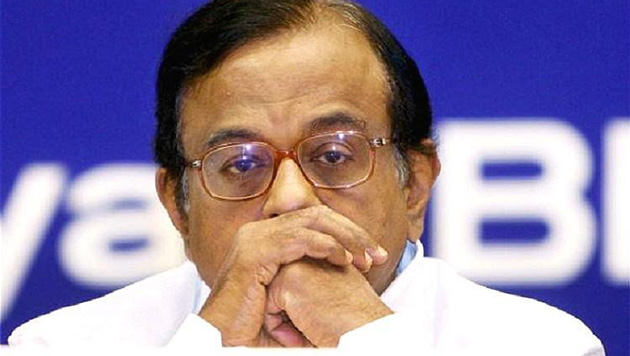
New Delhi, Dec 11: The Congress is best placed to be the "pole" around which a non-BJP front can be built for the 2024 general elections, senior party leader P Chidambaram said on Sunday and asserted that the Aam Aadmi Party does not have much appeal outside Delhi with the exception of Haryana and Punjab.

Chidambaram also stressed that there were lessons to be learnt by the Congress from the Gujarat loss, saying there is no such thing as a "silent" campaign in a hard-fought election.

In an interview, he also said the Aam Aadmi Party (AAP) played spoiler in Gujarat, like it did earlier in Goa and Uttarakhand.

He weighed in on the recent elections in Gujarat, Himachal Pradesh assemblies and the Municipal Corporation of Delhi, saying Prime Minister Narendra Modi should reflect on the fact that the BJP was in power in all three but was defeated in two.

"That is a huge setback for the BJP. The win in Gujarat, important as it is, cannot hide the fact that the BJP, the incumbent, was defeated decisively in Himachal Pradesh and MCD," the former Union minister said.

The Congress in Himachal and the AAP in MCD polls won by a decisive margin of seats, he pointed out.

"The overall margin of votes in Himachal Pradesh may be small, but it was not a state-wide presidential kind of election. It was a constituency-wise election and we have to look at the margin in each constituency," he said.

"In many of the 40 constituencies won by the Congress, the margins were sizable. A state-wide margin is an inappropriate measure in a constituency-wise election," Chidambaram said when asked about the PM highlighting the less than one per cent vote share difference between the Congress and the BJP in Himachal.

Asked about the Congress' debacle in Gujarat and the low key campaign in the state, Chidambaram said he was not fully acquainted with the strategy, if any, followed in the state.

"My sense was the Congress did not have great expectations in Gujarat. As a general rule, I believe that in every election the party must put its best forward and throw into the battle all the available resources - human, material and digital," he said.

The Gujarat Pradesh Congress Committee ought to have mobilised the best human resources available in the Congress all over the country and deployed them in the campaign, he said.

"I also believe that there is no such thing as a 'silent' campaign in a hard-fought election. There are lessons to be learnt from the Gujarat loss," he said.

On whether the AAP would pose a challenge to the Congress' leadership of the Opposition block after winning MCD polls and bagging about 13 per cent of the vote share in Gujarat, Chidambaram said the AAP's win in the MCD election was not surprising as it is the ruling party in Delhi.

The BJP carried the burden of 15 years of incumbency in the MCD and the Congress was not a serious contender, he opined.

"However, in Gujarat, the AAP played the spoiler's role, like it did earlier in Goa and Uttarakhand. The AAP dented the chances of the Congress in 33 seats in Gujarat," Chidambaram said.

"I do not think the AAP has much appeal outside Delhi except perhaps (in) Haryana and Punjab. As the AAP travels further from Delhi, it will find that its appeal diminishes," he said.

Whether the AAP has qualified for the label of 'national' party or not, is of little significance, he added.

Asked whether the Congress still remains the fulcrum of the Opposition alliance to take on the BJP in 2024 polls, Chidambaram said, "Yes, the Congress is best placed to be the pole around which a non-BJP front can be built."

Talking about Opposition unity, he said, "Opposition unity has always been difficult to build and maintain. Remember 1977 and 1989? If the Congress undertakes the task with humility and if the other parties undertake the task with realism, I think it is possible to forge unity for an electoral alliance."

On the poll results and their implications for the road to 2024 general elections, he said that before 2024, there is 2023 and elections in several states, including Karnataka, Rajasthan, Madhya Pradesh and Chhattisgarh.

Along with the results of the recently concluded three elections in 2022, the forthcoming state elections next year will set the field for the Lok Sabha elections in 2024, he said.

"How well the BJP will do and how well the Congress and other non-BJP parties will do in the state elections will undoubtedly play a major role in determining the outcome of the Lok Sabha elections," Chidambaram opined.

Asked whether the Bharat Jodo Yatra had any impact on the recently concluded polls and whether it would pay any electoral dividends to the party going forward, he said Rahul Gandhi made it clear at the outset that the aim of the Bharat Jodo Yatra was not to reap political benefits.

"Its goals were larger and with a long time view. I did not expect the BJY to influence the election in a state that the Bharat Jodo Yatra did not traverse. What impact it may have in the states that it traversed remains to be seen," Chidambaram said.

In Gujarat assembly polls, the BJP won a record 156 seats with a staggering 52.5 per cent vote share, dwarfing the Opposition Congress and the AAP, that got over 27 per cent and about 13 per cent vote share respectively. The Congress got just 17 seats while the AAP managed to bag five. Independents won three seats and the Samajwadi Party picked up one.

In Himachal Pradesh, the Congress won 40 seats and a vote share of 43.9 per cent. The BJP won 25 with 43 per cent vote share and on three seats independents were victorious. 

Comments

Add new comment

  • Coastaldigest.com reserves the right to delete or block any comments.
  • Coastaldigset.com is not responsible for its readers’ comments.
  • Comments that are abusive, incendiary or irrelevant are strictly prohibited.
  • Please use a genuine email ID and provide your name to avoid reject.
News Network
January 23,2026

modIKERALA.jpg

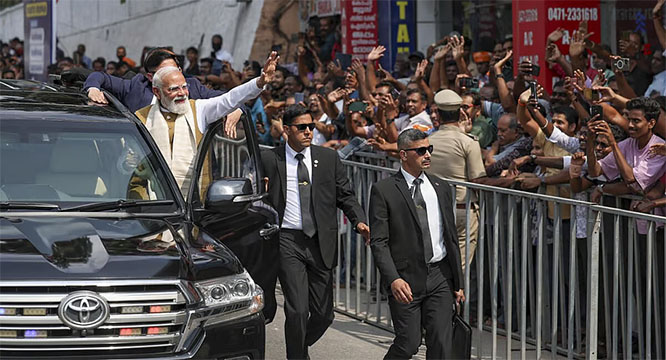
Prime Minister Narendra Modi, during his visit to Thiruvananthapuram on Friday, January 23, indicated that the Bharatiya Janata Party (BJP) is aiming to expand its political footprint in Kerala ahead of the Assembly elections scheduled in the coming months.

Speaking at a BJP-organised public meeting, Modi drew parallels between the party’s early electoral gains in Gujarat and its recent victory in the Thiruvananthapuram Municipal Corporation. The civic body win, which ended decades of Left control, was cited by the Prime Minister as a possible starting point for the party’s broader ambitions in the state.

Recalling BJP’s political trajectory in Gujarat, Modi said the party was largely insignificant before 1987 and received little media attention. He pointed out that the BJP’s first major breakthrough came with its victory in the Ahmedabad Municipal Corporation that year.

“Just as our journey in Gujarat began with one city, Kerala’s journey has also started with a single city,” Modi said, suggesting that the party’s municipal-level success could translate into wider electoral acceptance.

The Prime Minister alleged that successive governments led by the Left Democratic Front (LDF) and the United Democratic Front (UDF) had failed to adequately develop Thiruvananthapuram. He accused both fronts of corruption and neglect, claiming that basic infrastructure and facilities were denied to the capital city for decades.

According to Modi, the BJP’s control of the civic body represents a shift driven by public dissatisfaction with the existing political alternatives. He asserted that the BJP administration in Thiruvananthapuram had begun working towards development, though no specific details or timelines were outlined.

Addressing the gathering at Putharikandam Maidan, Modi said the BJP intended to project Thiruvananthapuram as a “model city,” reiterating his party’s commitment to governance-led change.

The Prime Minister’s visit to Kerala also included the inauguration of several development projects and the flagging off of new train services, as the BJP intensifies its political outreach in the poll-bound state.

Comments

Add new comment

  • Coastaldigest.com reserves the right to delete or block any comments.
  • Coastaldigset.com is not responsible for its readers’ comments.
  • Comments that are abusive, incendiary or irrelevant are strictly prohibited.
  • Please use a genuine email ID and provide your name to avoid reject.
News Network
February 4,2026

shettigar.jpg

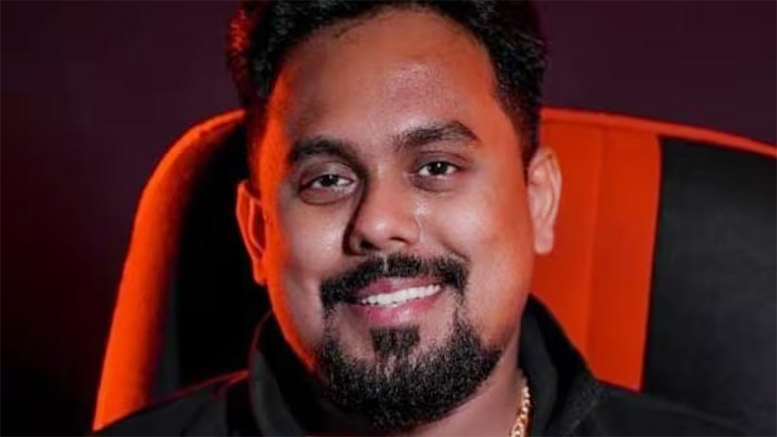
An Indian resident who won the Dh20 million (approximately Rs 50 crore) jackpot in Abu Dhabi's Big Ticket draw has told of his joy at sharing his life-changing fortune with a friend.

Shanthanu Shettigar, a shop manager in Muscat, regularly buys tickets for the monthly grand prize draw with one of his closest friends – and the pair won on February 3.

Mr Shettigar, 33, who is from Udyavar in Udupi district of the southern state of Karnataka and has lived in the Omani capital for eight years, said he was left speechless after learning of his success.

“When I first moved to Muscat, many of my colleagues were purchasing Big Ticket, which encouraged me to give it a try,” he said.

“I started buying tickets on my own, and later began sharing tickets with a close friend. The ticket that brought me this win was one we purchased together.”

“Like most people, I receive a lot of spam calls, and I was fully absorbed in my work as well. I knew the live draw was taking place tonight, but I never imagined my name would be announced,” he said.

“When I realised it was real and that I had won, I was honestly speechless. It still hasn’t fully sunk in, but I’m extremely happy.”

Mr Shettigar is not sure how he will spend his share of the money, but encouraged others to take part.

“This win was completely unexpected, so I want to take some time to think things through before deciding what to do next,” he said.

“I would definitely encourage others to participate with Big Ticket, whether with family or friends – you never know when your moment might come.”

The Big Ticket was established in 1992 with an initial first prize of Dh1 million. It is one of the most popular monthly raffles in the UAE.

It has transformed the lives of many people across the Emirates and beyond.

Entry to the Big Ticket Millionaire is Dh500. Tickets can be bought online or at counters at Zayed International Airport and Al Ain Airport.

Comments

Add new comment

  • Coastaldigest.com reserves the right to delete or block any comments.
  • Coastaldigset.com is not responsible for its readers’ comments.
  • Comments that are abusive, incendiary or irrelevant are strictly prohibited.
  • Please use a genuine email ID and provide your name to avoid reject.
News Network
February 1,2026

Bengaluru, Feb 1: For travelers landing at Kempegowda International Airport (KIA), the sleek, wood-paneled curves of Terminal 2 promise a world-class welcome. But the famed “Garden City” charm quickly withers at the curb. As India’s aviation sector swells to record numbers—handling over 43 million passengers in Bengaluru alone this past year—the “last mile” has turned into a marathon of frustration.

The Bengaluru Logjam: Rules vs Reality

While the city awaits the 2027 completion of the Namma Metro Blue Line, the interim has been chaotic. Recent “decongestion” rules at Terminal 1 have pushed app-based cab pickups to distant parking zones, forcing weary passengers into a 20-minute walk with luggage.

“I landed after ten months away and felt like a stranger in my own city,” says Ruchitha Jain, a Koramangala resident. “My driver couldn’t find me, staff couldn’t guide me, and the so-called ‘Premium’ lane is just a fancy tax on convenience.”

•    The Cost of Distance: A 40-km cab ride can now easily cross ₹1,500, driven by demand pricing and airport surcharges.

•    The Bus Gap: While Vayu Vajra remains a lifeline, its ₹300–₹400 fare is often cited as the most expensive airport bus service in the country.

A National Pattern of Disconnect

The struggle is not unique to Karnataka. From Chennai’s coast to Hyderabad’s plateau, India’s airports tell a familiar story: brilliant runways, broken exits.

City:    Primary Issue   |    Recent Development

Bengaluru:    Cab pickup restrictions & distance  |    App-based taxis shifted to far parking zones; long walks and fare spikes reported

Chennai:    Multi-Level Parking (MLCP) hike  |    Passengers report 40-minute walks to reach cab pickup points

Hyderabad:    “Taxi mafia” & touting  |    Over 440 touting cases reported; security presence intensified

Mumbai:    Fare scams  |     Tourists charged ₹18,000 for just 400 metres, triggering police action

In Hyderabad, travelers continue to battle entrenched local groups that intimidate Uber and Ola drivers, pushing passengers toward overpriced private taxis. Chennai flyers, meanwhile, complain that reaching the designated pickup zones now takes longer than short-haul flights from cities like Coimbatore.

The ‘Budget Day’ Hope

As Finance Minister Nirmala Sitharaman presents the Union Budget 2026 today, the aviation sector is watching closely. With the government’s renewed emphasis on multimodal integration, there is cautious hope for funding toward seamless airport-metro-bus hubs.

The vision is clear: a future where planes, trains, and metros speak the same language. Until then, passengers at KIA—and airports across India—will continue to discover that the hardest part of flying isn’t the thousands of kilometres in the air, but the last few on the ground.

Comments

Add new comment

  • Coastaldigest.com reserves the right to delete or block any comments.
  • Coastaldigset.com is not responsible for its readers’ comments.
  • Comments that are abusive, incendiary or irrelevant are strictly prohibited.
  • Please use a genuine email ID and provide your name to avoid reject.