



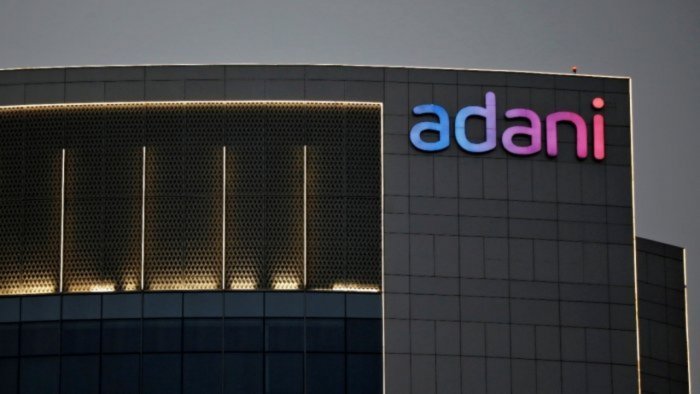
Beleaguered Adani Group suspends work on Rs 34,900 cr project in Gujarat

News Network
March 19, 2023

adanigroup.jpg

New Delhi, Mar 19: Adani Group has suspended work on a Rs 34,900 crore petrochemical project at Mundra in Gujarat as it focuses on resources to consolidate operations and address investor concerns following a damning report by a US-based short seller, sources said.

The group's flagship Adani Enterprises Ltd (AEL) had in 2021 incorporated a wholly-owned subsidiary, Mundra Petrochem Ltd for setting up a greenfield coal-to-PVC plant at Adani Ports and Special Economic Zone (APSEZ) land in Kutch district of Gujarat.

But after Hindenburg Research's January 24 report alleging accounting fraud, stock manipulations and other corporate governance lapses chopped off about $140 billion from the market value of Gautam Adani's empire, the apples-to-airport group is hoping to claw back and calm jittery investors and lenders through a comeback strategy.

The comeback strategy is based on addressing investor concerns around debt by repaying some loans, consolidating operations, and fighting off allegations.

The group has denied all allegations levelled by Hindenburg. As part of this, projects are being re-evaluated based on cashflow and finance available.

And of the projects the group has decided not to pursue for the time being is the 1 million tonne per annum Green PVC project, two sources with knowledge of the matter said.

The group has shot off mails to vendors and suppliers to "suspend all activities" on immediate basis.

In the mails, seen by PTI, the group has asked them to "suspend all activities of the scope of work and performance of all obligations" for Mundra Petrochem Ltd's Green PVC project "till further notice."

This is the following "unforeseen scenario". The management, it said, was "re-evaluating various project/s being implemented at group level in different  business verticals. Based on future cashflow and finance, some of the project/s are being re-evaluated for its continuation and revision in timeline."

Reached for comments, a group spokesperson said AEL will be evaluating the status of growth projects in primary industry vertical over the coming months.

"The balance sheet of each of our independent portfolio companies is very strong. We have industry-leading project development and execution capabilities, strong corporate governance, secure assets, strong cashflows, and our business plan is fully funded. We remain focused on executing our previously outlined strategy to create value for our stakeholders," the spokesperson said.

"AEL will be evaluating the status of growth projects in the primary industry vertical over the coming months".

The unit was to have a poly-vinyl-chloride (PVC) production capacity of 2,000 KTPA (kilo tonne per annum) requiring 3.1 million tonne per annum (MTPA) of coal that was to be imported from Australia, Russia and other countries.

PVC is the world's third-most widely produced synthetic polymer of plastic. It finds wide applications - from flooring, to making sewage pipes and other pipe applications, in insulation on electrical wires, packaging and manufacture of aprons etc.

Adani Group had planned the project as PVC demand in India at around 3.5 MTPA was growing at the rate of 7 per cent year-on-year. With near stagnant domestic production of PVC at 1.4 million tonne, India is dependent on imports to keep pace with the demand.

The Hindenburg report had alleged "brazen stock manipulation and accounting fraud" and use of offshore shell companies to inflate stock prices. The group has denied all Hindenburg allegations, calling them "malicious", "baseless" and a "calculated attack on India".

As part of the comeback strategy, the group has cancelled a Rs 7,000 crore coal plant purchase as well as shelved plans to bid for stake in power trader PTC to conserve expenses. It has repaid some debt and pre-paid some of the finances raised by pledging promoter stake in group companies.

Comments

Add new comment

  • Coastaldigest.com reserves the right to delete or block any comments.
  • Coastaldigset.com is not responsible for its readers’ comments.
  • Comments that are abusive, incendiary or irrelevant are strictly prohibited.
  • Please use a genuine email ID and provide your name to avoid reject.
News Network
February 1,2026

Bengaluru: Karnataka Deputy Chief Minister D K Shivakumar on Sunday criticised the Union Budget presented by Finance Minister Nirmala Sitharaman, claiming it offered no tangible benefit to the state.

Though he said he was yet to study the budget in detail, Shivakumar asserted that Karnataka had gained little from it. “There is no benefit for our state from the central budget. I was observing it. They have now named a programme after Mahatma Gandhi, after repealing the MGNREGA Act that was named after him,” he said.

Speaking to reporters here, the Deputy Chief Minister demanded the restoration of MGNREGA, and made it clear that the newly enacted rural employment scheme — VB-G RAM G — which proposes a 60:40 fund-sharing formula between the Centre and the states, would not be implemented in Karnataka.

“I don’t see any major share for our state in this budget,” he added.

Shivakumar, who also holds charge of Bengaluru development, said there were high expectations for the city from the Union Budget. “The Prime Minister calls Bengaluru a ‘global city’, but what has the Centre done for it?” he asked.

He also drew attention to the problems faced by sugar factories, particularly those in the cooperative sector, alleging a lack of timely decisions and support from the central government.

Noting that the Centre has the authority to fix the minimum support price (MSP) for agricultural produce, Shivakumar said the Union government must take concrete steps to protect farmers’ interests.

Comments

Add new comment

  • Coastaldigest.com reserves the right to delete or block any comments.
  • Coastaldigset.com is not responsible for its readers’ comments.
  • Comments that are abusive, incendiary or irrelevant are strictly prohibited.
  • Please use a genuine email ID and provide your name to avoid reject.
News Network
February 1,2026

Bengaluru, Feb 1: For travelers landing at Kempegowda International Airport (KIA), the sleek, wood-paneled curves of Terminal 2 promise a world-class welcome. But the famed “Garden City” charm quickly withers at the curb. As India’s aviation sector swells to record numbers—handling over 43 million passengers in Bengaluru alone this past year—the “last mile” has turned into a marathon of frustration.

The Bengaluru Logjam: Rules vs Reality

While the city awaits the 2027 completion of the Namma Metro Blue Line, the interim has been chaotic. Recent “decongestion” rules at Terminal 1 have pushed app-based cab pickups to distant parking zones, forcing weary passengers into a 20-minute walk with luggage.

“I landed after ten months away and felt like a stranger in my own city,” says Ruchitha Jain, a Koramangala resident. “My driver couldn’t find me, staff couldn’t guide me, and the so-called ‘Premium’ lane is just a fancy tax on convenience.”

•    The Cost of Distance: A 40-km cab ride can now easily cross ₹1,500, driven by demand pricing and airport surcharges.

•    The Bus Gap: While Vayu Vajra remains a lifeline, its ₹300–₹400 fare is often cited as the most expensive airport bus service in the country.

A National Pattern of Disconnect

The struggle is not unique to Karnataka. From Chennai’s coast to Hyderabad’s plateau, India’s airports tell a familiar story: brilliant runways, broken exits.

City:    Primary Issue   |    Recent Development

Bengaluru:    Cab pickup restrictions & distance  |    App-based taxis shifted to far parking zones; long walks and fare spikes reported

Chennai:    Multi-Level Parking (MLCP) hike  |    Passengers report 40-minute walks to reach cab pickup points

Hyderabad:    “Taxi mafia” & touting  |    Over 440 touting cases reported; security presence intensified

Mumbai:    Fare scams  |     Tourists charged ₹18,000 for just 400 metres, triggering police action

In Hyderabad, travelers continue to battle entrenched local groups that intimidate Uber and Ola drivers, pushing passengers toward overpriced private taxis. Chennai flyers, meanwhile, complain that reaching the designated pickup zones now takes longer than short-haul flights from cities like Coimbatore.

The ‘Budget Day’ Hope

As Finance Minister Nirmala Sitharaman presents the Union Budget 2026 today, the aviation sector is watching closely. With the government’s renewed emphasis on multimodal integration, there is cautious hope for funding toward seamless airport-metro-bus hubs.

The vision is clear: a future where planes, trains, and metros speak the same language. Until then, passengers at KIA—and airports across India—will continue to discover that the hardest part of flying isn’t the thousands of kilometres in the air, but the last few on the ground.

Comments

Add new comment

  • Coastaldigest.com reserves the right to delete or block any comments.
  • Coastaldigset.com is not responsible for its readers’ comments.
  • Comments that are abusive, incendiary or irrelevant are strictly prohibited.
  • Please use a genuine email ID and provide your name to avoid reject.
News Network
January 23,2026

modIKERALA.jpg

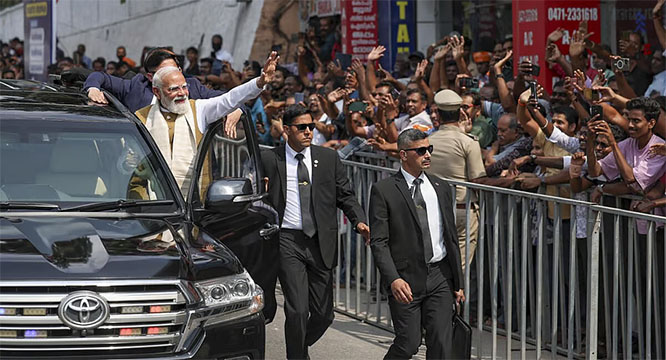
Prime Minister Narendra Modi, during his visit to Thiruvananthapuram on Friday, January 23, indicated that the Bharatiya Janata Party (BJP) is aiming to expand its political footprint in Kerala ahead of the Assembly elections scheduled in the coming months.

Speaking at a BJP-organised public meeting, Modi drew parallels between the party’s early electoral gains in Gujarat and its recent victory in the Thiruvananthapuram Municipal Corporation. The civic body win, which ended decades of Left control, was cited by the Prime Minister as a possible starting point for the party’s broader ambitions in the state.

Recalling BJP’s political trajectory in Gujarat, Modi said the party was largely insignificant before 1987 and received little media attention. He pointed out that the BJP’s first major breakthrough came with its victory in the Ahmedabad Municipal Corporation that year.

“Just as our journey in Gujarat began with one city, Kerala’s journey has also started with a single city,” Modi said, suggesting that the party’s municipal-level success could translate into wider electoral acceptance.

The Prime Minister alleged that successive governments led by the Left Democratic Front (LDF) and the United Democratic Front (UDF) had failed to adequately develop Thiruvananthapuram. He accused both fronts of corruption and neglect, claiming that basic infrastructure and facilities were denied to the capital city for decades.

According to Modi, the BJP’s control of the civic body represents a shift driven by public dissatisfaction with the existing political alternatives. He asserted that the BJP administration in Thiruvananthapuram had begun working towards development, though no specific details or timelines were outlined.

Addressing the gathering at Putharikandam Maidan, Modi said the BJP intended to project Thiruvananthapuram as a “model city,” reiterating his party’s commitment to governance-led change.

The Prime Minister’s visit to Kerala also included the inauguration of several development projects and the flagging off of new train services, as the BJP intensifies its political outreach in the poll-bound state.

Comments

Add new comment

  • Coastaldigest.com reserves the right to delete or block any comments.
  • Coastaldigset.com is not responsible for its readers’ comments.
  • Comments that are abusive, incendiary or irrelevant are strictly prohibited.
  • Please use a genuine email ID and provide your name to avoid reject.