



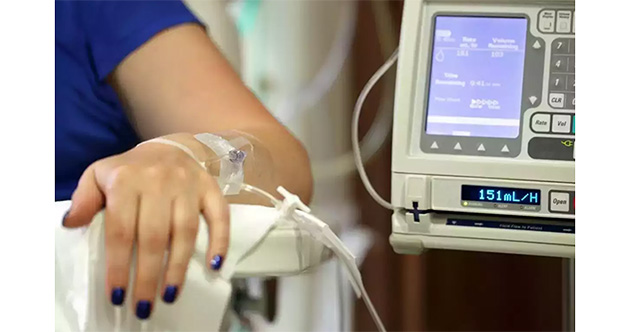
Cancer cases, deaths increased in India between 2020 and 2022: Govt

News Network
December 13, 2022

cancer.jpg

New Delhi, Dec 13: Estimated cancer cases and mortality due to it have increased in the country between 2020 and 2022, Union Health Minister Mansukh Mandaviya told the Rajya Sabha on Tuesday, citing official data.

The Department of Health and Family Welfare provides technical and financial support to states and Union territories under the National Programme for Prevention and Control of Cancer, Diabetes, Cardiovascular Diseases and Stroke (NPCDCS) as part of the National Health Mission (NHM), based on the proposals received from the states and subject to the resource envelope, he said in reply to a question.

According to the National Cancer Registry Programme of the Indian Council of Medical Research (ICMR), an estimated incidence of cancer cases in India by different states and Union territories in 2020 was 13,92,179 and it increased to 14,26,447 in 2021 and 14,61,427 in 2022.

Estimated mortality due to cancer in India was 7,70,230 in 2020 and it increased to 7,89,202 in 2021 and 8,08,558 in 2022, Mandaviya said.

Cancer is an integral part of NPCDCS, the minister said, adding the programme focusses on strengthening infrastructure, human resource development, health promotion and awareness generation for cancer prevention, early diagnosis, management and referral to an appropriate level of healthcare facility for treatment of the non- communicable diseases (NCDs), including cancer.

Under NPCDCS, 707 district NCD clinics, 268 district daycare centres, and 5,541 community health centre NCD clinics have been set up.

A population-based initiative for prevention, control and screening for common NCDs, i.e. diabetes, hypertension and common cancers, has been rolled out in the country under NHM and also as a part of comprehensive primary health care, Mandaviya stated.

Under the initiative, persons more than 30 years of age are targeted for their screening for the three common cancers  -- oral, breast and cervical. Screening of these common cancers is an integral part of service delivery under Ayushman Bharat – Health and Wellness Centres.

Preventive aspect of cancer are strengthened under comprehensive primary health care through Ayushman Bharat Health Wellness Centre scheme, by promotion of wellness activities and targeted communication at the community level. 

Other initiatives for increasing public awareness about cancer and for promotion of healthy lifestyle includes observation of National Cancer Awareness Day and World Cancer Day and use of print, electronic and social media for continued community awareness. 

Furthermore, healthy eating is also promoted through Food Safety and Standards Authority of India (FSSAI). Fit India movement is implemented by the Ministry of Youth Affairs and Sports, and various Yoga related activities are carried out by the Ministry of AYUSH, the minister said in the reply.

In addition, NPCDCS gives financial support under NHM for awareness generation activities for cancer to be taken by states UTs as per their Programme Implementation Plans.

The central government implements Strengthening of Tertiary Cancer Care Centres Facilities Scheme in order to enhance the facilities for tertiary care of cancer. Nineteen State Cancer Institutes (SCIs) and 20 Tertiary Cancer Care Centres (TCCCs) have been approved under the scheme. Seven of these SCIs and TCCCs have been completed, he said.

There is also focus on oncology in its various aspects in case of new AIIMS and many upgraded institutions under Pradhan Mantri Swasthya Suraksha Yojna (PMSSY).

Setting up of National Cancer Institute at Jhajjar (Haryana) and second campus of Chittaranjan National Cancer Institute, Kolkata are also steps in this direction. All these enhance the capacity for treatment of cancer in the country, he said. 

Comments

Add new comment

  • Coastaldigest.com reserves the right to delete or block any comments.
  • Coastaldigset.com is not responsible for its readers’ comments.
  • Comments that are abusive, incendiary or irrelevant are strictly prohibited.
  • Please use a genuine email ID and provide your name to avoid reject.
News Network
February 1,2026

Bengaluru: Karnataka Deputy Chief Minister D K Shivakumar on Sunday criticised the Union Budget presented by Finance Minister Nirmala Sitharaman, claiming it offered no tangible benefit to the state.

Though he said he was yet to study the budget in detail, Shivakumar asserted that Karnataka had gained little from it. “There is no benefit for our state from the central budget. I was observing it. They have now named a programme after Mahatma Gandhi, after repealing the MGNREGA Act that was named after him,” he said.

Speaking to reporters here, the Deputy Chief Minister demanded the restoration of MGNREGA, and made it clear that the newly enacted rural employment scheme — VB-G RAM G — which proposes a 60:40 fund-sharing formula between the Centre and the states, would not be implemented in Karnataka.

“I don’t see any major share for our state in this budget,” he added.

Shivakumar, who also holds charge of Bengaluru development, said there were high expectations for the city from the Union Budget. “The Prime Minister calls Bengaluru a ‘global city’, but what has the Centre done for it?” he asked.

He also drew attention to the problems faced by sugar factories, particularly those in the cooperative sector, alleging a lack of timely decisions and support from the central government.

Noting that the Centre has the authority to fix the minimum support price (MSP) for agricultural produce, Shivakumar said the Union government must take concrete steps to protect farmers’ interests.

Comments

Add new comment

  • Coastaldigest.com reserves the right to delete or block any comments.
  • Coastaldigset.com is not responsible for its readers’ comments.
  • Comments that are abusive, incendiary or irrelevant are strictly prohibited.
  • Please use a genuine email ID and provide your name to avoid reject.
News Network
February 1,2026

Bengaluru: The Karnataka High Court has refused to quash an investigation against a WhatsApp group administrator accused of allowing the circulation of obscene and offensive images depicting Hindutva politicians and idols in 2021.

Justice M Nagaprasanna observed that, prima facie, the ingredients of the offence under Section 295A of the Indian Penal Code were made out. “The offence under Section 295A of the IPC is met to every word of its ingredient, albeit prima facie,” the judge said.

The petitioner, Sirajuddin, a resident of Belthangady taluk in Dakshina Kannada district, had challenged the FIR registered against him at the CEN (Cyber, Economics and Narcotics) police station, Mangaluru, for offences under Section 295A of the IPC and Section 67 of the Information Technology Act. Section 295A relates to punishment for deliberate and malicious acts intended to outrage the religious feelings of any class of citizens.

According to the complaint filed by K Jayaraj Salian, also a resident of Belthangady taluk, he received a WhatsApp group link from an unknown source and was added to the group after accessing it. The group reportedly had six administrators and around 250 participants, where obscene and offensive images depicting Hindu deities and certain political figures were allegedly circulated repeatedly.

Sirajuddin was arrested in connection with the case and later released on bail on February 16, 2021. He argued before the court that he was being selectively targeted, while other administrators—including the creator of the group—were neither arrested nor investigated. He also contended that the Magistrate could not have taken cognisance of the offence under Section 295A without prior sanction under Section 196(1) of the CrPC.

Rejecting the argument, Justice Nagaprasanna held that prior sanction is required only at the stage of taking cognisance, and not at the stage of registration of the crime or during investigation.

The judge noted that the State had produced the entire investigation material before the court. “A perusal of the material reveals depictions of Hindu deities in an extraordinarily obscene, demeaning and profane manner. The content is such that its reproduction in a judicial order would itself be inappropriate,” the court said, adding that the material, on its face, had the tendency to outrage religious feelings and disturb communal harmony.

Observing that the case was still at the investigation stage, the court said it could not interdict the probe at this juncture. However, it expressed concern that the investigating officer appeared to have not proceeded uniformly against all administrators. The court clarified that if the investigation revealed the active involvement of any member in permitting the circulation of such content, they must also be proceeded against.

“At this investigative stage, any further observation by this Court would be unnecessary,” the order concluded.

Comments

Add new comment

  • Coastaldigest.com reserves the right to delete or block any comments.
  • Coastaldigset.com is not responsible for its readers’ comments.
  • Comments that are abusive, incendiary or irrelevant are strictly prohibited.
  • Please use a genuine email ID and provide your name to avoid reject.
News Network
February 4,2026

Mangaluru: Urban local bodies and gram panchayats should make the use of Kannada on signboards mandatory while issuing trade licences to commercial establishments, Dakshina Kannada Deputy Commissioner Darshan HV said. He also called for regular inspections to ensure compliance.

Presiding over the District Kannada Awareness Committee meeting at the deputy commissioner’s office, Darshan said the city corporation would be directed to ensure that shops operating in malls prominently display their names in Kannada. “All commercial establishments, including shops, companies, offices and hotels, must mandatorily display their names in Kannada on signboards,” he said.

The deputy commissioner added that the National Highways Authority of India (NHAI) would be instructed to include Kannada on signboards along national highways. Banks, he said, would be directed through committee meetings to provide application forms in Kannada.

“Even if English-medium schools and colleges impart education in English, their signboards must display the institution’s name in Kannada. Steps will also be taken to ensure that private buses display place names in Kannada,” Darshan said.

During the meeting, committee members raised concerns over the closure of Kannada-medium schools in rural areas due to a shortage of teachers and stressed the need for immediate corrective measures. They also pointed out that several industries employ workers from other states while overlooking local candidates.

Members further demanded that nationalised banks provide deposit and withdrawal slips in Kannada. It was brought to the deputy commissioner’s notice that the presence of staff without knowledge of Kannada in rural branches of nationalised banks is causing hardship to local customers.

Meanwhile, MP Srinath, president of the District Kannada Sahitya Parishat, urged the district administration to allot land for the construction of a district Kannada Bhavana in Mangaluru.

Comments

Add new comment

  • Coastaldigest.com reserves the right to delete or block any comments.
  • Coastaldigset.com is not responsible for its readers’ comments.
  • Comments that are abusive, incendiary or irrelevant are strictly prohibited.
  • Please use a genuine email ID and provide your name to avoid reject.