India deserves more non-stop overseas flights: Air India CEO

News Network
June 4, 2023

flight.jpg

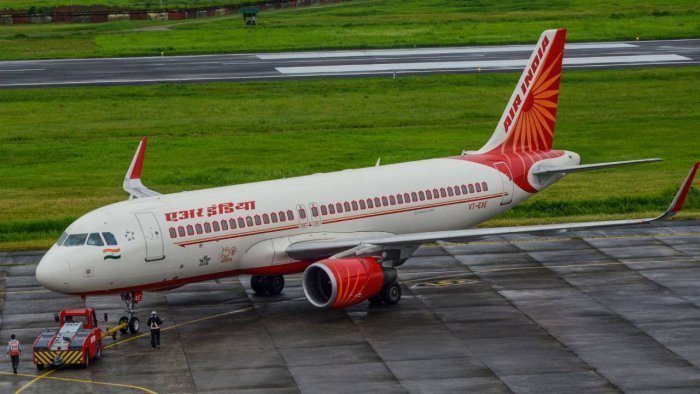
New Delhi, June 5: Asserting that India deserves to have international non-stop connectivity to more destinations, Air India chief Campbell Wilson has said the country has in some respect not been able to control its own destiny as a consequence of not having a healthy domestic airline industry.

Wilson, who is piloting Air India's massive expansion plans in terms of fleet as well as routes, also said that IndiGo succeeding well and Tata airlines coming together provides a good competitor to the strength of IndiGo.

"It should hopefully allow for a market that is more sustainable, ideally profitable that will allow airlines to invest in new products, expand network and also lead India to assume its place on the world aviation stage...," he told PTI in a recent interview.

Tata Group took over Air India and Air India Express from the government in January last year.

Currently, the group has four carriers under its fold -- Air India, Air India Express, AIX Connect (earlier known as AirAsia India) and Vistara, a joint venture with Singapore Airlines.

The group is also in the process of merging Air India Express and AIX Connect, and Vistara with Air India.

Responding to a query about the crisis at Go First, Wilson said it is very unfortunate.

Cash-strapped budget carrier Go First stopped flying from May 3 and is undergoing voluntary insolvency resolution proceedings.

This is not the first time that an airline has failed in the country and "it does I think underscore the industry structure that has prevailed has not been conducive for a healthy, vibrant, profitable industry", the Air India CEO and Managing Director said.

"As a consequence of not having a healthy domestic airline industry, India has in some respects is not able to control its own destiny. Some foreign airlines coming into India have been the ones that have reaped the benefits of the growing Indian market as opposed to the Indian airlines.

"We continue to make sure that we put in the investments in aircraft, products, people and systems. We will have a significantly sized, professionally run, expansion-oriented high quality airline," Wilson said.

He also said that Air India is investing $70 billion at list price for 470 new aircraft and that is with the explicit purpose of providing more services, especially international connectivity.

As Air India flies to more places non-stop from India and also builds a hub, then hopefully, the airline will catalyse further broader development of the country's aviation industry. "That will be good for all the parties and not just the airline itself," he noted.

While travel demand is on the rise, India has relatively less direct international air connectivity and overseas traffic is catered to mostly by foreign carriers with connecting flights.

Against this backdrop, the government is working on developing an international aviation hub in the country while Air India and IndiGo are also expanding their international operations.

"Our view is that India deserves to have international non-stop connectivity to many more destinations in the world than presently is the case.

"In order to do that, it will require investments in aircraft, systems, and people by Indian carriers. That investment comes with economic incentives and other incentives. So building the environment to make such investments attractive to the people and such investments successful, at least in my view, is in the national interest," Wilson said.

When asked about India being hesitant to allow more bilateral flying rights to foreign carriers, Wilson said that for whatever reason, India did not have a strong home carrier to announce non-stop services to the points that people wanted to fly to and from.

"In the absence of that, people were served by airlines hubbing in different places around India. Now, there are two airlines in India with the capacity and ambition to expand non-stop services, it is only right that they be given time to demonstrate that the intent is matched by action," he emphasised.

India is one of the fastest growing aviation markets in the world.

Comments

Add new comment

  • Coastaldigest.com reserves the right to delete or block any comments.
  • Coastaldigset.com is not responsible for its readers’ comments.
  • Comments that are abusive, incendiary or irrelevant are strictly prohibited.
  • Please use a genuine email ID and provide your name to avoid reject.
News Network
February 1,2026

Bengaluru: Karnataka Deputy Chief Minister D K Shivakumar on Sunday criticised the Union Budget presented by Finance Minister Nirmala Sitharaman, claiming it offered no tangible benefit to the state.

Though he said he was yet to study the budget in detail, Shivakumar asserted that Karnataka had gained little from it. “There is no benefit for our state from the central budget. I was observing it. They have now named a programme after Mahatma Gandhi, after repealing the MGNREGA Act that was named after him,” he said.

Speaking to reporters here, the Deputy Chief Minister demanded the restoration of MGNREGA, and made it clear that the newly enacted rural employment scheme — VB-G RAM G — which proposes a 60:40 fund-sharing formula between the Centre and the states, would not be implemented in Karnataka.

“I don’t see any major share for our state in this budget,” he added.

Shivakumar, who also holds charge of Bengaluru development, said there were high expectations for the city from the Union Budget. “The Prime Minister calls Bengaluru a ‘global city’, but what has the Centre done for it?” he asked.

He also drew attention to the problems faced by sugar factories, particularly those in the cooperative sector, alleging a lack of timely decisions and support from the central government.

Noting that the Centre has the authority to fix the minimum support price (MSP) for agricultural produce, Shivakumar said the Union government must take concrete steps to protect farmers’ interests.

Comments

Add new comment

  • Coastaldigest.com reserves the right to delete or block any comments.
  • Coastaldigset.com is not responsible for its readers’ comments.
  • Comments that are abusive, incendiary or irrelevant are strictly prohibited.
  • Please use a genuine email ID and provide your name to avoid reject.
News Network
January 31,2026

Roy.jpg

Bengaluru: The shooting incident involving CJ Roy, founder of the Confident Group, has once again put the spotlight on a businessman whose life has swung between flamboyant global success and persistent controversy at home.

Though Roy’s business interests extended across continents, his roots lay firmly in Karnataka. An alumnus of Christ School in Bengaluru, he later moved to Tumakuru to pursue an engineering degree. Those familiar with his early years describe him as intensely ambitious, beginning his career as a salesman at a small electronics firm dealing in computers.

Roy’s entry into large-scale real estate came through the Crystal Group, where he worked closely with Latha Namboothiri and rose from manager to director. However, the launch of the Confident Group in 2005 was clouded by industry speculation. Insiders speak of a fallout involving alleged “benami” properties and claims of deception that ultimately led to his independent venture—an episode Roy spent years trying to distance himself from, according to associates.

A tale of two cities

Roy’s professional trajectory diverged sharply across geographies.

In Dubai, he built a reputation as a bold and efficient developer, completing massive luxury residential projects in record time—some reportedly within 11 months. His rapid project delivery and lavish lifestyle in the Emirates earned him admiration and visibility in the real estate sector.

In Bengaluru, however, his image remained far more fractured. Sources say Roy stayed away from the city for several years amid disputes over unpaid dues to vendors and suppliers. Several projects were allegedly stalled, with accusations of unfulfilled commitments to cement and steel suppliers continuing to follow him.

Roy’s return to Bengaluru’s business and social circles began around 2018, marked by a conscious attempt at rebranding. His appointment as Honorary Consul of the Slovak Republic added diplomatic legitimacy, which he complemented with visible CSR initiatives, including ambulance donations and high-profile charity events.

Heavy police presence in Langford Town

Following the incident, police personnel from the Central division were deployed outside the Confident Group building in Langford Town, which also houses the Slovak Honorary Consulate in Bengaluru.

The otherwise busy premises near Hosur Road wore a deserted look on Friday, reflecting the shock and uncertainty that followed the tragedy.

Comments

Add new comment

  • Coastaldigest.com reserves the right to delete or block any comments.
  • Coastaldigset.com is not responsible for its readers’ comments.
  • Comments that are abusive, incendiary or irrelevant are strictly prohibited.
  • Please use a genuine email ID and provide your name to avoid reject.
News Network
January 23,2026

modIKERALA.jpg

Prime Minister Narendra Modi, during his visit to Thiruvananthapuram on Friday, January 23, indicated that the Bharatiya Janata Party (BJP) is aiming to expand its political footprint in Kerala ahead of the Assembly elections scheduled in the coming months.

Speaking at a BJP-organised public meeting, Modi drew parallels between the party’s early electoral gains in Gujarat and its recent victory in the Thiruvananthapuram Municipal Corporation. The civic body win, which ended decades of Left control, was cited by the Prime Minister as a possible starting point for the party’s broader ambitions in the state.

Recalling BJP’s political trajectory in Gujarat, Modi said the party was largely insignificant before 1987 and received little media attention. He pointed out that the BJP’s first major breakthrough came with its victory in the Ahmedabad Municipal Corporation that year.

“Just as our journey in Gujarat began with one city, Kerala’s journey has also started with a single city,” Modi said, suggesting that the party’s municipal-level success could translate into wider electoral acceptance.

The Prime Minister alleged that successive governments led by the Left Democratic Front (LDF) and the United Democratic Front (UDF) had failed to adequately develop Thiruvananthapuram. He accused both fronts of corruption and neglect, claiming that basic infrastructure and facilities were denied to the capital city for decades.

According to Modi, the BJP’s control of the civic body represents a shift driven by public dissatisfaction with the existing political alternatives. He asserted that the BJP administration in Thiruvananthapuram had begun working towards development, though no specific details or timelines were outlined.

Addressing the gathering at Putharikandam Maidan, Modi said the BJP intended to project Thiruvananthapuram as a “model city,” reiterating his party’s commitment to governance-led change.

The Prime Minister’s visit to Kerala also included the inauguration of several development projects and the flagging off of new train services, as the BJP intensifies its political outreach in the poll-bound state.

Comments

Add new comment

  • Coastaldigest.com reserves the right to delete or block any comments.
  • Coastaldigset.com is not responsible for its readers’ comments.
  • Comments that are abusive, incendiary or irrelevant are strictly prohibited.
  • Please use a genuine email ID and provide your name to avoid reject.