No written exams till class 2, assessment should not cause burden for children: Draft NCF

News Network
April 7, 2023

students.jpg

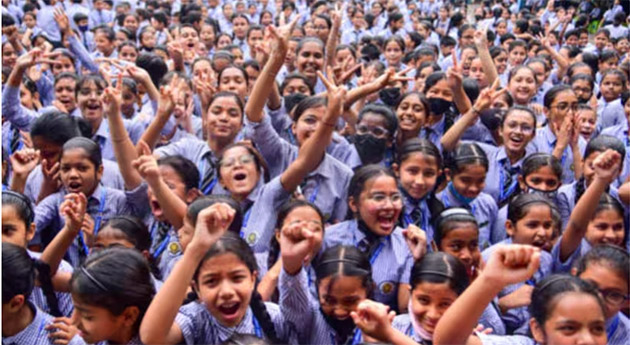
New Delhi, Apr 7: Explicit tests and exams are completely inappropriate assessment tools for children up to class 2 and written tests should be introduced from class 3 onwards, the draft National Curriculum Framework (NCF) has recommended stressing that assessment methods should be such that they do not contribute to any additional burden for the child.

The framework which is being developed along the lines of the new National Education Policy (NEP) suggests that two important methods of assessment that are appropriate for the foundational stage are observations of the child and analysing of artefacts that the child has produced as part of their learning experience.

The draft notes that explicit tests and examinations are completely inappropriate assessment tools for the Foundational stage (preschool to class 2).

"Assessment should allow for diversity among children and in their learning. Children learn differently and express their learning differently too. There might be many ways to assess the achievement of a learning outcome or competency. The teacher should have the ability to design different kinds of assessments for the same learning outcome and use each assessment appropriately.

"Assessment should enable recording and documentation. Children's progress should be described and analysed through the systematic collection of evidence. Assessment should not contribute to any additional burden for the child. Assessment tools and processes should be designed such that they are a natural extension of the learning experience for the child," it adds.

Describing the assessment for the preparatory stage (class 3 to 5), the draft recommends that "written tests should be introduced at this stage".

"A variety of assessment methods should be used to promote learning. Portfolios can be used to capture student progress holistically through their work. This could also provide a reliable picture of their learning to parents. Peer and self-assessments could also be introduced to help students monitor the trajectory of their own learning.

"At the end of the preparatory stage, there should be a comprehensive summative assessment of the student's readiness to enter the middle stage where several new curricular areas are introduced," it adds.

The education ministry released a "pre-draft" of the NCF for school education on Thursday and invited suggestions from stakeholders such as students, parents, teachers and scholars.

The draft prepared by a panel headed by K Kasturirangan, former ISRO chief, suggests that at the middle stage (class 6 to 8), the focus of the curriculum should move to conceptual understanding and higher-order capacities.

"Therefore, classroom assessment techniques such as projects, debates, presentations, experiments, investigations, role plays, journals and portfolios should be used to assess learning. Regular summative assessments at this stage will help students synthesize their learning at logical intervals such as year-end, term-end, unit-end. Summative assessments comprising multiple-choice questions and constructed responses like short and long answers may be used periodically," it says.

In the secondary stage (class 9 to 12), the panel has asserted that comprehensive classroom assessments should be effectively practised for facilitating meaningful learning and constructive feedback. Regular summative assessments should be conducted for recording students learning against competencies.

"Self-assessment will play a key role in student learning at this stage. Students should be facilitated to monitor what they are learning and use the feedback from this monitoring to adjust, adapt, and decide their own strategies for learning.

"Summative assessments can be designed using case-based questions, simulations, and essay-type questions to enable assessment of competencies. At this stage, students should also be prepared to undertake the board examinations and other selection tests to gain access to higher education and livelihood opportunities," the draft adds.

According to ministry officials, the textbooks as per the new NCF will be introduced from next year.

The Education Ministry has designed four NCFs based on the 5+3+3+4 ‘curricular and pedagogical’ structure that NEP 2020 has recommended for school education.

The ministry launched the NCF for the foundational stage (NCF-FS) for children between ages 3-8 years in October 2022. In continuation of that policy, the next NCF for school education is being prepared.

Revamping class 10 and 12 board exams, aligning the shift from 10+2 structure to 5+3+3+4 structure and emphasis on developmental perspectives suggesting curricular and pedagogical shifts at different stages - foundational, preparatory, middle and secondary - are among the recommendations made in the pre-draft.

The NCF has been revised four times - in 1975, 1988, 2000 and 2005. The new proposed revision will be the fifth of the framework.

 

Comments

Add new comment

  • Coastaldigest.com reserves the right to delete or block any comments.
  • Coastaldigset.com is not responsible for its readers’ comments.
  • Comments that are abusive, incendiary or irrelevant are strictly prohibited.
  • Please use a genuine email ID and provide your name to avoid reject.
News Network
January 23,2026

modIKERALA.jpg

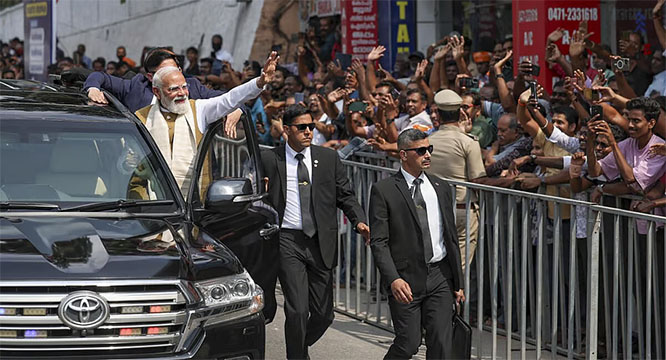
Prime Minister Narendra Modi, during his visit to Thiruvananthapuram on Friday, January 23, indicated that the Bharatiya Janata Party (BJP) is aiming to expand its political footprint in Kerala ahead of the Assembly elections scheduled in the coming months.

Speaking at a BJP-organised public meeting, Modi drew parallels between the party’s early electoral gains in Gujarat and its recent victory in the Thiruvananthapuram Municipal Corporation. The civic body win, which ended decades of Left control, was cited by the Prime Minister as a possible starting point for the party’s broader ambitions in the state.

Recalling BJP’s political trajectory in Gujarat, Modi said the party was largely insignificant before 1987 and received little media attention. He pointed out that the BJP’s first major breakthrough came with its victory in the Ahmedabad Municipal Corporation that year.

“Just as our journey in Gujarat began with one city, Kerala’s journey has also started with a single city,” Modi said, suggesting that the party’s municipal-level success could translate into wider electoral acceptance.

The Prime Minister alleged that successive governments led by the Left Democratic Front (LDF) and the United Democratic Front (UDF) had failed to adequately develop Thiruvananthapuram. He accused both fronts of corruption and neglect, claiming that basic infrastructure and facilities were denied to the capital city for decades.

According to Modi, the BJP’s control of the civic body represents a shift driven by public dissatisfaction with the existing political alternatives. He asserted that the BJP administration in Thiruvananthapuram had begun working towards development, though no specific details or timelines were outlined.

Addressing the gathering at Putharikandam Maidan, Modi said the BJP intended to project Thiruvananthapuram as a “model city,” reiterating his party’s commitment to governance-led change.

The Prime Minister’s visit to Kerala also included the inauguration of several development projects and the flagging off of new train services, as the BJP intensifies its political outreach in the poll-bound state.

Comments

Add new comment

  • Coastaldigest.com reserves the right to delete or block any comments.
  • Coastaldigset.com is not responsible for its readers’ comments.
  • Comments that are abusive, incendiary or irrelevant are strictly prohibited.
  • Please use a genuine email ID and provide your name to avoid reject.
News Network
February 5,2026

In an era where digital distractions are the primary rival to academic excellence, the Karnataka Education Department is taking the fight directly to the living room. As the SSLC (Class 10) annual examinations loom, officials have launched a localized "digital strike" to ensure students aren't losing their competitive edge to scrolling or soap operas.

The 7-to-9 Lockdown

The department has issued a formal directive urging—and in some cases, enforcing via home visits—a total blackout of mobile phones and television sets between 7:00 PM and 9:00 PM. This two-hour window is being designated as "sacred study time" across the state until the examinations conclude on April 2.

Key Pillars of the Initiative:

•    Doorstep Advocacy: Teachers are transitioning from classrooms to living rooms, meeting parents to explain the psychological benefits of a distraction-free environment.

•    Parental Accountability: The campaign shifts the burden of discipline from the student to the household, asking parents to lead by example and switch off their own devices.

•    The Timeline: The focus remains sharp on the upcoming exam block, scheduled from March 18 to April 2.

"The objective is simple: uninterrupted focus. We are reclaiming the evening hours for the students, ensuring their environment is as prepared as their minds," stated a senior department official.

Student vs. Reality

While the student community has largely welcomed the "forced focus"—with many admitting they lack the willpower to ignore notifications—the move has sparked a debate on enforceability. Without a "TV Police," the success of this initiative rests entirely on the shoulders of parents and the persuasive power of visiting educators.

Comments

Add new comment

  • Coastaldigest.com reserves the right to delete or block any comments.
  • Coastaldigset.com is not responsible for its readers’ comments.
  • Comments that are abusive, incendiary or irrelevant are strictly prohibited.
  • Please use a genuine email ID and provide your name to avoid reject.
News Network
February 1,2026

Bengaluru, Feb 1: For travelers landing at Kempegowda International Airport (KIA), the sleek, wood-paneled curves of Terminal 2 promise a world-class welcome. But the famed “Garden City” charm quickly withers at the curb. As India’s aviation sector swells to record numbers—handling over 43 million passengers in Bengaluru alone this past year—the “last mile” has turned into a marathon of frustration.

The Bengaluru Logjam: Rules vs Reality

While the city awaits the 2027 completion of the Namma Metro Blue Line, the interim has been chaotic. Recent “decongestion” rules at Terminal 1 have pushed app-based cab pickups to distant parking zones, forcing weary passengers into a 20-minute walk with luggage.

“I landed after ten months away and felt like a stranger in my own city,” says Ruchitha Jain, a Koramangala resident. “My driver couldn’t find me, staff couldn’t guide me, and the so-called ‘Premium’ lane is just a fancy tax on convenience.”

•    The Cost of Distance: A 40-km cab ride can now easily cross ₹1,500, driven by demand pricing and airport surcharges.

•    The Bus Gap: While Vayu Vajra remains a lifeline, its ₹300–₹400 fare is often cited as the most expensive airport bus service in the country.

A National Pattern of Disconnect

The struggle is not unique to Karnataka. From Chennai’s coast to Hyderabad’s plateau, India’s airports tell a familiar story: brilliant runways, broken exits.

City:    Primary Issue   |    Recent Development

Bengaluru:    Cab pickup restrictions & distance  |    App-based taxis shifted to far parking zones; long walks and fare spikes reported

Chennai:    Multi-Level Parking (MLCP) hike  |    Passengers report 40-minute walks to reach cab pickup points

Hyderabad:    “Taxi mafia” & touting  |    Over 440 touting cases reported; security presence intensified

Mumbai:    Fare scams  |     Tourists charged ₹18,000 for just 400 metres, triggering police action

In Hyderabad, travelers continue to battle entrenched local groups that intimidate Uber and Ola drivers, pushing passengers toward overpriced private taxis. Chennai flyers, meanwhile, complain that reaching the designated pickup zones now takes longer than short-haul flights from cities like Coimbatore.

The ‘Budget Day’ Hope

As Finance Minister Nirmala Sitharaman presents the Union Budget 2026 today, the aviation sector is watching closely. With the government’s renewed emphasis on multimodal integration, there is cautious hope for funding toward seamless airport-metro-bus hubs.

The vision is clear: a future where planes, trains, and metros speak the same language. Until then, passengers at KIA—and airports across India—will continue to discover that the hardest part of flying isn’t the thousands of kilometres in the air, but the last few on the ground.

Comments

Add new comment

  • Coastaldigest.com reserves the right to delete or block any comments.
  • Coastaldigset.com is not responsible for its readers’ comments.
  • Comments that are abusive, incendiary or irrelevant are strictly prohibited.
  • Please use a genuine email ID and provide your name to avoid reject.