



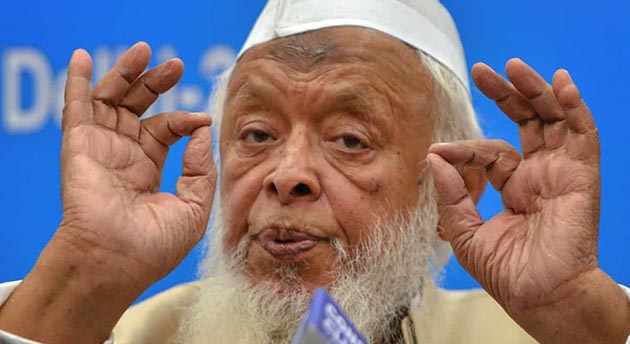
UCC against religious freedom; will fight legally, won’t take to streets: Jamiat Ulema-e-Hind

News Network
June 19, 2023

jamiat.jpg

New Delhi, June 19: Prominent Muslim organisation Jamiat Ulema-e-Hind on Monday claimed that the Uniform Civil Code is against the religious freedom guaranteed under the the Constitution but said it will not take to the streets to protest against it and instead would oppose it by taking all possible steps within the ambit of law.

The statement by the Muslim organisation comes days after the Law Commission initiated a fresh consultation process on the Uniform Civil Code (UCC) by seeking views from stakeholders, including public and recognised religious organisations, on the politically sensitive issue.

In a statement, the Jamiat Ulema-e-Hind said it opposes the UCC as it is "totally against the religious freedom and fundamental rights guaranteed to the citizens in Articles 25 and 26 of the Constitution."

"Our Constitution is a secular Constitution, in which every citizen has been given full religious freedom, and every person has been also given the right to choose the religion of his choice, because there is no official religion for the Indian state, and it gives complete freedom to all its citizens," the Jamiat said.

A resolution opposing the UCC was also passed by the executive committee of the Jamiat (Arshad Madani faction) at its executive meeting Sunday.

The demand for a UCC is nothing but a deliberate attempt to curtail the religious freedom of citizens, the Jamiat alleged.

Hence, Jamiat has been opposing this effort from day one as it feels that the demand for a UCC is part of an attempt to destroy the religious freedom of the citizens and the original spirit of the Constitution, the statement said.

The UCC is against the fundamental rights given in the Constitution, it is unacceptable to Muslims, and detrimental to the unity and integrity of the country.

While expressing his views on the resolution passed, Jamiat president Maulana Arshad Madani said this matter pertains not only to Muslims but to all Indians.

Jamiat Ulema-e-Hind cannot compromise on religious affairs and worship in any way, he said.

"We will not protest on the streets but will take all possible steps within the ambit of law (to oppose the UCC)," he said.

In a pluralistic society like India, where followers of different religions have been living in peace and unity following the teachings of their respective religions for centuries, the idea of imposing a UCC is not only surprising but it also seems that Article 44 of the Constitution is being used keeping a particular sect in mind to mislead the majority, the Jamiat said.

"It is being said that this is written in the Constitution, although the second sarsanghchalak (chief) of the RSS Guru Golwalkar, himself said that 'Uniform Civil Code is unnatural to India and against its diversity'. Moreover, while the UCC has been mentioned in the directive principles, the fundamental rights of citizens have been guaranteed in the Constitution," it said.

The Jamiat alleged that the basic rights of the citizens are often being violated and there is no protest about it.

History says that for centuries, people in this country have been following their own religious principles. The religious beliefs and customs of the people have been different, but there has never been any conflict or tension between them, it said.

Jamiat considers religious freedom as being the spirit of the Constitution, whereas Article 44 is an optional matter under Directive Principles of State Policy, the statement said.

Liquor ban in the country also comes under the Directive Principles, it said citing an example.

Neither Parliament nor the Supreme Court has the authority to change the basic provisions listed under Chapter 3 of the Constitution, the Jamiat argued.

In fact, people of a certain mindset are trying to mislead the majority by saying that UCC is part of the Constitution, the Jamiat said.

The minorities, tribes and some other communities of the country have been given freedom under the religious and social law because the identity of different religious communities and groups are associated with their religious and social rituals and customs, and this is also the basis of unity, integrity and unity of the country, the Muslim body asserted.

For centuries, people of different religious groups and communities have been living according to their own personal laws, and in view of this, the Constitution has given citizens religious freedom, it said.

Comments

Add new comment

  • Coastaldigest.com reserves the right to delete or block any comments.
  • Coastaldigset.com is not responsible for its readers’ comments.
  • Comments that are abusive, incendiary or irrelevant are strictly prohibited.
  • Please use a genuine email ID and provide your name to avoid reject.
News Network
January 23,2026

modIKERALA.jpg

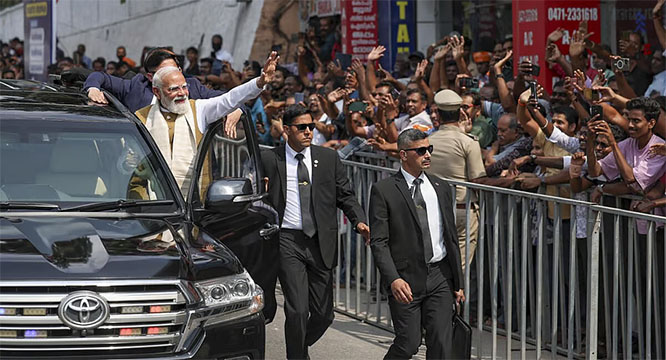
Prime Minister Narendra Modi, during his visit to Thiruvananthapuram on Friday, January 23, indicated that the Bharatiya Janata Party (BJP) is aiming to expand its political footprint in Kerala ahead of the Assembly elections scheduled in the coming months.

Speaking at a BJP-organised public meeting, Modi drew parallels between the party’s early electoral gains in Gujarat and its recent victory in the Thiruvananthapuram Municipal Corporation. The civic body win, which ended decades of Left control, was cited by the Prime Minister as a possible starting point for the party’s broader ambitions in the state.

Recalling BJP’s political trajectory in Gujarat, Modi said the party was largely insignificant before 1987 and received little media attention. He pointed out that the BJP’s first major breakthrough came with its victory in the Ahmedabad Municipal Corporation that year.

“Just as our journey in Gujarat began with one city, Kerala’s journey has also started with a single city,” Modi said, suggesting that the party’s municipal-level success could translate into wider electoral acceptance.

The Prime Minister alleged that successive governments led by the Left Democratic Front (LDF) and the United Democratic Front (UDF) had failed to adequately develop Thiruvananthapuram. He accused both fronts of corruption and neglect, claiming that basic infrastructure and facilities were denied to the capital city for decades.

According to Modi, the BJP’s control of the civic body represents a shift driven by public dissatisfaction with the existing political alternatives. He asserted that the BJP administration in Thiruvananthapuram had begun working towards development, though no specific details or timelines were outlined.

Addressing the gathering at Putharikandam Maidan, Modi said the BJP intended to project Thiruvananthapuram as a “model city,” reiterating his party’s commitment to governance-led change.

The Prime Minister’s visit to Kerala also included the inauguration of several development projects and the flagging off of new train services, as the BJP intensifies its political outreach in the poll-bound state.

Comments

Add new comment

  • Coastaldigest.com reserves the right to delete or block any comments.
  • Coastaldigset.com is not responsible for its readers’ comments.
  • Comments that are abusive, incendiary or irrelevant are strictly prohibited.
  • Please use a genuine email ID and provide your name to avoid reject.
News Network
February 3,2026

Bengaluru: Following reports of fresh Nipah virus (NiV) cases in West Bengal and heightened vigilance across parts of Southeast Asia, the Karnataka Health Department has placed the state on high alert and activated emergency preparedness protocols.

Health officials said enhanced surveillance measures have been initiated after two healthcare workers in Barasat, West Bengal, tested positive for the virus earlier this month. While no cases have been reported in Karnataka so far, authorities said the state’s past exposure to Nipah outbreaks and high inter-state mobility warranted preventive action.

Officials have directed district health teams to intensify monitoring, particularly at hospitals and points of entry, and to ensure early detection and isolation of suspected cases.

High Mortality Virus with Multiple Transmission Routes

Nipah virus is a zoonotic disease that can spread from animals to humans and has a reported fatality rate ranging between 60 and 75 per cent. Fruit bats, also known as flying foxes, are the natural reservoirs of the virus and can transmit it by contaminating food sources with saliva or urine.

Known modes of transmission include:

•    Contaminated food: Consumption of fruits partially eaten by bats or raw date-palm sap
•    Animal contact: Exposure to infected pigs or other animals
•    Human-to-human transmission: Close contact with body fluids of infected persons, particularly in healthcare settings

Symptoms and Disease Progression

The incubation period typically ranges from 4 to 14 days, though delayed onset has also been reported. Early symptoms often resemble common viral infections, making prompt clinical suspicion critical.

•    Initial symptoms: Fever, headache, body aches, fatigue, sore throat
•    Progressive symptoms: Drowsiness, disorientation, altered mental state
•    Severe stage: Seizures, neck stiffness and acute encephalitis, which can rapidly progress to coma

Public Health Advisory

The Health Department has issued precautionary guidelines urging the public to adopt risk-avoidance practices to prevent any local spillover.

Do’s
•    Wash fruits thoroughly before consumption
•    Drink boiled and cooled water
•    Use protective equipment while handling livestock
•    Maintain strict hand hygiene

Don’ts
•    Avoid fruits found on the ground or showing bite marks
•    Do not consume beverages made from raw tree sap, including toddy
•    Avoid areas with dense bat populations
•    Do not handle sick or dead animals

Preparedness Measures

Officials confirmed that isolation wards are being readied in major government hospitals and that medical staff are being sensitised to identify early warning signs.

“There is no cause for panic, but there is a need for heightened vigilance,” a senior health official said, adding that there is currently no approved vaccine or specific antiviral treatment for Nipah, and care remains largely supportive.

Comments

Add new comment

  • Coastaldigest.com reserves the right to delete or block any comments.
  • Coastaldigset.com is not responsible for its readers’ comments.
  • Comments that are abusive, incendiary or irrelevant are strictly prohibited.
  • Please use a genuine email ID and provide your name to avoid reject.
News Network
February 5,2026

In an era where digital distractions are the primary rival to academic excellence, the Karnataka Education Department is taking the fight directly to the living room. As the SSLC (Class 10) annual examinations loom, officials have launched a localized "digital strike" to ensure students aren't losing their competitive edge to scrolling or soap operas.

The 7-to-9 Lockdown

The department has issued a formal directive urging—and in some cases, enforcing via home visits—a total blackout of mobile phones and television sets between 7:00 PM and 9:00 PM. This two-hour window is being designated as "sacred study time" across the state until the examinations conclude on April 2.

Key Pillars of the Initiative:

•    Doorstep Advocacy: Teachers are transitioning from classrooms to living rooms, meeting parents to explain the psychological benefits of a distraction-free environment.

•    Parental Accountability: The campaign shifts the burden of discipline from the student to the household, asking parents to lead by example and switch off their own devices.

•    The Timeline: The focus remains sharp on the upcoming exam block, scheduled from March 18 to April 2.

"The objective is simple: uninterrupted focus. We are reclaiming the evening hours for the students, ensuring their environment is as prepared as their minds," stated a senior department official.

Student vs. Reality

While the student community has largely welcomed the "forced focus"—with many admitting they lack the willpower to ignore notifications—the move has sparked a debate on enforceability. Without a "TV Police," the success of this initiative rests entirely on the shoulders of parents and the persuasive power of visiting educators.

Comments

Add new comment

  • Coastaldigest.com reserves the right to delete or block any comments.
  • Coastaldigset.com is not responsible for its readers’ comments.
  • Comments that are abusive, incendiary or irrelevant are strictly prohibited.
  • Please use a genuine email ID and provide your name to avoid reject.