Jaitley announces contours of electoral bonds for political funding

Agencies
January 2, 2018

New Delhi, Jan 2:  In a bid to clean election financing, the government today outlined contours of the new electoral bonds that donors can buy from SBI and said receiving political parties can encash only through a designated bank account.

The electoral bonds, which are being pitched as an alternative to cash donations made to political parties, will be available at specified branches of State Bank of India (SBI) for 10 days each in months of January, April, July and October.

The bonds, which would be valid for 15 days, will not carry the donor's name even though the purchaser would have to fulfil KYC norms at the bank, Finance Minister Arun Jaitley said in the Lok Sabha while announcing the contours of the scheme.

He had first announced the idea of electoral bonds in his Budget 2017-18 speech made on February 1, 2017, to make political funding more transparent.

"The government has now finalised the scheme of electoral bonds. The scheme will be notified today," he said.

Although called a bond, the banking instruments resembling promissory note will not carry any interest. The lender will remain the custodian of the donor's funds until the political parties are paid.

The move is aimed at making political funding more transparent. Currently, almost all of the funding is done by anonymous cash donations. This step follows the audacious move to ban high currency notes in November 2016 in a bid to flush the system of black money.

Electoral bonds will allow donors to pay political parties using banks as an intermediary.

When Congress leader Mallikarjun Kharge asked what purpose the bonds would serve when the name of the donor is not disclosed, Mr Jaitley said bonds would get reflected in the balance sheet of the donors.

"Let me clear misconceptions, if any. I had announced in Budget speech that political funding needs to be cleansed up. A very large part of donation coming to political parties by the donors, quantum and source is not known.... electoral bonds substantially cleanse the system," he said.

Electoral bonds, he said, can be given to registered political party which has secured at least 1 per cent vote in last election.

That party will have to give one bank account to the Election Commission and it will have to be encashed within 15 days, Mr Jaitley said.

"Donors who buy these bonds, their balance sheet will reflect. It will ensure cleaner money coming from donors, cleaner money coming to political party and ensure significant transparency," he said.

The minister said at present, donor, quantum and source of funds is not known.

"The donor will know which party he is depositing money. The political party will file return with the election commission. Now, which donor gave to which political party, that is the only thing which will not be known," he said, adding, "Electoral bonds will ensure clean money and significant transparency against the current system of unclean money".

In the Budget for 2017-18, Mr Jaitley had also announced capping cash donation at Rs. 2,000 instead of Rs. 20,000 and allowed parties to receive digital donations.

Mr Jaitley said the electoral bond, which will be a bearer instrument, will not carry the name of the payee and can be bought for any value, in multiples of Rs. 1,000, Rs. 10,000, Rs. 1 lakh, Rs. 10 lakh or Rs. 1 crore.

The bonds with a life of only 15 days, during which it can be used for making donation only to registered political parties, can be encashed only through a designated bank account of the receiver.

The bonds will be available for purchase for 10 days each in the months of January, April, July and October. The window will be for 30 days in the year of general election, he said.

Mr Jaitley said the purchaser, whose name will not appear on the bonds, would have to make KYC (know your customer) disclosures to the SBI.

"A citizen of India or a body incorporated in India will be eligible to purchase the bond," he said.

Only political parties which have secured not less than one per cent of the votes polled in the last general election or an assembly poll would be eligible to receive donations through electoral bonds, Mr Jaitley said.

Later talking to reporters, Mr Jaitley said the 15 days time has been prescribed for the bonds to ensure that they do not become a parallel currency.

"Every political party will file before Election Commission return as to how much money has come through electoral bonds," the minister said.

On why the name of the donor is being kept secret, he said the past experience has shown that once the names are disclosed, there is a tendency to shift to cash donations.

"The present system is unclean money and new system is a substantial amount of transparency if not total," he added.

The idea is to move away from present system, which is cash, Mr Jaitley said.

"This will substantially help a lot of opposition parties because in case a disclosure is made it will always be in favour of ruling party," he said. "People who are expressing apprehension let them suggest better way," Mr Jaitley added.


Comments

Add new comment

  • Coastaldigest.com reserves the right to delete or block any comments.
  • Coastaldigset.com is not responsible for its readers’ comments.
  • Comments that are abusive, incendiary or irrelevant are strictly prohibited.
  • Please use a genuine email ID and provide your name to avoid reject.
News Network
December 16,2025

bengal.jpg

The deletion of over 58 lakh names from West Bengal’s draft electoral rolls following a Special Intensive Revision (SIR) has sparked widespread concern and is likely to deepen political tensions in the poll-bound state.

According to the Election Commission, the revision exercise has identified 24 lakh voters as deceased, 19 lakh as relocated, 12 lakh as missing, and 1.3 lakh as duplicate entries. The draft list, published after the completion of the first phase of SIR, aims to remove errors and duplication from the electoral rolls.

However, the scale of deletions has raised fears that a large number of eligible voters may have been wrongly excluded. The Election Commission has said that individuals whose names are missing can file objections and seek corrections. The final voter list is scheduled to be published in February next year, after which the Assembly election announcement is expected. Notably, the last Special Intensive Revision in Bengal was conducted in 2002.

The development has intensified the political row over the SIR process. Chief Minister Mamata Banerjee and her Trinamool Congress have strongly opposed the exercise, accusing the Centre and the Election Commission of attempting to disenfranchise lakhs of voters ahead of the elections.

Addressing a rally in Krishnanagar earlier this month, Banerjee urged people to protest if their names were removed from the voter list, alleging intimidation during elections and warning of serious consequences if voting rights were taken away.

The BJP, meanwhile, has defended the revision and accused the Trinamool Congress of politicising the issue to protect what it claims is an illegal voter base. Leader of the Opposition Suvendu Adhikari alleged that the ruling party fears losing power due to the removal of deceased, fake, and illegal voters.

The controversy comes amid earlier allegations by the Trinamool Congress that excessive work pressure during the SIR led to the deaths by suicide of some Booth Level Officers (BLOs), for which the party blamed the Election Commission. With the draft list now out, another round of political confrontation appears imminent.

As objections begin to be filed, the focus will be on whether the correction mechanism is accessible, transparent, and timely—critical factors in ensuring that no eligible voter is denied their democratic right ahead of a crucial election.

Comments

Add new comment

  • Coastaldigest.com reserves the right to delete or block any comments.
  • Coastaldigset.com is not responsible for its readers’ comments.
  • Comments that are abusive, incendiary or irrelevant are strictly prohibited.
  • Please use a genuine email ID and provide your name to avoid reject.
News Network
December 21,2025

hadith.jpg

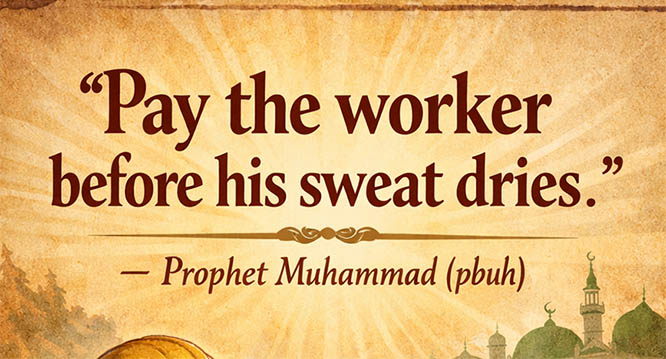
Invoking the teachings of Prophet Muhammad—“pay the worker before his sweat dries”—the Madras High Court has directed a municipal corporation to settle long-pending legal dues owed to a former counsel. The court observed that this principle reflects basic fairness and applies equally to labour and service-related disputes.

Justice G. R. Swaminathan made the observation while hearing a petition filed by advocate P. Thirumalai, who claimed that the Madurai City Municipal Corporation failed to pay him legal fees amounting to ₹13.05 lakh. Earlier, the High Court had asked the corporation to consider his representation. However, a later order rejected a major portion of his claim, prompting the present petition.

The court allowed Thirumalai to approach the District Legal Services Authority (DLSA) and submit a list of cases in which he had appeared. It also directed the corporation to settle the verified fee bills within two months, without interest. The court noted that the petitioner had waited nearly 18 years before challenging the non-payment and that the corporation could not be fully blamed, as the fee bills were not submitted properly.

‘A Matter of Embarrassment’

Justice Swaminathan described it as a “matter of embarrassment” that the State has nearly a dozen Additional Advocate Generals. He observed that appointing too many law officers often leads to unnecessary allocation of work and frequent adjournments, as government counsel claim that senior officers are engaged elsewhere.

He expressed hope that such practices would end at least in the Madurai Bench of the High Court and added that Additional Advocate Generals should “turn a new leaf” from 2026 onwards.

‘Scandalously High Amounts’

While stating that the court cannot examine the exact fees paid to senior counsel or law officers, Justice Swaminathan stressed that good governance requires public funds to be used prudently. He expressed concern over the “scandalously high amounts” paid by government and quasi-government bodies to a few favoured law officers.

In contrast, the court noted that Thirumalai’s total claim was “a pittance” considering the large number of cases he had handled.

Background

Thirumalai served as the standing counsel for the Madurai City Municipal Corporation for more than 14 years, from 1992 to 2006. During this period, he represented the corporation in about 818 cases before the Madurai District Courts.

As the former counsel was unable to hire a clerk to obtain certified copies of judgments in all 818 cases, the court directed the District Legal Services Authority to collect the certified copies within two months. The court further ordered the corporation to bear the cost incurred by the DLSA and deduct that amount from the final settlement payable to the petitioner.

Comments

Add new comment

  • Coastaldigest.com reserves the right to delete or block any comments.
  • Coastaldigset.com is not responsible for its readers’ comments.
  • Comments that are abusive, incendiary or irrelevant are strictly prohibited.
  • Please use a genuine email ID and provide your name to avoid reject.
News Network
December 22,2025

bhagavat.jpg

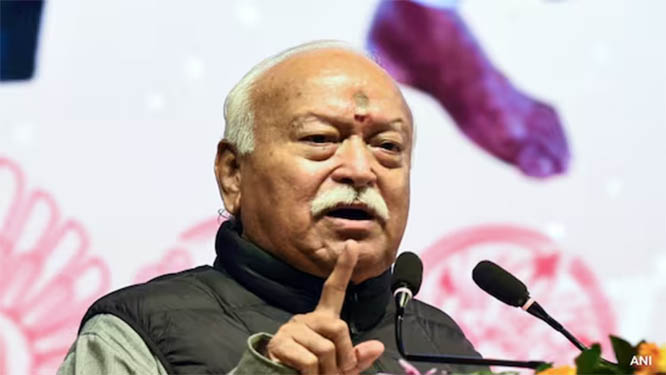
Kolkata: Stressing that India is a "Hindu nation," Rashtriya Swayamsevak Sangh (RSS) Chief Mohan Bhagwat on Sunday said that no constitutional approval is needed as it is the "truth".

Addressing an event marking 100 years of the RSS, Bhagwat said that India is, and will remain, a Hindu nation until Indian culture is appreciated in the country.

"The Sun rises in the east; we don't know since when this has been happening. So, do we need constitutional approval for that, too? Hindustan is a Hindu nation. Whoever considers India their motherland appreciates Indian culture, as long as there is even one person alive on the land of Hindustan who believes in and cherishes the glory of Indian ancestors, India is a Hindu nation. This is the ideology of the Sangh," he said at the '100 Vyakhyan Mala' program of RSS in Kolkata.

"If Parliament ever decides to amend the Constitution and add that word, whether they do it or not, it's fine. We don't care about that word because we are Hindus, and our nation is a Hindu nation. That is the truth. The caste system based on birth is not the hallmark of Hindutva," he added.

RSS has always argued that India is a "Hindu Nation," given the culture and majority's affiliations to Hinduism. However, 'secular' was not originally part of the Preamble of the Constitution, but it was added along with the word 'socialist' by the Constitution (42nd Amendment) Act, 1976, during the Emergency imposed by then Prime Minister Indira Gandhi.

Bhagwat also urged people to visit the organisation's offices and 'shakhas' to understand its work, so that what he dubbed as the “false perception” of the organisation as anti-Muslim can be dispelled!

Bhagwat said that people have understood that the organisation advocates for the protection of Hindus, and are "staunch nationalists," but not anti-muslim.

"If there is a perception that we are anti-Muslim, then, as I said, the RSS work is transparent. You can come anytime and see for yourself, and if you see anything like that happening, then you keep your views, and if you don't see it, then you change your views. There is a lot to understand (about RSS), but if you don't want to understand, then no one can change your mind," Bhagwat said.

He said, but anyone unwilling to learn cannot be helped.

"After seeing, people have said that you are staunch nationalists. You organise Hindus, and you advocate for the protection of Hindus. But you are not anti-Muslim. Many people have accepted this, and those who want to know more should come and see the RSS for themselves," he said.

Comments

Add new comment

  • Coastaldigest.com reserves the right to delete or block any comments.
  • Coastaldigset.com is not responsible for its readers’ comments.
  • Comments that are abusive, incendiary or irrelevant are strictly prohibited.
  • Please use a genuine email ID and provide your name to avoid reject.