



Malaysian tycoon's $7 billion wipeout turns his India dream into nightmare

Bloomberg
March 2, 2018

New Delhi, Mar 2: It was supposed to be the crowning achievement of Malaysian tycoon T Ananda Krishnan's five-decade career.

But his $7 billion bet on mobile carrier Aircel Ltd may instead go down as one of the biggest-ever flops by a foreign investor in India, a stark reminder that doing business in the world's fastest-growing major economy is often a lot tougher than it looks.

Krishnan's holding company stands to lose all the money it poured into Aircel over the past 12 years, people with knowledge of the matter said, after the carrier filed to start bankruptcy proceedings this week. Buffeted by intense competition and regulatory uncertainty, Aircel is the latest in a long list of casualties in an Indian telecom market that only a few years ago was luring foreign entrants in droves.

While international companies have fared much better in India's buoyant consumer products and financial services industries, the turmoil in telecom is unlikely to help Prime Minister Narendra Modi's campaign to lure more foreign capital. In January, his government eased restrictions on foreign direct investment in several sectors, including single brand retail, real estate brokerages and power exchanges.

"India has always been a difficult market, even as it offers the prospects of great demographics and a billion-plus population," Sampath Reddy, chief investment officer at Pune-based Bajaj Allianz Life Insurance Co, said by phone. "The Aircel episode definitely has lessons in the offing for anyone who starts a business in the country."

Krishnan, 79, spent about $800 million to purchase Aircel in 2006, when less than 10 percent of India's 1.1 billion people owned a mobile phone and the scope for growth looked nearly limitless.

By that time, the Harvard Business School graduate had already established himself as one of Malaysia's most powerful billionaires, with controlling stakes in the country's biggest mobile-phone and pay-television operators and close ties to former Prime Minister Mahathir Mohamad.

India Allure

Faced with lackluster growth at home, Krishnan saw India's booming market as key to his empire's future. And he was willing to invest big to make Aircel a success.

Over the years, Maxis Communications Bhd, the holding company in which Krishnan owns a 45 percent stake, made about $3.4 billion of shareholder advances to Aircel, one of the people with knowledge of the matter said. Maxis Communications also bought $1.2 billion of common stock and subscribed to $1.6 billion of redeemable preference shares, the person said.

While he had deep pockets, Krishnan failed to anticipate how cutthroat India's telecom market would become. With nearly a dozen players jockeying for market share, call rates in the country plunged to some of the lowest levels worldwide. Competition has only intensified since 2016, when Reliance Jio Infocomm Ltd., owned by India's richest man, stormed into the market and offered free calls.

Aircel made a last-ditch effort to gain scale by attempting a merger with Reliance Communications Ltd. A setback came in January 2017, when India's highest court barred Aircel from selling or leasing its airwaves amid a broader graft lawsuit. The deal eventually collapsed in October last year.

The company summed up its dire situation in a Twitter post on Wednesday announcing the bankruptcy filing, saying Aircel had been "facing troubled times in a highly financially stressed industry, owing to intense competition following the disruptive entry of a new player, legal and regulatory challenges, high level of unsustainable debt and increased losses."

A representative for Maxis Communications declined to comment.

After Aircel, Krishnan is likely to spend more time focusing on his other businesses, which include Malaysian carrier Maxis Bhd. and pay-TV operator Astro Malaysia Holdings Bhd., the person with knowledge of the matter said. Both companies are still profitable, though their stock prices have dropped by an average 10 percent over the past year, versus a 9.6 percent gain in Malaysia’s benchmark equity index, according to data compiled by Bloomberg.

That doesn’t mean Krishnan is giving up on India entirely. He still controls a stake in South Asia FM Ltd., a radio broadcaster, and TV service provider Sun Direct. The businesses are performing well, and Krishnan currently has no plans to sell, the person said.

Comments

Add new comment

  • Coastaldigest.com reserves the right to delete or block any comments.
  • Coastaldigset.com is not responsible for its readers’ comments.
  • Comments that are abusive, incendiary or irrelevant are strictly prohibited.
  • Please use a genuine email ID and provide your name to avoid reject.
News Network
January 23,2026

Karnataka Governor Thaawarchand Gehlot read only three lines from the 122-paragraph address prepared by the Congress-led state government while addressing the joint session of the Legislature on Thursday, effectively bypassing large sections critical of the BJP-led Union government.

The omitted portions of the customary Governor’s address outlined what the state government described as a “suppressive situation in economic and policy matters” under India’s federal framework. The speech also sharply criticised the Centre’s move to replace the Mahatma Gandhi National Rural Employment Guarantee Act (MGNREGA) with the Viksit Bharat–Guarantee for Rozgar and Ajeevika Mission (Gramin) Act, commonly referred to as the VB-GRAM (G) Act.

Governor Gehlot had earlier conveyed his objection to several paragraphs that were explicitly critical of the Union government. On Thursday, he confined himself to the opening lines — “I extend a warm welcome to all of you to the joint session of the State legislature. I am extremely pleased to address this august House” — before jumping directly to the concluding sentence of the final paragraph.

He ended the address by reading the last line of paragraph 122: “Overall, my government is firmly committed to doubling the pace of the State’s economic, social and physical development. Jai Hind — Jai Karnataka.”

According to the prepared speech, the Karnataka government demanded the scrapping of the VB-GRAM (G) Act, describing it as “contractor-centric” and detrimental to rural livelihoods, and called for the full restoration of MGNREGA. The state government argued that the new law undermines decentralisation, weakens labour protections, and centralises decision-making in violation of constitutional norms.

Key points from the unread sections of the speech:

•    Karnataka facing a “suppressive” economic and policy environment within the federal system

•    Repeal of MGNREGA described as a blow to rural livelihoods

•    VB-GRAM (G) Act accused of protecting corporate and contractor interests

•    New law alleged to weaken decentralised governance

•    Decision-making said to be imposed by the Centre without consulting states

•    Rights of Adivasis, women, backward classes and agrarian communities curtailed

•    Labourers allegedly placed under contractor control

•    States facing mounting fiscal stress due to central policies

•    VB-GRAM (G) Act accused of enabling large-scale corruption

Comments

Add new comment

  • Coastaldigest.com reserves the right to delete or block any comments.
  • Coastaldigset.com is not responsible for its readers’ comments.
  • Comments that are abusive, incendiary or irrelevant are strictly prohibited.
  • Please use a genuine email ID and provide your name to avoid reject.
News Network
February 3,2026

wind.jpg

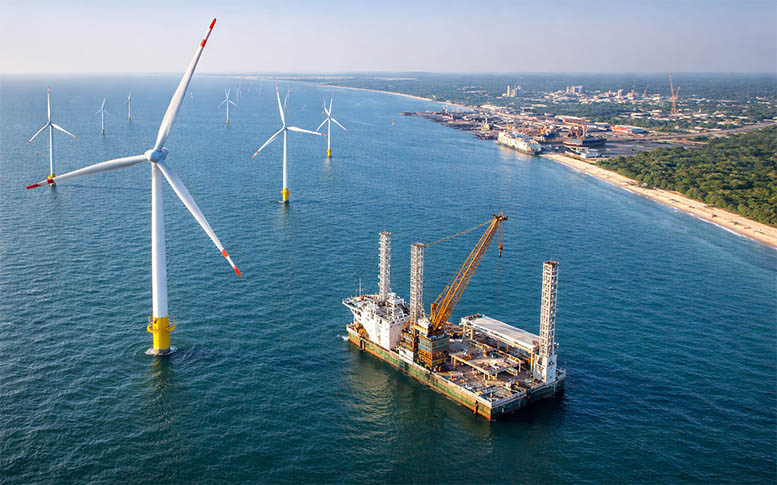
Dakshina Kannada MP Capt Brijesh Chowta has urged the Centre to give high priority to offshore wind energy generation along the Mangaluru coast, citing its strategic importance to India’s green energy and port-led development goals.

Raising the issue in the Lok Sabha under Rule 377, Chowta said studies by the National Institute of Oceanography have identified the Mangaluru coastline as part of India’s promising offshore wind ‘Zone-2’, covering nearly 6,490 sq km. He noted that the region’s relatively low exposure to cyclones and earthquakes makes it suitable for long-term offshore wind projects and called for its development as a dedicated offshore wind energy zone.

Highlighting the role of New Mangalore Port, Chowta said its modern infrastructure, multiple berths and heavy cargo-handling capacity position it well as a logistics hub for transporting and assembling large wind energy equipment.

He also pointed to the presence of major industrial units such as MRPL, OMPL, UPCL and the Mangaluru SEZ, which could serve as direct buyers of green power through power purchase agreements, improving project viability and speeding up execution.

With Karnataka’s peak power demand crossing 18,000 MW in early 2025, Chowta stressed the need to diversify renewable energy sources. He added that offshore wind projects in the Arabian Sea are strategically safer compared to the cyclone-prone Bay of Bengal.

Calling the project vital to India’s target of 500 GW of renewable energy by 2030, Chowta urged the Ministry of New and Renewable Energy to initiate resource assessments, pilot projects and stakeholder consultations at the earliest.

Comments

Add new comment

  • Coastaldigest.com reserves the right to delete or block any comments.
  • Coastaldigset.com is not responsible for its readers’ comments.
  • Comments that are abusive, incendiary or irrelevant are strictly prohibited.
  • Please use a genuine email ID and provide your name to avoid reject.
News Network
February 5,2026

Bengaluru: As air quality continues to worsen across several parts of the city, hospitals in Bengaluru are reporting a steady rise in patients suffering from respiratory illnesses such as asthma, bronchitis and Chronic Obstructive Pulmonary Disease (COPD), health officials and doctors said.

Data from the Suvarna Arogya Suraksha Trust (SAST) shows that 3,891 patients received treatment for respiratory ailments between April and November 2024. The figure rose to 4,187 during the same period in 2025.

Private hospitals, too, are witnessing a 10–15 per cent year-on-year increase in such cases.

While doctors caution that the rise cannot be attributed solely to air pollution, a significant number of patients are non-smokers with no prior history of respiratory disease.

“Nearly 70 per cent of the patients we see are non-smokers with no previous respiratory issues. When other causes are ruled out, air pollution emerges as the most likely factor,” said Dr Manjunath PH, consultant interventional pulmonologist at a hospital in Kengeri.

Doctors noted that patient footfall spikes during the winter months and around Deepavali, when air quality typically worsens.

“There is a clear correlation between poor air quality and the rise in cases. People commonly present with persistent cough, breathlessness and irritation of the respiratory tract, indicating the impact of polluted air on their health,” said Dr Sheetal Chaurasia, consultant in pulmonary medicine at a private hospital in Whitefield.

Dr Chaurasia added that respiratory tract infections are also on the rise.

“Poor air quality leads to chronic airway inflammation, making the airways more vulnerable to infections. We are seeing an increase in both upper and lower respiratory tract infections,” she said.

Patients with pre-existing respiratory conditions remain the worst affected.

“For those already diagnosed with respiratory illnesses, deteriorating air quality significantly worsens the condition. Both the frequency and severity of attacks increase sharply,” said Dr Vandana P, a pulmonologist at a hospital on Bannerghatta Road.

Doctors also flagged a worrying trend of rising respiratory problems among younger adults and children.

To reduce exposure, they advised people to wear masks while travelling on two-wheelers or autos and ensure adequate ventilation at home to minimise indoor air pollution.

Comments

Add new comment

  • Coastaldigest.com reserves the right to delete or block any comments.
  • Coastaldigset.com is not responsible for its readers’ comments.
  • Comments that are abusive, incendiary or irrelevant are strictly prohibited.
  • Please use a genuine email ID and provide your name to avoid reject.