




India-Gulf flights: Court asks DGCA representation to hear petition filed by expat group over unreasonable airfares

News Network
August 24, 2022

indiagulf.jpg

A High Court in India has asked a representation from the Directorate General of Civil Aviation (DGCA) to hear a writ petition challenging the exorbitant prices of air tickets on flights operating between Gulf countries and India.

The petition, filed by Delhi-based political group Kerala Pravasi Association, in Delhi High Court challenged Rule 135(1) of the Aircraft Rules, 1937, stating that it is vague, arbitrary and unconstitutional.

The petition to the Court noted that airlines have been charging unreasonable, excessive, and prohibitive airfares for travel from the Gulf region countries to Kerala and the rest of India.

“Resultantly, Indian citizens who wish to travel to and from these countries primarily for employment, business, and education are facing grave impediments,” read the petition.

“Furthermore, it is submitted that such unreasonable and exorbitant airfares impose restrictions on air travel as a mode of transportation and, thereby, infringe the constitutionally protected rights of the Indian passengers to or from Gulf countries,” it added.

“I35. Tariff- (1) Every air transport undertaking operating by sub-rules (I) and (2) of rule 134 shall establish a tariff having regard to all relevant factors, including the cost of operation, characteristics of service, reasonable profit and the generally prevailing tariff.”

Although Rule 135(4) of the Aircraft Rules, 1937 (‘Rules’) empowers DGCA to issue directions to an airline in case it has established excessive tariff under Rule 135(1) or has indulged in oligopolistic practice; the said provision is rendered ineffectual on account of the arbitrary and unbridled powers given under Rule 135(1) of the Rules to the airlines to establish tariff.

The petitioners, Kerala Pravasi Association, seek urgent interim relief concerning tariffs established by the airline or the scrapping of Rule 135(1). According to senior members of the NRI association, this may be the first time a writ petition has been filed challenging rule 135(1). Kerala Pravasi Association is a political party registered with the Election Commission of India, and the group has chapters in various countries worldwide, including the UAE.

The petition on behalf of the NRI group was filed by senior Supreme Court advocate and managing partner at KNPM Law Kuriakose Varghese. Peak season India-UAE airfares can hike up to anything between Dh 1,500 to Dh 3,000, depending on the sector the passenger is flying. Kerala sector flights are among the most expensive, said Rajendran Vellapalath, the chairman of the Kerala Pravasi Association.

Varghese said, “The writ challenges Rule 135 (1) of Aircraft Rules, 1937. The pricing of airfares has to adhere to certain reasonable limits. Based on what the Court has ruled, we will not find a representation for the DGCA and take matters forward from there.”

Varghese said the practice of charging airfares based on market rates makes it highly lucrative and discretionary.

Vellapalath explained, “We are glad the High Court has not quashed our petition. Instead, we have been asked to speak with the DGCA. Based on their response, we are willing to take matters to the Supreme Court of India.”

However, while petitions of this nature have been filed before, not many courts get involved in such matters as they are tricky, stated Varghese.

“This is a matter of law being linked to economics. It is a very grey area of operation, and there is no transparency on the matter as stakeholders generally adopt a take it or leave it attitude, especially during peak travel time,” he added.

Moreover, several members of the Indian Parliament, community groups in the UAE, travel agencies, and other non-profit bodies have also raised this issue to no avail.

Vellapalath added, “When two countries are involved in bilateral discussions, the civil aviation governing body can determine what sort of fare needs to be levied on passengers travelling between the sectors. The government can place a minimum or maximum cap on the ticket prices.”

“The government capped prices on domestic flights during peak Covid-19. Why can’t the same be done for international airlines as well,” asked Vellapalath

According to Vellapalath, airlines have always maintained a lower capacity of operations between Gulf sectors to India during peak season. “The role of the government is to help its people, not allow airlines to make a profile. If there is a shortage of capacity, then let them increase it. The public must not be fleeced,” argued Vellapalath.

Comments

Add new comment

  • Coastaldigest.com reserves the right to delete or block any comments.
  • Coastaldigset.com is not responsible for its readers’ comments.
  • Comments that are abusive, incendiary or irrelevant are strictly prohibited.
  • Please use a genuine email ID and provide your name to avoid reject.
News Network
February 1,2026

Bengaluru: Karnataka Deputy Chief Minister D K Shivakumar on Sunday criticised the Union Budget presented by Finance Minister Nirmala Sitharaman, claiming it offered no tangible benefit to the state.

Though he said he was yet to study the budget in detail, Shivakumar asserted that Karnataka had gained little from it. “There is no benefit for our state from the central budget. I was observing it. They have now named a programme after Mahatma Gandhi, after repealing the MGNREGA Act that was named after him,” he said.

Speaking to reporters here, the Deputy Chief Minister demanded the restoration of MGNREGA, and made it clear that the newly enacted rural employment scheme — VB-G RAM G — which proposes a 60:40 fund-sharing formula between the Centre and the states, would not be implemented in Karnataka.

“I don’t see any major share for our state in this budget,” he added.

Shivakumar, who also holds charge of Bengaluru development, said there were high expectations for the city from the Union Budget. “The Prime Minister calls Bengaluru a ‘global city’, but what has the Centre done for it?” he asked.

He also drew attention to the problems faced by sugar factories, particularly those in the cooperative sector, alleging a lack of timely decisions and support from the central government.

Noting that the Centre has the authority to fix the minimum support price (MSP) for agricultural produce, Shivakumar said the Union government must take concrete steps to protect farmers’ interests.

Comments

Add new comment

  • Coastaldigest.com reserves the right to delete or block any comments.
  • Coastaldigset.com is not responsible for its readers’ comments.
  • Comments that are abusive, incendiary or irrelevant are strictly prohibited.
  • Please use a genuine email ID and provide your name to avoid reject.
News Network
February 3,2026

Bengaluru: Following reports of fresh Nipah virus (NiV) cases in West Bengal and heightened vigilance across parts of Southeast Asia, the Karnataka Health Department has placed the state on high alert and activated emergency preparedness protocols.

Health officials said enhanced surveillance measures have been initiated after two healthcare workers in Barasat, West Bengal, tested positive for the virus earlier this month. While no cases have been reported in Karnataka so far, authorities said the state’s past exposure to Nipah outbreaks and high inter-state mobility warranted preventive action.

Officials have directed district health teams to intensify monitoring, particularly at hospitals and points of entry, and to ensure early detection and isolation of suspected cases.

High Mortality Virus with Multiple Transmission Routes

Nipah virus is a zoonotic disease that can spread from animals to humans and has a reported fatality rate ranging between 60 and 75 per cent. Fruit bats, also known as flying foxes, are the natural reservoirs of the virus and can transmit it by contaminating food sources with saliva or urine.

Known modes of transmission include:

•    Contaminated food: Consumption of fruits partially eaten by bats or raw date-palm sap
•    Animal contact: Exposure to infected pigs or other animals
•    Human-to-human transmission: Close contact with body fluids of infected persons, particularly in healthcare settings

Symptoms and Disease Progression

The incubation period typically ranges from 4 to 14 days, though delayed onset has also been reported. Early symptoms often resemble common viral infections, making prompt clinical suspicion critical.

•    Initial symptoms: Fever, headache, body aches, fatigue, sore throat
•    Progressive symptoms: Drowsiness, disorientation, altered mental state
•    Severe stage: Seizures, neck stiffness and acute encephalitis, which can rapidly progress to coma

Public Health Advisory

The Health Department has issued precautionary guidelines urging the public to adopt risk-avoidance practices to prevent any local spillover.

Do’s
•    Wash fruits thoroughly before consumption
•    Drink boiled and cooled water
•    Use protective equipment while handling livestock
•    Maintain strict hand hygiene

Don’ts
•    Avoid fruits found on the ground or showing bite marks
•    Do not consume beverages made from raw tree sap, including toddy
•    Avoid areas with dense bat populations
•    Do not handle sick or dead animals

Preparedness Measures

Officials confirmed that isolation wards are being readied in major government hospitals and that medical staff are being sensitised to identify early warning signs.

“There is no cause for panic, but there is a need for heightened vigilance,” a senior health official said, adding that there is currently no approved vaccine or specific antiviral treatment for Nipah, and care remains largely supportive.

Comments

Add new comment

  • Coastaldigest.com reserves the right to delete or block any comments.
  • Coastaldigset.com is not responsible for its readers’ comments.
  • Comments that are abusive, incendiary or irrelevant are strictly prohibited.
  • Please use a genuine email ID and provide your name to avoid reject.
News Network
February 3,2026

manjeshwar.jpg

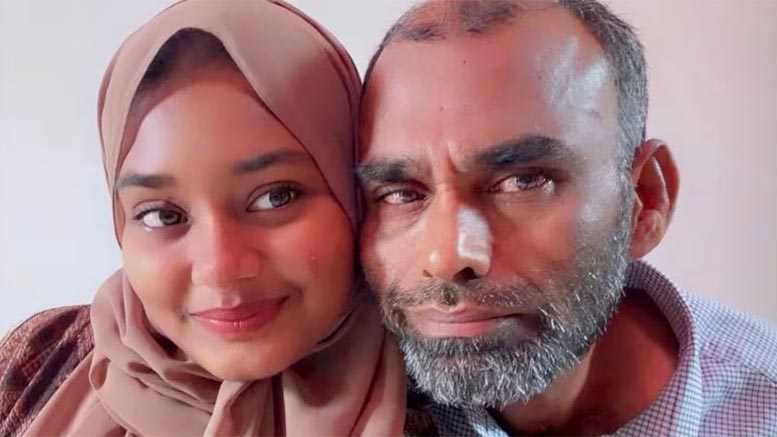
Kasaragod: An 18-year-old girl was stabbed to death at Thuminad in Manjeshwar panchayat on Monday, allegedly by her father following a domestic dispute. 

The victim has been identified as K U Mariyamath Jumaila. Her father, Umar Farooq, has been taken into police custody, Manjeshwar Station House Officer Inspector Ajith Kumar P said.

According to the police, Umar Farooq had been working in a West Asian country and returned home about three months ago. 

Family tensions reportedly escalated after his wife, Thahira (41), decided to seek a divorce and asked him to leave her life. Kasaragod district panchayat member Harshad Vorkady alleged that Umer was addicted to marijuana and frequently caused disturbances at home.

On Monday, Thahira asked Umar to come to her sister’s house in Thuminad to discuss the dispute. Jumaila accompanied her mother. 

Manjeshwar panchayat member Illiyas Thuminad said Umar arrived along with his brother, following which Thahira handed over gold ornaments and property documents to him and asked him to sever ties with her.

However, the police said a property dispute had been ongoing between Umar Farooq and his sister-in-law’s husband. During a heated argument, Umar allegedly attempted to attack the man with a sharp weapon. When Jumaila intervened to stop the assault, she was stabbed in the neck.

The teenager collapsed after bleeding profusely and was rushed to a private hospital in Mangaluru, where doctors declared her dead. Her body was later shifted to Mangalpady Taluk Hospital for post-mortem examination.

Jumaila was a former student of Sirajul Huda English Medium Higher Secondary School, Manjeshwar. 

Comments

Add new comment

  • Coastaldigest.com reserves the right to delete or block any comments.
  • Coastaldigset.com is not responsible for its readers’ comments.
  • Comments that are abusive, incendiary or irrelevant are strictly prohibited.
  • Please use a genuine email ID and provide your name to avoid reject.