



New Zealand PM vows gun law reform after mosque massacre

Agencies
March 16, 2019

Christchurch, Mar 16: New Zealand's prime minister vowed Saturday to toughen the country's gun laws after revealing the alleged shooter behind Christchurch's mosque attacks had legally bought the five weapons, including two semi-automatic rifles, used in the massacre.

The nation's firearms laws are lax compared to neighbouring Australia, which enacted a strict gun control regime in the wake of a similar massacre in 1996.

Jacinda Ardern said 28-year-old Australian Brenton Tarrant obtained a "Category A" gun licence in November 2017 which allowed him to purchase the weapons used to mow down worshippers in two Christchurch mosques.

Some of the guns appear to have been modified to make them more deadly, she said, adding that a ban on semi-automatic weapons would be considered.

"The mere fact... that this individual had acquired a gun licence and acquired weapons of that range, then obviously I think people will be seeking change, and I'm committing to that," she told a press conference.

"I can tell you one thing right now -- our gun laws will change." 

Ardern confirmed that the suspected gunman and two associates who were also arrested had not been on the radar of any intelligence agencies for extremism.

"I have asked our agencies this morning to work swiftly on assessing whether there was any activity on social media or otherwise, that should have triggered a response. That work is already underway," she said.

The head of the New Zealand Police Association, Chris Cahill, welcomed Ardern's comments and said previous attempts to introduce gun controls had failed partly because of diehard opponents to reform.

"I believe many New Zealanders will be aghast that in our country someone can amass a cache of weapons like that discovered in this Christchurch tragedy," he said in a statement.

"There is no place in the upcoming debate for the radical gun lobby which has made its presence felt in previous attempts to make our country safer." 

He highlighted the "bitter irony" that the alleged Australian shooter would not have been able to buy the same weapons in his home country.

At least one of the weapons used by Tarrant was reportedly an AR-15 -- the same semi-automatic rifle used in a number of mass shootings in the United States, including the 2012 Sandy Hook school killings in Connecticut.

Families of the Sandy Hook victims were recently given the green light to sue US gunmaker Remington for knowingly marketing a military grade weapon that is "grossly unsuited" for civilian use and has become the gun of choice for mass killings.

But despite the horror of the Christchurch shootings, some local residents who AFP spoke with Saturday warned against any drastic moves on gun control.

"Let's hope there are no knee-jerk reactions," said Matthew Simmonds. 

"Just because a lot of people are killed on the roads we don't ban cars. 

There needs to be a proper investigation." 

New Zealand tightened its gun laws to restrict access to semi-automatic rifles in 1992, two years after a mentally ill man shot dead 13 people in the southern town of Aramoana.

But subsequent efforts to tighten the laws, including a ban on semi-automatic weapons, have stalled in parliament.

Anyone over 16 can apply for a New Zealand firearms licence, valid for 10 years after completing a safety course and a police background check.

Most guns do not require registration under New Zealand's Arms Act and police do not know "how many legally or illegally owned firearms there are in New Zealand", police said last year.

In 2014, police estimated there were up to 1.2 million legal firearms in civilian ownership, or around one for every four members of the public -- twice the per capita number of guns in Australia.

Separate "endorsements" are required to own semi-automatic weapons, as well as pistols and other restricted weapons but police and firearms experts have pointed to several loopholes.

Comments

Add new comment

  • Coastaldigest.com reserves the right to delete or block any comments.
  • Coastaldigset.com is not responsible for its readers’ comments.
  • Comments that are abusive, incendiary or irrelevant are strictly prohibited.
  • Please use a genuine email ID and provide your name to avoid reject.
News Network
January 20,2026

DGP.jpg

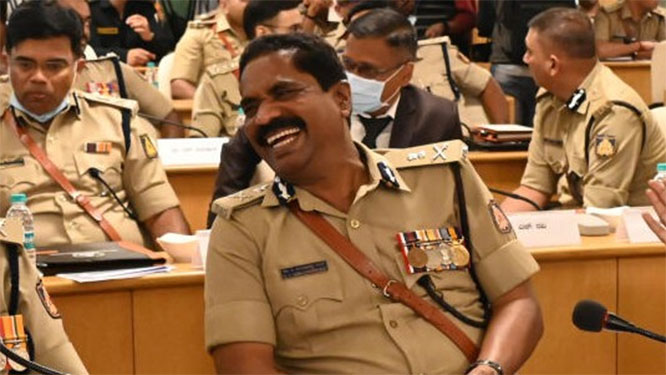
Karnataka DGP (Civil Rights Enforcement) K Ramachandra Rao was suspended with immediate effect, as per a state government order issued on Monday, 19 January. The order cited conduct unbecoming of a government servant and causing embarrassment to the state administration.

The Karnataka government suspended Rao after a purported video showed him in a compromising position with a woman inside his official chamber. The video went viral on social media. Rao rejected the videos outright, terming them "fabricated and false".

Who is K Ramachandra Rao?

Rao is a DGP-rank officer who was heading the Directorate of Civil Rights Enforcement until his suspension. He was promoted to DGP in September 2023 and assumed office in October 2023, the Sunday Guardian reported.

He also served as the Chairman and Managing Director of the Karnataka State Police Housing and Infrastructure Development Corporation Limited.

His stint as the Inspector General of Police (IGP) for the Southern Range was also marred by controversy. In 2014, during a cash seizure near Mysuru’s Yelwal, officials claimed the seized amount was ₹20 lakh, while the accused (Kerala-based merchants) claimed it was around ₹2.27 crore.

Rao, who was present during the seizure, denied all allegations. However, he was transferred soon after.

Allegations of collusion with a businessman surfaced, and a senior police officer was quoted by The Sunday Guardian as saying, “In Rao’s case, the CID has clearly mentioned that there was a great degree of lapse on the part of Rao and a deputy superintendent of police after it was brought to their notice that a few policemen, including a gunman attached to the IGP, were involved in the robbery.”

Rao had denied all wrongdoing in that incident. Despite past controversies, he rose to the state’s top police position, the Sunday Guardian reported.

Ranya Rao’s stepfather

Rao is the stepfather of Kannada actress Harshavardhini Ranya alias Ranya Rao, accused of orchestrating the illegal import of gold worth over ₹12.56 crore from Dubai to India along with two others — businessman Tarun Raju, and jewellery dealer Sahil Jain.

‘Obscene video’ controversy

A viral video showed Rao behaving inappropriately with a woman inside his office while in uniform.

The Karnataka government said in its Monday order that “vide videos and news reports widely broadcast on public news channels and media platforms, it is observed that Dr K Ramachandra Rao has acted in an obscene manner which is unbecoming of a Government Servant and also causing embarrassment to the Government.”

The order said the matter was examined by the state government, which found that the officer's conduct amounted to a violation of Rule 3 of the All India Services (Conduct) Rules, 1968.

The government said it is prima facie satisfied that "it is necessary to place Rao under suspension with immediate effect, pending inquiry".

During the suspension period, Rao will be entitled to subsistence allowance as per Rule 4 of the All India Services (Discipline and Appeal) Rules, 1969.

The order also places restrictions on his movement, stating that during the period of suspension, the officer must not leave headquarters under any circumstances without the written permission of the state government.

Comments

Add new comment

  • Coastaldigest.com reserves the right to delete or block any comments.
  • Coastaldigset.com is not responsible for its readers’ comments.
  • Comments that are abusive, incendiary or irrelevant are strictly prohibited.
  • Please use a genuine email ID and provide your name to avoid reject.
News Network
February 1,2026

Bengaluru: Karnataka Deputy Chief Minister D K Shivakumar on Sunday criticised the Union Budget presented by Finance Minister Nirmala Sitharaman, claiming it offered no tangible benefit to the state.

Though he said he was yet to study the budget in detail, Shivakumar asserted that Karnataka had gained little from it. “There is no benefit for our state from the central budget. I was observing it. They have now named a programme after Mahatma Gandhi, after repealing the MGNREGA Act that was named after him,” he said.

Speaking to reporters here, the Deputy Chief Minister demanded the restoration of MGNREGA, and made it clear that the newly enacted rural employment scheme — VB-G RAM G — which proposes a 60:40 fund-sharing formula between the Centre and the states, would not be implemented in Karnataka.

“I don’t see any major share for our state in this budget,” he added.

Shivakumar, who also holds charge of Bengaluru development, said there were high expectations for the city from the Union Budget. “The Prime Minister calls Bengaluru a ‘global city’, but what has the Centre done for it?” he asked.

He also drew attention to the problems faced by sugar factories, particularly those in the cooperative sector, alleging a lack of timely decisions and support from the central government.

Noting that the Centre has the authority to fix the minimum support price (MSP) for agricultural produce, Shivakumar said the Union government must take concrete steps to protect farmers’ interests.

Comments

Add new comment

  • Coastaldigest.com reserves the right to delete or block any comments.
  • Coastaldigset.com is not responsible for its readers’ comments.
  • Comments that are abusive, incendiary or irrelevant are strictly prohibited.
  • Please use a genuine email ID and provide your name to avoid reject.