45% of Karnataka's population was infected with covid-19 by August, says a new study

News Network
November 10, 2020

Bengaluru, Nov 10: A whopping 44.5% of Karnataka’s population was infected with Covid-19 by the end of August, said a team of Indian and American researchers who completed a randomised Covid-19 testing study.

This estimate stands in sharp contrast to the state’s official sero-survey which determined that 27.3% of the population was exposed to the virus. The diverging studies appear to suggest that this is because the state’s sero-survey did not conduct enough random tests.

The survey, titled “Karnataka Seroprevalence Study” (KSS), began on June 15 and ended on August 29. It saw researchers from Duke University in North Carolina, the University of Chicago, the Centre for Monitoring Indian Economy (CMIE) and Mapmygenome, supported by the State Covid Task Force, reach out to 1,907 random households across 20 districts of Karnataka.

The homes were identified from an existing and representative sample of 9,717 households, drawn from the Pyramids Household Survey (CPHS), a longitudinal household panel data set assembled by the Mumbai-based Centre for Monitoring Indian Economy (CMIE).

The survey has now estimated that a shocking 3.15 crore residents had been infected by the virus by the end of August 2020, which is higher than the figure of 1.93 crore persons currently infected or recovered from Covid according to the government survey.

Another key finding is that rural areas have been hit equally badly as urban areas because of returning migrants and because there were fewer lockdowns there due to ongoing agricultural activities.

Commissioner of Health Pankaj Kumar Pandey said the disparity in findings could be due to KSS’ small sample size.

 “A small sample size can skew estimates. Plus the KSS’ use of households sourced from an economic survey can create a distorted picture. The state’s sero-survey results, meantime, have tallied largely with nationwide sero-survey results,” he said.

One of the authors of the KSS study, Associate Professor Manoj Mohanan of the Sanford School of Public Policy at Duke, told DH that one reason for the disparity is the different strategies used.

“We aimed to get at the population-representative sample while the state’s study focused on target-risk groups. This is likely to cause some variation, especially because consent rates are likely to differ,” he said.

That the studies used different antibody tests is also a factor, he added. “We relied on the Elisa test for the RBD spike protein that was developed by THSTI while the other study relied on the Covid Kavach Elisa,” he said.

Scientists of the DBT India Consortium for Covid-19 Research had published a paper in August showing that the ICMR-designed Covid Kavach Elisa test has a specificity of 99.5% and a sensitivity of 75.7%. In contrast, THSTI’s Elisa test was shown to have a specificity of 100% and a sensitivity of 84.7%.

“Sensitivity” is the ability to identify those with antibodies to Sars-Cov-2 (true positive rate), and “specificity” is the ability to identify those without antibodies to Sars-CoV-2 (true negative rate).

Professor Mohanan also pointed out that the RT-PCR positive rates in the state’s sero-survey (12.7%) are “slightly higher than the high-end of our estimates for current infection”.

Comments

Add new comment

  • Coastaldigest.com reserves the right to delete or block any comments.
  • Coastaldigset.com is not responsible for its readers’ comments.
  • Comments that are abusive, incendiary or irrelevant are strictly prohibited.
  • Please use a genuine email ID and provide your name to avoid reject.
News Network
February 3,2026

Kanchur2.jpg

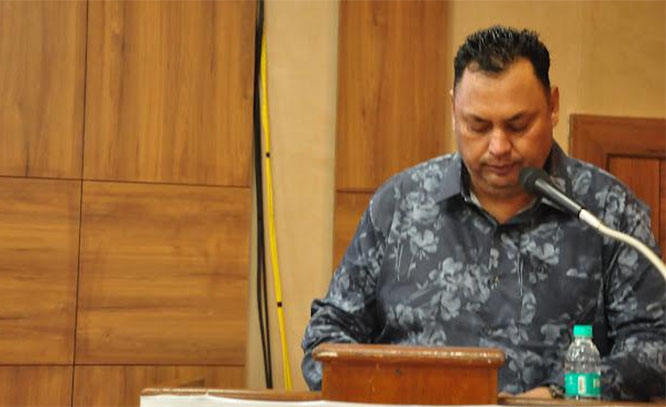
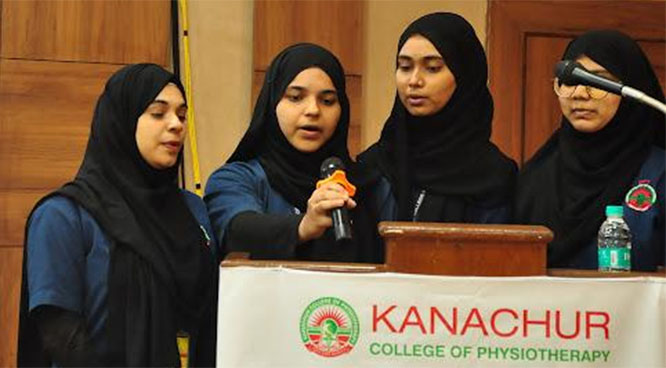
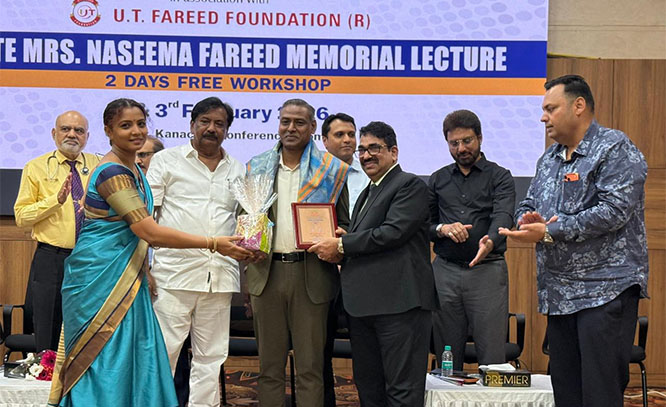
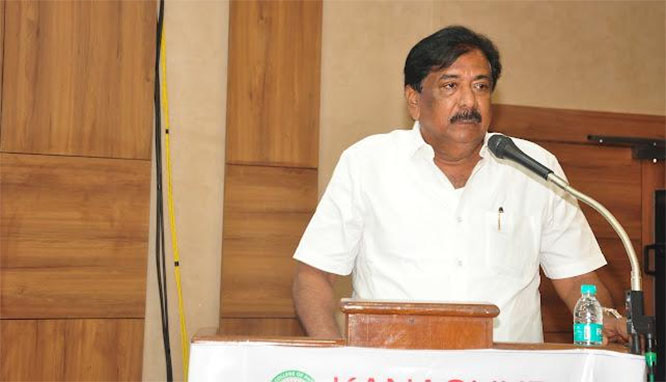
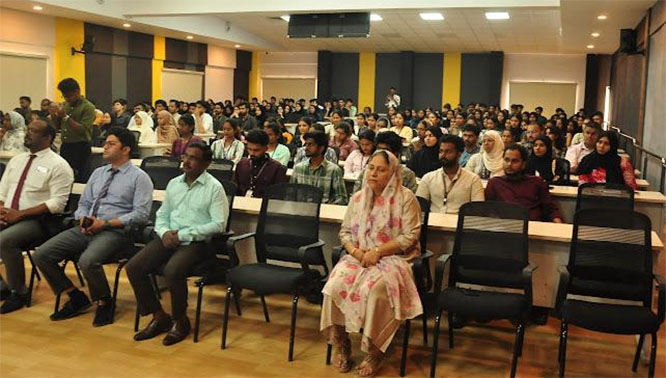
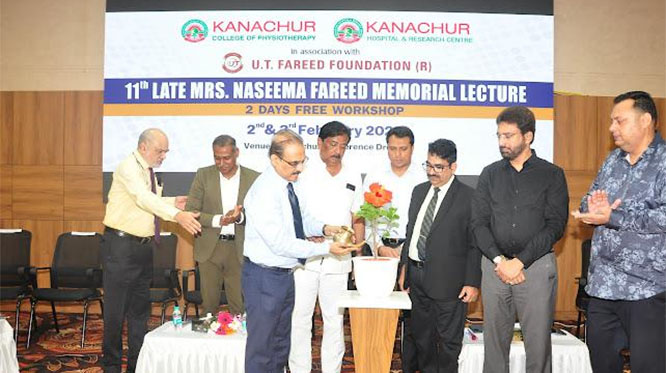
Mangaluru, Feb 3: Kanachur College of Physiotherapy and Kanachur Hospital & Research Centre, in association with U.T. Fareed Foundation (R), organised the 11th Late Mrs. Naseema Fareed Memorial Lecture on Tuesday.

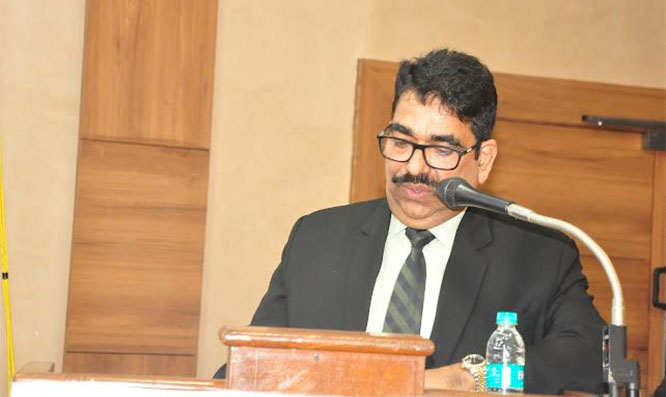
The programme was inaugurated by Dr. Subramanyam K, Head of the Department and Professor, Department of Cardiology, Srinivas Institute of Medical Sciences & Research Centre, Mangaluru. In his inaugural address, Dr. Subramanyam delivered an insightful talk highlighting the vital role of physiotherapy in modern medical care, particularly in cardiac rehabilitation, patient recovery, and improving overall quality of life through a multidisciplinary healthcare approach.

The presidential address was delivered by Dr. Haji U.K. Monu, Chairman, KIET. The keynote address was presented by Dr. Mohammed Ismail Hejamady, who spoke on the evolving scope and significance of physiotherapy.

The event was held in the presence of Mr. Abdul Rahiman, Director, Kanachur Institute of Medical Sciences, Mangaluru; Dr. Vaishali Sreejith, Senate Member, Rajiv Gandhi University of Health Sciences, Bengaluru; Dr. Sudhan S.G., Professor and Principal, Krupanidhi College of Physiotherapy, Bengaluru; Dr. Shanavaz Manipady, Dean, Kanachur Institute of Medical Sciences, Mangaluru; and Dr. Venkat Rai Prabhu, Member, Kanachur Health Science Advisory Council, Kanachur Hospital & Research Centre.

Dr. Mohammad Suhail, Dean, Kanachur College of Physiotherapy, welcomed the guests and delegates.

As part of the programme, a two-day free workshop was organised on the following topics:

•    Art of Practice in Cardiopulmonary Conditions by Dr. Sudhan S.G., Principal, Krupanidhi College of Physiotherapy

•    The Gift of Life – Organ Donation by Dr. Rohan Monis, Chief Administrative Medical Officer

•    Chest X-ray Interpretation by Dr. Hemanth, Department of Radiology, KIMS

•    Pulmonary Rehabilitation by Dr. Vijaya Kumar, Department of Respiratory Medicine, KIMS

Organisers noted that the memorial lecture series has been conducted continuously for the 11th year, benefiting interns and postgraduate students from various colleges across Mangaluru. A total of 130 delegates attended the workshop.

Dr. Reshma, Vice Principal, Kanachur College of Physiotherapy, Mangaluru, delivered the vote of thanks.

Kanchur7.jpg

Kanchur6.jpg

Kanchur5.jpg

Kanchur4.jpg

Kanchur3.jpg

Kanchur1.jpg

Comments

Add new comment

  • Coastaldigest.com reserves the right to delete or block any comments.
  • Coastaldigset.com is not responsible for its readers’ comments.
  • Comments that are abusive, incendiary or irrelevant are strictly prohibited.
  • Please use a genuine email ID and provide your name to avoid reject.
coastaldigest.com news network
February 5,2026

protestkerala.jpg

Mangaluru: The KSRTC Mangaluru division has rolled back the fare hike on buses operating on the Mangaluru–Kasaragod route following the suspension of toll collection at the Arikkady toll plaza near Kumbala in Kasaragod district.

The fare revision had been implemented after the National Highways Authority of India (NHAI) began toll collection at the Arikkady plaza on NH-66. As a result, fares for ordinary and Rajahamsa services were increased by ₹7 and ₹10, respectively, raising the bus fare from Mangaluru to Kasaragod from ₹81 to ₹88.

Senior Divisional Controller of KSRTC’s Mangaluru division, Rajesh Shetty, said the fares were reduced after toll collection at the Arikkady plaza was stopped. “The tollgate began operations on January 13, and the toll amount was deducted from the FASTag accounts of KSRTC buses operating on the route. Following an order from the central government to suspend toll collection, KSRTC has also withdrawn the additional fare with immediate effect,” he said.

At present, vehicles travelling on the Mangaluru–Kasaragod route pay toll only at the Talapady toll plaza. The toll for light motor vehicles (LMVs) at Talapady is ₹80 for a same-day return, while heavy vehicles, including buses, are charged ₹250. At Arikkady, the toll rates were ₹130 for LMVs (same-day return) and ₹450 for buses.

Protests against Arikkady toll plaza

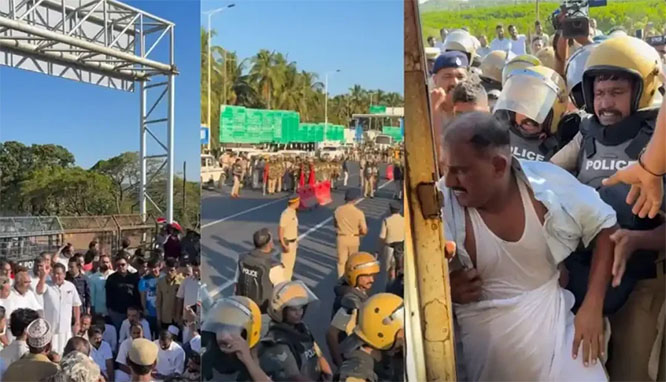
The Arikkady toll plaza witnessed widespread protests from January 12, the day toll collection commenced. On the second day, an action committee led by Manjeshwar MLA A K M Ashraf launched an indefinite protest at the site. Except for the BJP, leaders and workers of most major political parties participated in the agitation.

On the night of January 14, a large number of protesters gathered at the plaza and vandalised property, following which authorities temporarily suspended toll operations. The BJP later also expressed opposition to the toll plaza and criticised NHAI’s decision. 

Comments

Add new comment

  • Coastaldigest.com reserves the right to delete or block any comments.
  • Coastaldigset.com is not responsible for its readers’ comments.
  • Comments that are abusive, incendiary or irrelevant are strictly prohibited.
  • Please use a genuine email ID and provide your name to avoid reject.
News Network
February 3,2026

wind.jpg

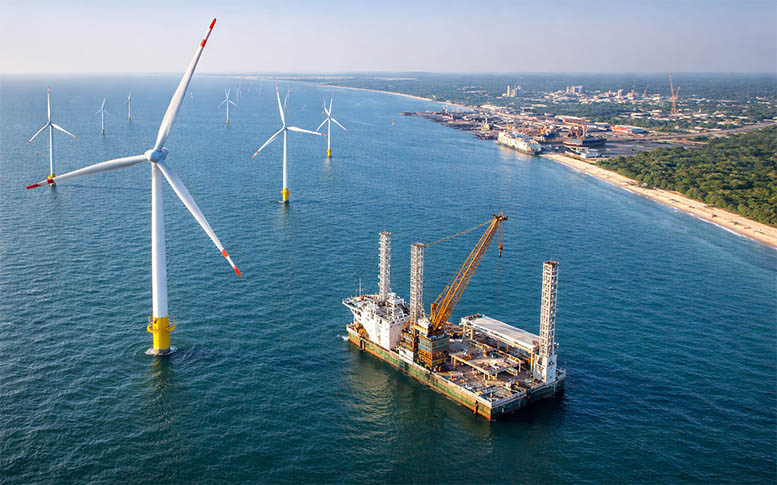
Dakshina Kannada MP Capt Brijesh Chowta has urged the Centre to give high priority to offshore wind energy generation along the Mangaluru coast, citing its strategic importance to India’s green energy and port-led development goals.

Raising the issue in the Lok Sabha under Rule 377, Chowta said studies by the National Institute of Oceanography have identified the Mangaluru coastline as part of India’s promising offshore wind ‘Zone-2’, covering nearly 6,490 sq km. He noted that the region’s relatively low exposure to cyclones and earthquakes makes it suitable for long-term offshore wind projects and called for its development as a dedicated offshore wind energy zone.

Highlighting the role of New Mangalore Port, Chowta said its modern infrastructure, multiple berths and heavy cargo-handling capacity position it well as a logistics hub for transporting and assembling large wind energy equipment.

He also pointed to the presence of major industrial units such as MRPL, OMPL, UPCL and the Mangaluru SEZ, which could serve as direct buyers of green power through power purchase agreements, improving project viability and speeding up execution.

With Karnataka’s peak power demand crossing 18,000 MW in early 2025, Chowta stressed the need to diversify renewable energy sources. He added that offshore wind projects in the Arabian Sea are strategically safer compared to the cyclone-prone Bay of Bengal.

Calling the project vital to India’s target of 500 GW of renewable energy by 2030, Chowta urged the Ministry of New and Renewable Energy to initiate resource assessments, pilot projects and stakeholder consultations at the earliest.

Comments

Add new comment

  • Coastaldigest.com reserves the right to delete or block any comments.
  • Coastaldigset.com is not responsible for its readers’ comments.
  • Comments that are abusive, incendiary or irrelevant are strictly prohibited.
  • Please use a genuine email ID and provide your name to avoid reject.