



45% of Karnataka's population was infected with covid-19 by August, says a new study

News Network
November 10, 2020

Bengaluru, Nov 10: A whopping 44.5% of Karnataka’s population was infected with Covid-19 by the end of August, said a team of Indian and American researchers who completed a randomised Covid-19 testing study.

This estimate stands in sharp contrast to the state’s official sero-survey which determined that 27.3% of the population was exposed to the virus. The diverging studies appear to suggest that this is because the state’s sero-survey did not conduct enough random tests.

The survey, titled “Karnataka Seroprevalence Study” (KSS), began on June 15 and ended on August 29. It saw researchers from Duke University in North Carolina, the University of Chicago, the Centre for Monitoring Indian Economy (CMIE) and Mapmygenome, supported by the State Covid Task Force, reach out to 1,907 random households across 20 districts of Karnataka.

The homes were identified from an existing and representative sample of 9,717 households, drawn from the Pyramids Household Survey (CPHS), a longitudinal household panel data set assembled by the Mumbai-based Centre for Monitoring Indian Economy (CMIE).

The survey has now estimated that a shocking 3.15 crore residents had been infected by the virus by the end of August 2020, which is higher than the figure of 1.93 crore persons currently infected or recovered from Covid according to the government survey.

Another key finding is that rural areas have been hit equally badly as urban areas because of returning migrants and because there were fewer lockdowns there due to ongoing agricultural activities.

Commissioner of Health Pankaj Kumar Pandey said the disparity in findings could be due to KSS’ small sample size.

 “A small sample size can skew estimates. Plus the KSS’ use of households sourced from an economic survey can create a distorted picture. The state’s sero-survey results, meantime, have tallied largely with nationwide sero-survey results,” he said.

One of the authors of the KSS study, Associate Professor Manoj Mohanan of the Sanford School of Public Policy at Duke, told DH that one reason for the disparity is the different strategies used.

“We aimed to get at the population-representative sample while the state’s study focused on target-risk groups. This is likely to cause some variation, especially because consent rates are likely to differ,” he said.

That the studies used different antibody tests is also a factor, he added. “We relied on the Elisa test for the RBD spike protein that was developed by THSTI while the other study relied on the Covid Kavach Elisa,” he said.

Scientists of the DBT India Consortium for Covid-19 Research had published a paper in August showing that the ICMR-designed Covid Kavach Elisa test has a specificity of 99.5% and a sensitivity of 75.7%. In contrast, THSTI’s Elisa test was shown to have a specificity of 100% and a sensitivity of 84.7%.

“Sensitivity” is the ability to identify those with antibodies to Sars-Cov-2 (true positive rate), and “specificity” is the ability to identify those without antibodies to Sars-CoV-2 (true negative rate).

Professor Mohanan also pointed out that the RT-PCR positive rates in the state’s sero-survey (12.7%) are “slightly higher than the high-end of our estimates for current infection”.

Comments

Add new comment

  • Coastaldigest.com reserves the right to delete or block any comments.
  • Coastaldigset.com is not responsible for its readers’ comments.
  • Comments that are abusive, incendiary or irrelevant are strictly prohibited.
  • Please use a genuine email ID and provide your name to avoid reject.
News Network
January 31,2026

files.jpg

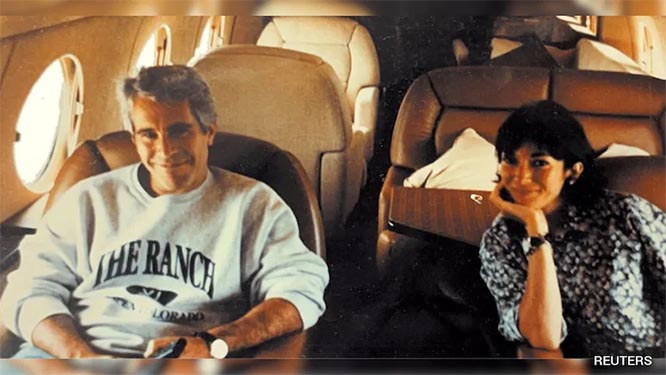
A fresh cache of files related to the investigation into the late convicted sex offender Jeffrey Epstein contains documents that reference President Donald Trump and other high-profile figures including Microsoft co-founder Bill Gates, Commerce Secretary Howard Lutnick and British billionaire Richard Branson.

Here are key details about mentions of the celebrities, none of whom have been accused of wrongdoing:

Donald Trump

The files included an FBI-compiled list of sexual assault allegations related to President Donald Trump -- many of them involving anonymous callers and unverified tips.

The allegations -- some secondhand -- were sent to the FBI's National Threat Operations Center which receives information by phone and electronically.

The document suggests that investigators followed up on a number of the tips. Some were deemed to lack credibility.

Trump has long denied any wrongdoing related to Epstein.

In a statement accompanying Friday's file dump, the Justice Department said: "Some of the documents contain untrue and sensationalist claims against President Trump that were submitted to the FBI right before the 2020 election. To be clear, the claims are unfounded and false."

Bill Gates

In a draft email among the documents, Epstein alleged Gates had engaged in extramarital affairs.

In the mail, Epstein wrote that his relationship with Gates had ranged from "helping Bill to get drugs, in order to deal with consequences of sex with russian girls, to facilitating his illicit trysts, with married women."

Richard Branson

Files show friendly relations between the two billionaires.

In an email sent to Epstein on Sept 11, 2013, Branson wrote "It was really nice seeing you yesterday. The boys in Watersports can't stop speaking about it! Any time you're in the area would love to see you. As long as you bring your harem!"

Elon Musk

The files contain numerous mail exchanges between Epstein and billionaire entrepreneur Elon Musk.

In November 2012, Epstein sent Musk an email asking "how many people will you be for the heli to island."

"Probably just Talulah and me. What day/night will be the wildest party on your island?" Musk replied.

Andrew Mountbatten-Windsor

The disgraced former prince invited Epstein to visit him at Buckingham Palace in September 2010 while the financier was making a trip to London.

An email exchange shows Epstein contacting Andrew to ask: "What time would you like me... we will also need... private time."

Andrew replied: "we could have dinner at Buckingham Palace and lots of privacy."

Howard Lutnick

Emails show that Epstein and businessman Lutnick -- currently Trump's commerce secretary -- made plans in December 2012 to lunch on Epstein's Caribbean island.

"We are heading towards you from St. Thomas" Lutnick's wife wrote to Epstein's secretary, asking where they should anchor.

Steve Tisch

Several mails suggested Epstein connected Steve Tisch, 76, producer of the movies "Forrest Gump" and "Risky Business" and the co-owner of the New York Giants football team, with multiple women.

In one exchange with Tisch, Epstein describes a woman as "russian, and rarely tells the full truth, but fun."

Zohran Mamdani's Mother, Filmmaker Mira Nair 

New York City Mayor Zohran Mamdani's mother, Mira Nair, attended an afterparty at convicted sex trafficker Ghislaine Maxwell's house for her 2009 film "Amelia", reveals a new set of Epstein files.

An email dated October 21, 2009, sent by publicist Peggy Siegal to Jeffrey Epstein, also surfaced in documents. The email, sent in the early hours, right after Siegal left the gathering, gives an insight into the afterparty. 

The party was also attended by former President Bill Clinton and Amazon CEO Jeff Bezos.

"Just left Ghislaine's townhouse...after party for film. Bill Clinton and Jeff Bezos were there...Jean Pigoni, director Mira Nair....etc," the email read.

The email described the reaction of guests to Nair's film as "tepid."

"Film received tepid reaction although women like it much more...Hillary Swank and Gen: at stupid party in Bloomingdales cheap sportwear department....very weird. Studio went for free party from store and windows for a month....Going to be in Wall Street 2 tomorrow ....more to come. xoxo Peg," the email read.

Comments

Add new comment

  • Coastaldigest.com reserves the right to delete or block any comments.
  • Coastaldigset.com is not responsible for its readers’ comments.
  • Comments that are abusive, incendiary or irrelevant are strictly prohibited.
  • Please use a genuine email ID and provide your name to avoid reject.
News Network
February 5,2026

Bengaluru: As air quality continues to worsen across several parts of the city, hospitals in Bengaluru are reporting a steady rise in patients suffering from respiratory illnesses such as asthma, bronchitis and Chronic Obstructive Pulmonary Disease (COPD), health officials and doctors said.

Data from the Suvarna Arogya Suraksha Trust (SAST) shows that 3,891 patients received treatment for respiratory ailments between April and November 2024. The figure rose to 4,187 during the same period in 2025.

Private hospitals, too, are witnessing a 10–15 per cent year-on-year increase in such cases.

While doctors caution that the rise cannot be attributed solely to air pollution, a significant number of patients are non-smokers with no prior history of respiratory disease.

“Nearly 70 per cent of the patients we see are non-smokers with no previous respiratory issues. When other causes are ruled out, air pollution emerges as the most likely factor,” said Dr Manjunath PH, consultant interventional pulmonologist at a hospital in Kengeri.

Doctors noted that patient footfall spikes during the winter months and around Deepavali, when air quality typically worsens.

“There is a clear correlation between poor air quality and the rise in cases. People commonly present with persistent cough, breathlessness and irritation of the respiratory tract, indicating the impact of polluted air on their health,” said Dr Sheetal Chaurasia, consultant in pulmonary medicine at a private hospital in Whitefield.

Dr Chaurasia added that respiratory tract infections are also on the rise.

“Poor air quality leads to chronic airway inflammation, making the airways more vulnerable to infections. We are seeing an increase in both upper and lower respiratory tract infections,” she said.

Patients with pre-existing respiratory conditions remain the worst affected.

“For those already diagnosed with respiratory illnesses, deteriorating air quality significantly worsens the condition. Both the frequency and severity of attacks increase sharply,” said Dr Vandana P, a pulmonologist at a hospital on Bannerghatta Road.

Doctors also flagged a worrying trend of rising respiratory problems among younger adults and children.

To reduce exposure, they advised people to wear masks while travelling on two-wheelers or autos and ensure adequate ventilation at home to minimise indoor air pollution.

Comments

Add new comment

  • Coastaldigest.com reserves the right to delete or block any comments.
  • Coastaldigset.com is not responsible for its readers’ comments.
  • Comments that are abusive, incendiary or irrelevant are strictly prohibited.
  • Please use a genuine email ID and provide your name to avoid reject.
News Network
February 1,2026

Bengaluru, Feb 1: For travelers landing at Kempegowda International Airport (KIA), the sleek, wood-paneled curves of Terminal 2 promise a world-class welcome. But the famed “Garden City” charm quickly withers at the curb. As India’s aviation sector swells to record numbers—handling over 43 million passengers in Bengaluru alone this past year—the “last mile” has turned into a marathon of frustration.

The Bengaluru Logjam: Rules vs Reality

While the city awaits the 2027 completion of the Namma Metro Blue Line, the interim has been chaotic. Recent “decongestion” rules at Terminal 1 have pushed app-based cab pickups to distant parking zones, forcing weary passengers into a 20-minute walk with luggage.

“I landed after ten months away and felt like a stranger in my own city,” says Ruchitha Jain, a Koramangala resident. “My driver couldn’t find me, staff couldn’t guide me, and the so-called ‘Premium’ lane is just a fancy tax on convenience.”

•    The Cost of Distance: A 40-km cab ride can now easily cross ₹1,500, driven by demand pricing and airport surcharges.

•    The Bus Gap: While Vayu Vajra remains a lifeline, its ₹300–₹400 fare is often cited as the most expensive airport bus service in the country.

A National Pattern of Disconnect

The struggle is not unique to Karnataka. From Chennai’s coast to Hyderabad’s plateau, India’s airports tell a familiar story: brilliant runways, broken exits.

City:    Primary Issue   |    Recent Development

Bengaluru:    Cab pickup restrictions & distance  |    App-based taxis shifted to far parking zones; long walks and fare spikes reported

Chennai:    Multi-Level Parking (MLCP) hike  |    Passengers report 40-minute walks to reach cab pickup points

Hyderabad:    “Taxi mafia” & touting  |    Over 440 touting cases reported; security presence intensified

Mumbai:    Fare scams  |     Tourists charged ₹18,000 for just 400 metres, triggering police action

In Hyderabad, travelers continue to battle entrenched local groups that intimidate Uber and Ola drivers, pushing passengers toward overpriced private taxis. Chennai flyers, meanwhile, complain that reaching the designated pickup zones now takes longer than short-haul flights from cities like Coimbatore.

The ‘Budget Day’ Hope

As Finance Minister Nirmala Sitharaman presents the Union Budget 2026 today, the aviation sector is watching closely. With the government’s renewed emphasis on multimodal integration, there is cautious hope for funding toward seamless airport-metro-bus hubs.

The vision is clear: a future where planes, trains, and metros speak the same language. Until then, passengers at KIA—and airports across India—will continue to discover that the hardest part of flying isn’t the thousands of kilometres in the air, but the last few on the ground.

Comments

Add new comment

  • Coastaldigest.com reserves the right to delete or block any comments.
  • Coastaldigset.com is not responsible for its readers’ comments.
  • Comments that are abusive, incendiary or irrelevant are strictly prohibited.
  • Please use a genuine email ID and provide your name to avoid reject.