India’s GDP contracts by record 23.9% in first quarter of FY2020

News Network
August 31, 2020

Bengaluru, Aug 31: India’s economy contracted at its steepest pace of 23.9% in the June quarter as the pandemic lockdown dented consumer and business spending, putting pressure on the government and central bank for further stimulus and a rate cut.

The gross domestic product (GDP) data released on Monday showed consumer spending, private investments and exports all collapsed during the world’s strictest lockdown imposed in late March to combat the COVID-19 pandemic.

A Reuters poll of economists had forecast that GDP in the world’s fifth-largest economy will contract by 18.3% in the June quarter, compared with 3.1% growth in the previous quarter, the worst performance in at least eight years.

COMMENTARY

PRITHVIRAJ SRINIVAS, CHIEF ECONOMIST, AXIS CAPITAL, MUMBAI

“The June-quarter GDP growth number confirms that India’s national lockdown was the most severe and the deepest GDP decline among large countries.

“The gradual reversal of the lockdown since mid-April is likely to reduce the severity of GDP contraction in coming quarters. However, to erase the contraction fully we need to see an improved consumer sentiment.”

SHASHANK MENDIRATTA, ECONOMIST, IBM, NEW DELHI

“As expected, growth contracted sharply in the June quarter. Investment demand recorded a 47% decline, while private consumption recorded a contraction of nearly 20%. With a contraction of 20.6% y/y, service sector was a key drag on the growth.

“While the overall growth print witnessed the weakest decline on record, this also marks a bottom in our view. Our assessment is that investment will likely stay weak, while consumption activity is likely to improve in subsequent quarters. For a broader recovery, however, supportive policy will need to provide a push.”

ADITI NAYAR, PRINCIPAL ECONOMIST, ICRA, GURUGRAM

“The GDP and GVA plunged precipitously in the lockdown-ridden Q1 of FY2021, both printing similar to our forecast of a 25% contraction. Moreover, incoming data on the MSME and less-formal sectors could manifest in a deeper contraction when revised data is released subsequently. We maintain our forecast that the Indian economy will contract by 9.5% in FY2021.

“The wide discrepancy between the double-digit growth of the government’s final consumption expenditure and the contraction in public administration, defence and other services on the production side, is rather incongruous.”

SUVODEEP RAKSHIT, SENIOR ECONOMIST, KOTAK INSTITUTIONAL EQUITIES, MUMBAI

“Real GDP growth at (-)23.9% in 1QFY21 was much lower than what the markets were expecting. The choice for the government will be on whether the consumption or the investment side needs to be pushed. Given the limited fiscal space and the need to stimulate a more durable growth, the growth recovery will be gradual and is likely to continue into 1HFY22.”

MADHAVI ARORA, LEAD ECONOMIST, FX AND RATES, EDELWEISS SECURITIES, MUMBAI

“The Q1 GDP growth print came in worse than our expectations of -18%. The surprise take-away elements were the better-than-expected performance of finance and real-estate sectors, and more pertinently, a sharp contraction in public administration (proxy for government spending) data. Nonetheless, it does little to change the broad contours of the growth trajectory.

“The sub-optimal policy response would only mean the downward cycle could stretch further, while structural constraints limit sustained secular growth pick-up ahead. We think the government will have to loosen its fiscal strings further in 2HFY21 if growth prospects remain weak.” SAKSHI GUPTA, SENIOR ECONOMIST, HDFC BANK, GURUGRAM”Given the lack of reporting due to the lockdown in Q1 (especially for the informal sector), we expect the GDP numbers to be revised down further in subsequent releases.

“Hopes of an economic recovery in the second half of the year have been pinned on a rural sector revival. However, with the virus spreading to the hinterland, the rural support might be lower than expected.

“In terms of the growth prints, Q1 is likely to be the worst print and it will be a very slow grind up from this bottom going forward. We continue to expect a -7.5% growth print for the year with a downward bias to our forecast.”

RAJANI SINHA, CHIEF ECONOMIST, KNIGHT FRANK INDIA, MUMBAI

“The sharp fall in the first-quarter GDP is on expected lines, given that around 70-80% of the economy was on a standstill in the first two months of this quarter.

“With the economy unlocking in the last few months, most economic parameters have improved to 70-90% level of the corresponding period of last year. However, a sustainable recovery would depend on the time taken to contain the spread of virus. Increased infrastructure investment by the government and demand-boosting measures are much required for the economy to recover.”

SUJAN HAJRA, CHIEF ECONOMIST, ANAND RATHI SECURITIES, MUMBAI

“This kind of a decline was expected as there was a lockdown for roughly half of the quarter. The infrastructure data showed the decline was less than 10%, and with the exception of cement and steel, all other sectors have done reasonably well. “The Reserve Bank of India (RBI) won’t lose too much sleep on this number as it was expected. The RBI still has its focus on growth. This (GDP number) slightly improves chances of a rate cut in October. Unless the inflation comes below 5% in the next reading, the RBI still might postpone the rate cut to December.”

RUPA REGE NITSURE, GROUP CHIEF ECONOMIST, L&T FINANCIAL HOLDINGS, MUMBAI

“Contraction of real GDP at 23.9% appears to be underestimated, as data collection efforts were hit by the pandemic.

“The NSO had to use substitutes and proxies to estimate the losses of informal sector. So there is a very high probability that this data will undergo several revisions in the future. But broader trends are clearly visible.

“Unless the central and state governments focus on re-starting the economic machine completely, the real process of repair and reconstruction will not gain momentum. Unless this is given the top-most priority, India will get trapped with the unsustainable debt burden.”

UPASNA BHARDWAJ, SENIOR ECONOMIST, KOTAK MAHINDRA BANK, MUMBAI

“After a record contraction in Q1, we expect the following quarters to normalise registering a much slower fall. The high-frequency data since June has been suggesting a significant pickup in activity. Nonetheless, the weakness in demand is expected to weigh across all sectors and some policy support will be necessary to cushion any further deterioration.

“We expect some kind of stimulus from the government in the coming few months. The recent policy measures from the RBI will help cap any sharp upside risks to bond yields in case of any incremental supply.”

SIDDHARTHA SANYAL, CHIEF ECONOMIST AND HEAD OF RESEARCH, BANDHAN BANK, KOLKATA

“The GDP contraction of nearly 24% y/y during Q1 FY21 was clearly sharper than expected. Also, given the lack of clarity about whether the disruption in informal sector activities were captured adequately, the possibility of further worsening of Q1 FY21 GDP estimate during subsequent rounds of revisions cannot be ruled out. Overall, GDP looks set to record near double-digit contraction during FY21.

“However, rural activities seem to be relatively more resilient at the moment and might benefit from the government’s rural-focused employment schemes. Given the recent uptick in CPI prints, it seems that the RBI may not be in a position to cut rates in the near-future.”


Comments

Add new comment

  • Coastaldigest.com reserves the right to delete or block any comments.
  • Coastaldigset.com is not responsible for its readers’ comments.
  • Comments that are abusive, incendiary or irrelevant are strictly prohibited.
  • Please use a genuine email ID and provide your name to avoid reject.
News Network
February 5,2026

Bengaluru: As air quality continues to worsen across several parts of the city, hospitals in Bengaluru are reporting a steady rise in patients suffering from respiratory illnesses such as asthma, bronchitis and Chronic Obstructive Pulmonary Disease (COPD), health officials and doctors said.

Data from the Suvarna Arogya Suraksha Trust (SAST) shows that 3,891 patients received treatment for respiratory ailments between April and November 2024. The figure rose to 4,187 during the same period in 2025.

Private hospitals, too, are witnessing a 10–15 per cent year-on-year increase in such cases.

While doctors caution that the rise cannot be attributed solely to air pollution, a significant number of patients are non-smokers with no prior history of respiratory disease.

“Nearly 70 per cent of the patients we see are non-smokers with no previous respiratory issues. When other causes are ruled out, air pollution emerges as the most likely factor,” said Dr Manjunath PH, consultant interventional pulmonologist at a hospital in Kengeri.

Doctors noted that patient footfall spikes during the winter months and around Deepavali, when air quality typically worsens.

“There is a clear correlation between poor air quality and the rise in cases. People commonly present with persistent cough, breathlessness and irritation of the respiratory tract, indicating the impact of polluted air on their health,” said Dr Sheetal Chaurasia, consultant in pulmonary medicine at a private hospital in Whitefield.

Dr Chaurasia added that respiratory tract infections are also on the rise.

“Poor air quality leads to chronic airway inflammation, making the airways more vulnerable to infections. We are seeing an increase in both upper and lower respiratory tract infections,” she said.

Patients with pre-existing respiratory conditions remain the worst affected.

“For those already diagnosed with respiratory illnesses, deteriorating air quality significantly worsens the condition. Both the frequency and severity of attacks increase sharply,” said Dr Vandana P, a pulmonologist at a hospital on Bannerghatta Road.

Doctors also flagged a worrying trend of rising respiratory problems among younger adults and children.

To reduce exposure, they advised people to wear masks while travelling on two-wheelers or autos and ensure adequate ventilation at home to minimise indoor air pollution.

Comments

Add new comment

  • Coastaldigest.com reserves the right to delete or block any comments.
  • Coastaldigset.com is not responsible for its readers’ comments.
  • Comments that are abusive, incendiary or irrelevant are strictly prohibited.
  • Please use a genuine email ID and provide your name to avoid reject.
News Network
February 3,2026

Kanchur2.jpg

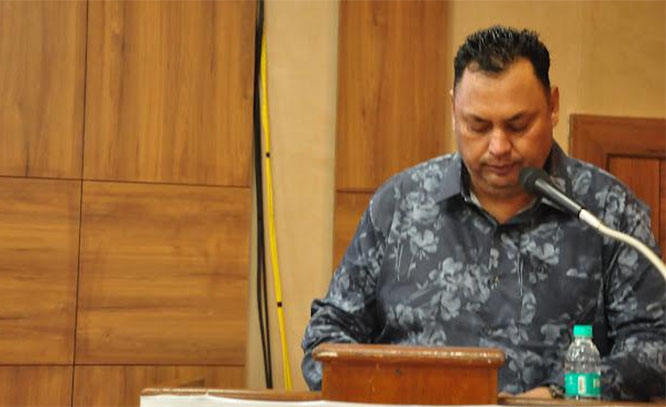
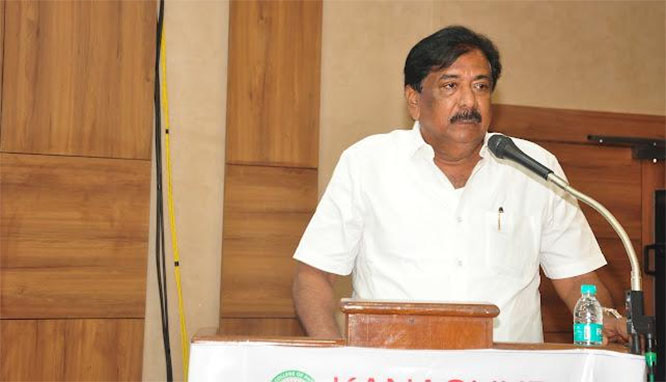
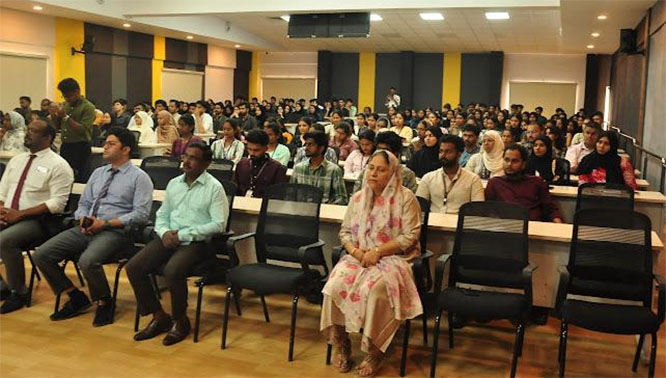
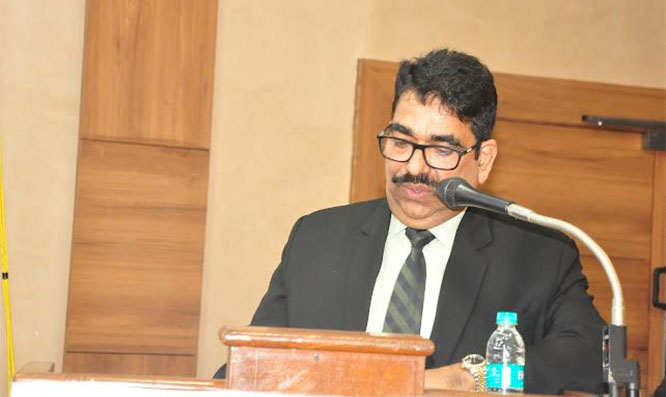
Mangaluru, Feb 3: Kanachur College of Physiotherapy and Kanachur Hospital & Research Centre, in association with U.T. Fareed Foundation (R), organised the 11th Late Mrs. Naseema Fareed Memorial Lecture on Tuesday.

The programme was inaugurated by Dr. Subramanyam K, Head of the Department and Professor, Department of Cardiology, Srinivas Institute of Medical Sciences & Research Centre, Mangaluru. In his inaugural address, Dr. Subramanyam delivered an insightful talk highlighting the vital role of physiotherapy in modern medical care, particularly in cardiac rehabilitation, patient recovery, and improving overall quality of life through a multidisciplinary healthcare approach.

The presidential address was delivered by Dr. Haji U.K. Monu, Chairman, KIET. The keynote address was presented by Dr. Mohammed Ismail Hejamady, who spoke on the evolving scope and significance of physiotherapy.

The event was held in the presence of Mr. Abdul Rahiman, Director, Kanachur Institute of Medical Sciences, Mangaluru; Dr. Vaishali Sreejith, Senate Member, Rajiv Gandhi University of Health Sciences, Bengaluru; Dr. Sudhan S.G., Professor and Principal, Krupanidhi College of Physiotherapy, Bengaluru; Dr. Shanavaz Manipady, Dean, Kanachur Institute of Medical Sciences, Mangaluru; and Dr. Venkat Rai Prabhu, Member, Kanachur Health Science Advisory Council, Kanachur Hospital & Research Centre.

Dr. Mohammad Suhail, Dean, Kanachur College of Physiotherapy, welcomed the guests and delegates.

As part of the programme, a two-day free workshop was organised on the following topics:

•    Art of Practice in Cardiopulmonary Conditions by Dr. Sudhan S.G., Principal, Krupanidhi College of Physiotherapy

•    The Gift of Life – Organ Donation by Dr. Rohan Monis, Chief Administrative Medical Officer

•    Chest X-ray Interpretation by Dr. Hemanth, Department of Radiology, KIMS

•    Pulmonary Rehabilitation by Dr. Vijaya Kumar, Department of Respiratory Medicine, KIMS

Organisers noted that the memorial lecture series has been conducted continuously for the 11th year, benefiting interns and postgraduate students from various colleges across Mangaluru. A total of 130 delegates attended the workshop.

Dr. Reshma, Vice Principal, Kanachur College of Physiotherapy, Mangaluru, delivered the vote of thanks.

Kanchur7.jpg

Kanchur6.jpg

Kanchur5.jpg

Kanchur4.jpg

Kanchur3.jpg

Kanchur1.jpg

Comments

Add new comment

  • Coastaldigest.com reserves the right to delete or block any comments.
  • Coastaldigset.com is not responsible for its readers’ comments.
  • Comments that are abusive, incendiary or irrelevant are strictly prohibited.
  • Please use a genuine email ID and provide your name to avoid reject.
News Network
February 5,2026

Bengaluru: As air quality continues to worsen across several parts of the city, hospitals in Bengaluru are reporting a steady rise in patients suffering from respiratory illnesses such as asthma, bronchitis and Chronic Obstructive Pulmonary Disease (COPD), health officials and doctors said.

Data from the Suvarna Arogya Suraksha Trust (SAST) shows that 3,891 patients received treatment for respiratory ailments between April and November 2024. The figure rose to 4,187 during the same period in 2025.

Private hospitals, too, are witnessing a 10–15 per cent year-on-year increase in such cases.

While doctors caution that the rise cannot be attributed solely to air pollution, a significant number of patients are non-smokers with no prior history of respiratory disease.

“Nearly 70 per cent of the patients we see are non-smokers with no previous respiratory issues. When other causes are ruled out, air pollution emerges as the most likely factor,” said Dr Manjunath PH, consultant interventional pulmonologist at a hospital in Kengeri.

Doctors noted that patient footfall spikes during the winter months and around Deepavali, when air quality typically worsens.

“There is a clear correlation between poor air quality and the rise in cases. People commonly present with persistent cough, breathlessness and irritation of the respiratory tract, indicating the impact of polluted air on their health,” said Dr Sheetal Chaurasia, consultant in pulmonary medicine at a private hospital in Whitefield.

Dr Chaurasia added that respiratory tract infections are also on the rise.

“Poor air quality leads to chronic airway inflammation, making the airways more vulnerable to infections. We are seeing an increase in both upper and lower respiratory tract infections,” she said.

Patients with pre-existing respiratory conditions remain the worst affected.

“For those already diagnosed with respiratory illnesses, deteriorating air quality significantly worsens the condition. Both the frequency and severity of attacks increase sharply,” said Dr Vandana P, a pulmonologist at a hospital on Bannerghatta Road.

Doctors also flagged a worrying trend of rising respiratory problems among younger adults and children.

To reduce exposure, they advised people to wear masks while travelling on two-wheelers or autos and ensure adequate ventilation at home to minimise indoor air pollution.

Comments

Add new comment

  • Coastaldigest.com reserves the right to delete or block any comments.
  • Coastaldigset.com is not responsible for its readers’ comments.
  • Comments that are abusive, incendiary or irrelevant are strictly prohibited.
  • Please use a genuine email ID and provide your name to avoid reject.