India’s GDP contracts by record 23.9% in first quarter of FY2020

News Network
August 31, 2020

Bengaluru, Aug 31: India’s economy contracted at its steepest pace of 23.9% in the June quarter as the pandemic lockdown dented consumer and business spending, putting pressure on the government and central bank for further stimulus and a rate cut.

The gross domestic product (GDP) data released on Monday showed consumer spending, private investments and exports all collapsed during the world’s strictest lockdown imposed in late March to combat the COVID-19 pandemic.

A Reuters poll of economists had forecast that GDP in the world’s fifth-largest economy will contract by 18.3% in the June quarter, compared with 3.1% growth in the previous quarter, the worst performance in at least eight years.

COMMENTARY

PRITHVIRAJ SRINIVAS, CHIEF ECONOMIST, AXIS CAPITAL, MUMBAI

“The June-quarter GDP growth number confirms that India’s national lockdown was the most severe and the deepest GDP decline among large countries.

“The gradual reversal of the lockdown since mid-April is likely to reduce the severity of GDP contraction in coming quarters. However, to erase the contraction fully we need to see an improved consumer sentiment.”

SHASHANK MENDIRATTA, ECONOMIST, IBM, NEW DELHI

“As expected, growth contracted sharply in the June quarter. Investment demand recorded a 47% decline, while private consumption recorded a contraction of nearly 20%. With a contraction of 20.6% y/y, service sector was a key drag on the growth.

“While the overall growth print witnessed the weakest decline on record, this also marks a bottom in our view. Our assessment is that investment will likely stay weak, while consumption activity is likely to improve in subsequent quarters. For a broader recovery, however, supportive policy will need to provide a push.”

ADITI NAYAR, PRINCIPAL ECONOMIST, ICRA, GURUGRAM

“The GDP and GVA plunged precipitously in the lockdown-ridden Q1 of FY2021, both printing similar to our forecast of a 25% contraction. Moreover, incoming data on the MSME and less-formal sectors could manifest in a deeper contraction when revised data is released subsequently. We maintain our forecast that the Indian economy will contract by 9.5% in FY2021.

“The wide discrepancy between the double-digit growth of the government’s final consumption expenditure and the contraction in public administration, defence and other services on the production side, is rather incongruous.”

SUVODEEP RAKSHIT, SENIOR ECONOMIST, KOTAK INSTITUTIONAL EQUITIES, MUMBAI

“Real GDP growth at (-)23.9% in 1QFY21 was much lower than what the markets were expecting. The choice for the government will be on whether the consumption or the investment side needs to be pushed. Given the limited fiscal space and the need to stimulate a more durable growth, the growth recovery will be gradual and is likely to continue into 1HFY22.”

MADHAVI ARORA, LEAD ECONOMIST, FX AND RATES, EDELWEISS SECURITIES, MUMBAI

“The Q1 GDP growth print came in worse than our expectations of -18%. The surprise take-away elements were the better-than-expected performance of finance and real-estate sectors, and more pertinently, a sharp contraction in public administration (proxy for government spending) data. Nonetheless, it does little to change the broad contours of the growth trajectory.

“The sub-optimal policy response would only mean the downward cycle could stretch further, while structural constraints limit sustained secular growth pick-up ahead. We think the government will have to loosen its fiscal strings further in 2HFY21 if growth prospects remain weak.” SAKSHI GUPTA, SENIOR ECONOMIST, HDFC BANK, GURUGRAM”Given the lack of reporting due to the lockdown in Q1 (especially for the informal sector), we expect the GDP numbers to be revised down further in subsequent releases.

“Hopes of an economic recovery in the second half of the year have been pinned on a rural sector revival. However, with the virus spreading to the hinterland, the rural support might be lower than expected.

“In terms of the growth prints, Q1 is likely to be the worst print and it will be a very slow grind up from this bottom going forward. We continue to expect a -7.5% growth print for the year with a downward bias to our forecast.”

RAJANI SINHA, CHIEF ECONOMIST, KNIGHT FRANK INDIA, MUMBAI

“The sharp fall in the first-quarter GDP is on expected lines, given that around 70-80% of the economy was on a standstill in the first two months of this quarter.

“With the economy unlocking in the last few months, most economic parameters have improved to 70-90% level of the corresponding period of last year. However, a sustainable recovery would depend on the time taken to contain the spread of virus. Increased infrastructure investment by the government and demand-boosting measures are much required for the economy to recover.”

SUJAN HAJRA, CHIEF ECONOMIST, ANAND RATHI SECURITIES, MUMBAI

“This kind of a decline was expected as there was a lockdown for roughly half of the quarter. The infrastructure data showed the decline was less than 10%, and with the exception of cement and steel, all other sectors have done reasonably well. “The Reserve Bank of India (RBI) won’t lose too much sleep on this number as it was expected. The RBI still has its focus on growth. This (GDP number) slightly improves chances of a rate cut in October. Unless the inflation comes below 5% in the next reading, the RBI still might postpone the rate cut to December.”

RUPA REGE NITSURE, GROUP CHIEF ECONOMIST, L&T FINANCIAL HOLDINGS, MUMBAI

“Contraction of real GDP at 23.9% appears to be underestimated, as data collection efforts were hit by the pandemic.

“The NSO had to use substitutes and proxies to estimate the losses of informal sector. So there is a very high probability that this data will undergo several revisions in the future. But broader trends are clearly visible.

“Unless the central and state governments focus on re-starting the economic machine completely, the real process of repair and reconstruction will not gain momentum. Unless this is given the top-most priority, India will get trapped with the unsustainable debt burden.”

UPASNA BHARDWAJ, SENIOR ECONOMIST, KOTAK MAHINDRA BANK, MUMBAI

“After a record contraction in Q1, we expect the following quarters to normalise registering a much slower fall. The high-frequency data since June has been suggesting a significant pickup in activity. Nonetheless, the weakness in demand is expected to weigh across all sectors and some policy support will be necessary to cushion any further deterioration.

“We expect some kind of stimulus from the government in the coming few months. The recent policy measures from the RBI will help cap any sharp upside risks to bond yields in case of any incremental supply.”

SIDDHARTHA SANYAL, CHIEF ECONOMIST AND HEAD OF RESEARCH, BANDHAN BANK, KOLKATA

“The GDP contraction of nearly 24% y/y during Q1 FY21 was clearly sharper than expected. Also, given the lack of clarity about whether the disruption in informal sector activities were captured adequately, the possibility of further worsening of Q1 FY21 GDP estimate during subsequent rounds of revisions cannot be ruled out. Overall, GDP looks set to record near double-digit contraction during FY21.

“However, rural activities seem to be relatively more resilient at the moment and might benefit from the government’s rural-focused employment schemes. Given the recent uptick in CPI prints, it seems that the RBI may not be in a position to cut rates in the near-future.”

Comments

Add new comment

  • Coastaldigest.com reserves the right to delete or block any comments.
  • Coastaldigset.com is not responsible for its readers’ comments.
  • Comments that are abusive, incendiary or irrelevant are strictly prohibited.
  • Please use a genuine email ID and provide your name to avoid reject.
News Network
January 23,2026

Mangaluru: The Karnataka Government Polytechnic (KPT), Mangaluru, has achieved autonomous status from the All India Council for Technical Education (AICTE), becoming the first government polytechnic in the country to receive such recognition in its 78-year history. The status was granted by AICTE, New Delhi, and subsequently approved by the Karnataka Board of Technical Education in October last year.

Officials said the autonomy was conferred a few months ago. Until recently, AICTE extended autonomous status only to engineering colleges, excluding diploma institutions. However, with a renewed national focus on skill development, several government polytechnics across India have now been granted autonomy.

KPT, the second-largest polytechnic in Karnataka, was established in 1946 with four branches and has since expanded to offer eight diploma programmes, including computer science and polymer technology. The institution is spread across a 19-acre campus.

Ravindra M Keni, the first dean of the institution, told The Times of India that AICTE had proposed autonomous status for polytechnic institutions that are over 25 years old. “Many colleges applied. In the first round, 100 institutions were shortlisted, which was further narrowed down to 15 in the second round. We have already completed one semester after becoming an autonomous institution,” he said. He added that nearly 500 students are admitted annually across eight three-year diploma courses.

Explaining the factors that helped KPT secure autonomy, Keni said the institution has consistently recorded 100 per cent admissions and placements for its graduates. He also noted its strong performance in sports, with the college emerging champions for 12 consecutive years, along with active student participation in NCC and NSS activities.

Autonomous status allows KPT to design industry-oriented curricula, conduct examinations, prepare question papers, and manage academic documentation independently. The institution can also directly collaborate with industries and receive priority funding from AICTE or the Ministry of Education. While academic autonomy has been granted, financial control will continue to rest with the state government.

“There will be separate committees for examinations, question paper setting, boards of studies, and boards of examiners. The institution will now have the freedom to conduct admissions without government notifications and issue its own marks cards,” Keni said, adding that new academic initiatives would be planned after a year of functioning under the autonomous framework.

Comments

Add new comment

  • Coastaldigest.com reserves the right to delete or block any comments.
  • Coastaldigset.com is not responsible for its readers’ comments.
  • Comments that are abusive, incendiary or irrelevant are strictly prohibited.
  • Please use a genuine email ID and provide your name to avoid reject.
News Network
January 31,2026

Roy.jpg

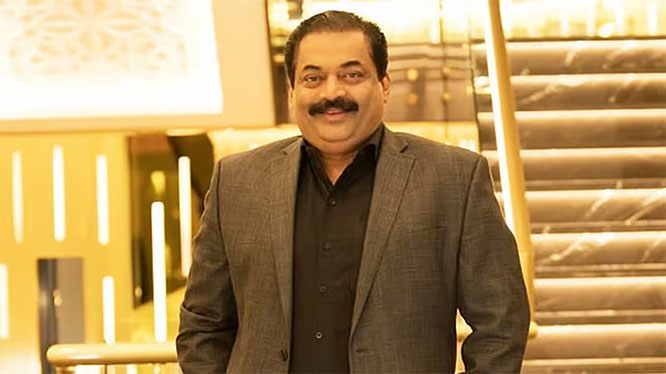
Bengaluru: The shooting incident involving CJ Roy, founder of the Confident Group, has once again put the spotlight on a businessman whose life has swung between flamboyant global success and persistent controversy at home.

Though Roy’s business interests extended across continents, his roots lay firmly in Karnataka. An alumnus of Christ School in Bengaluru, he later moved to Tumakuru to pursue an engineering degree. Those familiar with his early years describe him as intensely ambitious, beginning his career as a salesman at a small electronics firm dealing in computers.

Roy’s entry into large-scale real estate came through the Crystal Group, where he worked closely with Latha Namboothiri and rose from manager to director. However, the launch of the Confident Group in 2005 was clouded by industry speculation. Insiders speak of a fallout involving alleged “benami” properties and claims of deception that ultimately led to his independent venture—an episode Roy spent years trying to distance himself from, according to associates.

A tale of two cities

Roy’s professional trajectory diverged sharply across geographies.

In Dubai, he built a reputation as a bold and efficient developer, completing massive luxury residential projects in record time—some reportedly within 11 months. His rapid project delivery and lavish lifestyle in the Emirates earned him admiration and visibility in the real estate sector.

In Bengaluru, however, his image remained far more fractured. Sources say Roy stayed away from the city for several years amid disputes over unpaid dues to vendors and suppliers. Several projects were allegedly stalled, with accusations of unfulfilled commitments to cement and steel suppliers continuing to follow him.

Roy’s return to Bengaluru’s business and social circles began around 2018, marked by a conscious attempt at rebranding. His appointment as Honorary Consul of the Slovak Republic added diplomatic legitimacy, which he complemented with visible CSR initiatives, including ambulance donations and high-profile charity events.

Heavy police presence in Langford Town

Following the incident, police personnel from the Central division were deployed outside the Confident Group building in Langford Town, which also houses the Slovak Honorary Consulate in Bengaluru.

The otherwise busy premises near Hosur Road wore a deserted look on Friday, reflecting the shock and uncertainty that followed the tragedy.

Comments

Add new comment

  • Coastaldigest.com reserves the right to delete or block any comments.
  • Coastaldigset.com is not responsible for its readers’ comments.
  • Comments that are abusive, incendiary or irrelevant are strictly prohibited.
  • Please use a genuine email ID and provide your name to avoid reject.
coastaldigest.com news network
February 5,2026

protestkerala.jpg

Mangaluru: The KSRTC Mangaluru division has rolled back the fare hike on buses operating on the Mangaluru–Kasaragod route following the suspension of toll collection at the Arikkady toll plaza near Kumbala in Kasaragod district.

The fare revision had been implemented after the National Highways Authority of India (NHAI) began toll collection at the Arikkady plaza on NH-66. As a result, fares for ordinary and Rajahamsa services were increased by ₹7 and ₹10, respectively, raising the bus fare from Mangaluru to Kasaragod from ₹81 to ₹88.

Senior Divisional Controller of KSRTC’s Mangaluru division, Rajesh Shetty, said the fares were reduced after toll collection at the Arikkady plaza was stopped. “The tollgate began operations on January 13, and the toll amount was deducted from the FASTag accounts of KSRTC buses operating on the route. Following an order from the central government to suspend toll collection, KSRTC has also withdrawn the additional fare with immediate effect,” he said.

At present, vehicles travelling on the Mangaluru–Kasaragod route pay toll only at the Talapady toll plaza. The toll for light motor vehicles (LMVs) at Talapady is ₹80 for a same-day return, while heavy vehicles, including buses, are charged ₹250. At Arikkady, the toll rates were ₹130 for LMVs (same-day return) and ₹450 for buses.

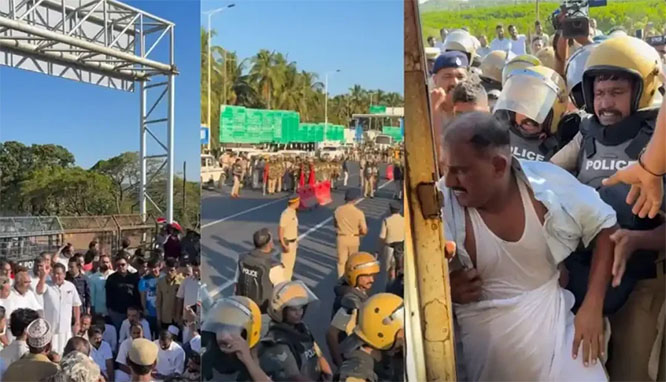
Protests against Arikkady toll plaza

The Arikkady toll plaza witnessed widespread protests from January 12, the day toll collection commenced. On the second day, an action committee led by Manjeshwar MLA A K M Ashraf launched an indefinite protest at the site. Except for the BJP, leaders and workers of most major political parties participated in the agitation.

On the night of January 14, a large number of protesters gathered at the plaza and vandalised property, following which authorities temporarily suspended toll operations. The BJP later also expressed opposition to the toll plaza and criticised NHAI’s decision. 

Comments

Add new comment

  • Coastaldigest.com reserves the right to delete or block any comments.
  • Coastaldigset.com is not responsible for its readers’ comments.
  • Comments that are abusive, incendiary or irrelevant are strictly prohibited.
  • Please use a genuine email ID and provide your name to avoid reject.