



Karnataka to borrow Rs 33,000 cr from Centre to tide over Covid crisis

News Network
September 15, 2020

Bengaluru, Sep 15: Close on the heels of the Union government allowing the states to borrow up to five per cent of the state's GDP, the cabinet on Tuesday approved the decision to amend the Karnataka Fiscal Responsibility Act in order to borrow an additional Rs 33,000 crore in this fiscal year.

The proposed amendment will enable the Karnataka government to increase the borrowing limit from the present three per cent to five per cent of the GSDP (gross state domestic product), which can go up to Rs 36,000 crore. Recently, the Union Finance Minister had allowed this as a one-time measure for all the states in the country. Karnataka is one of the early states to take this route to mop-up revenues to meet its needs.

 Speaking to reporters after the cabinet meeting here, Karnataka Law and Parliamentary affairs minister, J. C. Madhuswamy said that the state will also sell "B-Kharab" land (wasteland) existing within the periphery of 18 kms in and around Bengaluru at four times the present guidance value.

He added that everyone knows the truth behind why the state government had to opt for this route. "Due to the pandemic, we are helpless, we need money to kickstart various projects. Therefore, the state cabinet has approved to amend the Karnataka Fiscal Responsibility Act, which will allow us to borrow up to Rs 36,000 crore but at present we have decided to use it to the tune of Rs 33,000 crore," he explained.

According to him, all these years, whenever such borrowings were undertaken, it was used only for capital investment purposes, but for the first time the state has decided to utilise it for expenditure purposes also.

Generally, in government parlance, capital investment is considered to be an investment in development projects or to introduce welfare programmes, while expenditure is deemed as payment of salary and other day-to-day expenses incurred by the government.

Across the state, sporadic protests in the recent past by doctors, teachers, guest lecturers and others over the delay in their salaries was also another reason why the Karnataka government has opted for this route, a senior bureaucrat told IANS.

The minister added that the state government had not forgone its demand to the tune of Rs 11,000 crore GST share from the Union government. "We will relentlessly pursue to recover this share from the Union government. We have not forgone our claim on this. Like all other states, we will also continue to demand from the Union government to release our share," he added.

Responding to a question about the government's decision to auction the Kharab land in Bengaluru, the Law Minister added that whenever the state government allots land, sometimes, that land will also contain Kharab land, for which the government would not have recovered the cost.

"But now within Bengaluru, the land prices have shot up to an unprecedented level that even this Kharab land fetches a good value for realtors. Therefore, the state government will recover the cost from them to legalise it in their favour. Most of the Kharab land is used to build housing or commercial complexes. Hence, the state is now planning to charge four times the present guidance value in such cases," he explained.

According to the Minister, Karnataka will also renew the mining lease that was awarded to the National Minerals Development Corporation in Bellary, where they have been operating for the last several years. "With the renewal of mining lease to the NMDC, the state is expected to mop-up to the tune of Rs 650 crore annually," he said.

Answering to another question, Madhuswami asserted that there was no proposal before the state government to divide Bengaluru city into three or four municipalities, but there was a proposal of dividing Bengaluru into four zones. "Bengaluru will be divided into four zones. To effect this change, the state government is planning to introduce a new Act exclusively in the forthcoming Legislature session," he said.

Comments

Add new comment

  • Coastaldigest.com reserves the right to delete or block any comments.
  • Coastaldigset.com is not responsible for its readers’ comments.
  • Comments that are abusive, incendiary or irrelevant are strictly prohibited.
  • Please use a genuine email ID and provide your name to avoid reject.
News Network
February 4,2026

Mangaluru: Urban local bodies and gram panchayats should make the use of Kannada on signboards mandatory while issuing trade licences to commercial establishments, Dakshina Kannada Deputy Commissioner Darshan HV said. He also called for regular inspections to ensure compliance.

Presiding over the District Kannada Awareness Committee meeting at the deputy commissioner’s office, Darshan said the city corporation would be directed to ensure that shops operating in malls prominently display their names in Kannada. “All commercial establishments, including shops, companies, offices and hotels, must mandatorily display their names in Kannada on signboards,” he said.

The deputy commissioner added that the National Highways Authority of India (NHAI) would be instructed to include Kannada on signboards along national highways. Banks, he said, would be directed through committee meetings to provide application forms in Kannada.

“Even if English-medium schools and colleges impart education in English, their signboards must display the institution’s name in Kannada. Steps will also be taken to ensure that private buses display place names in Kannada,” Darshan said.

During the meeting, committee members raised concerns over the closure of Kannada-medium schools in rural areas due to a shortage of teachers and stressed the need for immediate corrective measures. They also pointed out that several industries employ workers from other states while overlooking local candidates.

Members further demanded that nationalised banks provide deposit and withdrawal slips in Kannada. It was brought to the deputy commissioner’s notice that the presence of staff without knowledge of Kannada in rural branches of nationalised banks is causing hardship to local customers.

Meanwhile, MP Srinath, president of the District Kannada Sahitya Parishat, urged the district administration to allot land for the construction of a district Kannada Bhavana in Mangaluru.

Comments

Add new comment

  • Coastaldigest.com reserves the right to delete or block any comments.
  • Coastaldigset.com is not responsible for its readers’ comments.
  • Comments that are abusive, incendiary or irrelevant are strictly prohibited.
  • Please use a genuine email ID and provide your name to avoid reject.
News Network
February 3,2026

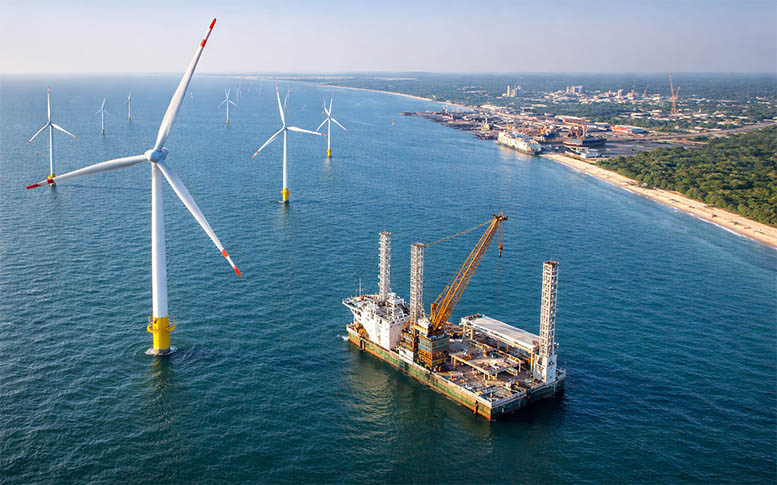
wind.jpg

Dakshina Kannada MP Capt Brijesh Chowta has urged the Centre to give high priority to offshore wind energy generation along the Mangaluru coast, citing its strategic importance to India’s green energy and port-led development goals.

Raising the issue in the Lok Sabha under Rule 377, Chowta said studies by the National Institute of Oceanography have identified the Mangaluru coastline as part of India’s promising offshore wind ‘Zone-2’, covering nearly 6,490 sq km. He noted that the region’s relatively low exposure to cyclones and earthquakes makes it suitable for long-term offshore wind projects and called for its development as a dedicated offshore wind energy zone.

Highlighting the role of New Mangalore Port, Chowta said its modern infrastructure, multiple berths and heavy cargo-handling capacity position it well as a logistics hub for transporting and assembling large wind energy equipment.

He also pointed to the presence of major industrial units such as MRPL, OMPL, UPCL and the Mangaluru SEZ, which could serve as direct buyers of green power through power purchase agreements, improving project viability and speeding up execution.

With Karnataka’s peak power demand crossing 18,000 MW in early 2025, Chowta stressed the need to diversify renewable energy sources. He added that offshore wind projects in the Arabian Sea are strategically safer compared to the cyclone-prone Bay of Bengal.

Calling the project vital to India’s target of 500 GW of renewable energy by 2030, Chowta urged the Ministry of New and Renewable Energy to initiate resource assessments, pilot projects and stakeholder consultations at the earliest.

Comments

Add new comment

  • Coastaldigest.com reserves the right to delete or block any comments.
  • Coastaldigset.com is not responsible for its readers’ comments.
  • Comments that are abusive, incendiary or irrelevant are strictly prohibited.
  • Please use a genuine email ID and provide your name to avoid reject.
News Network
February 5,2026

Bengaluru: As air quality continues to worsen across several parts of the city, hospitals in Bengaluru are reporting a steady rise in patients suffering from respiratory illnesses such as asthma, bronchitis and Chronic Obstructive Pulmonary Disease (COPD), health officials and doctors said.

Data from the Suvarna Arogya Suraksha Trust (SAST) shows that 3,891 patients received treatment for respiratory ailments between April and November 2024. The figure rose to 4,187 during the same period in 2025.

Private hospitals, too, are witnessing a 10–15 per cent year-on-year increase in such cases.

While doctors caution that the rise cannot be attributed solely to air pollution, a significant number of patients are non-smokers with no prior history of respiratory disease.

“Nearly 70 per cent of the patients we see are non-smokers with no previous respiratory issues. When other causes are ruled out, air pollution emerges as the most likely factor,” said Dr Manjunath PH, consultant interventional pulmonologist at a hospital in Kengeri.

Doctors noted that patient footfall spikes during the winter months and around Deepavali, when air quality typically worsens.

“There is a clear correlation between poor air quality and the rise in cases. People commonly present with persistent cough, breathlessness and irritation of the respiratory tract, indicating the impact of polluted air on their health,” said Dr Sheetal Chaurasia, consultant in pulmonary medicine at a private hospital in Whitefield.

Dr Chaurasia added that respiratory tract infections are also on the rise.

“Poor air quality leads to chronic airway inflammation, making the airways more vulnerable to infections. We are seeing an increase in both upper and lower respiratory tract infections,” she said.

Patients with pre-existing respiratory conditions remain the worst affected.

“For those already diagnosed with respiratory illnesses, deteriorating air quality significantly worsens the condition. Both the frequency and severity of attacks increase sharply,” said Dr Vandana P, a pulmonologist at a hospital on Bannerghatta Road.

Doctors also flagged a worrying trend of rising respiratory problems among younger adults and children.

To reduce exposure, they advised people to wear masks while travelling on two-wheelers or autos and ensure adequate ventilation at home to minimise indoor air pollution.

Comments

Add new comment

  • Coastaldigest.com reserves the right to delete or block any comments.
  • Coastaldigset.com is not responsible for its readers’ comments.
  • Comments that are abusive, incendiary or irrelevant are strictly prohibited.
  • Please use a genuine email ID and provide your name to avoid reject.