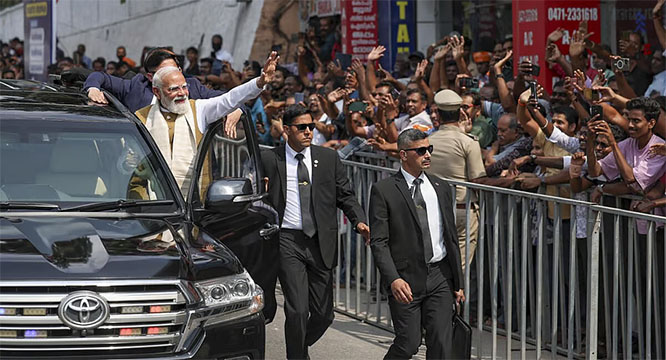
PM's Mann ki Baat call syncs with Karnataka plans for India's 1st toy cluster

News Network
August 31, 2020

Bengaluru, Aug 31: Spurred by Prime Minister Narendra Modi's 'vocal for local' call in his 'Mann Ki Baat' radio programme on Sunday, Karnataka Chief Minister B.S. Yediyurappa said the country's first toy making cluster would be built at Koppal in the state's northwest region.

"In line with Modi's vision of 'vocal for local', Koppal will be India's first toy making cluster in a 400-acre special economic zone, with Rs 5,000-crore investment to create 40,000 jobs over the next 5 years," Yediyurappa said after the Prime Minister's address in his radio programme that is broadcast on the last Sunday of every month.

Koppal is about 350km northwest of Bengaluru in the southern state.

Asserting that India had the talent and ability to become the world's toy hub, Modi called upon startups to work towards harnessing the potential while being vocal about local toys.

Noting that India's share in the global toy industry was very small, the Prime Minister said it was not fair to have such a small share and all have to work towards improving it.

"The global toy industry is worth Rs 7 lakh crore. I have been thinking how can India become a toy production hub, as toys can be used to build minds. Even poet Laureate Rabindranath Tagore spoke about the importance of toys," the PM recalled.

Modi, however, referred to the world famous Channapatna toys from the state's Ramanagara district, about 60km southwest of Bengaluru towards Mysuru, while pitching India to become the global toy hub.

"Toy clusters are coming up across the country with skilled artisans who have expertise in making good toys. Some parts of the country like Channapatna in Ramanagaram in Karnataka, Kondapalli in Krishna (Andhra Pradesh), Thanjavur in Tamil Nadu, Dhubri in Assam, and Varanasi in Uttar Pradesh are developing as toy clusters," Modi said in his 30-minute talk in Hindi.

Referring to his discussions with the Children University at Gandhinagar in Gujarat and the ministries of education, women and child development and micro, small and medium enterprises, the PM said he was thinking how to make new toys available to the children and how India could become a global hub for toy production.

"Toys not only augment activity, but also give flight to our aspirations. Toys, not only entertain, but also build the mind and foster intent too," asserted Modi.

Using ivory-wood, rosewood or sandalwood, Channapatna toys are made by traditional craft, which is protected as a geographical indication under the World Trade Organisation (WTO) by the state government.

Toy-making at Channapatna dates back to the reign of Mysore ruler Tipu Sultan in the 18th century when he invited artisans from Persia to train the locals in making wooden toys.

State-run Karnataka Handicrafts Development Corporation provides assistance to the artisans with marketing efforts to promote and market the toys across the country and overseas.

aceKarnataka has a legacy of toy making. The state is focusing on building a strong toy manufacturing industry by providing the required ingredients," said State Industries Principal Secretary Gaurav Gupta here on August 25.

Addressing top toy executives in a virtual meeting, Gupta said the state was making efforts to build a world-classAclusterAfor all investors.

As part of the toy manufacturing push, the state government is inviting domestic and international toy makers to the proposed toy cluster at Koppal.

According to estimates, Karnataka is the third largestAtoysAmarket in the country, with a value of $159 million and accounts for 9 per cent of the national market.

Growing at a CAGR of 18 per cent, the state's toy market is projected to touch $310 million by 2023.

"Toy manufacturing in Karnataka is getting a renewed push after Modi's call that the Indian toy market had potential to bring about a transformative change in the industry by promoting 'Vocal for Local' under AatmaNirbhar Bharat campaign," said Gupta on the occasion.

Karnataka offers world class machine tools infrastructure, favourable labour laws for toy manufacturers with subsidies to facilitate investments.

Comments

Add new comment

  • Coastaldigest.com reserves the right to delete or block any comments.
  • Coastaldigset.com is not responsible for its readers’ comments.
  • Comments that are abusive, incendiary or irrelevant are strictly prohibited.
  • Please use a genuine email ID and provide your name to avoid reject.
News Network
February 3,2026

wind.jpg

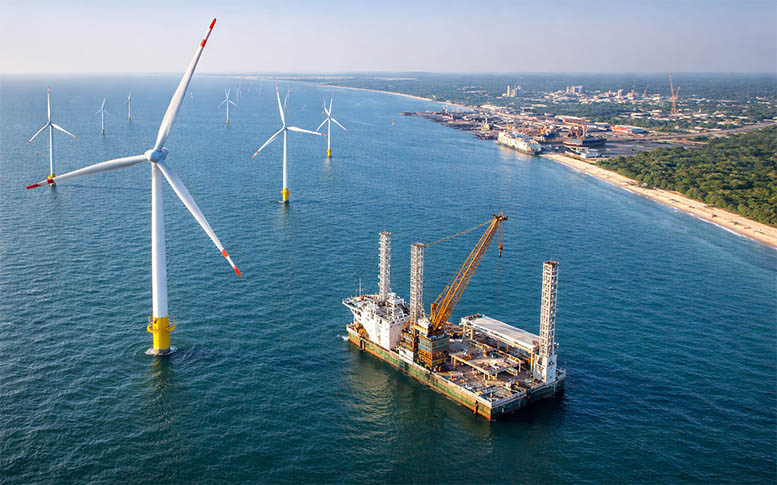
Dakshina Kannada MP Capt Brijesh Chowta has urged the Centre to give high priority to offshore wind energy generation along the Mangaluru coast, citing its strategic importance to India’s green energy and port-led development goals.

Raising the issue in the Lok Sabha under Rule 377, Chowta said studies by the National Institute of Oceanography have identified the Mangaluru coastline as part of India’s promising offshore wind ‘Zone-2’, covering nearly 6,490 sq km. He noted that the region’s relatively low exposure to cyclones and earthquakes makes it suitable for long-term offshore wind projects and called for its development as a dedicated offshore wind energy zone.

Highlighting the role of New Mangalore Port, Chowta said its modern infrastructure, multiple berths and heavy cargo-handling capacity position it well as a logistics hub for transporting and assembling large wind energy equipment.

He also pointed to the presence of major industrial units such as MRPL, OMPL, UPCL and the Mangaluru SEZ, which could serve as direct buyers of green power through power purchase agreements, improving project viability and speeding up execution.

With Karnataka’s peak power demand crossing 18,000 MW in early 2025, Chowta stressed the need to diversify renewable energy sources. He added that offshore wind projects in the Arabian Sea are strategically safer compared to the cyclone-prone Bay of Bengal.

Calling the project vital to India’s target of 500 GW of renewable energy by 2030, Chowta urged the Ministry of New and Renewable Energy to initiate resource assessments, pilot projects and stakeholder consultations at the earliest.

Comments

Add new comment

  • Coastaldigest.com reserves the right to delete or block any comments.
  • Coastaldigset.com is not responsible for its readers’ comments.
  • Comments that are abusive, incendiary or irrelevant are strictly prohibited.
  • Please use a genuine email ID and provide your name to avoid reject.
News Network
January 23,2026

Karnataka Governor Thaawarchand Gehlot read only three lines from the 122-paragraph address prepared by the Congress-led state government while addressing the joint session of the Legislature on Thursday, effectively bypassing large sections critical of the BJP-led Union government.

The omitted portions of the customary Governor’s address outlined what the state government described as a “suppressive situation in economic and policy matters” under India’s federal framework. The speech also sharply criticised the Centre’s move to replace the Mahatma Gandhi National Rural Employment Guarantee Act (MGNREGA) with the Viksit Bharat–Guarantee for Rozgar and Ajeevika Mission (Gramin) Act, commonly referred to as the VB-GRAM (G) Act.

Governor Gehlot had earlier conveyed his objection to several paragraphs that were explicitly critical of the Union government. On Thursday, he confined himself to the opening lines — “I extend a warm welcome to all of you to the joint session of the State legislature. I am extremely pleased to address this august House” — before jumping directly to the concluding sentence of the final paragraph.

He ended the address by reading the last line of paragraph 122: “Overall, my government is firmly committed to doubling the pace of the State’s economic, social and physical development. Jai Hind — Jai Karnataka.”

According to the prepared speech, the Karnataka government demanded the scrapping of the VB-GRAM (G) Act, describing it as “contractor-centric” and detrimental to rural livelihoods, and called for the full restoration of MGNREGA. The state government argued that the new law undermines decentralisation, weakens labour protections, and centralises decision-making in violation of constitutional norms.

Key points from the unread sections of the speech:

•    Karnataka facing a “suppressive” economic and policy environment within the federal system

•    Repeal of MGNREGA described as a blow to rural livelihoods

•    VB-GRAM (G) Act accused of protecting corporate and contractor interests

•    New law alleged to weaken decentralised governance

•    Decision-making said to be imposed by the Centre without consulting states

•    Rights of Adivasis, women, backward classes and agrarian communities curtailed

•    Labourers allegedly placed under contractor control

•    States facing mounting fiscal stress due to central policies

•    VB-GRAM (G) Act accused of enabling large-scale corruption

Comments

Add new comment

  • Coastaldigest.com reserves the right to delete or block any comments.
  • Coastaldigset.com is not responsible for its readers’ comments.
  • Comments that are abusive, incendiary or irrelevant are strictly prohibited.
  • Please use a genuine email ID and provide your name to avoid reject.
News Network
January 23,2026

modIKERALA.jpg

Prime Minister Narendra Modi, during his visit to Thiruvananthapuram on Friday, January 23, indicated that the Bharatiya Janata Party (BJP) is aiming to expand its political footprint in Kerala ahead of the Assembly elections scheduled in the coming months.

Speaking at a BJP-organised public meeting, Modi drew parallels between the party’s early electoral gains in Gujarat and its recent victory in the Thiruvananthapuram Municipal Corporation. The civic body win, which ended decades of Left control, was cited by the Prime Minister as a possible starting point for the party’s broader ambitions in the state.

Recalling BJP’s political trajectory in Gujarat, Modi said the party was largely insignificant before 1987 and received little media attention. He pointed out that the BJP’s first major breakthrough came with its victory in the Ahmedabad Municipal Corporation that year.

“Just as our journey in Gujarat began with one city, Kerala’s journey has also started with a single city,” Modi said, suggesting that the party’s municipal-level success could translate into wider electoral acceptance.

The Prime Minister alleged that successive governments led by the Left Democratic Front (LDF) and the United Democratic Front (UDF) had failed to adequately develop Thiruvananthapuram. He accused both fronts of corruption and neglect, claiming that basic infrastructure and facilities were denied to the capital city for decades.

According to Modi, the BJP’s control of the civic body represents a shift driven by public dissatisfaction with the existing political alternatives. He asserted that the BJP administration in Thiruvananthapuram had begun working towards development, though no specific details or timelines were outlined.

Addressing the gathering at Putharikandam Maidan, Modi said the BJP intended to project Thiruvananthapuram as a “model city,” reiterating his party’s commitment to governance-led change.

The Prime Minister’s visit to Kerala also included the inauguration of several development projects and the flagging off of new train services, as the BJP intensifies its political outreach in the poll-bound state.

Comments

Add new comment

  • Coastaldigest.com reserves the right to delete or block any comments.
  • Coastaldigset.com is not responsible for its readers’ comments.
  • Comments that are abusive, incendiary or irrelevant are strictly prohibited.
  • Please use a genuine email ID and provide your name to avoid reject.