




Pilot's son fights to clear his father's name over Mangalore Air India crash

[email protected] (The National)
January 4, 2012

pilotson
Dubai, January 4: The son of the Serbian pilot blamed for an Air India crash in Mangalore that killed 158 people has called for the accident investigation to be reopened, and vows to clear his father's name.

Alexander Glusica, 26, said that investigators, while preparing the report that found his father negligent, had not considered what he claims are inadequate safety measures at Mangalore Airport. He has asked Air India to look into the airport's safety and other possible causes of the crash.

"I find it quite necessary to resolve the whole situation and to present our father to the public in the way that he really was, and not in the way he was described in the official report and in the media," said Mr Glusica, of Belgrade, who is also a pilot.

"The only aim of the report was, from the beginning of the investigation, to put the blame on my father. The crucial point in the report is how unsafe the Mangalore Airport is."

The ill-fated Air India Express flight had been travelling from Dubai to Mangalore when it overshot the runway and crashed at Mangalore Airport on May 22, 2010. Only eight people survived.

A court of inquiry appointed by the Indian government found Capt Zlatko Glusica responsible for the crash, saying that he had been sleeping for most of the flight and woke up disoriented when the aircraft was about to land.

The report said the captain, who died in the crash, had been sleeping in his seat for about an hour and 40 minutes during the flight, and that sleep inertia might have clouded his judgement.

However, his son pointed out that the aircraft caught fire after crashing into the instrument landing system at the end of the runway. He believes positioning the system in such a place was partly to blame for the disaster.

"The location of the non-frangible structure at this point is forbidden by every international aviation regulation," Mr Glusica said. "The access roads to the crash site are also in very bad condition. That is why the fire rescue operators failed to reach and contain the fire in a reasonable time."

Mr Glusica said that he and some colleagues of his late father had prepared a list of arguments against the court of inquiry report.

"These are only a few remarks among those from the report which give a clue about how hazardous the Mangalore runway is. Having that in mind, it is more than necessary to reopen the investigation, all in the aim of preventing another disaster from happening once more," he said. "We will forward a letter to Air India asking for an explanation as to why our father is being held responsible for the crash even though there were a lot of other issues that caused the accident."

Mr Glusica said he would take the matter to court.

"Our plan is to file a lawsuit against them in order to clear our father's name that they so intentionally wanted to abuse."

However, an Air India spokesman based in New Delhi said the court of inquiry's findings could not be disputed.

"He has been making these claims for a long time, and as an airline we have no comment except that the court of inquiry is a legal committee set up by the government and has done detailed work on the accident," the spokesman said.

The spokesman said Air India had contacted the family regarding the crash, despite Mr Glusica's denial that it had ever done so.

Mr Glusica said his father had been an employee of Air India since 2008, and that he had three children - himself and his two sisters.

One of the sisters, Merima, wrote a poem in honour of their father. She wrote:

"What can we do when winter comes with the beautiful snowflakes? Lonely, we will walk down the street, looking into your windows …

"The lights will be off. We know there's no one there since a long time ago. Only darkness … Tears in my eyes, that's all that will remain … May your wings be light, my angel."

"We miss our father so much," Mr Glusica said. "He was such a wonderful and caring human being. We love him."

Comments

Add new comment

  • Coastaldigest.com reserves the right to delete or block any comments.
  • Coastaldigset.com is not responsible for its readers’ comments.
  • Comments that are abusive, incendiary or irrelevant are strictly prohibited.
  • Please use a genuine email ID and provide your name to avoid reject.
News Network
February 3,2026

Bengaluru: Following reports of fresh Nipah virus (NiV) cases in West Bengal and heightened vigilance across parts of Southeast Asia, the Karnataka Health Department has placed the state on high alert and activated emergency preparedness protocols.

Health officials said enhanced surveillance measures have been initiated after two healthcare workers in Barasat, West Bengal, tested positive for the virus earlier this month. While no cases have been reported in Karnataka so far, authorities said the state’s past exposure to Nipah outbreaks and high inter-state mobility warranted preventive action.

Officials have directed district health teams to intensify monitoring, particularly at hospitals and points of entry, and to ensure early detection and isolation of suspected cases.

High Mortality Virus with Multiple Transmission Routes

Nipah virus is a zoonotic disease that can spread from animals to humans and has a reported fatality rate ranging between 60 and 75 per cent. Fruit bats, also known as flying foxes, are the natural reservoirs of the virus and can transmit it by contaminating food sources with saliva or urine.

Known modes of transmission include:

•    Contaminated food: Consumption of fruits partially eaten by bats or raw date-palm sap
•    Animal contact: Exposure to infected pigs or other animals
•    Human-to-human transmission: Close contact with body fluids of infected persons, particularly in healthcare settings

Symptoms and Disease Progression

The incubation period typically ranges from 4 to 14 days, though delayed onset has also been reported. Early symptoms often resemble common viral infections, making prompt clinical suspicion critical.

•    Initial symptoms: Fever, headache, body aches, fatigue, sore throat
•    Progressive symptoms: Drowsiness, disorientation, altered mental state
•    Severe stage: Seizures, neck stiffness and acute encephalitis, which can rapidly progress to coma

Public Health Advisory

The Health Department has issued precautionary guidelines urging the public to adopt risk-avoidance practices to prevent any local spillover.

Do’s
•    Wash fruits thoroughly before consumption
•    Drink boiled and cooled water
•    Use protective equipment while handling livestock
•    Maintain strict hand hygiene

Don’ts
•    Avoid fruits found on the ground or showing bite marks
•    Do not consume beverages made from raw tree sap, including toddy
•    Avoid areas with dense bat populations
•    Do not handle sick or dead animals

Preparedness Measures

Officials confirmed that isolation wards are being readied in major government hospitals and that medical staff are being sensitised to identify early warning signs.

“There is no cause for panic, but there is a need for heightened vigilance,” a senior health official said, adding that there is currently no approved vaccine or specific antiviral treatment for Nipah, and care remains largely supportive.

Comments

Add new comment

  • Coastaldigest.com reserves the right to delete or block any comments.
  • Coastaldigset.com is not responsible for its readers’ comments.
  • Comments that are abusive, incendiary or irrelevant are strictly prohibited.
  • Please use a genuine email ID and provide your name to avoid reject.
News Network
February 4,2026

shettigar.jpg

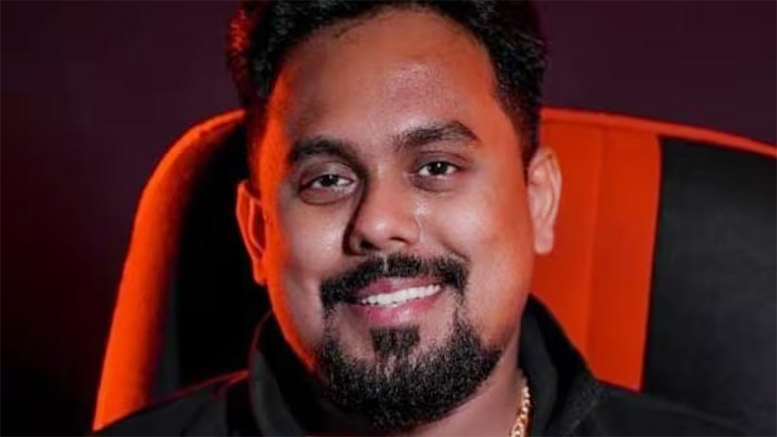
An Indian resident who won the Dh20 million (approximately Rs 50 crore) jackpot in Abu Dhabi's Big Ticket draw has told of his joy at sharing his life-changing fortune with a friend.

Shanthanu Shettigar, a shop manager in Muscat, regularly buys tickets for the monthly grand prize draw with one of his closest friends – and the pair won on February 3.

Mr Shettigar, 33, who is from Udyavar in Udupi district of the southern state of Karnataka and has lived in the Omani capital for eight years, said he was left speechless after learning of his success.

“When I first moved to Muscat, many of my colleagues were purchasing Big Ticket, which encouraged me to give it a try,” he said.

“I started buying tickets on my own, and later began sharing tickets with a close friend. The ticket that brought me this win was one we purchased together.”

“Like most people, I receive a lot of spam calls, and I was fully absorbed in my work as well. I knew the live draw was taking place tonight, but I never imagined my name would be announced,” he said.

“When I realised it was real and that I had won, I was honestly speechless. It still hasn’t fully sunk in, but I’m extremely happy.”

Mr Shettigar is not sure how he will spend his share of the money, but encouraged others to take part.

“This win was completely unexpected, so I want to take some time to think things through before deciding what to do next,” he said.

“I would definitely encourage others to participate with Big Ticket, whether with family or friends – you never know when your moment might come.”

The Big Ticket was established in 1992 with an initial first prize of Dh1 million. It is one of the most popular monthly raffles in the UAE.

It has transformed the lives of many people across the Emirates and beyond.

Entry to the Big Ticket Millionaire is Dh500. Tickets can be bought online or at counters at Zayed International Airport and Al Ain Airport.

Comments

Add new comment

  • Coastaldigest.com reserves the right to delete or block any comments.
  • Coastaldigset.com is not responsible for its readers’ comments.
  • Comments that are abusive, incendiary or irrelevant are strictly prohibited.
  • Please use a genuine email ID and provide your name to avoid reject.
News Network
February 5,2026

Bengaluru: As air quality continues to worsen across several parts of the city, hospitals in Bengaluru are reporting a steady rise in patients suffering from respiratory illnesses such as asthma, bronchitis and Chronic Obstructive Pulmonary Disease (COPD), health officials and doctors said.

Data from the Suvarna Arogya Suraksha Trust (SAST) shows that 3,891 patients received treatment for respiratory ailments between April and November 2024. The figure rose to 4,187 during the same period in 2025.

Private hospitals, too, are witnessing a 10–15 per cent year-on-year increase in such cases.

While doctors caution that the rise cannot be attributed solely to air pollution, a significant number of patients are non-smokers with no prior history of respiratory disease.

“Nearly 70 per cent of the patients we see are non-smokers with no previous respiratory issues. When other causes are ruled out, air pollution emerges as the most likely factor,” said Dr Manjunath PH, consultant interventional pulmonologist at a hospital in Kengeri.

Doctors noted that patient footfall spikes during the winter months and around Deepavali, when air quality typically worsens.

“There is a clear correlation between poor air quality and the rise in cases. People commonly present with persistent cough, breathlessness and irritation of the respiratory tract, indicating the impact of polluted air on their health,” said Dr Sheetal Chaurasia, consultant in pulmonary medicine at a private hospital in Whitefield.

Dr Chaurasia added that respiratory tract infections are also on the rise.

“Poor air quality leads to chronic airway inflammation, making the airways more vulnerable to infections. We are seeing an increase in both upper and lower respiratory tract infections,” she said.

Patients with pre-existing respiratory conditions remain the worst affected.

“For those already diagnosed with respiratory illnesses, deteriorating air quality significantly worsens the condition. Both the frequency and severity of attacks increase sharply,” said Dr Vandana P, a pulmonologist at a hospital on Bannerghatta Road.

Doctors also flagged a worrying trend of rising respiratory problems among younger adults and children.

To reduce exposure, they advised people to wear masks while travelling on two-wheelers or autos and ensure adequate ventilation at home to minimise indoor air pollution.

Comments

Add new comment

  • Coastaldigest.com reserves the right to delete or block any comments.
  • Coastaldigset.com is not responsible for its readers’ comments.
  • Comments that are abusive, incendiary or irrelevant are strictly prohibited.
  • Please use a genuine email ID and provide your name to avoid reject.