Students urged to fight globalisation, commercalisation

January 5, 2012

SIO_5Jan_1

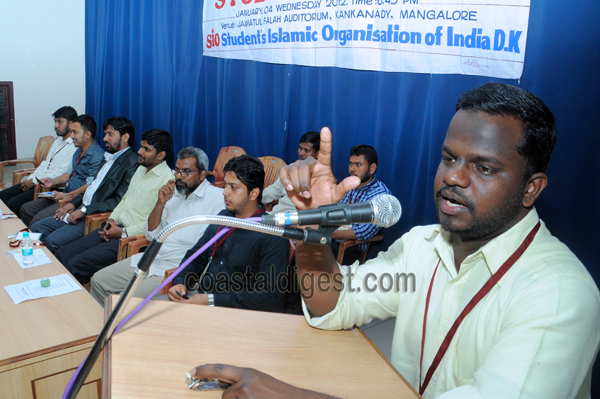
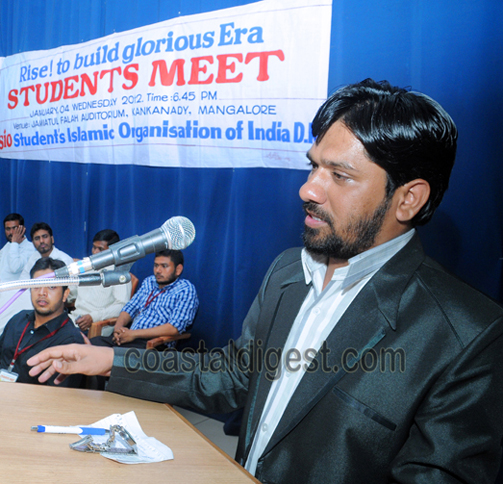
Mangalore, January 5: “Globalisation has led to unbridled commercialization which in turn has given birth to a number of problems including the increasing gulf between the haves and the have nots. The student community must raise unitedly against problems of injustice and deprivation,” said Mohammed Azharuddin, national president of the Students Islamic Organisation of India.

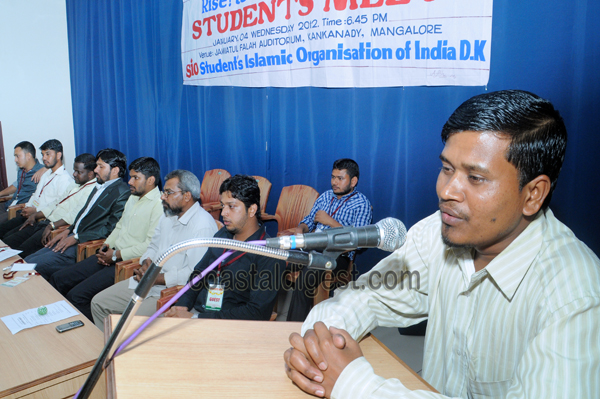
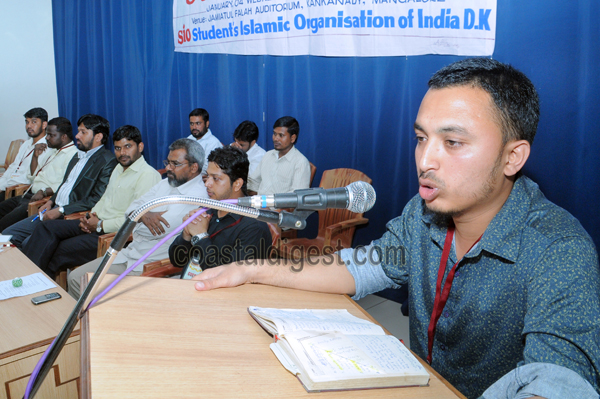
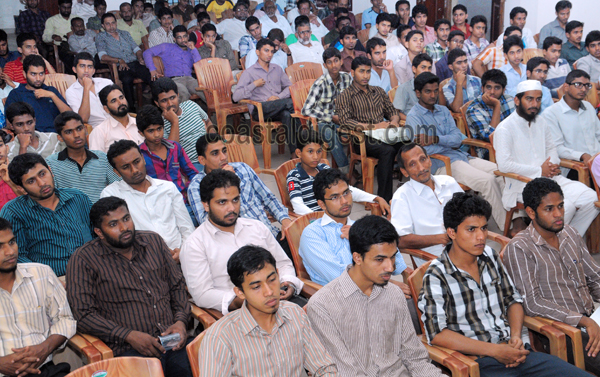
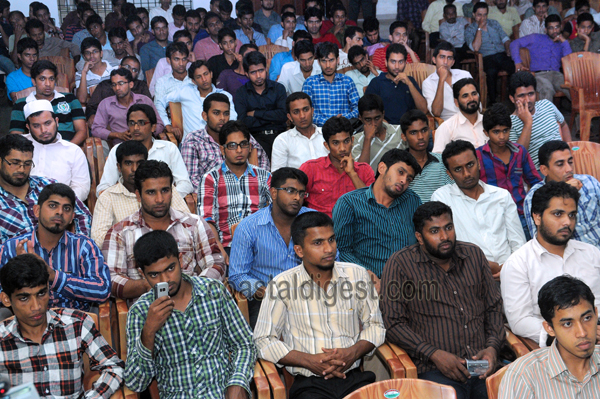
He was speaking at a Students Meet at the Jamiyyatul Falah auditorium at Kankanady here on Wednesday.

Mr. Azharuddin urged the students not to confine themselves to just academic activities, but take up the causes of the society. “Youth is playing a crucial role in all the revolutions and uprising in the recent past. Therefore, the youth of today should not confine their energies only towards achieving higher marks. They should respond to the social problems. We should try to safeguard the dignity of our country,” he said.

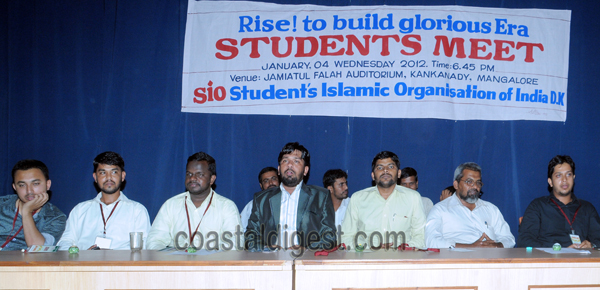
Speaking on the occasion, P.M. Saleh, general secretary of the organization, insisted that peace and harmony should become a part and parcel of our life. Ashfaq Ahmed Sharief, the Karnataka State president of the organization, in his introductory remarks, said that corruption was the biggest curse on our society and concerted effort was needed to end the menace.

Sayeed Ismail, the city president of Jamate Islami Hind, SIO national organizing secretary Shaukath Ali, among others were present.

The programme was followed by a question answer session.
SIO_5Jan_2

SIO_5Jan_3

SIO_5Jan_4

SIO_5Jan_5

SIO_5Jan_6

SIO_5Jan_7

SIO_5Jan_8

SIO_5Jan_9

Comments

Add new comment

  • Coastaldigest.com reserves the right to delete or block any comments.
  • Coastaldigset.com is not responsible for its readers’ comments.
  • Comments that are abusive, incendiary or irrelevant are strictly prohibited.
  • Please use a genuine email ID and provide your name to avoid reject.
News Network
January 23,2026

Karnataka Governor Thaawarchand Gehlot read only three lines from the 122-paragraph address prepared by the Congress-led state government while addressing the joint session of the Legislature on Thursday, effectively bypassing large sections critical of the BJP-led Union government.

The omitted portions of the customary Governor’s address outlined what the state government described as a “suppressive situation in economic and policy matters” under India’s federal framework. The speech also sharply criticised the Centre’s move to replace the Mahatma Gandhi National Rural Employment Guarantee Act (MGNREGA) with the Viksit Bharat–Guarantee for Rozgar and Ajeevika Mission (Gramin) Act, commonly referred to as the VB-GRAM (G) Act.

Governor Gehlot had earlier conveyed his objection to several paragraphs that were explicitly critical of the Union government. On Thursday, he confined himself to the opening lines — “I extend a warm welcome to all of you to the joint session of the State legislature. I am extremely pleased to address this august House” — before jumping directly to the concluding sentence of the final paragraph.

He ended the address by reading the last line of paragraph 122: “Overall, my government is firmly committed to doubling the pace of the State’s economic, social and physical development. Jai Hind — Jai Karnataka.”

According to the prepared speech, the Karnataka government demanded the scrapping of the VB-GRAM (G) Act, describing it as “contractor-centric” and detrimental to rural livelihoods, and called for the full restoration of MGNREGA. The state government argued that the new law undermines decentralisation, weakens labour protections, and centralises decision-making in violation of constitutional norms.

Key points from the unread sections of the speech:

•    Karnataka facing a “suppressive” economic and policy environment within the federal system

•    Repeal of MGNREGA described as a blow to rural livelihoods

•    VB-GRAM (G) Act accused of protecting corporate and contractor interests

•    New law alleged to weaken decentralised governance

•    Decision-making said to be imposed by the Centre without consulting states

•    Rights of Adivasis, women, backward classes and agrarian communities curtailed

•    Labourers allegedly placed under contractor control

•    States facing mounting fiscal stress due to central policies

•    VB-GRAM (G) Act accused of enabling large-scale corruption

Comments

Add new comment

  • Coastaldigest.com reserves the right to delete or block any comments.
  • Coastaldigset.com is not responsible for its readers’ comments.
  • Comments that are abusive, incendiary or irrelevant are strictly prohibited.
  • Please use a genuine email ID and provide your name to avoid reject.