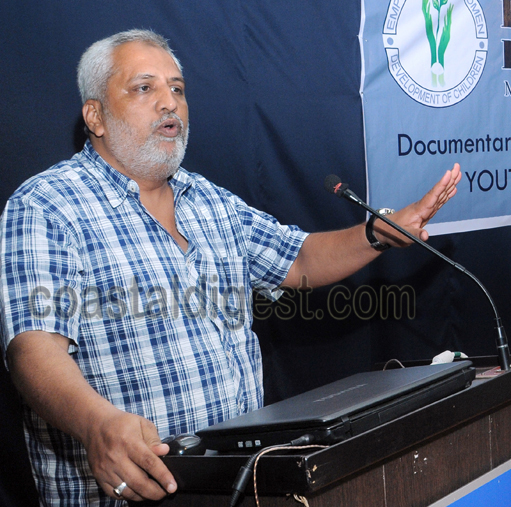
Dedicated and sustained work can change community's image: AS Puthige

[email protected] (CD Network, Photos by Ahmed Anwar )
January 6, 2012

HD_18

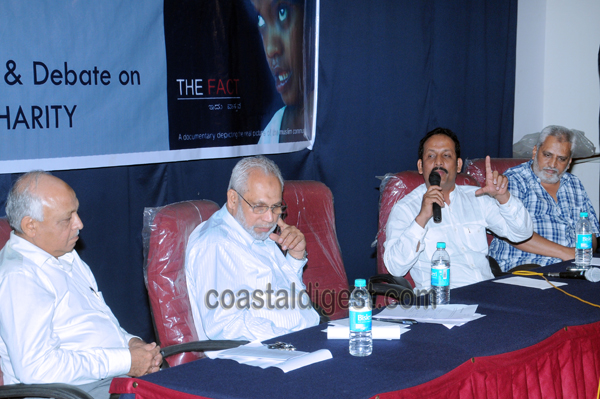
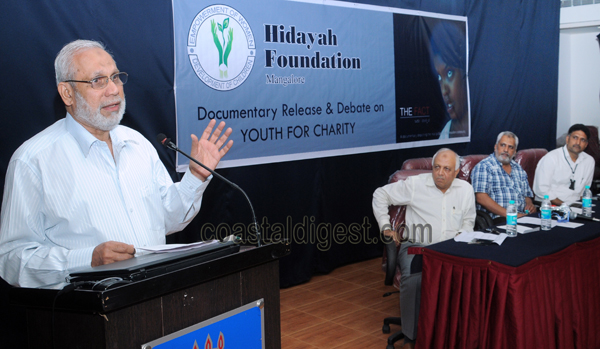
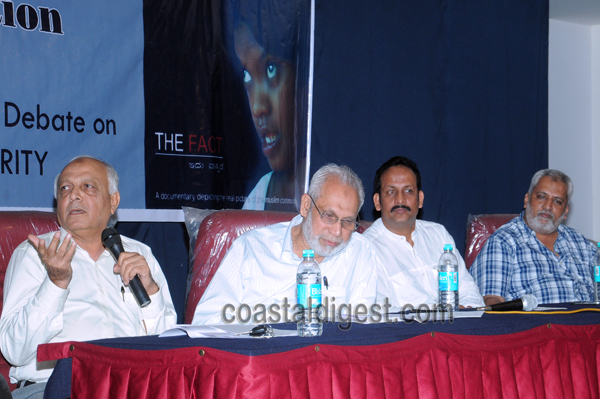
Mangalore, January 6: Sustained and committed work by a small group of resourceful individuals can surely solve many problems faced by the downtrodden section of the Muslim community in the region, said Abdussalam Puthige, Chief Editor of Varthabharathi.

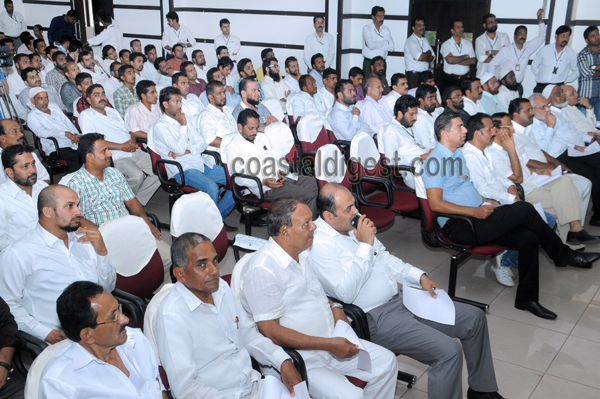
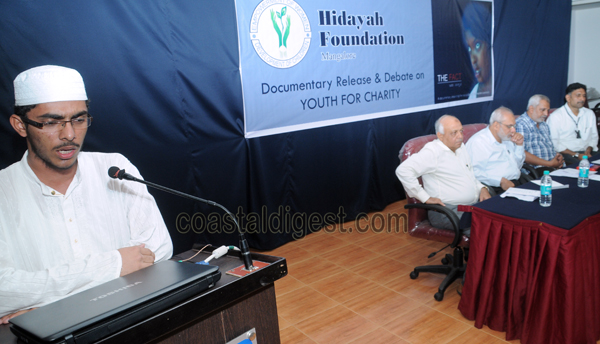
He was delivering the presidential address at a documentary launch-cum-discussion programme organised by Hidayah Foundation at IMA Hall, here on Friday.

Pointing to the new documentary titled 'The Fact', which visualised the pathetic condition of the Muslims living in the rural areas of Dakshina Kannada district, who were deprived of all facilities and among whom there were a large number of physically and mentally challenged men, women and children, Mr Puthige said determination and hard work by a few enthusiastic and committed youths can bring about a change in the society.

Such kind of poverty related problems are not new to the Muslim community, he said adding that “what we need are the 'people-with-life', who can move by witnessing the heartrending facts of their community, as we cannot expect anything from 'dead bodies'.”

Mr Puthige pointed out that the irresponsibility of the well off segment of the community has largely contributed to conversion of 'khaira ummah' into the 'community with special needs', in which you find a large number of beggars.

Giving the examples of Reza Shah Pahlavi of Iran, Saddam Hussein of Iraq and Colonel Muammar Gaddafi of Libya, the three powerful Muslim rulers, who finally met tragic ends, he warned the affluent section of the Muslim community of similar dire consequences if they failed to fulfill their responsibilities.

Chairman of Unity Academy of Education Dr C P Habeeb Rahman, who launched the documentary, opined that the returning to the Qur'an and Sunnah is the only solution to all the problems of Muslim community, which has moved away from the Islamic teachings.

Reminding the people about their short life in this world, social worker Abdul Rauf Puthige suggested the affluent class of the Muslims to write a will to distribute at least 10 percent of their property among the needy after their death.

fact

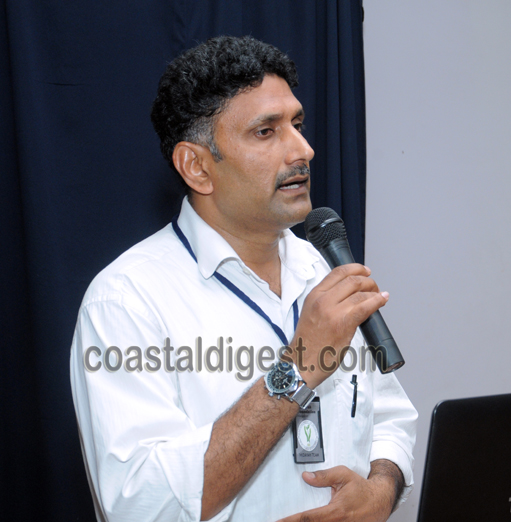
State joint-secretary of Jamaat-e-Islami Hind Mohammed Kunhi said that there was a need to create awareness about Zakath in the community, apart from trying to create an alternative system when the elected governments were failing in their responsibilities.

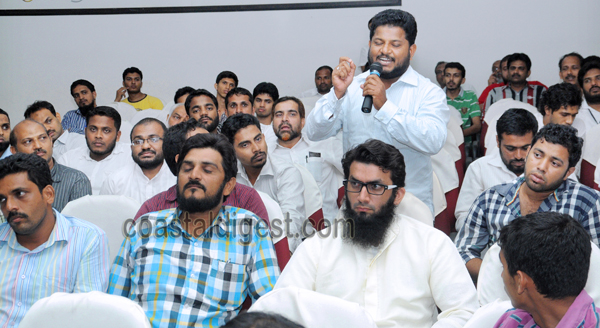
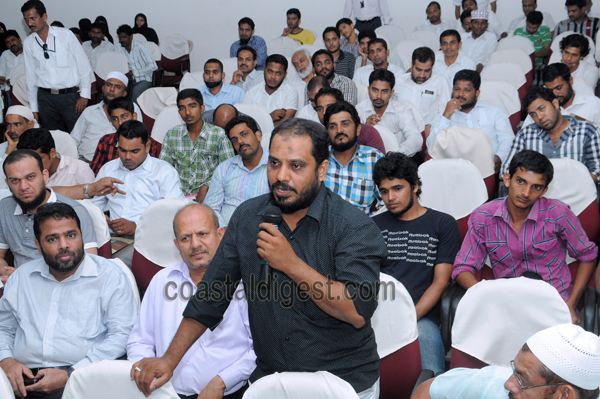
Mangalore MLA U T Khader, Imam of Ibrahim Khaleel Masjid Imran, Rafeeuddeen Kudroli and Zameer Amber also took part in the discussion. Abdul Razzak Ananthady compered the programme. Mohammed Haneef G welcomed the gathering and Umar U H proposed vote of thanks.
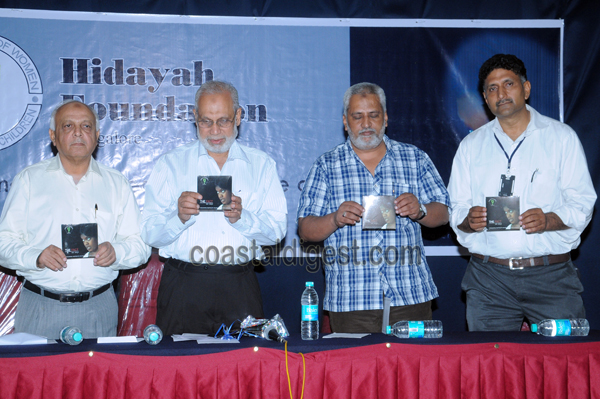
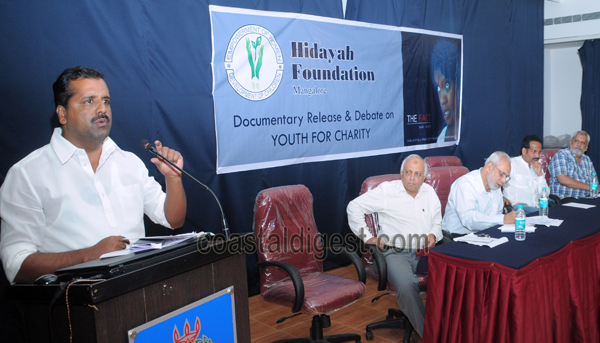
HD_7JAN_1

HD_7JAN_2

HD_7JAN_3

HD_7JAN_4

HD_7JAN_6

HD_7JAN_7

HD_7JAN_8

HD_7JAN_9

HD_7JAN_10

HD_7JAN_11

HD_7JAN_12

HD_7JAN_13

HD_7JAN_14

HD_7JAN_15

HD_7JAN_16

HD_7JAN_17

Comments

Add new comment

  • Coastaldigest.com reserves the right to delete or block any comments.
  • Coastaldigset.com is not responsible for its readers’ comments.
  • Comments that are abusive, incendiary or irrelevant are strictly prohibited.
  • Please use a genuine email ID and provide your name to avoid reject.
News Network
January 23,2026

Karnataka Governor Thaawarchand Gehlot read only three lines from the 122-paragraph address prepared by the Congress-led state government while addressing the joint session of the Legislature on Thursday, effectively bypassing large sections critical of the BJP-led Union government.

The omitted portions of the customary Governor’s address outlined what the state government described as a “suppressive situation in economic and policy matters” under India’s federal framework. The speech also sharply criticised the Centre’s move to replace the Mahatma Gandhi National Rural Employment Guarantee Act (MGNREGA) with the Viksit Bharat–Guarantee for Rozgar and Ajeevika Mission (Gramin) Act, commonly referred to as the VB-GRAM (G) Act.

Governor Gehlot had earlier conveyed his objection to several paragraphs that were explicitly critical of the Union government. On Thursday, he confined himself to the opening lines — “I extend a warm welcome to all of you to the joint session of the State legislature. I am extremely pleased to address this august House” — before jumping directly to the concluding sentence of the final paragraph.

He ended the address by reading the last line of paragraph 122: “Overall, my government is firmly committed to doubling the pace of the State’s economic, social and physical development. Jai Hind — Jai Karnataka.”

According to the prepared speech, the Karnataka government demanded the scrapping of the VB-GRAM (G) Act, describing it as “contractor-centric” and detrimental to rural livelihoods, and called for the full restoration of MGNREGA. The state government argued that the new law undermines decentralisation, weakens labour protections, and centralises decision-making in violation of constitutional norms.

Key points from the unread sections of the speech:

•    Karnataka facing a “suppressive” economic and policy environment within the federal system

•    Repeal of MGNREGA described as a blow to rural livelihoods

•    VB-GRAM (G) Act accused of protecting corporate and contractor interests

•    New law alleged to weaken decentralised governance

•    Decision-making said to be imposed by the Centre without consulting states

•    Rights of Adivasis, women, backward classes and agrarian communities curtailed

•    Labourers allegedly placed under contractor control

•    States facing mounting fiscal stress due to central policies

•    VB-GRAM (G) Act accused of enabling large-scale corruption

Comments

Add new comment

  • Coastaldigest.com reserves the right to delete or block any comments.
  • Coastaldigset.com is not responsible for its readers’ comments.
  • Comments that are abusive, incendiary or irrelevant are strictly prohibited.
  • Please use a genuine email ID and provide your name to avoid reject.
News Network
February 1,2026

Golf.jpg

The coastal city of Mangaluru is gearing up for a major sporting milestone with the launch of a Golf Excellence Academy at the Pilikula Golf Club (PGC), scheduled to open on May 31. The initiative aims to position Mangaluru firmly on India’s national golfing map.

Speaking to reporters on Saturday during PGC’s first-ever floodlit Pro-Am tournament, club captain Manoj Kumar Shetty said the project is being funded by UAE-based philanthropist Michael D’Souza and is currently in the design phase. Experts from leading golf academies across the country are expected to visit Mangaluru to help shape the training programme and infrastructure.

The academy will train 20 young golfers at a time, with a long-term vision of producing national-level players from the region. Until now, PGC relied on an in-house coach, but the recent renovation of the course and the introduction of floodlights have opened new possibilities for expanding the sport.

Shetty said discussions are underway with two reputed coaching academies, whose heads are expected to visit PGC shortly. “A dormitory for trainers is already under construction. We are inviting academies to assess the facilities and suggest changes so we can build a truly world-class Golf Excellence Academy,” he said.

Professional golfer Aryan Roopa Anand noted that the floodlit course would be a game-changer for young players. “Students can now practise after school hours, even up to 8 or 9 pm, without compromising on academics,” he said.

Comments

Add new comment

  • Coastaldigest.com reserves the right to delete or block any comments.
  • Coastaldigset.com is not responsible for its readers’ comments.
  • Comments that are abusive, incendiary or irrelevant are strictly prohibited.
  • Please use a genuine email ID and provide your name to avoid reject.
News Network
February 1,2026

Bengaluru: The Karnataka High Court has refused to quash an investigation against a WhatsApp group administrator accused of allowing the circulation of obscene and offensive images depicting Hindutva politicians and idols in 2021.

Justice M Nagaprasanna observed that, prima facie, the ingredients of the offence under Section 295A of the Indian Penal Code were made out. “The offence under Section 295A of the IPC is met to every word of its ingredient, albeit prima facie,” the judge said.

The petitioner, Sirajuddin, a resident of Belthangady taluk in Dakshina Kannada district, had challenged the FIR registered against him at the CEN (Cyber, Economics and Narcotics) police station, Mangaluru, for offences under Section 295A of the IPC and Section 67 of the Information Technology Act. Section 295A relates to punishment for deliberate and malicious acts intended to outrage the religious feelings of any class of citizens.

According to the complaint filed by K Jayaraj Salian, also a resident of Belthangady taluk, he received a WhatsApp group link from an unknown source and was added to the group after accessing it. The group reportedly had six administrators and around 250 participants, where obscene and offensive images depicting Hindu deities and certain political figures were allegedly circulated repeatedly.

Sirajuddin was arrested in connection with the case and later released on bail on February 16, 2021. He argued before the court that he was being selectively targeted, while other administrators—including the creator of the group—were neither arrested nor investigated. He also contended that the Magistrate could not have taken cognisance of the offence under Section 295A without prior sanction under Section 196(1) of the CrPC.

Rejecting the argument, Justice Nagaprasanna held that prior sanction is required only at the stage of taking cognisance, and not at the stage of registration of the crime or during investigation.

The judge noted that the State had produced the entire investigation material before the court. “A perusal of the material reveals depictions of Hindu deities in an extraordinarily obscene, demeaning and profane manner. The content is such that its reproduction in a judicial order would itself be inappropriate,” the court said, adding that the material, on its face, had the tendency to outrage religious feelings and disturb communal harmony.

Observing that the case was still at the investigation stage, the court said it could not interdict the probe at this juncture. However, it expressed concern that the investigating officer appeared to have not proceeded uniformly against all administrators. The court clarified that if the investigation revealed the active involvement of any member in permitting the circulation of such content, they must also be proceeded against.

“At this investigative stage, any further observation by this Court would be unnecessary,” the order concluded.

Comments

Add new comment

  • Coastaldigest.com reserves the right to delete or block any comments.
  • Coastaldigset.com is not responsible for its readers’ comments.
  • Comments that are abusive, incendiary or irrelevant are strictly prohibited.
  • Please use a genuine email ID and provide your name to avoid reject.