Curtains come down on memorable Alva's Virasat

January 9, 2012

AL_R9Jan_16

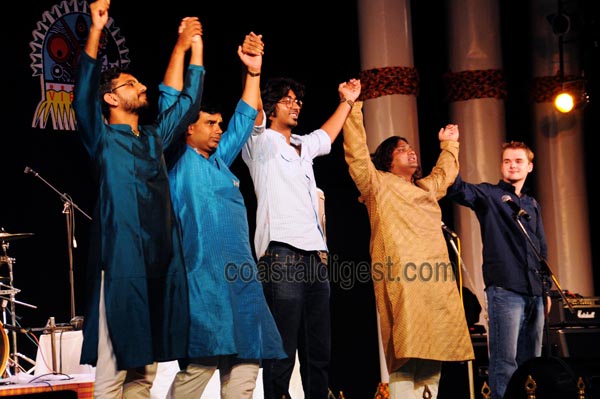
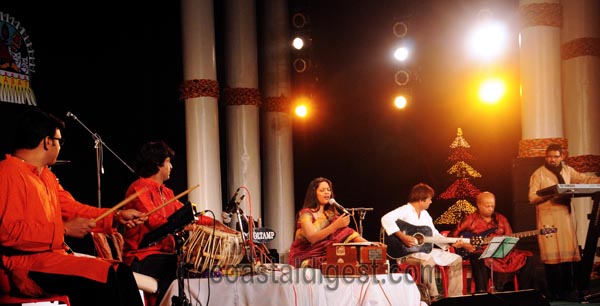
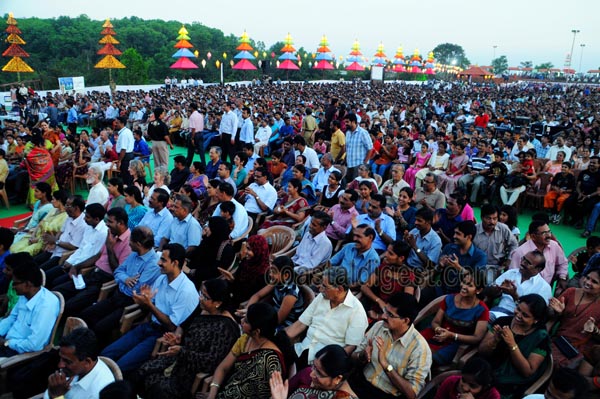
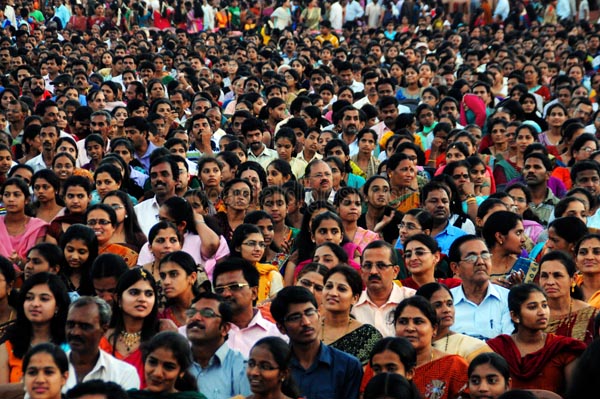
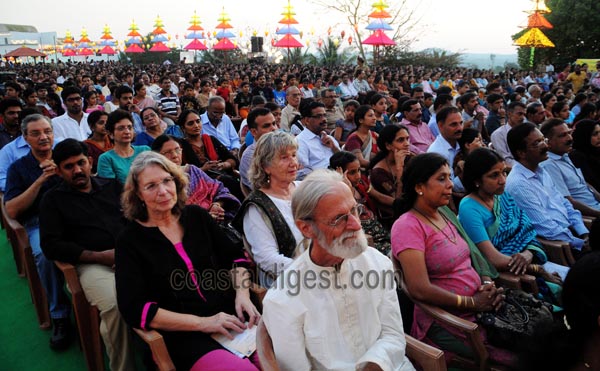
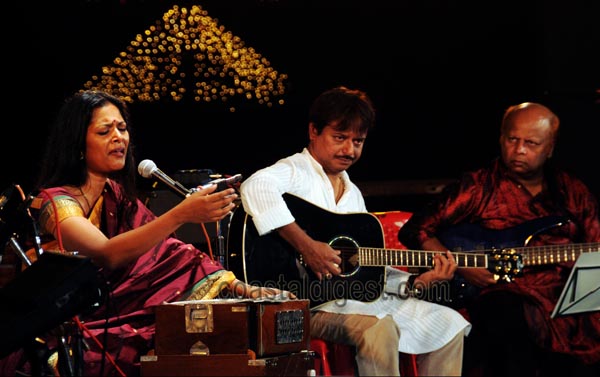
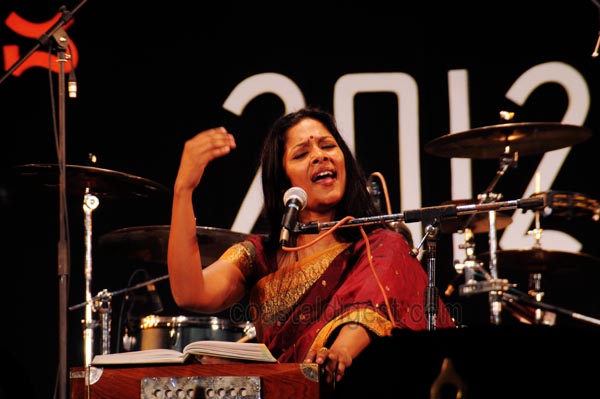
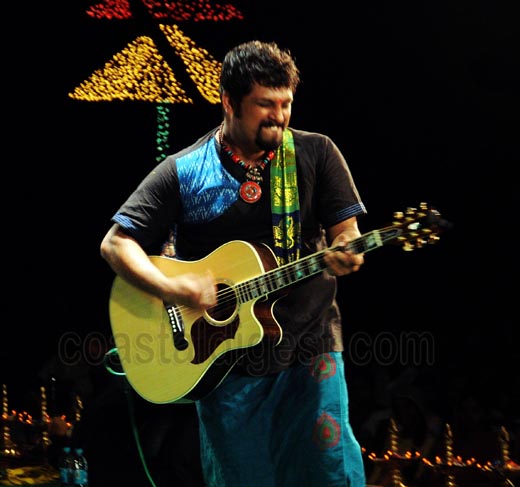
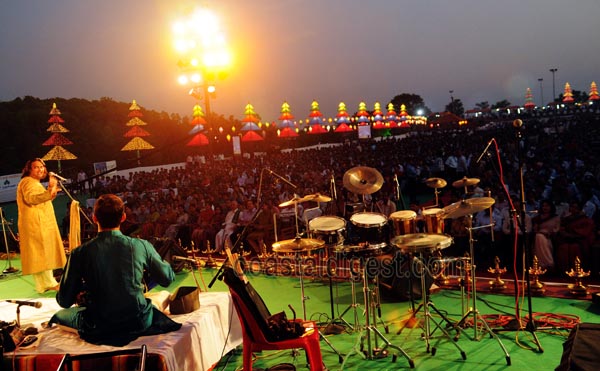
Moodbidri, January 9: The curtains came down on the five-day cultural fiesta, 'Alva's Virasat' at Mijar near here on Sunday with the mesmerizing performance by light music singer M D Pallavi.

Making a confident beginning with the title song of the Varakavi D.R. Bendre's Jnanpith Award-winning Naku Thanti , she went on to more popular Amma Naanu Devarane . Both, she said, were composed by her guru the late Mysore Ananthaswamy.

She presented Ha Yavva Byati Byatiyanadida Byadara Huduga written by Jnanpith Award-winner Chandrasekhara Kambar, in a folk tune. She showcased her prowess and richness of voice.

Acknowledging that she was deliberately choosing some of the finest jewels of Kannada literature, she picked up Baduku Jataka Bandi from D.V. Gundappa's Manku Thimmana Kagga . To drive home the poet's theme, she occasionally asked questions or explained. One could not disagree with her that DVG too deserved the Jnanpith.

She rendered the film song Nodayya Kotelingave which was originally sung by her. The presentation was different from the original song as the audience clapped rhythmically to the tune.

She rendered K.S. Narasimha Swamy's work Hindina Saalina Hudugaru against rat-race for marks and pleaded for a little love for life. The student-dominated crowd could not have asked for more. Through K.S. Nisar Ahmed's Kurigalu Saar Kurigalu she advised the students to be politically aware.

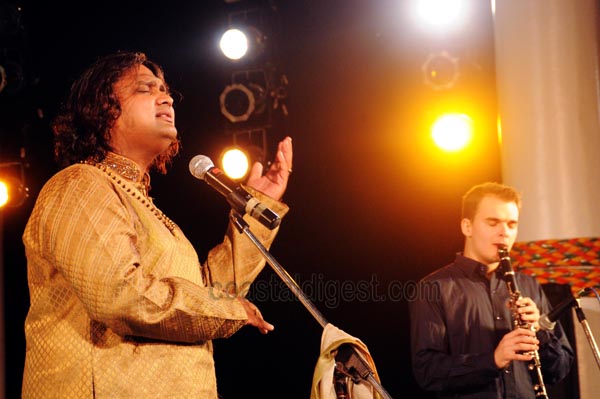
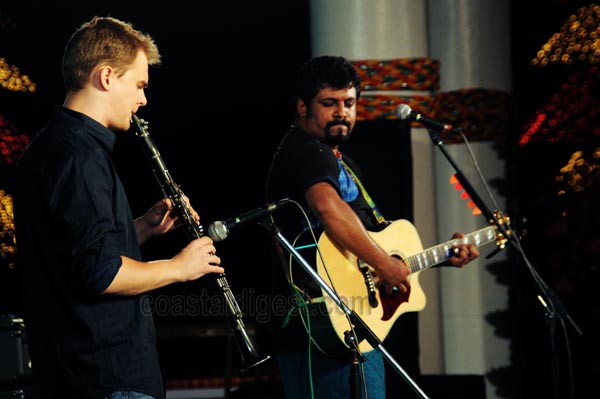
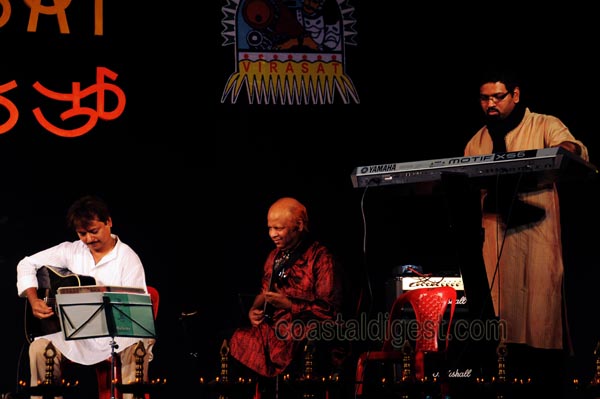
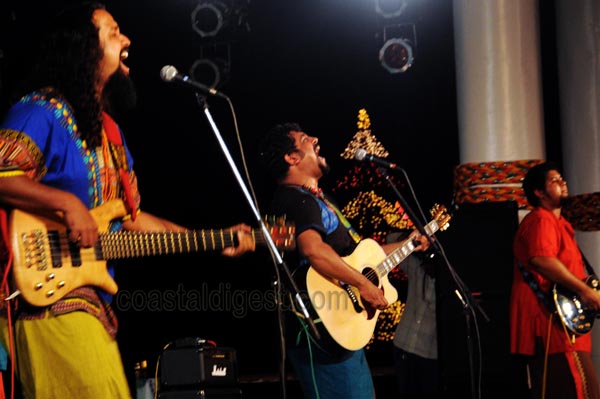
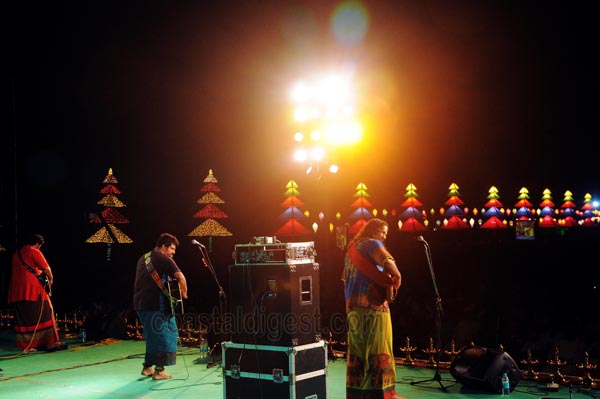
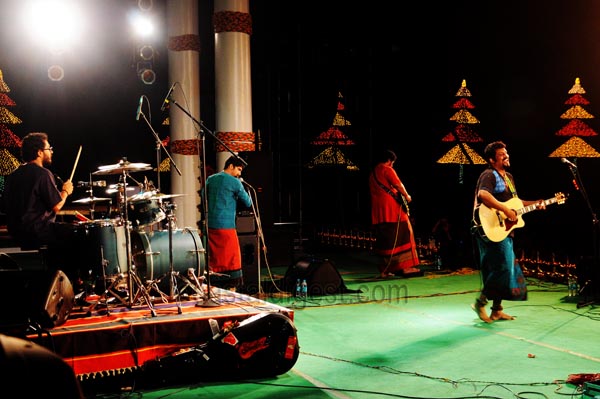
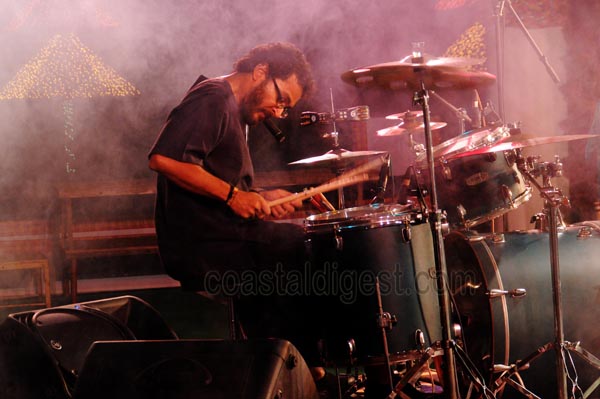
Earlier, the Moksha Band from Chennai led by singer Mahesh Vinayakam presented a unique Carnatic-Western fusion music.

He introduced Konnakol, which he described as an unique art from South India in which sounds or syllables of Mrudanga or ghatam were rendered vocally. By making the audience say 'dhum' together and giving a clap a split second later, he connected well with the large gathering.

Parthasarathy later represented the syllables on the Mridangam which was repeated on the Ghatam by N. Rajaram. The troupe of youngsters — all aged under 30 — knew how to mesmerise the crowd consisting mainly of students. Ambrose Tucker's clarinet was an added attraction.
AL_R9Jan_1

AL_R9Jan_2

AL_R9Jan_3

AL_R9Jan_4

AL_R9Jan_5

AL_R9Jan_6

AL_R9Jan_7

AL_R9Jan_8

AL_R9Jan_9

AL_R9Jan_10

AL_R9Jan_11

AL_R9Jan_12

AL_R9Jan_14

AL_R9Jan_15

AL_R9Jan_17

AL_R9Jan_18

AL_R9Jan_19

AL_R9Jan_20

ALBUM

Comments

Add new comment

  • Coastaldigest.com reserves the right to delete or block any comments.
  • Coastaldigset.com is not responsible for its readers’ comments.
  • Comments that are abusive, incendiary or irrelevant are strictly prohibited.
  • Please use a genuine email ID and provide your name to avoid reject.
coastaldigest.com news network
February 5,2026

protestkerala.jpg

Mangaluru: The KSRTC Mangaluru division has rolled back the fare hike on buses operating on the Mangaluru–Kasaragod route following the suspension of toll collection at the Arikkady toll plaza near Kumbala in Kasaragod district.

The fare revision had been implemented after the National Highways Authority of India (NHAI) began toll collection at the Arikkady plaza on NH-66. As a result, fares for ordinary and Rajahamsa services were increased by ₹7 and ₹10, respectively, raising the bus fare from Mangaluru to Kasaragod from ₹81 to ₹88.

Senior Divisional Controller of KSRTC’s Mangaluru division, Rajesh Shetty, said the fares were reduced after toll collection at the Arikkady plaza was stopped. “The tollgate began operations on January 13, and the toll amount was deducted from the FASTag accounts of KSRTC buses operating on the route. Following an order from the central government to suspend toll collection, KSRTC has also withdrawn the additional fare with immediate effect,” he said.

At present, vehicles travelling on the Mangaluru–Kasaragod route pay toll only at the Talapady toll plaza. The toll for light motor vehicles (LMVs) at Talapady is ₹80 for a same-day return, while heavy vehicles, including buses, are charged ₹250. At Arikkady, the toll rates were ₹130 for LMVs (same-day return) and ₹450 for buses.

Protests against Arikkady toll plaza

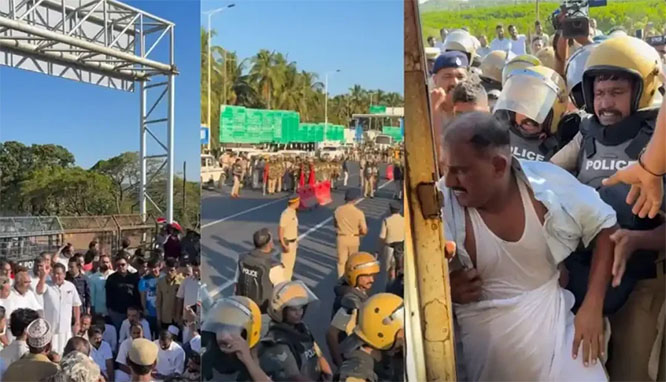
The Arikkady toll plaza witnessed widespread protests from January 12, the day toll collection commenced. On the second day, an action committee led by Manjeshwar MLA A K M Ashraf launched an indefinite protest at the site. Except for the BJP, leaders and workers of most major political parties participated in the agitation.

On the night of January 14, a large number of protesters gathered at the plaza and vandalised property, following which authorities temporarily suspended toll operations. The BJP later also expressed opposition to the toll plaza and criticised NHAI’s decision. 

Comments

Add new comment

  • Coastaldigest.com reserves the right to delete or block any comments.
  • Coastaldigset.com is not responsible for its readers’ comments.
  • Comments that are abusive, incendiary or irrelevant are strictly prohibited.
  • Please use a genuine email ID and provide your name to avoid reject.
News Network
January 23,2026

Mangaluru: The Karnataka Government Polytechnic (KPT), Mangaluru, has achieved autonomous status from the All India Council for Technical Education (AICTE), becoming the first government polytechnic in the country to receive such recognition in its 78-year history. The status was granted by AICTE, New Delhi, and subsequently approved by the Karnataka Board of Technical Education in October last year.

Officials said the autonomy was conferred a few months ago. Until recently, AICTE extended autonomous status only to engineering colleges, excluding diploma institutions. However, with a renewed national focus on skill development, several government polytechnics across India have now been granted autonomy.

KPT, the second-largest polytechnic in Karnataka, was established in 1946 with four branches and has since expanded to offer eight diploma programmes, including computer science and polymer technology. The institution is spread across a 19-acre campus.

Ravindra M Keni, the first dean of the institution, told The Times of India that AICTE had proposed autonomous status for polytechnic institutions that are over 25 years old. “Many colleges applied. In the first round, 100 institutions were shortlisted, which was further narrowed down to 15 in the second round. We have already completed one semester after becoming an autonomous institution,” he said. He added that nearly 500 students are admitted annually across eight three-year diploma courses.

Explaining the factors that helped KPT secure autonomy, Keni said the institution has consistently recorded 100 per cent admissions and placements for its graduates. He also noted its strong performance in sports, with the college emerging champions for 12 consecutive years, along with active student participation in NCC and NSS activities.

Autonomous status allows KPT to design industry-oriented curricula, conduct examinations, prepare question papers, and manage academic documentation independently. The institution can also directly collaborate with industries and receive priority funding from AICTE or the Ministry of Education. While academic autonomy has been granted, financial control will continue to rest with the state government.

“There will be separate committees for examinations, question paper setting, boards of studies, and boards of examiners. The institution will now have the freedom to conduct admissions without government notifications and issue its own marks cards,” Keni said, adding that new academic initiatives would be planned after a year of functioning under the autonomous framework.

Comments

Add new comment

  • Coastaldigest.com reserves the right to delete or block any comments.
  • Coastaldigset.com is not responsible for its readers’ comments.
  • Comments that are abusive, incendiary or irrelevant are strictly prohibited.
  • Please use a genuine email ID and provide your name to avoid reject.
News Network
February 5,2026

In an era where digital distractions are the primary rival to academic excellence, the Karnataka Education Department is taking the fight directly to the living room. As the SSLC (Class 10) annual examinations loom, officials have launched a localized "digital strike" to ensure students aren't losing their competitive edge to scrolling or soap operas.

The 7-to-9 Lockdown

The department has issued a formal directive urging—and in some cases, enforcing via home visits—a total blackout of mobile phones and television sets between 7:00 PM and 9:00 PM. This two-hour window is being designated as "sacred study time" across the state until the examinations conclude on April 2.

Key Pillars of the Initiative:

•    Doorstep Advocacy: Teachers are transitioning from classrooms to living rooms, meeting parents to explain the psychological benefits of a distraction-free environment.

•    Parental Accountability: The campaign shifts the burden of discipline from the student to the household, asking parents to lead by example and switch off their own devices.

•    The Timeline: The focus remains sharp on the upcoming exam block, scheduled from March 18 to April 2.

"The objective is simple: uninterrupted focus. We are reclaiming the evening hours for the students, ensuring their environment is as prepared as their minds," stated a senior department official.

Student vs. Reality

While the student community has largely welcomed the "forced focus"—with many admitting they lack the willpower to ignore notifications—the move has sparked a debate on enforceability. Without a "TV Police," the success of this initiative rests entirely on the shoulders of parents and the persuasive power of visiting educators.

Comments

Add new comment

  • Coastaldigest.com reserves the right to delete or block any comments.
  • Coastaldigset.com is not responsible for its readers’ comments.
  • Comments that are abusive, incendiary or irrelevant are strictly prohibited.
  • Please use a genuine email ID and provide your name to avoid reject.