



NRIs must register at missions to vote

[email protected] (Khaleej Times)
January 10, 2012

lokes

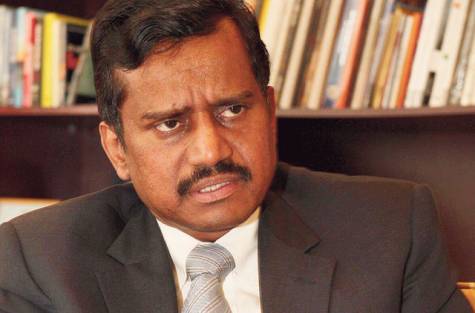
Abu Dhabi, January 10: Indian ambassador to the UAE, MK Lokesh has urged the Indian expatriate community in the UAE to register on the mission's website to be eligible for voting in the upcoming Assembly elections of 2012 in India.

Talking to Khaleej Times on Monday, the Indian Ambassador said that anybody can register online on the websites of the Indian missions in the UAE and the Election Commission of India.

The ambassador has clarified that an expatriate who wants to exercise his right of franchise has to first register and then cast his vote in India and not at the embassy.

“Pursuant to the law that was enacted to enable Non Resident Indians to vote in our national elections, the government has issued notifications for registration of overseas electors under the Representation of People Act, 1950,” Prime Minister Manmohan Singh announced in India on Sunday, as he formally inaugurated the 10th annual diaspora meet, the Pravasi Bharatiya Divas.

Those NRIs who have registered with the embassies of their respective countries of stay will be eligible to vote in the upcoming assembly elections in five states. Uttar Pradesh, Uttarakhand, Punjab, Goa and Manipur. Polls will take place in these countries between January 28 and March 3.

Election Commission of India

According to the ECI's website, an overseas Indian can get registered/enrolled in the Electoral Roll and he/she has to file the application for the purpose in a prescribed Form 6A (available on the Indian mission's website) before the Electoral Registration Officer (ERO) of the constituency within which the place of ordinary residence of the applicant in India as given in his/her valid passport falls.

After enrolment, an overseas elector will be able to cast his vote in an election in the Constituency, in person, at the polling station provided for the part where he is registered as an overseas elector, the ECI website says. The application can be presented in person before the ERO or sent by post addressed to the ERO concerned. If the application is sent by post, it must be accompanied by a copy of the passport and all relevant documents mentioned in Form 6A duly attested by an officer of the Indian Mission in the country concerned, ECI said on its website.

Expatriates hail decision

Speaking to Khaleej Times, Dr BR Shetty, managing director and CEO of New Medical Centre (NMC) Speciality Hospitals, said: “I welcome the move of the Indian government which will benefit the Indian diaspora living overseas and invite more investments in India.” Dr Shetty said, as the Indian currency is down currently, many expats remitted money to India. In 2010 around $55 billion were remitted to India from overseas.

Dr A Titus at the Cosmopolitan Medical Centre in Abu Dhabi said, the pension and insurance plan of the government will benefit the low income group of expats, particularly. Giving voting rights to overseas Indians is a recognition for them, but I am not sure if it would invite more investments to India. Ameen Mohsin, an Indian expatriate who has been residing in Abu Dhabi for over a decade, said: “I was delighted to read this morning about the voting rights for NRIs. It is a dream come true for me. When I read it, I was sure that the next election in India will be a fair one as you know that most of the people working abroad are educated and when such people are given a chance to vote, the governme\nt we will have back home will be a good one. Wrong votes going into the ballot will be reduced.”

“Investment in India will not have a major impact as only a few have the capacity to invest and for them it is like any other day,” he added.

Comments

Add new comment

  • Coastaldigest.com reserves the right to delete or block any comments.
  • Coastaldigset.com is not responsible for its readers’ comments.
  • Comments that are abusive, incendiary or irrelevant are strictly prohibited.
  • Please use a genuine email ID and provide your name to avoid reject.
coastaldigest.com news network
February 5,2026

protestkerala.jpg

Mangaluru: The KSRTC Mangaluru division has rolled back the fare hike on buses operating on the Mangaluru–Kasaragod route following the suspension of toll collection at the Arikkady toll plaza near Kumbala in Kasaragod district.

The fare revision had been implemented after the National Highways Authority of India (NHAI) began toll collection at the Arikkady plaza on NH-66. As a result, fares for ordinary and Rajahamsa services were increased by ₹7 and ₹10, respectively, raising the bus fare from Mangaluru to Kasaragod from ₹81 to ₹88.

Senior Divisional Controller of KSRTC’s Mangaluru division, Rajesh Shetty, said the fares were reduced after toll collection at the Arikkady plaza was stopped. “The tollgate began operations on January 13, and the toll amount was deducted from the FASTag accounts of KSRTC buses operating on the route. Following an order from the central government to suspend toll collection, KSRTC has also withdrawn the additional fare with immediate effect,” he said.

At present, vehicles travelling on the Mangaluru–Kasaragod route pay toll only at the Talapady toll plaza. The toll for light motor vehicles (LMVs) at Talapady is ₹80 for a same-day return, while heavy vehicles, including buses, are charged ₹250. At Arikkady, the toll rates were ₹130 for LMVs (same-day return) and ₹450 for buses.

Protests against Arikkady toll plaza

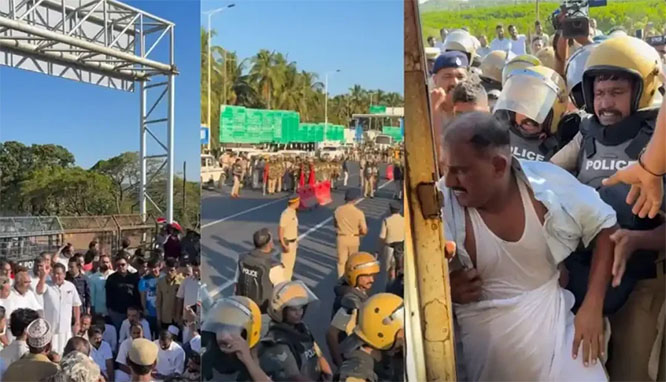
The Arikkady toll plaza witnessed widespread protests from January 12, the day toll collection commenced. On the second day, an action committee led by Manjeshwar MLA A K M Ashraf launched an indefinite protest at the site. Except for the BJP, leaders and workers of most major political parties participated in the agitation.

On the night of January 14, a large number of protesters gathered at the plaza and vandalised property, following which authorities temporarily suspended toll operations. The BJP later also expressed opposition to the toll plaza and criticised NHAI’s decision. 

Comments

Add new comment

  • Coastaldigest.com reserves the right to delete or block any comments.
  • Coastaldigset.com is not responsible for its readers’ comments.
  • Comments that are abusive, incendiary or irrelevant are strictly prohibited.
  • Please use a genuine email ID and provide your name to avoid reject.
News Network
February 1,2026

Bengaluru: Karnataka Deputy Chief Minister D K Shivakumar on Sunday criticised the Union Budget presented by Finance Minister Nirmala Sitharaman, claiming it offered no tangible benefit to the state.

Though he said he was yet to study the budget in detail, Shivakumar asserted that Karnataka had gained little from it. “There is no benefit for our state from the central budget. I was observing it. They have now named a programme after Mahatma Gandhi, after repealing the MGNREGA Act that was named after him,” he said.

Speaking to reporters here, the Deputy Chief Minister demanded the restoration of MGNREGA, and made it clear that the newly enacted rural employment scheme — VB-G RAM G — which proposes a 60:40 fund-sharing formula between the Centre and the states, would not be implemented in Karnataka.

“I don’t see any major share for our state in this budget,” he added.

Shivakumar, who also holds charge of Bengaluru development, said there were high expectations for the city from the Union Budget. “The Prime Minister calls Bengaluru a ‘global city’, but what has the Centre done for it?” he asked.

He also drew attention to the problems faced by sugar factories, particularly those in the cooperative sector, alleging a lack of timely decisions and support from the central government.

Noting that the Centre has the authority to fix the minimum support price (MSP) for agricultural produce, Shivakumar said the Union government must take concrete steps to protect farmers’ interests.

Comments

Add new comment

  • Coastaldigest.com reserves the right to delete or block any comments.
  • Coastaldigset.com is not responsible for its readers’ comments.
  • Comments that are abusive, incendiary or irrelevant are strictly prohibited.
  • Please use a genuine email ID and provide your name to avoid reject.
News Network
February 1,2026

Bengaluru: The Karnataka High Court has refused to quash an investigation against a WhatsApp group administrator accused of allowing the circulation of obscene and offensive images depicting Hindutva politicians and idols in 2021.

Justice M Nagaprasanna observed that, prima facie, the ingredients of the offence under Section 295A of the Indian Penal Code were made out. “The offence under Section 295A of the IPC is met to every word of its ingredient, albeit prima facie,” the judge said.

The petitioner, Sirajuddin, a resident of Belthangady taluk in Dakshina Kannada district, had challenged the FIR registered against him at the CEN (Cyber, Economics and Narcotics) police station, Mangaluru, for offences under Section 295A of the IPC and Section 67 of the Information Technology Act. Section 295A relates to punishment for deliberate and malicious acts intended to outrage the religious feelings of any class of citizens.

According to the complaint filed by K Jayaraj Salian, also a resident of Belthangady taluk, he received a WhatsApp group link from an unknown source and was added to the group after accessing it. The group reportedly had six administrators and around 250 participants, where obscene and offensive images depicting Hindu deities and certain political figures were allegedly circulated repeatedly.

Sirajuddin was arrested in connection with the case and later released on bail on February 16, 2021. He argued before the court that he was being selectively targeted, while other administrators—including the creator of the group—were neither arrested nor investigated. He also contended that the Magistrate could not have taken cognisance of the offence under Section 295A without prior sanction under Section 196(1) of the CrPC.

Rejecting the argument, Justice Nagaprasanna held that prior sanction is required only at the stage of taking cognisance, and not at the stage of registration of the crime or during investigation.

The judge noted that the State had produced the entire investigation material before the court. “A perusal of the material reveals depictions of Hindu deities in an extraordinarily obscene, demeaning and profane manner. The content is such that its reproduction in a judicial order would itself be inappropriate,” the court said, adding that the material, on its face, had the tendency to outrage religious feelings and disturb communal harmony.

Observing that the case was still at the investigation stage, the court said it could not interdict the probe at this juncture. However, it expressed concern that the investigating officer appeared to have not proceeded uniformly against all administrators. The court clarified that if the investigation revealed the active involvement of any member in permitting the circulation of such content, they must also be proceeded against.

“At this investigative stage, any further observation by this Court would be unnecessary,” the order concluded.

Comments

Add new comment

  • Coastaldigest.com reserves the right to delete or block any comments.
  • Coastaldigset.com is not responsible for its readers’ comments.
  • Comments that are abusive, incendiary or irrelevant are strictly prohibited.
  • Please use a genuine email ID and provide your name to avoid reject.