India's culinary vibrancy showcased at Festival

[email protected] (CD Network, Photos by Ahmed Anwar )
January 13, 2012

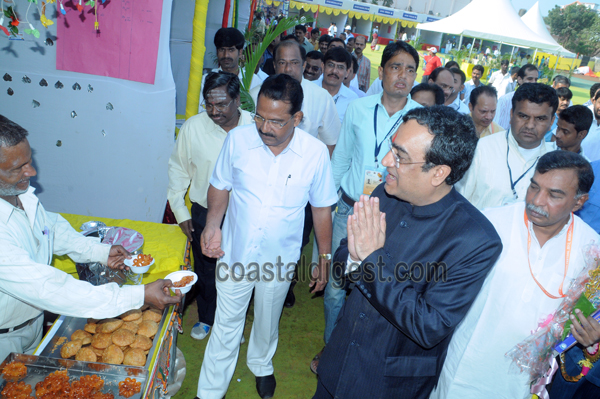
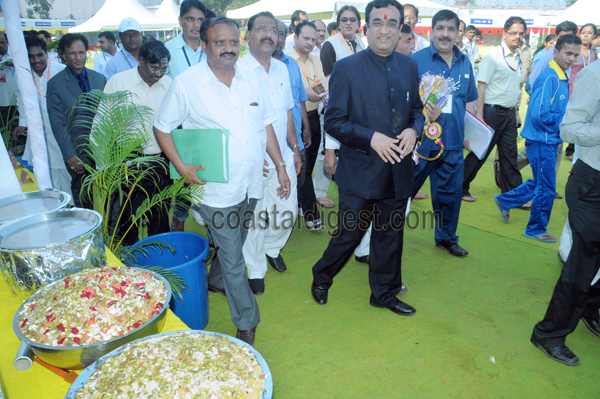
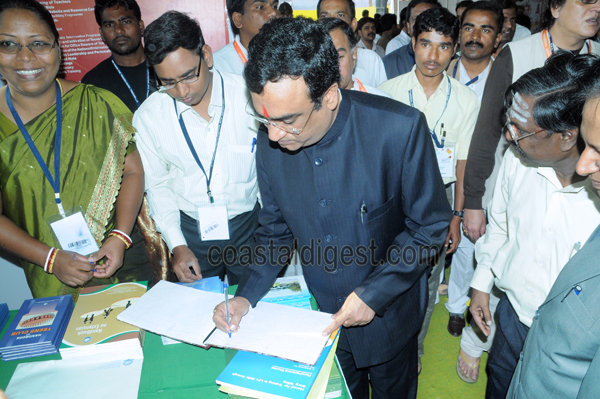
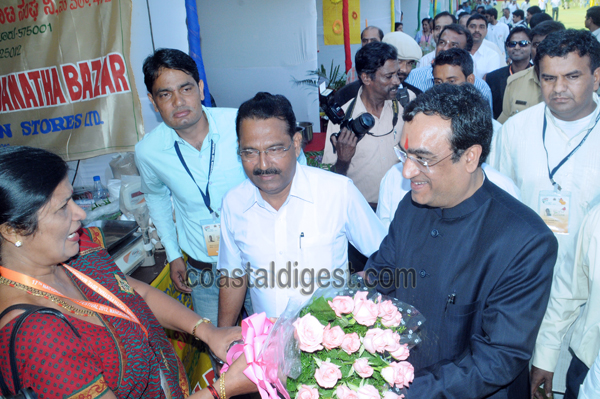
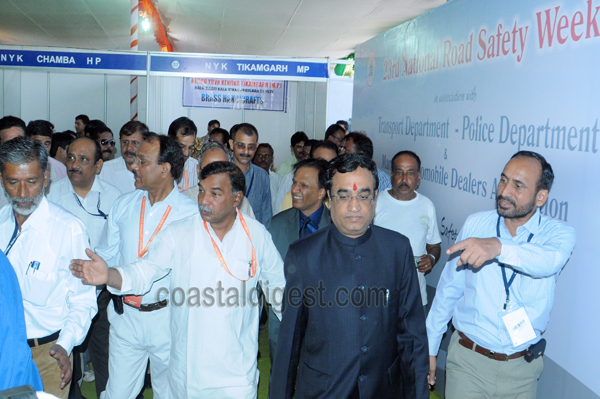
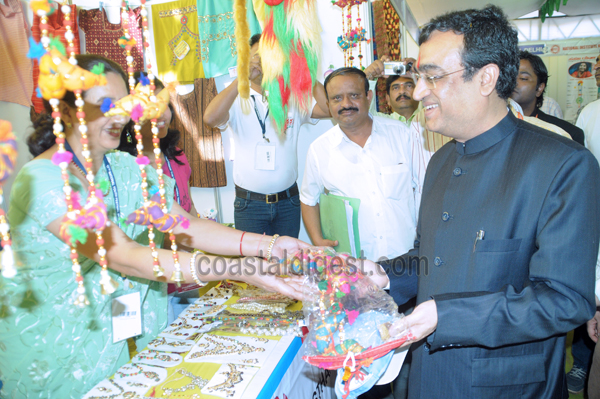
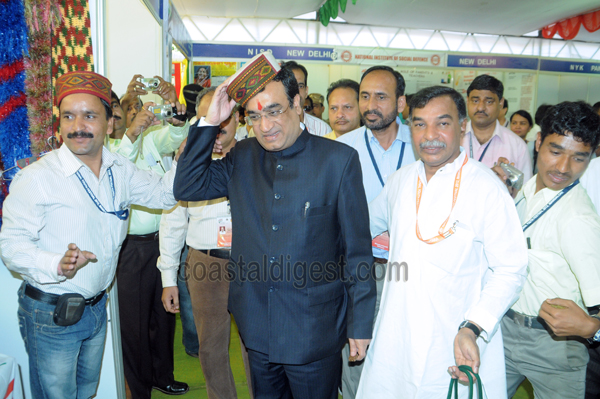
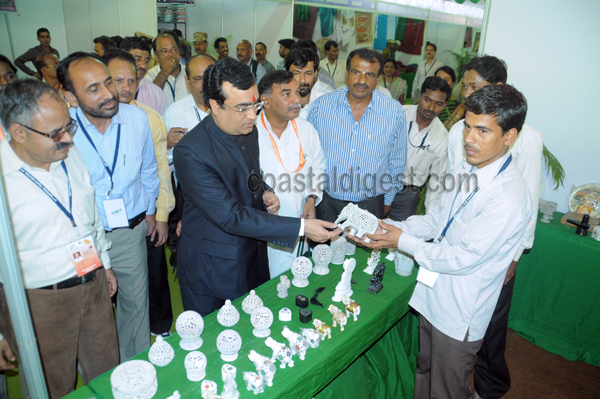
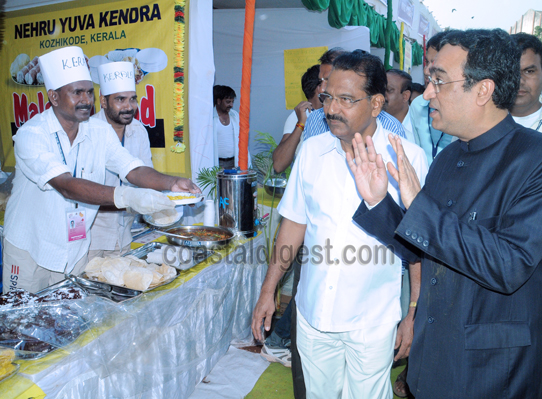
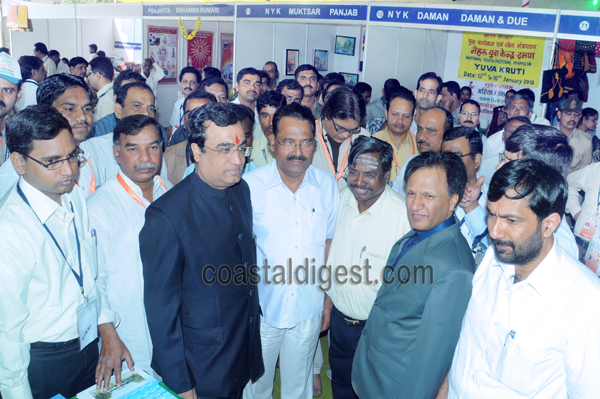
Mangalore, January 13: Union Minister of State for Youth Affairs and Sports Ajay Maken on Friday inaugurated the food festival organized as part of the 17th National Youth Festival in Karavali Utsav Grounds adjacent to Mangala Stadium.

As many as forty-four food stalls, serving the delicious food from all regions of India have added taste to the national assembly of youth. Foodies from different parts of India who thronged the coastal city to witness the mega event can satisfy his tastebud till January 16.

Most of the states which have participated at the Youth Festival have put up separate food stalls, so that they can give the customers mouthwatering food and tickle their taste buds.

The Assam stall had people from Nagaon, who were offering Thilpitah, bamboo achar and mustard paste. The Bihar stall had delicacies in Litti Choka, Chana Sattu and Rabri. Chandigarh were dishing out bread rolls, while West Bengal made brisk business with different types of rolls, like veg-roll, egg-roll and paneer rolls. Chhattisgarh stall had Mungodi and Chila as specialties.

The Delhi people offered Desi Ghee-ka-Tikki where the ghee was from delhi with Dahi Bhalla and Gol Guppas as fast food. The Haryana stall had Gajar-ka-halwa and Milk Burfi. The Himachal Pradesh people made Kadi Pakoda, curd and besan-ka-Pakoda.

Jharkand offered Duska, Pitha and Kachri to foodies. The south Indian state of Kerala offered Puttu, Kadale curry and pappad. They incidentally had won the second prize at last year's Youth fest in Rajasthan. The Kerala Parotha had to be another south Indian delicacy from God's own country.

Madhya Pradesh presented Dal Bafle, made from wheat and ghee. Maharashtra produced Puran Podi for the public, while Punjab offered their trademark Makki-ki-Rori and Sarson-ka-Saag. The Rajasthan stall cooked some Kesar Churma, masala bhati and Ghulab Churma. The cooks from North East in Sikkim baked some Sel Roti made from ground rice and Momos – a cabbage and onion delicacy. Tamil Nadu made some Banana Bajjis for all, while the Uttar Pradesh folk had hot Jalebis with Kachori which is Mathura's breakfast. The Uttarakhand team had Jhangore-ki-kheer and Kode-ki-Roti.

The Andhra Pradesh sold their famous Hyderabadi Biryani, Qurbani-ka-Meetha and Kaddu-ka-kheer. The Union Territory of Daman and Diu made prawns JInga , Sondia , Mendhli and Sekdi all sea food specialties. The Jammu and Kashmir state offered Biryani, with Kesar and also Kesar Chai. Nagaland dished out smoked pork meat with rice and soya pickle. The Orissa team made chicken fry and Dahi-Wada for the hungry Mangaloreans.

Also there were some local stalls who gave a taste of local delicacy and sea food to the people from other states. “It's great to see the whole of India come here and give us their delicacies. I am enjoying the food here and will come every night till the fest ends”, said Arun, who was among a group of local foodies who were enjoying the traditional dishes.
FD_F13Jan_1

FD_F13Jan_2

FD_F13Jan_3

FD_F13Jan_4

FD_F13Jan_5

FD_F13Jan_6

FD_F13Jan_7

FD_F13Jan_8

FD_F13Jan_9

FD_F13Jan_10

FD_F13Jan_11

Comments

Add new comment

  • Coastaldigest.com reserves the right to delete or block any comments.
  • Coastaldigset.com is not responsible for its readers’ comments.
  • Comments that are abusive, incendiary or irrelevant are strictly prohibited.
  • Please use a genuine email ID and provide your name to avoid reject.
News Network
January 23,2026

Mangaluru: The Karnataka Government Polytechnic (KPT), Mangaluru, has achieved autonomous status from the All India Council for Technical Education (AICTE), becoming the first government polytechnic in the country to receive such recognition in its 78-year history. The status was granted by AICTE, New Delhi, and subsequently approved by the Karnataka Board of Technical Education in October last year.

Officials said the autonomy was conferred a few months ago. Until recently, AICTE extended autonomous status only to engineering colleges, excluding diploma institutions. However, with a renewed national focus on skill development, several government polytechnics across India have now been granted autonomy.

KPT, the second-largest polytechnic in Karnataka, was established in 1946 with four branches and has since expanded to offer eight diploma programmes, including computer science and polymer technology. The institution is spread across a 19-acre campus.

Ravindra M Keni, the first dean of the institution, told The Times of India that AICTE had proposed autonomous status for polytechnic institutions that are over 25 years old. “Many colleges applied. In the first round, 100 institutions were shortlisted, which was further narrowed down to 15 in the second round. We have already completed one semester after becoming an autonomous institution,” he said. He added that nearly 500 students are admitted annually across eight three-year diploma courses.

Explaining the factors that helped KPT secure autonomy, Keni said the institution has consistently recorded 100 per cent admissions and placements for its graduates. He also noted its strong performance in sports, with the college emerging champions for 12 consecutive years, along with active student participation in NCC and NSS activities.

Autonomous status allows KPT to design industry-oriented curricula, conduct examinations, prepare question papers, and manage academic documentation independently. The institution can also directly collaborate with industries and receive priority funding from AICTE or the Ministry of Education. While academic autonomy has been granted, financial control will continue to rest with the state government.

“There will be separate committees for examinations, question paper setting, boards of studies, and boards of examiners. The institution will now have the freedom to conduct admissions without government notifications and issue its own marks cards,” Keni said, adding that new academic initiatives would be planned after a year of functioning under the autonomous framework.

Comments

Add new comment

  • Coastaldigest.com reserves the right to delete or block any comments.
  • Coastaldigset.com is not responsible for its readers’ comments.
  • Comments that are abusive, incendiary or irrelevant are strictly prohibited.
  • Please use a genuine email ID and provide your name to avoid reject.
News Network
February 3,2026

Bengaluru: Following reports of fresh Nipah virus (NiV) cases in West Bengal and heightened vigilance across parts of Southeast Asia, the Karnataka Health Department has placed the state on high alert and activated emergency preparedness protocols.

Health officials said enhanced surveillance measures have been initiated after two healthcare workers in Barasat, West Bengal, tested positive for the virus earlier this month. While no cases have been reported in Karnataka so far, authorities said the state’s past exposure to Nipah outbreaks and high inter-state mobility warranted preventive action.

Officials have directed district health teams to intensify monitoring, particularly at hospitals and points of entry, and to ensure early detection and isolation of suspected cases.

High Mortality Virus with Multiple Transmission Routes

Nipah virus is a zoonotic disease that can spread from animals to humans and has a reported fatality rate ranging between 60 and 75 per cent. Fruit bats, also known as flying foxes, are the natural reservoirs of the virus and can transmit it by contaminating food sources with saliva or urine.

Known modes of transmission include:

•    Contaminated food: Consumption of fruits partially eaten by bats or raw date-palm sap
•    Animal contact: Exposure to infected pigs or other animals
•    Human-to-human transmission: Close contact with body fluids of infected persons, particularly in healthcare settings

Symptoms and Disease Progression

The incubation period typically ranges from 4 to 14 days, though delayed onset has also been reported. Early symptoms often resemble common viral infections, making prompt clinical suspicion critical.

•    Initial symptoms: Fever, headache, body aches, fatigue, sore throat
•    Progressive symptoms: Drowsiness, disorientation, altered mental state
•    Severe stage: Seizures, neck stiffness and acute encephalitis, which can rapidly progress to coma

Public Health Advisory

The Health Department has issued precautionary guidelines urging the public to adopt risk-avoidance practices to prevent any local spillover.

Do’s
•    Wash fruits thoroughly before consumption
•    Drink boiled and cooled water
•    Use protective equipment while handling livestock
•    Maintain strict hand hygiene

Don’ts
•    Avoid fruits found on the ground or showing bite marks
•    Do not consume beverages made from raw tree sap, including toddy
•    Avoid areas with dense bat populations
•    Do not handle sick or dead animals

Preparedness Measures

Officials confirmed that isolation wards are being readied in major government hospitals and that medical staff are being sensitised to identify early warning signs.

“There is no cause for panic, but there is a need for heightened vigilance,” a senior health official said, adding that there is currently no approved vaccine or specific antiviral treatment for Nipah, and care remains largely supportive.

Comments

Add new comment

  • Coastaldigest.com reserves the right to delete or block any comments.
  • Coastaldigset.com is not responsible for its readers’ comments.
  • Comments that are abusive, incendiary or irrelevant are strictly prohibited.
  • Please use a genuine email ID and provide your name to avoid reject.
News Network
February 5,2026

In an era where digital distractions are the primary rival to academic excellence, the Karnataka Education Department is taking the fight directly to the living room. As the SSLC (Class 10) annual examinations loom, officials have launched a localized "digital strike" to ensure students aren't losing their competitive edge to scrolling or soap operas.

The 7-to-9 Lockdown

The department has issued a formal directive urging—and in some cases, enforcing via home visits—a total blackout of mobile phones and television sets between 7:00 PM and 9:00 PM. This two-hour window is being designated as "sacred study time" across the state until the examinations conclude on April 2.

Key Pillars of the Initiative:

•    Doorstep Advocacy: Teachers are transitioning from classrooms to living rooms, meeting parents to explain the psychological benefits of a distraction-free environment.

•    Parental Accountability: The campaign shifts the burden of discipline from the student to the household, asking parents to lead by example and switch off their own devices.

•    The Timeline: The focus remains sharp on the upcoming exam block, scheduled from March 18 to April 2.

"The objective is simple: uninterrupted focus. We are reclaiming the evening hours for the students, ensuring their environment is as prepared as their minds," stated a senior department official.

Student vs. Reality

While the student community has largely welcomed the "forced focus"—with many admitting they lack the willpower to ignore notifications—the move has sparked a debate on enforceability. Without a "TV Police," the success of this initiative rests entirely on the shoulders of parents and the persuasive power of visiting educators.

Comments

Add new comment

  • Coastaldigest.com reserves the right to delete or block any comments.
  • Coastaldigset.com is not responsible for its readers’ comments.
  • Comments that are abusive, incendiary or irrelevant are strictly prohibited.
  • Please use a genuine email ID and provide your name to avoid reject.