Feast Infant Jesus celebrated at Bikarnakatte Church

[email protected] (CD Network, Photos by Stanley Bantwal)
January 15, 2012

INJ_14jan1

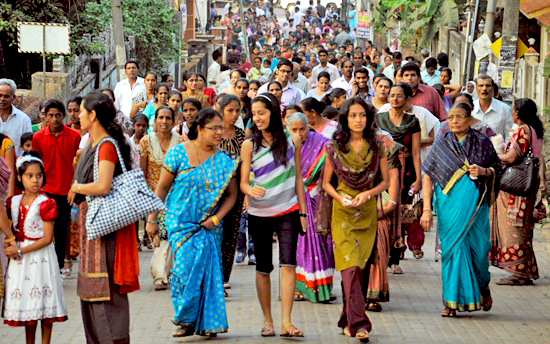
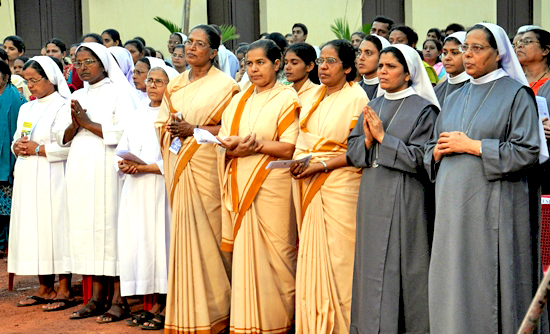
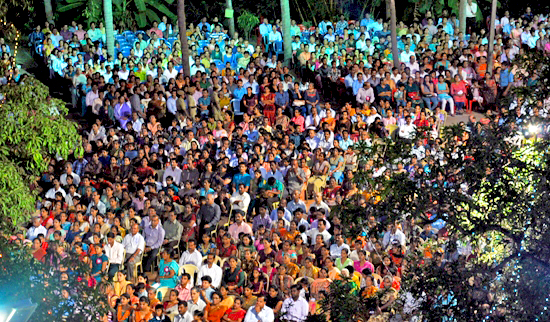
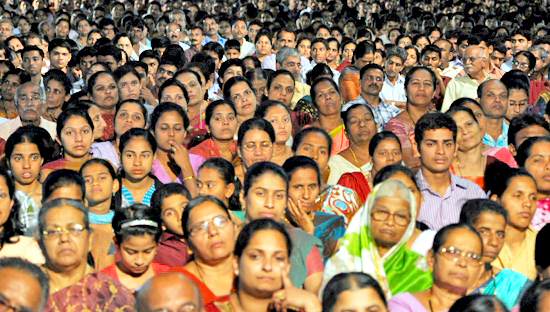
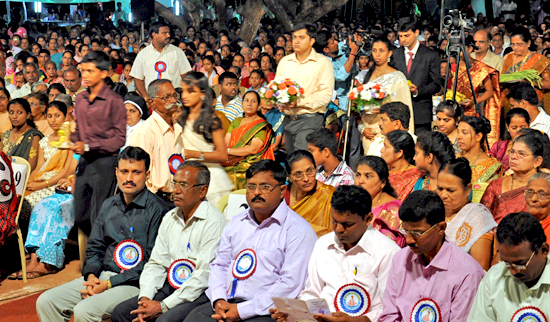
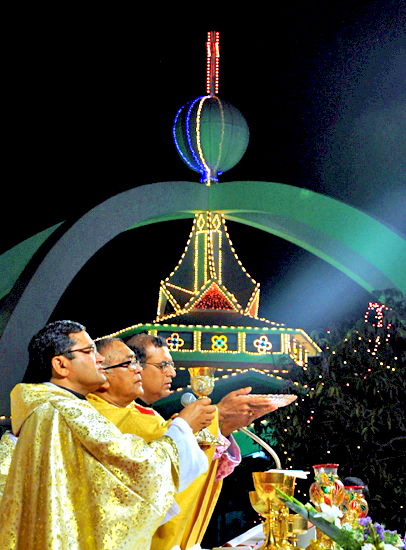
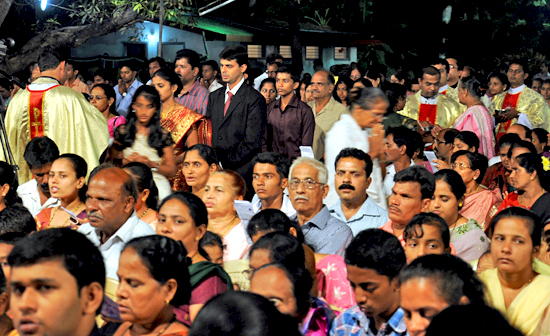
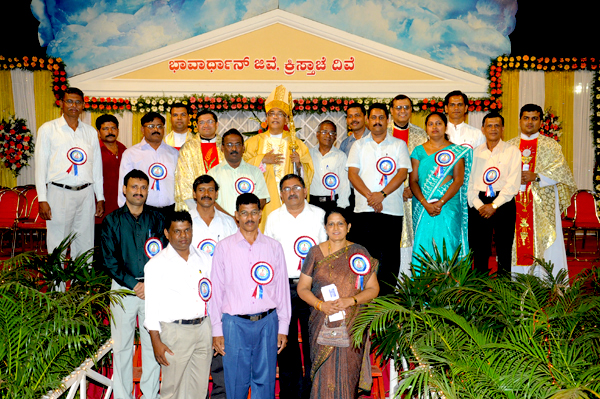
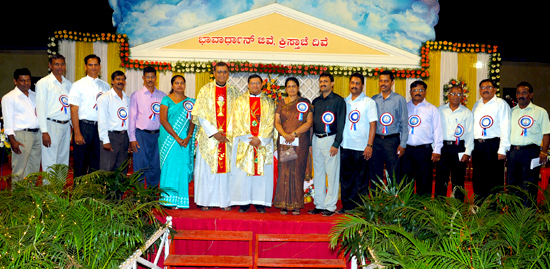
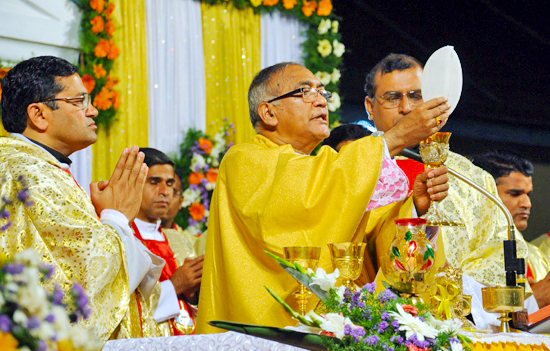
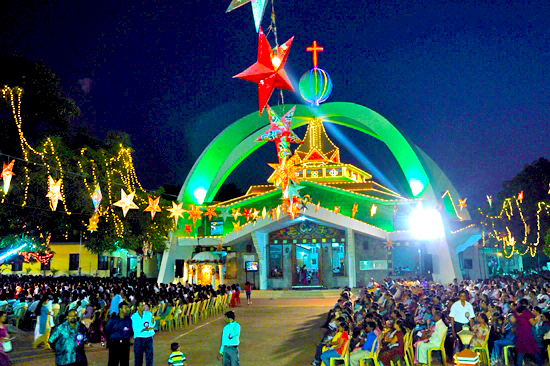
Mangalore, January 15: The annual feast of the Infant Jesus was celebrated on Saturday at Carmelite Fathers, Infant Jesus Shrine, Carmel Hill, Bikarnakatte, here, with religious fervor and devotion. Thousands of devotees irrespective of caste, creed and religion thronged the shrine of Infant Jesus and offered prayers to seek his divine intervention.

Though the festive mass was celebrated in the evening, devotees started pouring in the morning itself.

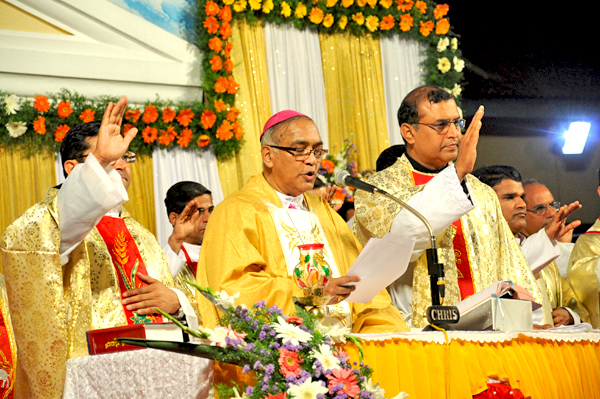
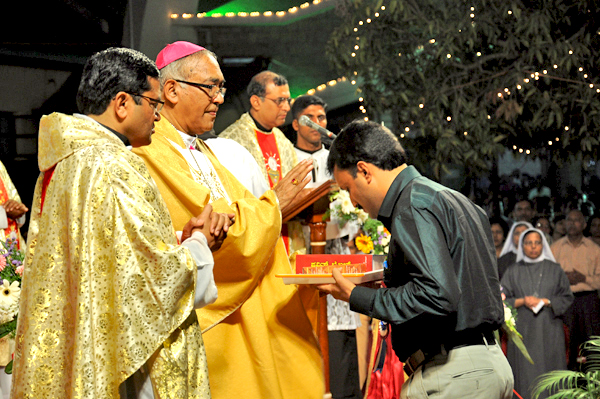
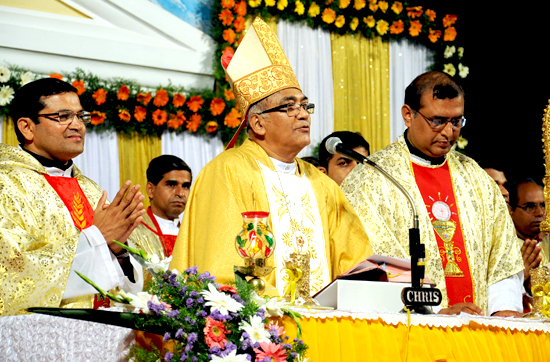
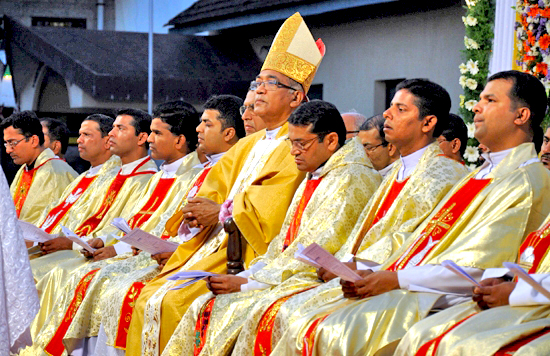
The first Eucharistic celebration of the feast day was offered at 6 a.m in Konkani. Dr Aloysius Paul D'Souza, the bishop of Mangalore, presided over the solemn Eucharistic celebration. The preacher was Fr Praveen Leo of St Joseph's Seminary.


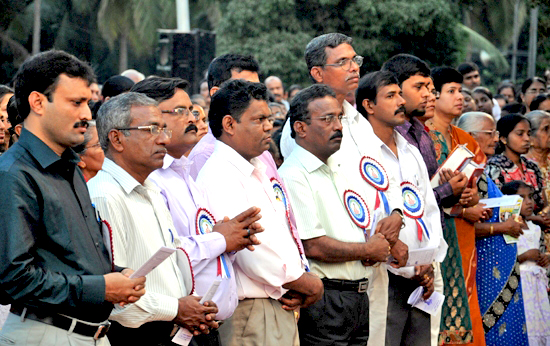
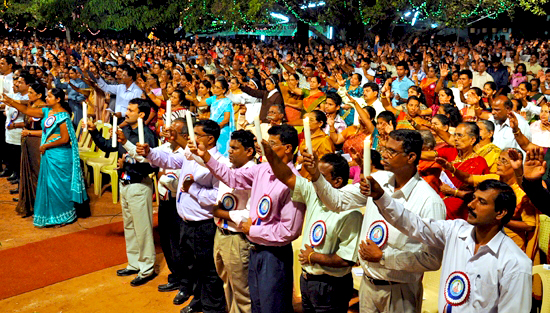
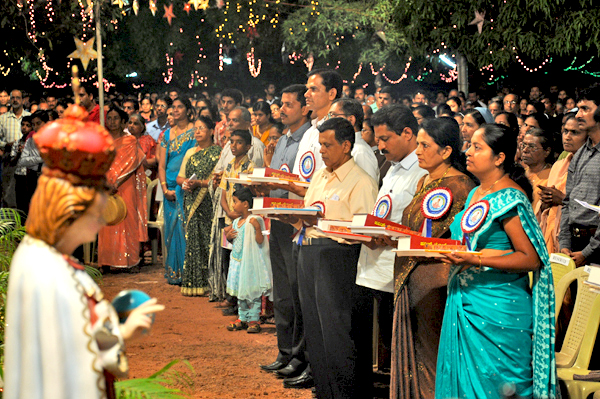
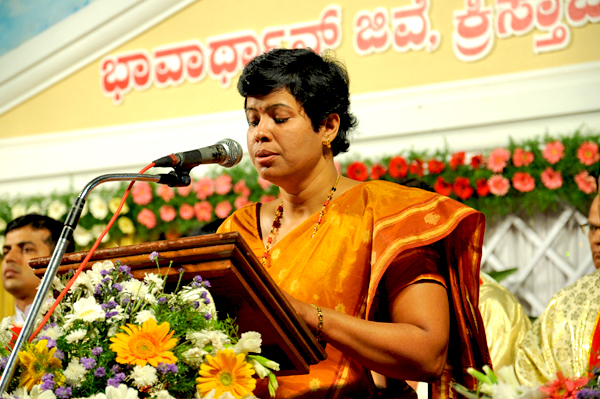
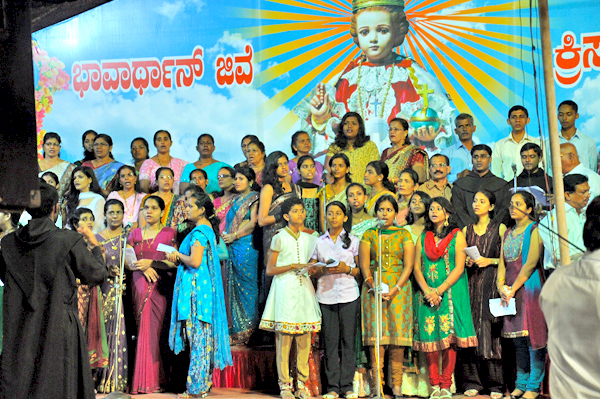
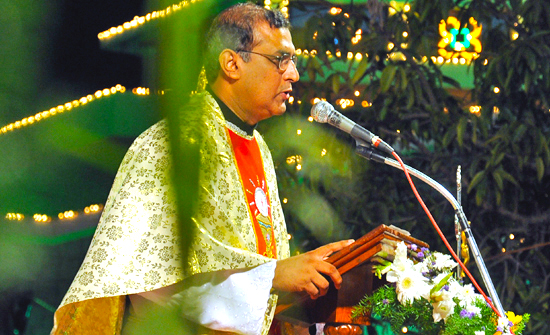
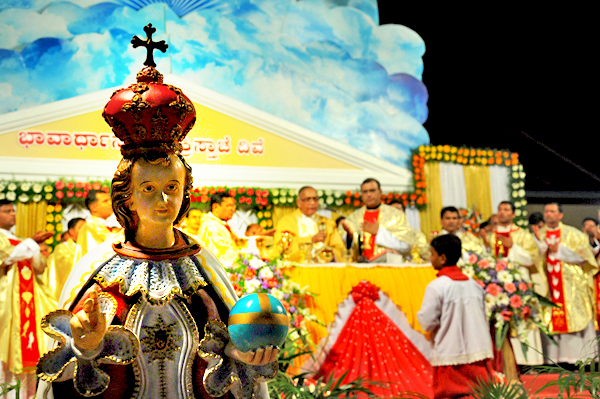
There were at least 15,000 people for the evening mass alone. The preacher was Rev. Fr. Praveen Leo Lasrado (St. Joseph's Seminary). He preached an inspiring sermon on the theme 'Glowing with faith, lamps of Christ.' He spoke of faith as turning to God in sickness and in health, in suffering and happiness, in joy and in sorrow. “Our faith must become 'fresh',” he said, giving examples of how the Biblical figures from Abraham right down to our forefathers became fresh in their faith in God and became ever more committed to Him. He said that we must be Christians not my chance, but by choice. When our faith becomes fresh it glows, and then alone can we become Lamps of Christ. Since the feast was also commemorating the 125th anniversary of the Diocese of Mangalore, representatives from the 15 deaneries were present at the Mass. During the profession of faith, they renewed their baptismal vows holding high a lit candle given to them by the Bishop as a sign of their faith. They were then given a cross, Bible, rosary, scapular and the statue of the Infant Jesus as symbols of the faith.

Leading to the feast was the Novena, with masses being celebrated and special prayers offered for various intentions each of the nine days beginning on January 5th. Devotees of all faiths thronged at the Shrine and received many blessings.

The Diocese of Mangalore this year is celebrating the 125th year of its foundation. In thanksgiving to God for the gift of faith that He has given us and in view of reinvigorating our commitment to Christ, the theme chosen for the Feast was “Glowing with Faith, Lamps of Light”. On each novena day, a theme based on faith was reflected upon, taking as an example and model one of God's Chosen in the Bible, beginning from Abraham: Father of Faith to our Forefathers who professed their faith even during the time of Tippu's persecution. There were also special prayers offered for a special intention.


There were seven masses on each day of the novena, 4 in the morning and 3 in the evening. The evening masses were telecast live on T.V. and the internet. Devotees came in large numbers for all the masses on all days. The largest crowds were present for the 6 pm open-air Konkani mass. Especially on days when there were special prayers conducted for Children (day 3) and for the Sick (day 10) the faithful came in great numbers and placed themselves at the feet of the Infant Jesus, trusting completely in His mercy and generosity. May He look kindly on their faith and grant them their intentions.

In the celebration of this Feast, apart from looking after the spiritual needs of the people, the Carmelite Community (OCD Fathers) took a step in promoting the social cause of caring for the sick by organizing a Blood Donation Camp on January 12th. The response of the people was tremendous. In thanksgiving to Infant Jesus for the gift of life, many came forward to donate their blood that they may help another to live. The Infant Jesus will surely look upon their charity and reward them.

In order to cater to the needs of the faithful on the Feast Day there were seven masses celebrated in the morning. Four of them were in Konkani and one each in English, Kannada and Malayalam. The 10:15 am mass was particularly celebrated for the sick, and there were special prayers for them. At 1:30 pm, an inter-religious prayer service was conducted in Kannada by Fr. Vijay Kumar OCD. The celebrants were Rev. Frs. Nelson OCD, Joy Painandath (St. Joseph's seminary) and Biju (Betharam Fathers), Abraham SVD (Mulki), John Sequeira OCD, Andrew D'Souza (Bondel), Maxim Noronha (Bishop's House) and Vijay Kumar OCD. From the first mass itself, devotees came in large numbers so that there was an average of about 2000 people at every mass. Let us thank God for such a gift of faith to the people staying in Mangalore.

INJ_14jan8
The history of devotion in Infant Jesus takes us back to the 17th century where the Carmelites in Prague had to stand hostility of the Lutherance. It was then that providence came to their rescue. It was in the year 1628 the Princess of Spain, Polixena, a great benefactor of the Friars, presented her wedding gift-a beautiful statue of the Infant Jesus to the Prior. However, in the year 1631, the Carmelite monastery was plundered and the statue of the Infant Jesus was cast upon a heap of rubble. Strange but true, years later, a Carmelite priest, Fr. Cyril discovered the statue in a heap of trash. He placed it at a respected place and began to pray. He dedicated a room in the Monastery to the Infant Jesus and allowed the faithful to come and worship Jesus. Many faithful were healed. This was the humble beginning of the devotion.

The devotion that began in a small way has spread rapidly throughout the world. The genesis of the devotion to the Infant Jesus at Carmel Hill, Mangalore takes us back to some 50 years. The Belgian Carmelite missionaries, who were in Mangalore, began the novena prayer to the Infant Jesus in the small chapel on Thursday. The present Shrine was inaugurated and blessed on 11th January 2006 to accommodate the increasing number of devotees.

Many devotees regularly visit the Infant Jesus Shrine. Every Thursday thousands of devotees participate in the Eucharistic celebration and novena services held throughout the day. The Shrine fathers are also available for confessions and counseling to cater the spiritual needs of the devotees.
INJ_14jan_7

INJ_14jan0

INJ_14jan2

INJ_14jan3

INJ_14jan4

INJ_14jan5

INJ_14jan6

INJ_14jan7

INJ_14jan_1

INJ_14jan_2

INJ_14jan_3

INJ_14jan_4

INJ_14jan_5

INJ_14jan_6

INJ_14jan_8

INJ_14jan_9

INJ_14jan_10

INJ_14jan_11

INJ_14jan_12

INJ_14jan_13

Comments

Add new comment

  • Coastaldigest.com reserves the right to delete or block any comments.
  • Coastaldigset.com is not responsible for its readers’ comments.
  • Comments that are abusive, incendiary or irrelevant are strictly prohibited.
  • Please use a genuine email ID and provide your name to avoid reject.
News Network
February 1,2026

Bengaluru: The Karnataka High Court has refused to quash an investigation against a WhatsApp group administrator accused of allowing the circulation of obscene and offensive images depicting Hindutva politicians and idols in 2021.

Justice M Nagaprasanna observed that, prima facie, the ingredients of the offence under Section 295A of the Indian Penal Code were made out. “The offence under Section 295A of the IPC is met to every word of its ingredient, albeit prima facie,” the judge said.

The petitioner, Sirajuddin, a resident of Belthangady taluk in Dakshina Kannada district, had challenged the FIR registered against him at the CEN (Cyber, Economics and Narcotics) police station, Mangaluru, for offences under Section 295A of the IPC and Section 67 of the Information Technology Act. Section 295A relates to punishment for deliberate and malicious acts intended to outrage the religious feelings of any class of citizens.

According to the complaint filed by K Jayaraj Salian, also a resident of Belthangady taluk, he received a WhatsApp group link from an unknown source and was added to the group after accessing it. The group reportedly had six administrators and around 250 participants, where obscene and offensive images depicting Hindu deities and certain political figures were allegedly circulated repeatedly.

Sirajuddin was arrested in connection with the case and later released on bail on February 16, 2021. He argued before the court that he was being selectively targeted, while other administrators—including the creator of the group—were neither arrested nor investigated. He also contended that the Magistrate could not have taken cognisance of the offence under Section 295A without prior sanction under Section 196(1) of the CrPC.

Rejecting the argument, Justice Nagaprasanna held that prior sanction is required only at the stage of taking cognisance, and not at the stage of registration of the crime or during investigation.

The judge noted that the State had produced the entire investigation material before the court. “A perusal of the material reveals depictions of Hindu deities in an extraordinarily obscene, demeaning and profane manner. The content is such that its reproduction in a judicial order would itself be inappropriate,” the court said, adding that the material, on its face, had the tendency to outrage religious feelings and disturb communal harmony.

Observing that the case was still at the investigation stage, the court said it could not interdict the probe at this juncture. However, it expressed concern that the investigating officer appeared to have not proceeded uniformly against all administrators. The court clarified that if the investigation revealed the active involvement of any member in permitting the circulation of such content, they must also be proceeded against.

“At this investigative stage, any further observation by this Court would be unnecessary,” the order concluded.

Comments

Add new comment

  • Coastaldigest.com reserves the right to delete or block any comments.
  • Coastaldigset.com is not responsible for its readers’ comments.
  • Comments that are abusive, incendiary or irrelevant are strictly prohibited.
  • Please use a genuine email ID and provide your name to avoid reject.
coastaldigest.com news network
February 5,2026

protestkerala.jpg

Mangaluru: The KSRTC Mangaluru division has rolled back the fare hike on buses operating on the Mangaluru–Kasaragod route following the suspension of toll collection at the Arikkady toll plaza near Kumbala in Kasaragod district.

The fare revision had been implemented after the National Highways Authority of India (NHAI) began toll collection at the Arikkady plaza on NH-66. As a result, fares for ordinary and Rajahamsa services were increased by ₹7 and ₹10, respectively, raising the bus fare from Mangaluru to Kasaragod from ₹81 to ₹88.

Senior Divisional Controller of KSRTC’s Mangaluru division, Rajesh Shetty, said the fares were reduced after toll collection at the Arikkady plaza was stopped. “The tollgate began operations on January 13, and the toll amount was deducted from the FASTag accounts of KSRTC buses operating on the route. Following an order from the central government to suspend toll collection, KSRTC has also withdrawn the additional fare with immediate effect,” he said.

At present, vehicles travelling on the Mangaluru–Kasaragod route pay toll only at the Talapady toll plaza. The toll for light motor vehicles (LMVs) at Talapady is ₹80 for a same-day return, while heavy vehicles, including buses, are charged ₹250. At Arikkady, the toll rates were ₹130 for LMVs (same-day return) and ₹450 for buses.

Protests against Arikkady toll plaza

The Arikkady toll plaza witnessed widespread protests from January 12, the day toll collection commenced. On the second day, an action committee led by Manjeshwar MLA A K M Ashraf launched an indefinite protest at the site. Except for the BJP, leaders and workers of most major political parties participated in the agitation.

On the night of January 14, a large number of protesters gathered at the plaza and vandalised property, following which authorities temporarily suspended toll operations. The BJP later also expressed opposition to the toll plaza and criticised NHAI’s decision. 

Comments

Add new comment

  • Coastaldigest.com reserves the right to delete or block any comments.
  • Coastaldigset.com is not responsible for its readers’ comments.
  • Comments that are abusive, incendiary or irrelevant are strictly prohibited.
  • Please use a genuine email ID and provide your name to avoid reject.
News Network
January 23,2026

Mangaluru: The Karnataka Government Polytechnic (KPT), Mangaluru, has achieved autonomous status from the All India Council for Technical Education (AICTE), becoming the first government polytechnic in the country to receive such recognition in its 78-year history. The status was granted by AICTE, New Delhi, and subsequently approved by the Karnataka Board of Technical Education in October last year.

Officials said the autonomy was conferred a few months ago. Until recently, AICTE extended autonomous status only to engineering colleges, excluding diploma institutions. However, with a renewed national focus on skill development, several government polytechnics across India have now been granted autonomy.

KPT, the second-largest polytechnic in Karnataka, was established in 1946 with four branches and has since expanded to offer eight diploma programmes, including computer science and polymer technology. The institution is spread across a 19-acre campus.

Ravindra M Keni, the first dean of the institution, told The Times of India that AICTE had proposed autonomous status for polytechnic institutions that are over 25 years old. “Many colleges applied. In the first round, 100 institutions were shortlisted, which was further narrowed down to 15 in the second round. We have already completed one semester after becoming an autonomous institution,” he said. He added that nearly 500 students are admitted annually across eight three-year diploma courses.

Explaining the factors that helped KPT secure autonomy, Keni said the institution has consistently recorded 100 per cent admissions and placements for its graduates. He also noted its strong performance in sports, with the college emerging champions for 12 consecutive years, along with active student participation in NCC and NSS activities.

Autonomous status allows KPT to design industry-oriented curricula, conduct examinations, prepare question papers, and manage academic documentation independently. The institution can also directly collaborate with industries and receive priority funding from AICTE or the Ministry of Education. While academic autonomy has been granted, financial control will continue to rest with the state government.

“There will be separate committees for examinations, question paper setting, boards of studies, and boards of examiners. The institution will now have the freedom to conduct admissions without government notifications and issue its own marks cards,” Keni said, adding that new academic initiatives would be planned after a year of functioning under the autonomous framework.

Comments

Add new comment

  • Coastaldigest.com reserves the right to delete or block any comments.
  • Coastaldigset.com is not responsible for its readers’ comments.
  • Comments that are abusive, incendiary or irrelevant are strictly prohibited.
  • Please use a genuine email ID and provide your name to avoid reject.