CPM to kick off people's movement

January 19, 2012

Mangalore, January 19: Blaming the three main political parties in Karnataka led by the ruling BJP, principal opposition Congress and JD(S) of losing sense of political direction, state unit of CPM is working to emerge as the people's alternative.

The CPM that adopted 33 resolutions at its state conference held in Chikkaballpur recently, will kick off its people's movement with a protest against 'pankthi bedha' followed in 250-odd temples across Karnataka on January 26.

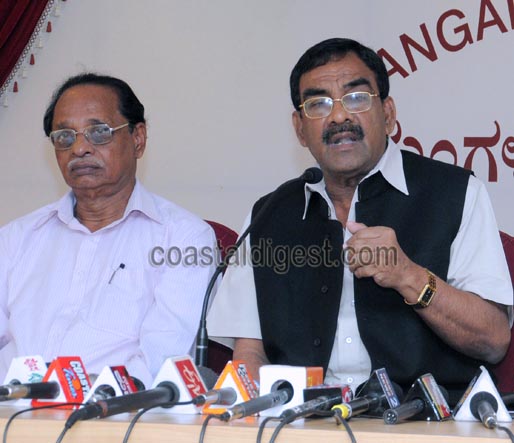
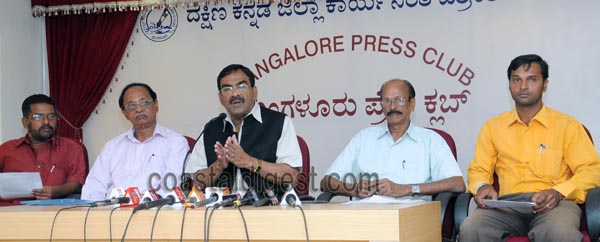
Holding the 'pankthi bedha' observed in Sri Krishna Temple, Udupi and other temples in the state as the 'genesis' of 'made made snana' practiced in Kukke Sri Subrahmanya Temple, G V Srirama Reddy, state CPM secretary told reporters here on Wednesday that the party will stage a protest at Udupi on January 26.

"The pankthi bedha is a form of discrimination that goes against basic tenets of the Constitution that advocates secularism," he said.

Likewise, CPM would support a call given by various central labour organisations for an All India general strike on February 28 to protest against price rise and corruption, Reddy said adding the party would also up the ante on its move to secure housing sites for the homeless poor under government housing schemes.

Noting that present housing plot dimension and cost per unit of house sanctioned under the housing schemes is not scientific, Reddy said the state government must take a relook at its housing policy and revise both the housing plot dimension and the cost per unit.

On Paramashivaiah Committee report aimed at providing permanent irrigation facility to eight districts, he said politicians from Congress and BJP are involved in spreading lies to keep their voter constituents happy.

It does not involve diversion of the Nethravathi as is being projected, but involves tapping good portion of around 57.1% rainfall that falls on land in Western Ghats - around 160 TMC and an additional 60 TMC from Krishna Basin.
CPI_18Jan_1

CPI_18Jan_2

Comments

Add new comment

  • Coastaldigest.com reserves the right to delete or block any comments.
  • Coastaldigset.com is not responsible for its readers’ comments.
  • Comments that are abusive, incendiary or irrelevant are strictly prohibited.
  • Please use a genuine email ID and provide your name to avoid reject.
News Network
February 5,2026

Bengaluru: As air quality continues to worsen across several parts of the city, hospitals in Bengaluru are reporting a steady rise in patients suffering from respiratory illnesses such as asthma, bronchitis and Chronic Obstructive Pulmonary Disease (COPD), health officials and doctors said.

Data from the Suvarna Arogya Suraksha Trust (SAST) shows that 3,891 patients received treatment for respiratory ailments between April and November 2024. The figure rose to 4,187 during the same period in 2025.

Private hospitals, too, are witnessing a 10–15 per cent year-on-year increase in such cases.

While doctors caution that the rise cannot be attributed solely to air pollution, a significant number of patients are non-smokers with no prior history of respiratory disease.

“Nearly 70 per cent of the patients we see are non-smokers with no previous respiratory issues. When other causes are ruled out, air pollution emerges as the most likely factor,” said Dr Manjunath PH, consultant interventional pulmonologist at a hospital in Kengeri.

Doctors noted that patient footfall spikes during the winter months and around Deepavali, when air quality typically worsens.

“There is a clear correlation between poor air quality and the rise in cases. People commonly present with persistent cough, breathlessness and irritation of the respiratory tract, indicating the impact of polluted air on their health,” said Dr Sheetal Chaurasia, consultant in pulmonary medicine at a private hospital in Whitefield.

Dr Chaurasia added that respiratory tract infections are also on the rise.

“Poor air quality leads to chronic airway inflammation, making the airways more vulnerable to infections. We are seeing an increase in both upper and lower respiratory tract infections,” she said.

Patients with pre-existing respiratory conditions remain the worst affected.

“For those already diagnosed with respiratory illnesses, deteriorating air quality significantly worsens the condition. Both the frequency and severity of attacks increase sharply,” said Dr Vandana P, a pulmonologist at a hospital on Bannerghatta Road.

Doctors also flagged a worrying trend of rising respiratory problems among younger adults and children.

To reduce exposure, they advised people to wear masks while travelling on two-wheelers or autos and ensure adequate ventilation at home to minimise indoor air pollution.

Comments

Add new comment

  • Coastaldigest.com reserves the right to delete or block any comments.
  • Coastaldigset.com is not responsible for its readers’ comments.
  • Comments that are abusive, incendiary or irrelevant are strictly prohibited.
  • Please use a genuine email ID and provide your name to avoid reject.
News Network
February 3,2026

Bengaluru: Following reports of fresh Nipah virus (NiV) cases in West Bengal and heightened vigilance across parts of Southeast Asia, the Karnataka Health Department has placed the state on high alert and activated emergency preparedness protocols.

Health officials said enhanced surveillance measures have been initiated after two healthcare workers in Barasat, West Bengal, tested positive for the virus earlier this month. While no cases have been reported in Karnataka so far, authorities said the state’s past exposure to Nipah outbreaks and high inter-state mobility warranted preventive action.

Officials have directed district health teams to intensify monitoring, particularly at hospitals and points of entry, and to ensure early detection and isolation of suspected cases.

High Mortality Virus with Multiple Transmission Routes

Nipah virus is a zoonotic disease that can spread from animals to humans and has a reported fatality rate ranging between 60 and 75 per cent. Fruit bats, also known as flying foxes, are the natural reservoirs of the virus and can transmit it by contaminating food sources with saliva or urine.

Known modes of transmission include:

•    Contaminated food: Consumption of fruits partially eaten by bats or raw date-palm sap
•    Animal contact: Exposure to infected pigs or other animals
•    Human-to-human transmission: Close contact with body fluids of infected persons, particularly in healthcare settings

Symptoms and Disease Progression

The incubation period typically ranges from 4 to 14 days, though delayed onset has also been reported. Early symptoms often resemble common viral infections, making prompt clinical suspicion critical.

•    Initial symptoms: Fever, headache, body aches, fatigue, sore throat
•    Progressive symptoms: Drowsiness, disorientation, altered mental state
•    Severe stage: Seizures, neck stiffness and acute encephalitis, which can rapidly progress to coma

Public Health Advisory

The Health Department has issued precautionary guidelines urging the public to adopt risk-avoidance practices to prevent any local spillover.

Do’s
•    Wash fruits thoroughly before consumption
•    Drink boiled and cooled water
•    Use protective equipment while handling livestock
•    Maintain strict hand hygiene

Don’ts
•    Avoid fruits found on the ground or showing bite marks
•    Do not consume beverages made from raw tree sap, including toddy
•    Avoid areas with dense bat populations
•    Do not handle sick or dead animals

Preparedness Measures

Officials confirmed that isolation wards are being readied in major government hospitals and that medical staff are being sensitised to identify early warning signs.

“There is no cause for panic, but there is a need for heightened vigilance,” a senior health official said, adding that there is currently no approved vaccine or specific antiviral treatment for Nipah, and care remains largely supportive.

Comments

Add new comment

  • Coastaldigest.com reserves the right to delete or block any comments.
  • Coastaldigset.com is not responsible for its readers’ comments.
  • Comments that are abusive, incendiary or irrelevant are strictly prohibited.
  • Please use a genuine email ID and provide your name to avoid reject.
News Network
February 1,2026

Golf.jpg

The coastal city of Mangaluru is gearing up for a major sporting milestone with the launch of a Golf Excellence Academy at the Pilikula Golf Club (PGC), scheduled to open on May 31. The initiative aims to position Mangaluru firmly on India’s national golfing map.

Speaking to reporters on Saturday during PGC’s first-ever floodlit Pro-Am tournament, club captain Manoj Kumar Shetty said the project is being funded by UAE-based philanthropist Michael D’Souza and is currently in the design phase. Experts from leading golf academies across the country are expected to visit Mangaluru to help shape the training programme and infrastructure.

The academy will train 20 young golfers at a time, with a long-term vision of producing national-level players from the region. Until now, PGC relied on an in-house coach, but the recent renovation of the course and the introduction of floodlights have opened new possibilities for expanding the sport.

Shetty said discussions are underway with two reputed coaching academies, whose heads are expected to visit PGC shortly. “A dormitory for trainers is already under construction. We are inviting academies to assess the facilities and suggest changes so we can build a truly world-class Golf Excellence Academy,” he said.

Professional golfer Aryan Roopa Anand noted that the floodlit course would be a game-changer for young players. “Students can now practise after school hours, even up to 8 or 9 pm, without compromising on academics,” he said.

Comments

Add new comment

  • Coastaldigest.com reserves the right to delete or block any comments.
  • Coastaldigset.com is not responsible for its readers’ comments.
  • Comments that are abusive, incendiary or irrelevant are strictly prohibited.
  • Please use a genuine email ID and provide your name to avoid reject.