Venur: Century's second anointing of Bahubali begins

[email protected] (CD Network, Photos by Ahmed Anwar )
January 28, 2012
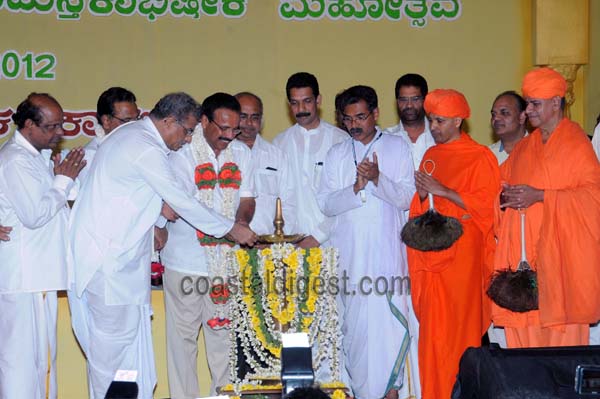
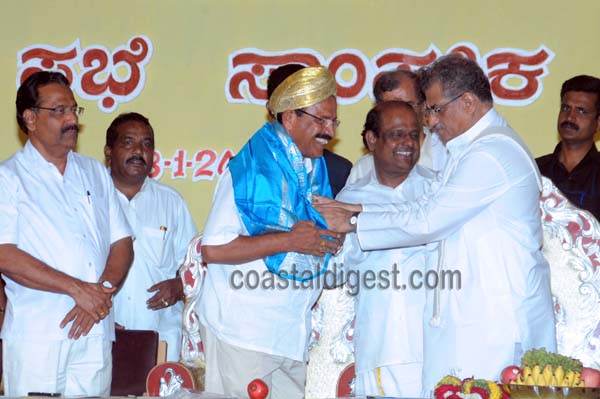
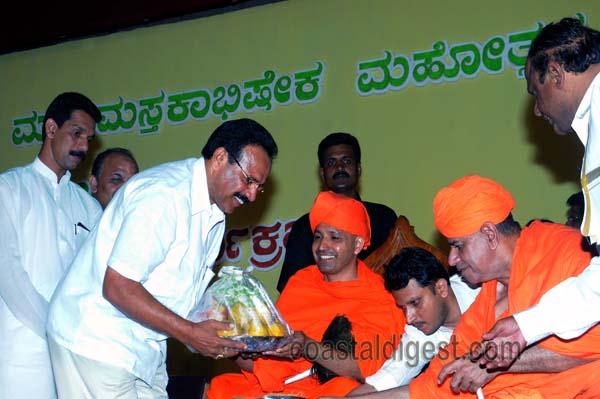
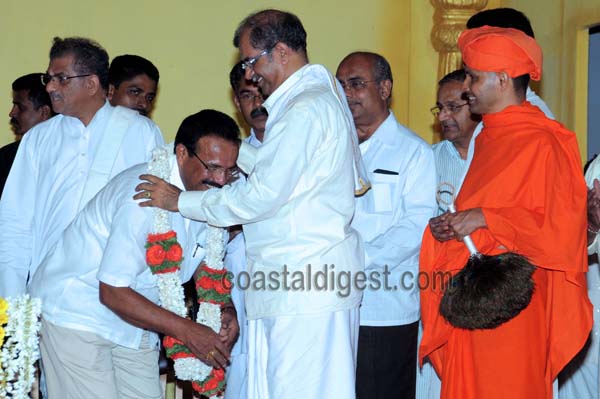
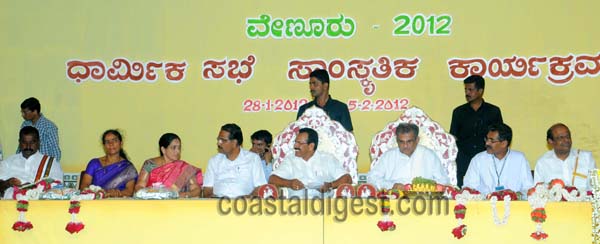
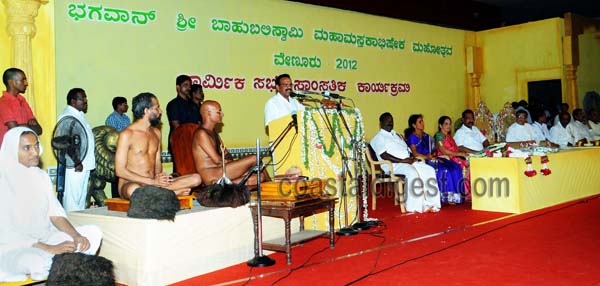
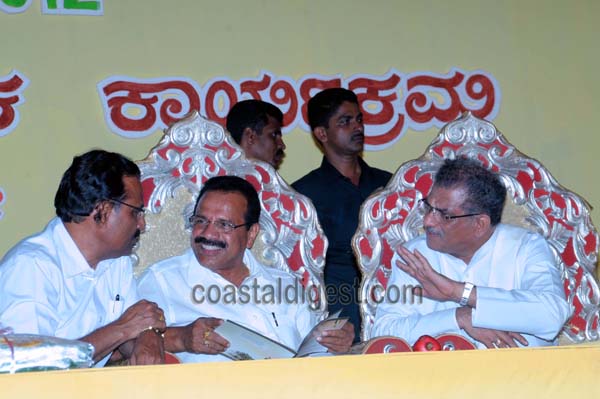
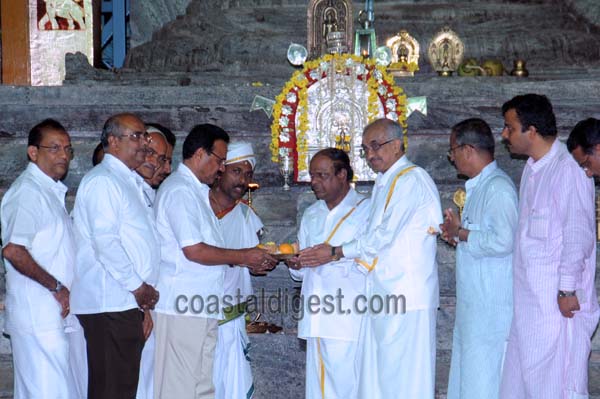
Mangalore, January 28: The second Mahamastakabhisheka (anointing) of the 21st century on Saturday got off to a colourful start with Chief Minister D V Sadananda Gowda stressing the need for values of Jainism like non-violence, sacrifice and spreading happiness in the tension-striken world.

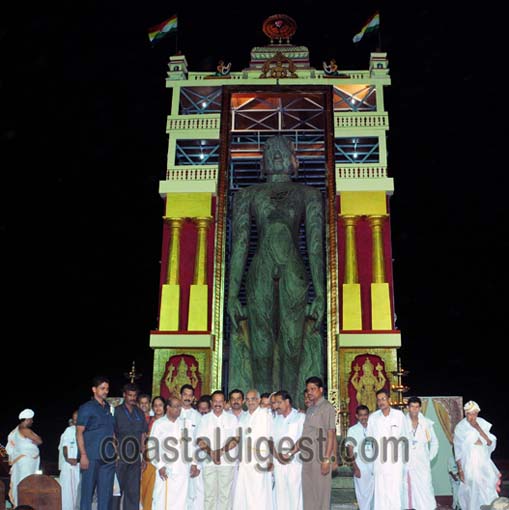
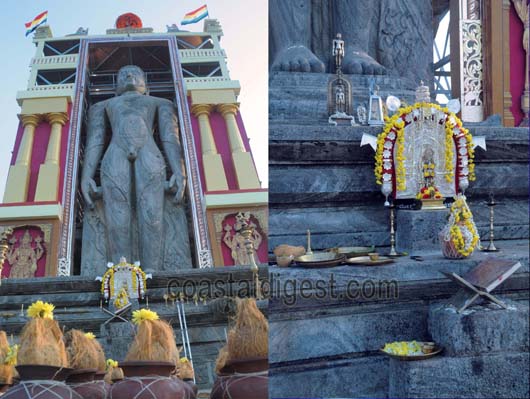
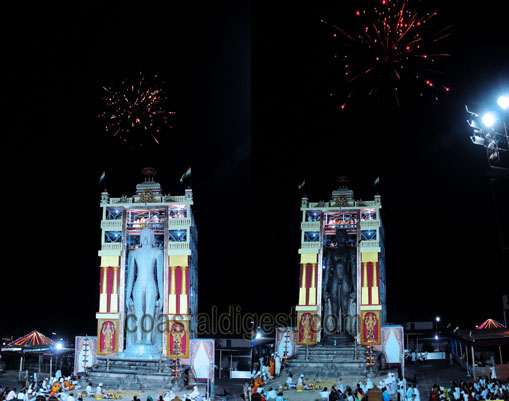
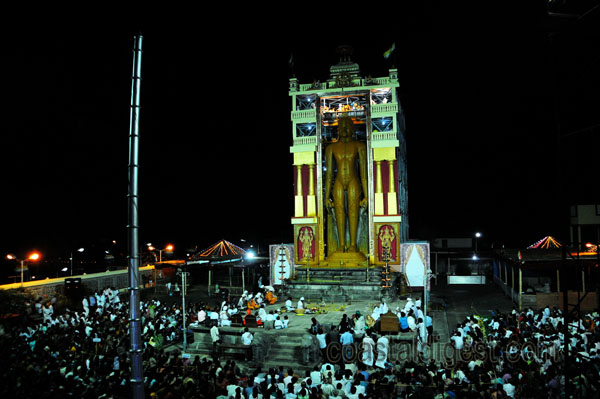
Inaugurating the nine day-long forth Mahamastakabhisheka at historical Venur town in Belthangady taluk, CM said the the massive monolith statue of Bahubali symbolised self-control and subjugation of ego.

“The one important thing that we all must learn from the Jainism is 'sacrifice'. If one learns to self-control and subjugate his ego and abstain from evil traits, he will surely progress in society”, he said.

He opined that the principles of Jainism are relevant for today's society which was full of problems and imbalances.

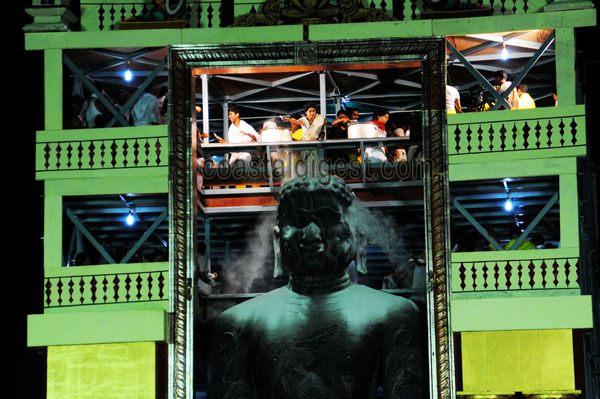
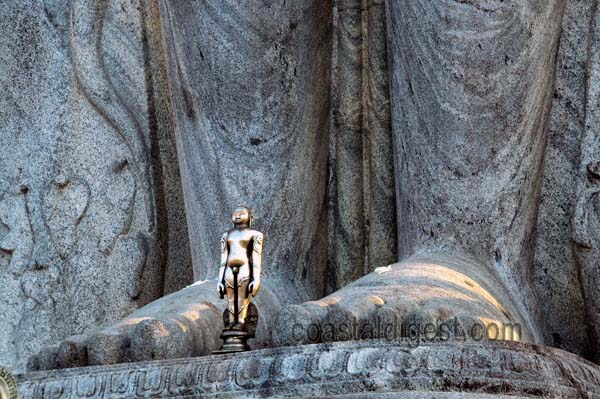
After inaugurating the event, the CM offered his prayers to the 35-foot tall idol.

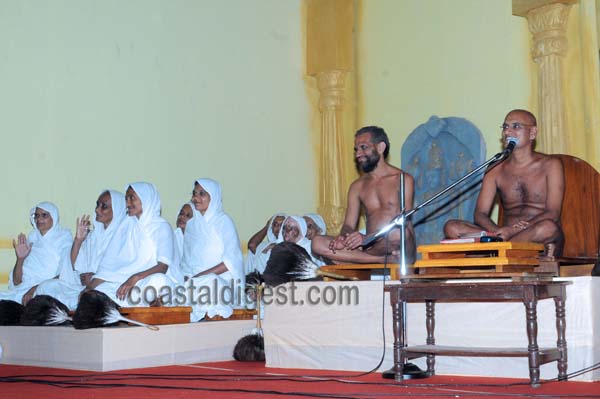
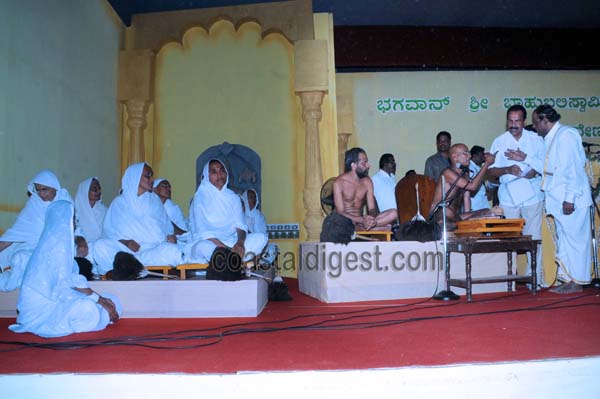
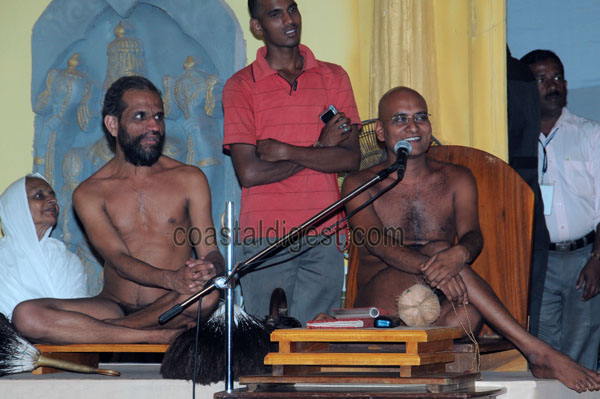
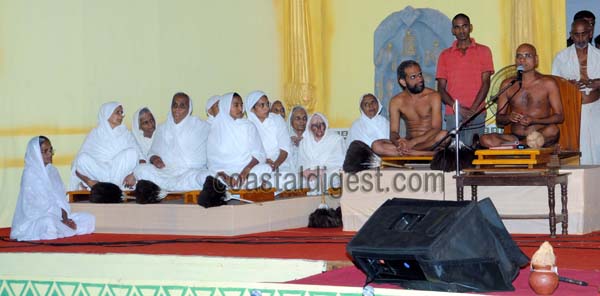
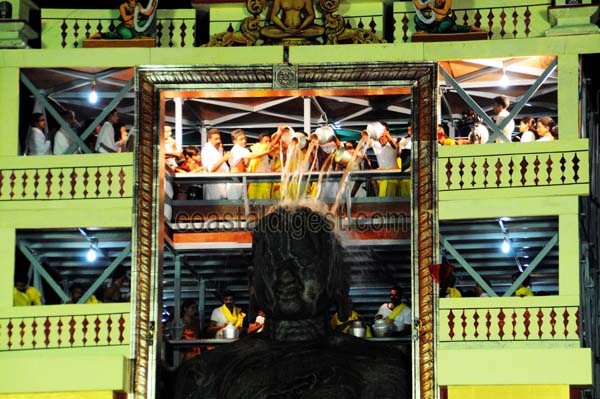
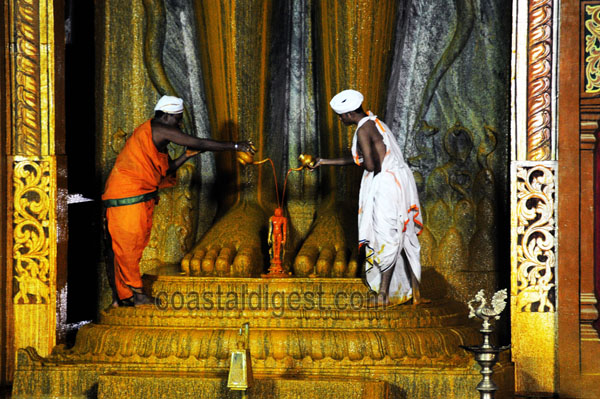
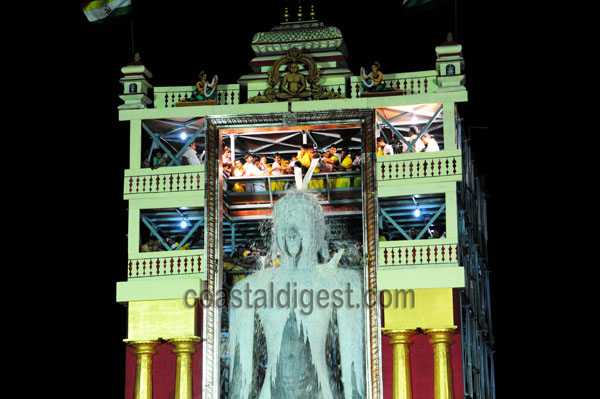
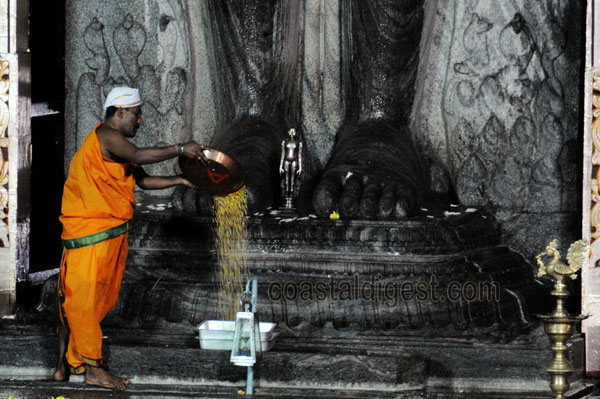
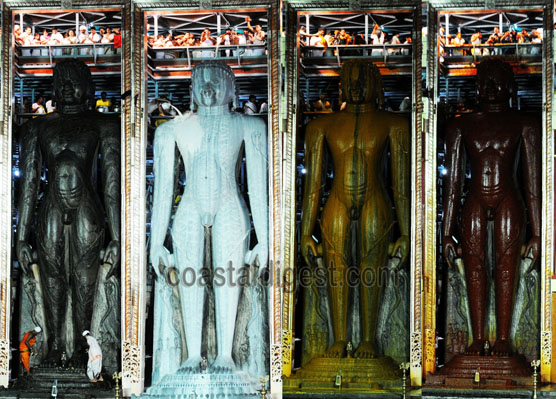
The rituals were carried out strictly following the principles of Jainism. After an attractive procession there was a water abhishekha. Then one after the other, holy things were poured from the statue's curly head to toe.

Tender coconut, sugarcane, milk, sandal, turmeric, red-turmeric, flowers, coins, gold, floral garlands were seen flowing on the giant sculpture. Later, a huge arathi made its presence.

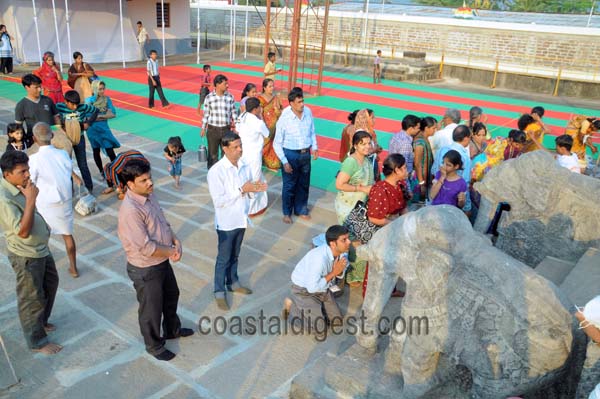
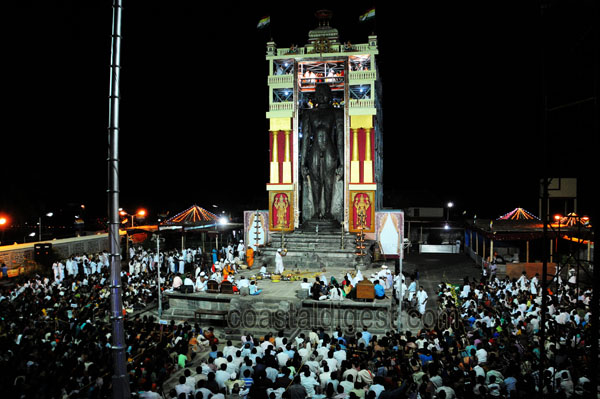
Thousands of devotees from across the country were seen eagerly waiting to get a glimpse of the celebrations.

The Mahamastakabhisheka organisers have set up stairs for devotees to reach the top of the idol and perform the rituals. On the first five days, the abhisheka would be performed using milk, sandalwood paste, and other material stocked in 108 kalashas. Around 450 litres of milk and 5 kg of sandalwood paste would be used in the first five days. This quantity would increase as more kalashas would be used for the abhisheka as the event progresses.

The abhisheka would be performed by families, including Ajila Princely family and Heggade from Dharmastala, on the first eight days of the event. Each family would bear the expenses of the ceremonies performed on the day. People could perform abhisheka on the last day of the event when material stored in 1,008 kalashas would be used.

The State Government had sanctioned Rs. 2 crore for the event. Some portion of this amount had been used for development activities, including asphalting of road and repair of compound wall. To commemorate this historic event, organisers had prepared a plan to provide drinking water for 12 villages surrounding Venur at an estimated cost of Rs. 25 crore. The water for these villages could be pumped from the Phalguni river, according to the organisers.

Going by the history, Thimmannajila Arasa installed the Bahubali statue in Venoor on the banks of Phalguni river in 1604 AD. The first Masthakabhisheka was held in 1928 followed by the second ceremony in 1956 and the third one in 2000.
VNM_29Jan_1

VNM_29Jan_2

VNM_29Jan_3

VNM_29Jan_4

VNM_29Jan_5

VNM_29Jan_6

VNM_29Jan_7

VNM_29Jan_8

VNM_29Jan_9

VNM_29Jan_10

VNM_29Jan_11

VNM_29Jan_12

VNM_29Jan_13

VNM_29Jan_14

VNM_29Jan_15

VNM_29Jan_16

VNM_29Jan_17

VNM_29Jan_18

VNM_29Jan_19

VNM_29Jan_20

VNM_29Jan_21

VNM_29Jan_22

VNM_29Jan_23

VNM_29Jan_24

VNM_29Jan_25

ALBUM

Comments

Add new comment

  • Coastaldigest.com reserves the right to delete or block any comments.
  • Coastaldigset.com is not responsible for its readers’ comments.
  • Comments that are abusive, incendiary or irrelevant are strictly prohibited.
  • Please use a genuine email ID and provide your name to avoid reject.
coastaldigest.com news network
February 5,2026

protestkerala.jpg

Mangaluru: The KSRTC Mangaluru division has rolled back the fare hike on buses operating on the Mangaluru–Kasaragod route following the suspension of toll collection at the Arikkady toll plaza near Kumbala in Kasaragod district.

The fare revision had been implemented after the National Highways Authority of India (NHAI) began toll collection at the Arikkady plaza on NH-66. As a result, fares for ordinary and Rajahamsa services were increased by ₹7 and ₹10, respectively, raising the bus fare from Mangaluru to Kasaragod from ₹81 to ₹88.

Senior Divisional Controller of KSRTC’s Mangaluru division, Rajesh Shetty, said the fares were reduced after toll collection at the Arikkady plaza was stopped. “The tollgate began operations on January 13, and the toll amount was deducted from the FASTag accounts of KSRTC buses operating on the route. Following an order from the central government to suspend toll collection, KSRTC has also withdrawn the additional fare with immediate effect,” he said.

At present, vehicles travelling on the Mangaluru–Kasaragod route pay toll only at the Talapady toll plaza. The toll for light motor vehicles (LMVs) at Talapady is ₹80 for a same-day return, while heavy vehicles, including buses, are charged ₹250. At Arikkady, the toll rates were ₹130 for LMVs (same-day return) and ₹450 for buses.

Protests against Arikkady toll plaza

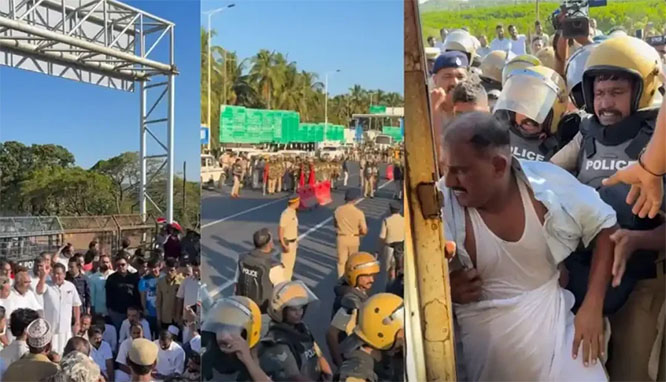
The Arikkady toll plaza witnessed widespread protests from January 12, the day toll collection commenced. On the second day, an action committee led by Manjeshwar MLA A K M Ashraf launched an indefinite protest at the site. Except for the BJP, leaders and workers of most major political parties participated in the agitation.

On the night of January 14, a large number of protesters gathered at the plaza and vandalised property, following which authorities temporarily suspended toll operations. The BJP later also expressed opposition to the toll plaza and criticised NHAI’s decision. 

Comments

Add new comment

  • Coastaldigest.com reserves the right to delete or block any comments.
  • Coastaldigset.com is not responsible for its readers’ comments.
  • Comments that are abusive, incendiary or irrelevant are strictly prohibited.
  • Please use a genuine email ID and provide your name to avoid reject.
News Network
February 3,2026

wind.jpg

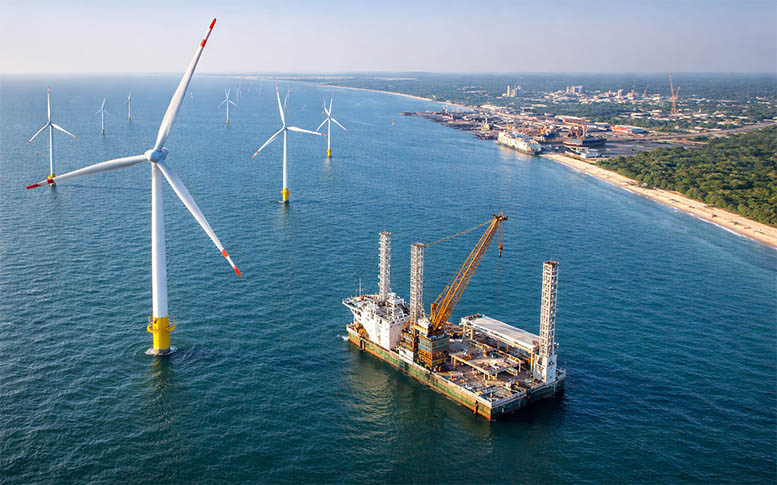
Dakshina Kannada MP Capt Brijesh Chowta has urged the Centre to give high priority to offshore wind energy generation along the Mangaluru coast, citing its strategic importance to India’s green energy and port-led development goals.

Raising the issue in the Lok Sabha under Rule 377, Chowta said studies by the National Institute of Oceanography have identified the Mangaluru coastline as part of India’s promising offshore wind ‘Zone-2’, covering nearly 6,490 sq km. He noted that the region’s relatively low exposure to cyclones and earthquakes makes it suitable for long-term offshore wind projects and called for its development as a dedicated offshore wind energy zone.

Highlighting the role of New Mangalore Port, Chowta said its modern infrastructure, multiple berths and heavy cargo-handling capacity position it well as a logistics hub for transporting and assembling large wind energy equipment.

He also pointed to the presence of major industrial units such as MRPL, OMPL, UPCL and the Mangaluru SEZ, which could serve as direct buyers of green power through power purchase agreements, improving project viability and speeding up execution.

With Karnataka’s peak power demand crossing 18,000 MW in early 2025, Chowta stressed the need to diversify renewable energy sources. He added that offshore wind projects in the Arabian Sea are strategically safer compared to the cyclone-prone Bay of Bengal.

Calling the project vital to India’s target of 500 GW of renewable energy by 2030, Chowta urged the Ministry of New and Renewable Energy to initiate resource assessments, pilot projects and stakeholder consultations at the earliest.

Comments

Add new comment

  • Coastaldigest.com reserves the right to delete or block any comments.
  • Coastaldigset.com is not responsible for its readers’ comments.
  • Comments that are abusive, incendiary or irrelevant are strictly prohibited.
  • Please use a genuine email ID and provide your name to avoid reject.
News Network
January 23,2026

Karnataka Governor Thaawarchand Gehlot read only three lines from the 122-paragraph address prepared by the Congress-led state government while addressing the joint session of the Legislature on Thursday, effectively bypassing large sections critical of the BJP-led Union government.

The omitted portions of the customary Governor’s address outlined what the state government described as a “suppressive situation in economic and policy matters” under India’s federal framework. The speech also sharply criticised the Centre’s move to replace the Mahatma Gandhi National Rural Employment Guarantee Act (MGNREGA) with the Viksit Bharat–Guarantee for Rozgar and Ajeevika Mission (Gramin) Act, commonly referred to as the VB-GRAM (G) Act.

Governor Gehlot had earlier conveyed his objection to several paragraphs that were explicitly critical of the Union government. On Thursday, he confined himself to the opening lines — “I extend a warm welcome to all of you to the joint session of the State legislature. I am extremely pleased to address this august House” — before jumping directly to the concluding sentence of the final paragraph.

He ended the address by reading the last line of paragraph 122: “Overall, my government is firmly committed to doubling the pace of the State’s economic, social and physical development. Jai Hind — Jai Karnataka.”

According to the prepared speech, the Karnataka government demanded the scrapping of the VB-GRAM (G) Act, describing it as “contractor-centric” and detrimental to rural livelihoods, and called for the full restoration of MGNREGA. The state government argued that the new law undermines decentralisation, weakens labour protections, and centralises decision-making in violation of constitutional norms.

Key points from the unread sections of the speech:

•    Karnataka facing a “suppressive” economic and policy environment within the federal system

•    Repeal of MGNREGA described as a blow to rural livelihoods

•    VB-GRAM (G) Act accused of protecting corporate and contractor interests

•    New law alleged to weaken decentralised governance

•    Decision-making said to be imposed by the Centre without consulting states

•    Rights of Adivasis, women, backward classes and agrarian communities curtailed

•    Labourers allegedly placed under contractor control

•    States facing mounting fiscal stress due to central policies

•    VB-GRAM (G) Act accused of enabling large-scale corruption

Comments

Add new comment

  • Coastaldigest.com reserves the right to delete or block any comments.
  • Coastaldigset.com is not responsible for its readers’ comments.
  • Comments that are abusive, incendiary or irrelevant are strictly prohibited.
  • Please use a genuine email ID and provide your name to avoid reject.