Students sing, dance to understand subjects

February 1, 2012

swaroopa4

Mangalore, February 1: When most of the students attempting SSLC exams in the next few months are buried in their books studying, students of Swaroopa Adhyayana Kendra are busy singing, dancing and painting.

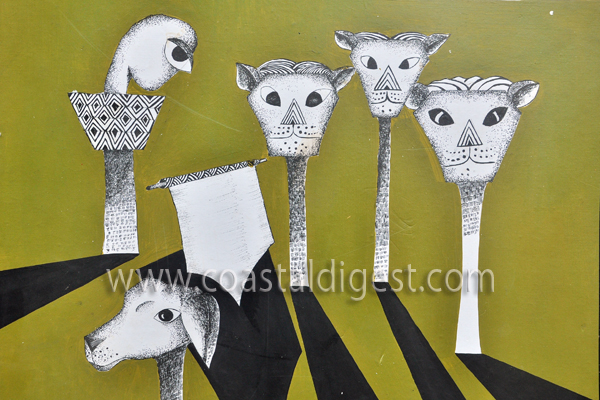
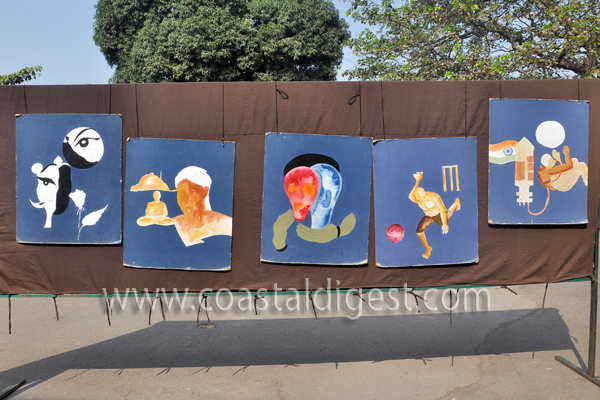
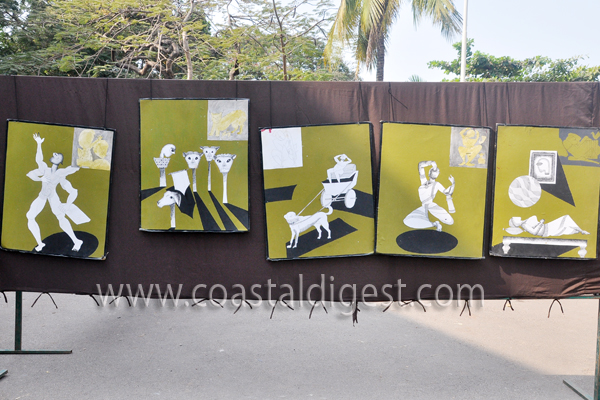
Students of Swaroopa Adhyayana Kendra painting a picture, while singing their institution anthem, at Town Hall in Mangalore on Tuesday.However, people who are thinking that these kids are up to tom-foolery will be shocked to find out that they know their theorems, science experiments, history dates, English poems, Kannada grammar on the tip of their tongue.

How are they able to do it? Well, thanks to the innovative learning methods of Gopadkar.

Swaroopa Adhyayan Kendra is the brain child of Gopadkar, which aims to break the barriers of conventional education system which is limited to six subjects, exams and marks.

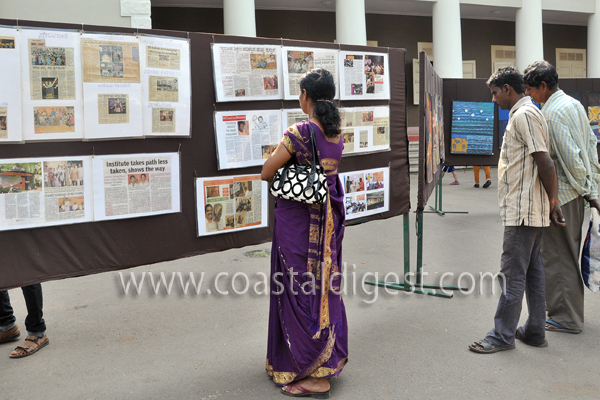
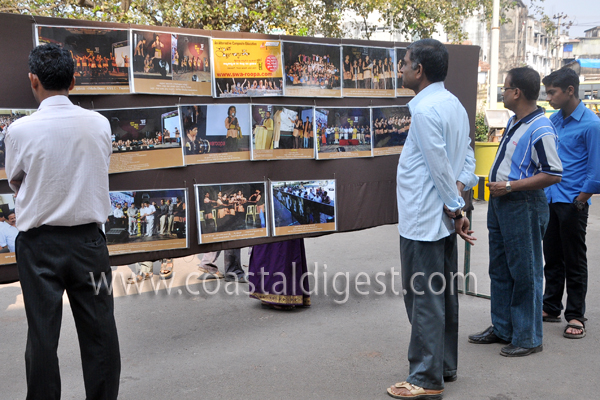
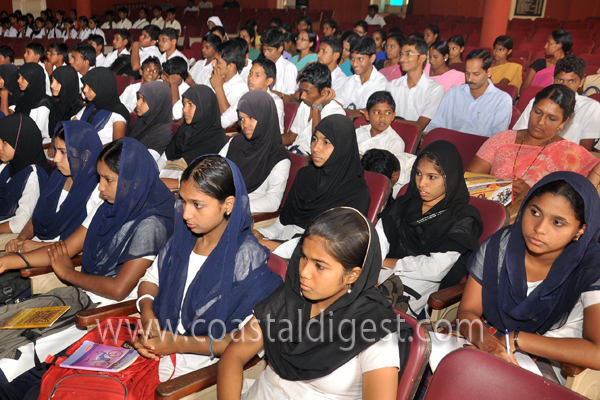
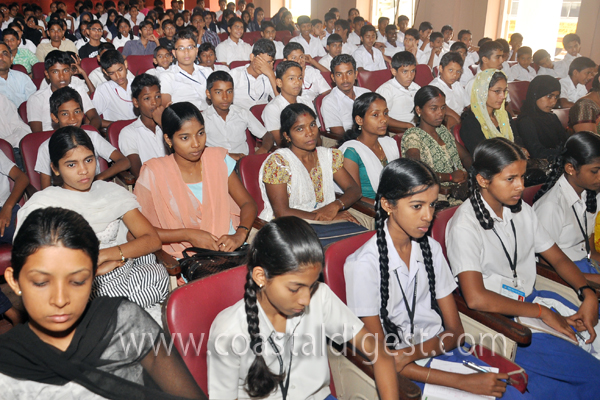
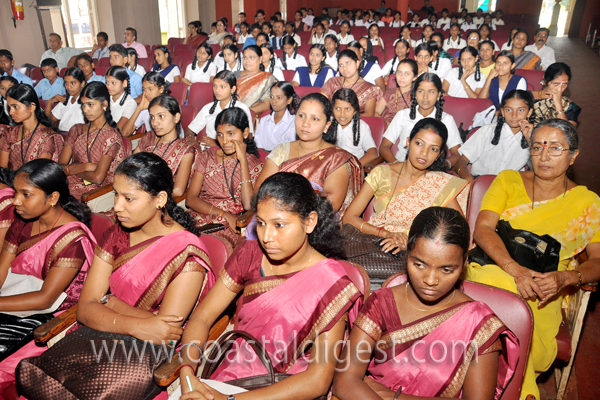
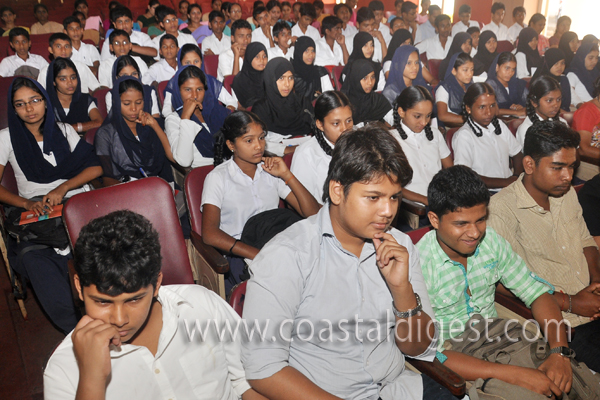
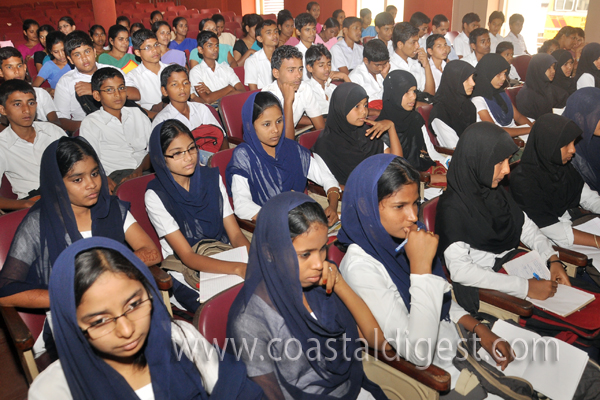
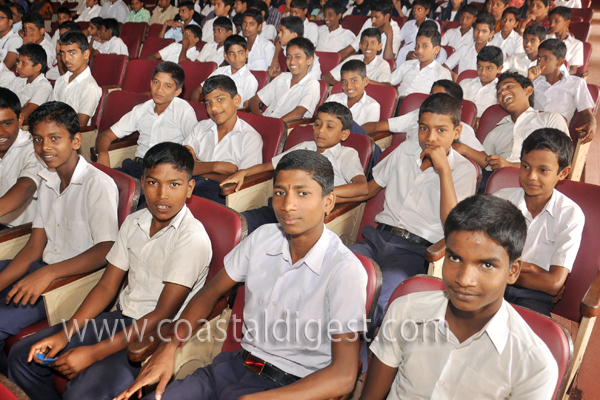
Gopadkar showed the wonders of his alternate education methods at 'Swaroopa Shikshana Jagruti Jatha' organised at Mangalore Town Hall on Tuesday.

“Who ever knows everything and understands everything, tends to forget. One who does not understand and is ready to accept that fact and learn is a student. When you do not understand, you are forced to think. Hence, it is better not to understand than understand,” said Gopadkar.

'Swaroopa,' means understanding oneself with an aim to develop. The alternate education system aims to bring change, development, experimentation and creativity, he said.

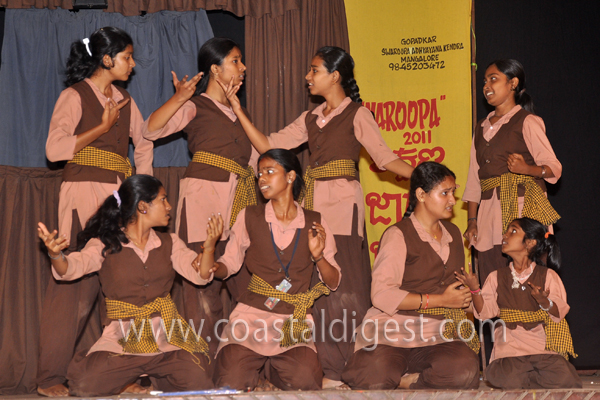
The students of Swaroopa, then demonstrated various learning techniques they learnt at the center and left the audience awestruck. The students presented a well-choreographed Bollywood dance. Later, they explained that the dance is just not a dance, but a depiction of Flemming's Right and Left Hand Rule. The students have memorised the entire rule with the dance moves.

The students performed various other dances which depicted Maths theorems and also the multi-tasked education dance, where students presented four different subjects in one dance.

Later, Gopadkar demonstrated the memory skills of his students, who could name more than 50 items in its chronological order and also randomly. “With this technique, my students have entered the Limca Book of World Records by naming 1000 items,” he said.

The students also demonstrated their concentration power, by doing 11 tasks at once. The students drew pictures in their left hand, counted in the right and memorised items, numbers, questions asked by their teachers simultaneously and also told what the audience were doing.

Any mobile number in the world can be memorised by these children and they can remember it permanently. The students have denoted numbers to various actions and they remember them through the story technique.

The First War of Indian Independence, seemed to come alive when the students enacted an entire chapter of the social science subject with an Yakshagana.

Later, they presented a puppet show “Artha Agtha Illa” (I don't understand) which showed the plight of the students in present education system.

“Stop Bonsai education. Try to solve the lacunae in the present education system. All children are geniuses, one has to know to use the human resource,” said Gopadkar and added that he and his students have toured Karnataka for three months, demonstrating the education techniques in over 54 centers. However, the education department is not considering to include the alternative study techniques in the education system,” he regretted.

“Earth is looted by the educated. Today's education is leading one to a destructive path. The society has become monotonous. There is a great need to have a change in the education system and hence emphasise on experimentation and creativity,” said Scholar and artist Gururaj Marpalli delivering the key-note address.

The programme was inaugurated by Artist K P Shenoy, with a painting which was backed by the Swaroopa institution anthem sung by the students.

swaroopa1

swaroopa2

swaroopa3

swaroopa5

swaroopa6

swaroopa7

swaroopa8

swaroopa9

swaroopa10

swaroopa11

swaroopa12

swaroopa13

swaroopa14

swaroopa15

swaroopa16

swaroopa17

swaroopa18

swaroopa19

swaroopa20

swaroopa21

swaroopa22

swaroopa23

Comments

Add new comment

  • Coastaldigest.com reserves the right to delete or block any comments.
  • Coastaldigset.com is not responsible for its readers’ comments.
  • Comments that are abusive, incendiary or irrelevant are strictly prohibited.
  • Please use a genuine email ID and provide your name to avoid reject.
News Network
January 31,2026

Roy.jpg

Bengaluru: The shooting incident involving CJ Roy, founder of the Confident Group, has once again put the spotlight on a businessman whose life has swung between flamboyant global success and persistent controversy at home.

Though Roy’s business interests extended across continents, his roots lay firmly in Karnataka. An alumnus of Christ School in Bengaluru, he later moved to Tumakuru to pursue an engineering degree. Those familiar with his early years describe him as intensely ambitious, beginning his career as a salesman at a small electronics firm dealing in computers.

Roy’s entry into large-scale real estate came through the Crystal Group, where he worked closely with Latha Namboothiri and rose from manager to director. However, the launch of the Confident Group in 2005 was clouded by industry speculation. Insiders speak of a fallout involving alleged “benami” properties and claims of deception that ultimately led to his independent venture—an episode Roy spent years trying to distance himself from, according to associates.

A tale of two cities

Roy’s professional trajectory diverged sharply across geographies.

In Dubai, he built a reputation as a bold and efficient developer, completing massive luxury residential projects in record time—some reportedly within 11 months. His rapid project delivery and lavish lifestyle in the Emirates earned him admiration and visibility in the real estate sector.

In Bengaluru, however, his image remained far more fractured. Sources say Roy stayed away from the city for several years amid disputes over unpaid dues to vendors and suppliers. Several projects were allegedly stalled, with accusations of unfulfilled commitments to cement and steel suppliers continuing to follow him.

Roy’s return to Bengaluru’s business and social circles began around 2018, marked by a conscious attempt at rebranding. His appointment as Honorary Consul of the Slovak Republic added diplomatic legitimacy, which he complemented with visible CSR initiatives, including ambulance donations and high-profile charity events.

Heavy police presence in Langford Town

Following the incident, police personnel from the Central division were deployed outside the Confident Group building in Langford Town, which also houses the Slovak Honorary Consulate in Bengaluru.

The otherwise busy premises near Hosur Road wore a deserted look on Friday, reflecting the shock and uncertainty that followed the tragedy.

Comments

Add new comment

  • Coastaldigest.com reserves the right to delete or block any comments.
  • Coastaldigset.com is not responsible for its readers’ comments.
  • Comments that are abusive, incendiary or irrelevant are strictly prohibited.
  • Please use a genuine email ID and provide your name to avoid reject.
News Network
February 4,2026

shettigar.jpg

An Indian resident who won the Dh20 million (approximately Rs 50 crore) jackpot in Abu Dhabi's Big Ticket draw has told of his joy at sharing his life-changing fortune with a friend.

Shanthanu Shettigar, a shop manager in Muscat, regularly buys tickets for the monthly grand prize draw with one of his closest friends – and the pair won on February 3.

Mr Shettigar, 33, who is from Udyavar in Udupi district of the southern state of Karnataka and has lived in the Omani capital for eight years, said he was left speechless after learning of his success.

“When I first moved to Muscat, many of my colleagues were purchasing Big Ticket, which encouraged me to give it a try,” he said.

“I started buying tickets on my own, and later began sharing tickets with a close friend. The ticket that brought me this win was one we purchased together.”

“Like most people, I receive a lot of spam calls, and I was fully absorbed in my work as well. I knew the live draw was taking place tonight, but I never imagined my name would be announced,” he said.

“When I realised it was real and that I had won, I was honestly speechless. It still hasn’t fully sunk in, but I’m extremely happy.”

Mr Shettigar is not sure how he will spend his share of the money, but encouraged others to take part.

“This win was completely unexpected, so I want to take some time to think things through before deciding what to do next,” he said.

“I would definitely encourage others to participate with Big Ticket, whether with family or friends – you never know when your moment might come.”

The Big Ticket was established in 1992 with an initial first prize of Dh1 million. It is one of the most popular monthly raffles in the UAE.

It has transformed the lives of many people across the Emirates and beyond.

Entry to the Big Ticket Millionaire is Dh500. Tickets can be bought online or at counters at Zayed International Airport and Al Ain Airport.

Comments

Add new comment

  • Coastaldigest.com reserves the right to delete or block any comments.
  • Coastaldigset.com is not responsible for its readers’ comments.
  • Comments that are abusive, incendiary or irrelevant are strictly prohibited.
  • Please use a genuine email ID and provide your name to avoid reject.
News Network
February 4,2026

Mangaluru: Urban local bodies and gram panchayats should make the use of Kannada on signboards mandatory while issuing trade licences to commercial establishments, Dakshina Kannada Deputy Commissioner Darshan HV said. He also called for regular inspections to ensure compliance.

Presiding over the District Kannada Awareness Committee meeting at the deputy commissioner’s office, Darshan said the city corporation would be directed to ensure that shops operating in malls prominently display their names in Kannada. “All commercial establishments, including shops, companies, offices and hotels, must mandatorily display their names in Kannada on signboards,” he said.

The deputy commissioner added that the National Highways Authority of India (NHAI) would be instructed to include Kannada on signboards along national highways. Banks, he said, would be directed through committee meetings to provide application forms in Kannada.

“Even if English-medium schools and colleges impart education in English, their signboards must display the institution’s name in Kannada. Steps will also be taken to ensure that private buses display place names in Kannada,” Darshan said.

During the meeting, committee members raised concerns over the closure of Kannada-medium schools in rural areas due to a shortage of teachers and stressed the need for immediate corrective measures. They also pointed out that several industries employ workers from other states while overlooking local candidates.

Members further demanded that nationalised banks provide deposit and withdrawal slips in Kannada. It was brought to the deputy commissioner’s notice that the presence of staff without knowledge of Kannada in rural branches of nationalised banks is causing hardship to local customers.

Meanwhile, MP Srinath, president of the District Kannada Sahitya Parishat, urged the district administration to allot land for the construction of a district Kannada Bhavana in Mangaluru.

Comments

Add new comment

  • Coastaldigest.com reserves the right to delete or block any comments.
  • Coastaldigset.com is not responsible for its readers’ comments.
  • Comments that are abusive, incendiary or irrelevant are strictly prohibited.
  • Please use a genuine email ID and provide your name to avoid reject.