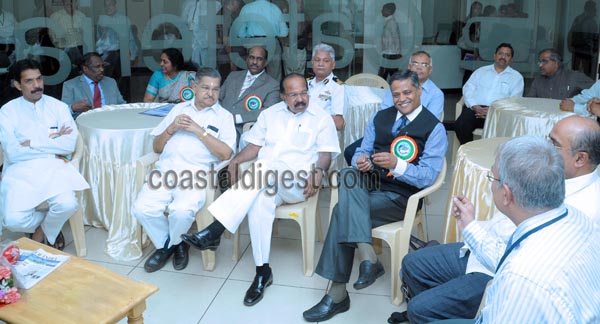
Increase efficiency, export value-added products: Expert

February 13, 2012

Mangalore, February 13: Export expert Anup K Pujari has laid emphasis on the need of increasing efficiency and exporting value-added products to new markets to increase the nations export.

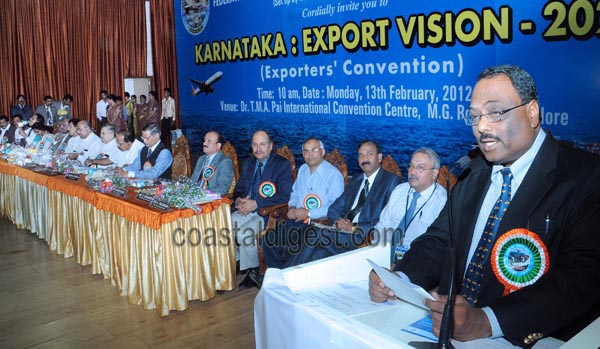
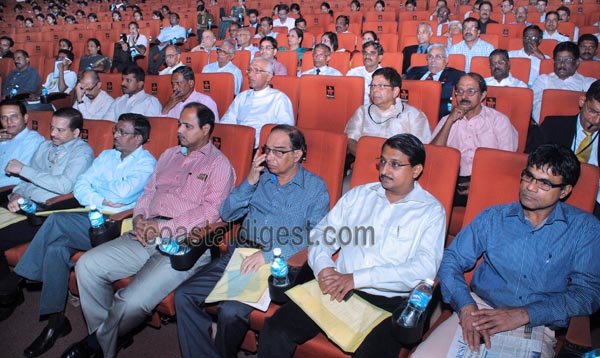
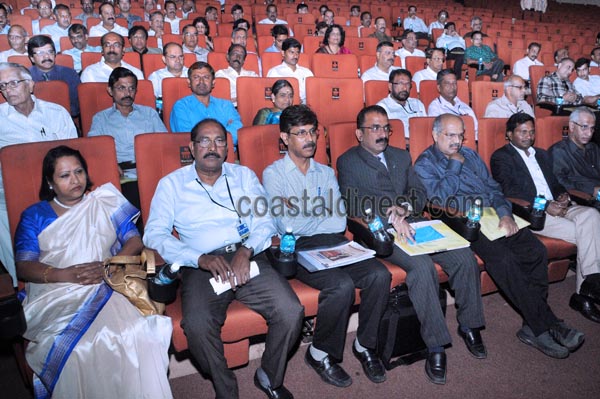
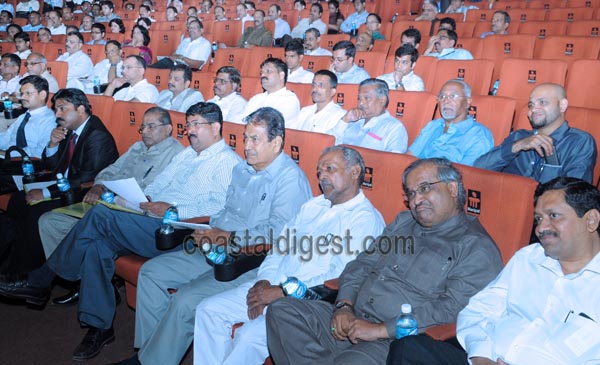
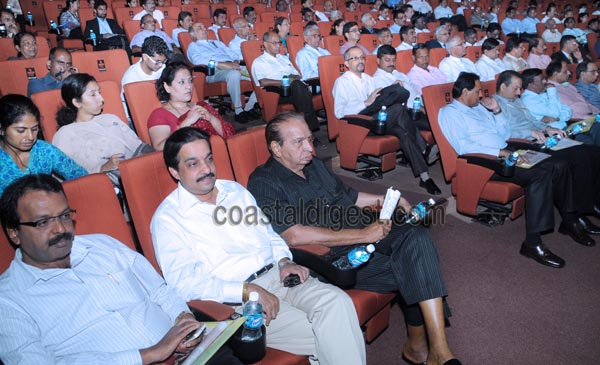
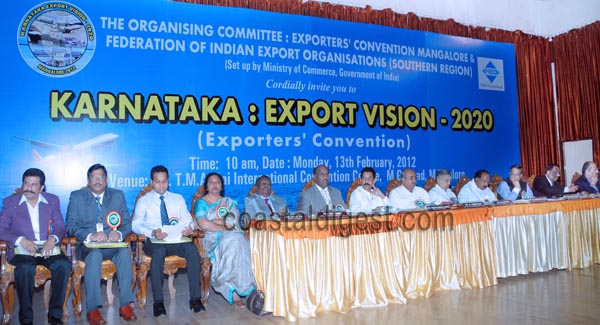
Speaking at a question and answer session at 'Karnataka: Export Vision-2020,' a convention of exporters organised by the Southern Region of Federation of Indian Export Organisations, he said that increasing port capacity would also be helpful in increasing exports.

Mr Pujari, who is the Director General Foreign Trade (DGFT), Union Ministry of Commerce, said that exporters must sell value-added products if India's exports should hit $ 300 billion-mark by the end of this financial year and $ 500 billion in two years.

He also suggested that instead of yarn, fashion garments could be exported.

Rafeeque Ahmad, president, FIEO, said that for exports to move up the value chain requires faster transport and clearances. While exporting traditional commodities could afford a time of two months and a further delay of a fortnight, clusters must be very active to reach consumers quickly.

He said exporters should identify clusters or combine two to three places into a cluster (so that they can send products together to containers and get clearances faster from the Ministry of Commerce).

Ajay Sahay said the Ministry of Commerce was studying clusters of exporters and their proximity to ports. The Government was looking at 70 clusters and their connectivity to ports and airports. The report would be ready by March 31, he said. In Chennai, despite units being close to the port, export products were going to ports other than Chennai, he said.

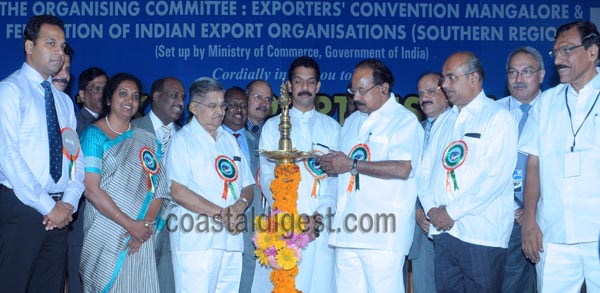
Earlier, inaugurating the convention, Mr. Ahmad said that if India had to increase exports to $ 500 billion by 2014, the Centre and the States must work together and States should think of exports as priority. States should not levy taxes on imports used in (production of goods meant for) exports. Exports should be treated as a public utility to avoid flash strikes (within export units), he said.

The concerns for exporters in Karnataka were a deficit of power and power quality, need for an air cargo complex with a cold chain in Mangalore, exports going through Chennai, which had a congested port, and lack of infrastructure.

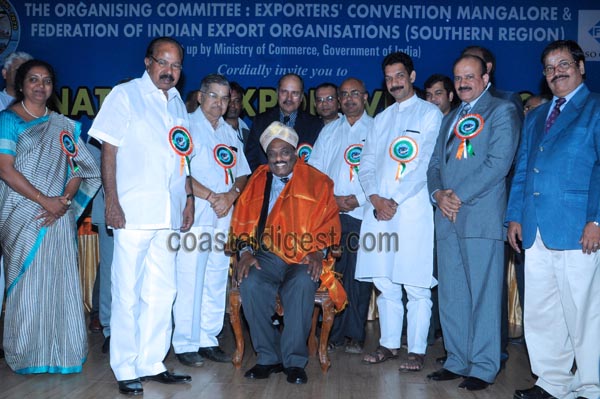
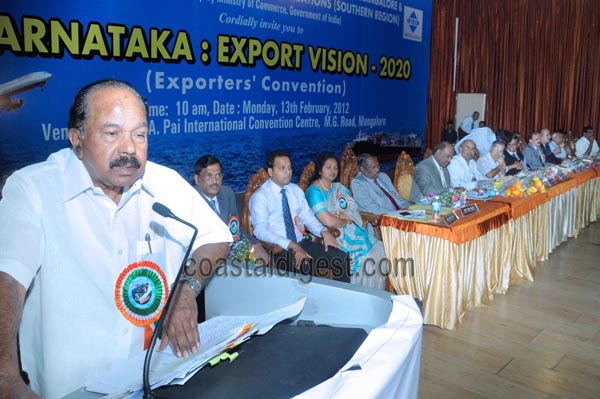
M. Veerappa Moily, Minister for Corporate Affairs, said that if India had to reach a share of 4 per cent of global trade by 2020, that is $ 2,480 billion, it would require massive capacity building in infrastructure and human resources. India's merchandise exports might fall short of the target of $ 300 billion set for 2011-12, he said. If companies in the U.S. and European Union reduced their IT budgets, it might affect prospects for India's software exports, he said.

Mr. Moily said that each district should have a research and development cell for exports, which should work on innovating exports. He said that Karnataka ranked lowest in the development of infrastructure among Southern States.

Speaking about the export potential of Mangalore, he said the city would be the gateway and the second commercial capital of India after Mumbai.
VSN_2020Feb13_2

VSN_2020Feb13_3

VSN_2020Feb13_4

VSN_2020Feb13_5

VSN_2020Feb13_6

VSN_2020Feb13_7

VSN_2020Feb13_8

VSN_2020Feb13_9

VSN_2020Feb13_10

VSN_2020Feb13_11

VSN_2020Feb13_13

Comments

Add new comment

  • Coastaldigest.com reserves the right to delete or block any comments.
  • Coastaldigset.com is not responsible for its readers’ comments.
  • Comments that are abusive, incendiary or irrelevant are strictly prohibited.
  • Please use a genuine email ID and provide your name to avoid reject.
News Network
January 23,2026

Mangaluru: The Karnataka Government Polytechnic (KPT), Mangaluru, has achieved autonomous status from the All India Council for Technical Education (AICTE), becoming the first government polytechnic in the country to receive such recognition in its 78-year history. The status was granted by AICTE, New Delhi, and subsequently approved by the Karnataka Board of Technical Education in October last year.

Officials said the autonomy was conferred a few months ago. Until recently, AICTE extended autonomous status only to engineering colleges, excluding diploma institutions. However, with a renewed national focus on skill development, several government polytechnics across India have now been granted autonomy.

KPT, the second-largest polytechnic in Karnataka, was established in 1946 with four branches and has since expanded to offer eight diploma programmes, including computer science and polymer technology. The institution is spread across a 19-acre campus.

Ravindra M Keni, the first dean of the institution, told The Times of India that AICTE had proposed autonomous status for polytechnic institutions that are over 25 years old. “Many colleges applied. In the first round, 100 institutions were shortlisted, which was further narrowed down to 15 in the second round. We have already completed one semester after becoming an autonomous institution,” he said. He added that nearly 500 students are admitted annually across eight three-year diploma courses.

Explaining the factors that helped KPT secure autonomy, Keni said the institution has consistently recorded 100 per cent admissions and placements for its graduates. He also noted its strong performance in sports, with the college emerging champions for 12 consecutive years, along with active student participation in NCC and NSS activities.

Autonomous status allows KPT to design industry-oriented curricula, conduct examinations, prepare question papers, and manage academic documentation independently. The institution can also directly collaborate with industries and receive priority funding from AICTE or the Ministry of Education. While academic autonomy has been granted, financial control will continue to rest with the state government.

“There will be separate committees for examinations, question paper setting, boards of studies, and boards of examiners. The institution will now have the freedom to conduct admissions without government notifications and issue its own marks cards,” Keni said, adding that new academic initiatives would be planned after a year of functioning under the autonomous framework.

Comments

Add new comment

  • Coastaldigest.com reserves the right to delete or block any comments.
  • Coastaldigset.com is not responsible for its readers’ comments.
  • Comments that are abusive, incendiary or irrelevant are strictly prohibited.
  • Please use a genuine email ID and provide your name to avoid reject.