



Legislators from DK, Udupi keep off Yeddy meeting

[email protected] (CD Network)
February 24, 2012

yeddi


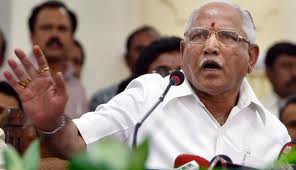
Mangalore, February 24: Amidst the mounting crisis in the ruling party of the state, legislators from the twin coastal districts of Udupi and Dakshina Kannada, who enjoy a close relationship with Chief Minister D V Sadananda Gowda, have distanced themselves from the meeting at former CM B S Yeddyurappa's house.

Apart from MLAs and MLCs of twin district, Mangalore MP Nalin Kumar Kateel too kept off the meeting, despite the invitation. Though Mangalore North MLA Krishna J Palemar attended the meeting, he clarified to reporters that his intention was not leadership change.

However, energy minister Shobha Karandlaje, who also participated in her mentor's meeting did not make any public statement.

It's worth mentioning here that the BJP and RSS have a strong base in these two districts, besides the Malnad district of Chikmagalur, which shares a parliamentary constituency with Udupi.

However, most of the legislators, who avoided Yeddyurappa's meeting on Thursday, gave only two reasons: They were attending the Mangalore University convocation or making preparations for the Udupi-Chikmagalur byelection.

The legislators from the coastal districts are learnt to have decided not to openly identify with Yeddyurappa, who is spearheading the 'oust Gowda campaign'.

Meanwhile the Chief Minister, who participated in the 30th convocation of Mangalore University on Thursday, held a secret meeting with prominent RSS leader Kalladka Prabhakar Bhat. The CM, who, has been very loyal to the party and the Sangh, which still wields considerable influence in these districts.


Comments

Add new comment

  • Coastaldigest.com reserves the right to delete or block any comments.
  • Coastaldigset.com is not responsible for its readers’ comments.
  • Comments that are abusive, incendiary or irrelevant are strictly prohibited.
  • Please use a genuine email ID and provide your name to avoid reject.
News Network
February 1,2026

Bengaluru: The Karnataka High Court has refused to quash an investigation against a WhatsApp group administrator accused of allowing the circulation of obscene and offensive images depicting Hindutva politicians and idols in 2021.

Justice M Nagaprasanna observed that, prima facie, the ingredients of the offence under Section 295A of the Indian Penal Code were made out. “The offence under Section 295A of the IPC is met to every word of its ingredient, albeit prima facie,” the judge said.

The petitioner, Sirajuddin, a resident of Belthangady taluk in Dakshina Kannada district, had challenged the FIR registered against him at the CEN (Cyber, Economics and Narcotics) police station, Mangaluru, for offences under Section 295A of the IPC and Section 67 of the Information Technology Act. Section 295A relates to punishment for deliberate and malicious acts intended to outrage the religious feelings of any class of citizens.

According to the complaint filed by K Jayaraj Salian, also a resident of Belthangady taluk, he received a WhatsApp group link from an unknown source and was added to the group after accessing it. The group reportedly had six administrators and around 250 participants, where obscene and offensive images depicting Hindu deities and certain political figures were allegedly circulated repeatedly.

Sirajuddin was arrested in connection with the case and later released on bail on February 16, 2021. He argued before the court that he was being selectively targeted, while other administrators—including the creator of the group—were neither arrested nor investigated. He also contended that the Magistrate could not have taken cognisance of the offence under Section 295A without prior sanction under Section 196(1) of the CrPC.

Rejecting the argument, Justice Nagaprasanna held that prior sanction is required only at the stage of taking cognisance, and not at the stage of registration of the crime or during investigation.

The judge noted that the State had produced the entire investigation material before the court. “A perusal of the material reveals depictions of Hindu deities in an extraordinarily obscene, demeaning and profane manner. The content is such that its reproduction in a judicial order would itself be inappropriate,” the court said, adding that the material, on its face, had the tendency to outrage religious feelings and disturb communal harmony.

Observing that the case was still at the investigation stage, the court said it could not interdict the probe at this juncture. However, it expressed concern that the investigating officer appeared to have not proceeded uniformly against all administrators. The court clarified that if the investigation revealed the active involvement of any member in permitting the circulation of such content, they must also be proceeded against.

“At this investigative stage, any further observation by this Court would be unnecessary,” the order concluded.

Comments

Add new comment

  • Coastaldigest.com reserves the right to delete or block any comments.
  • Coastaldigset.com is not responsible for its readers’ comments.
  • Comments that are abusive, incendiary or irrelevant are strictly prohibited.
  • Please use a genuine email ID and provide your name to avoid reject.