Eradicate naxalism by helping the poor and weak: Moily

March 4, 2012

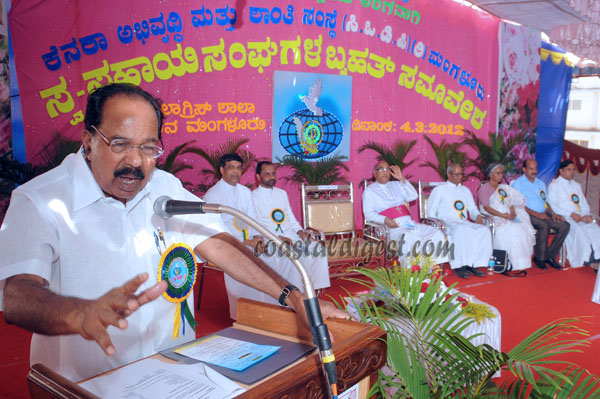
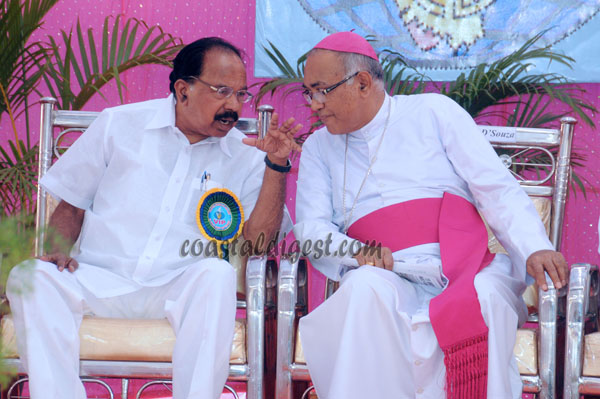
Mangalore, March 4: The only way to put an end to naxalism is to address the problems of the poor and the weaker sections of the society. Self-help groups have a role to play in reaching out to them and helping them in fulfilling their basic needs and empowering them, said Dr. M Veerappa Moily, Union Minister for Corporate Affairs.

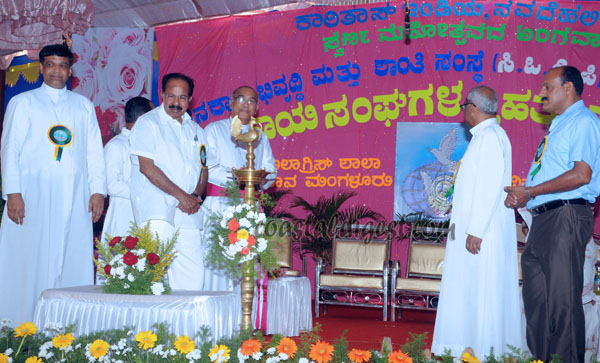
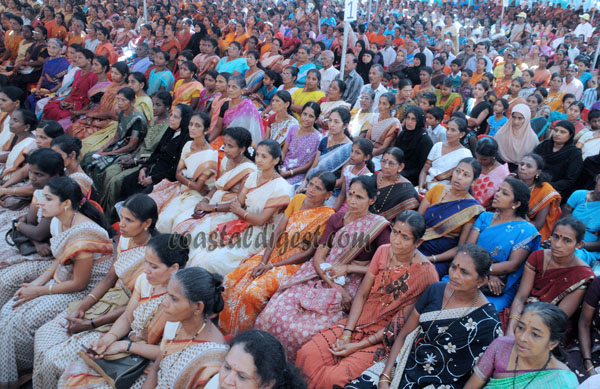
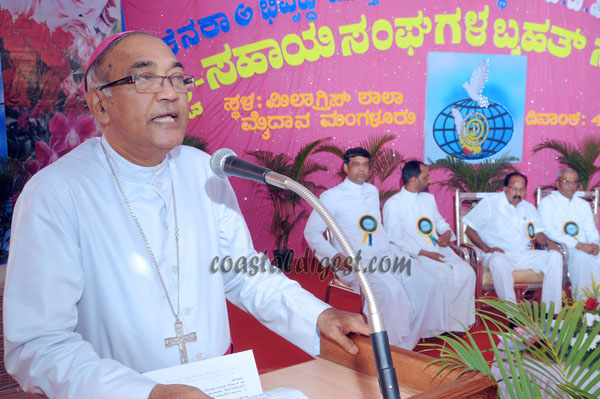
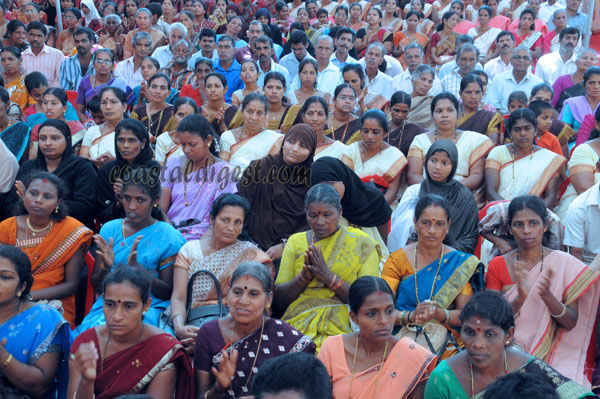
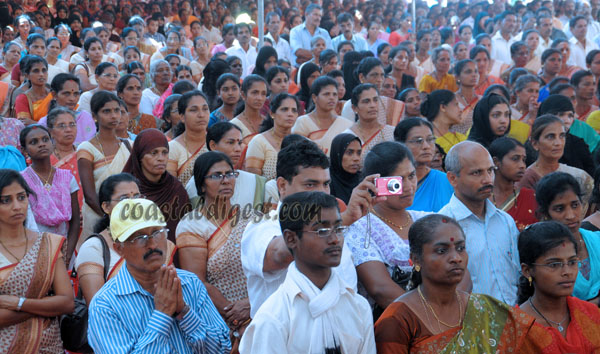
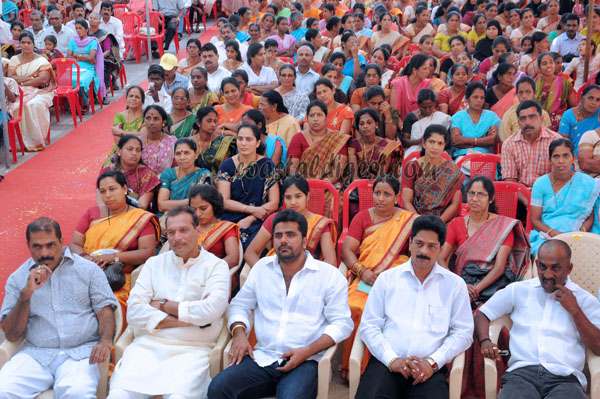
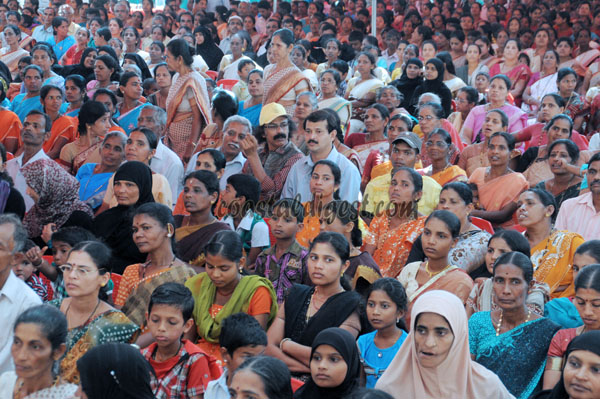
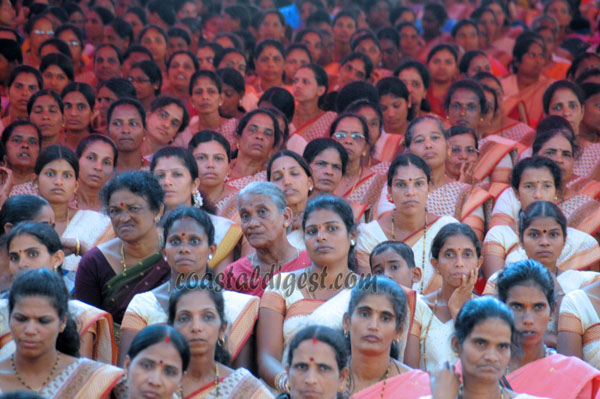
He was speaking at the mammoth convention of self-help groups organized by Canara Organisation for Development and Peace (CODP), Mangalore, on Sunday in the city.

Putting forth his observations on the growth of naxalism in quite a few parts of the country, Mr. Moily said “Backward classes in areas such as Jharkhand, Orissa etc have woken up and the naxals are taking advantage of it. Bodies such as CARITAS India and CODP must work in these places. The union government has released funds for such people and designed programmes for their basic healthcare, education etc and these groups can help the government in reaching out to them. There was no trace of naxalism after Indira Gandhi brought about land reforms which empowered the weak. But now, naxalism has returned due to a rise in social imbalance. The only way to eradicate naxalism is to provide basic facilities to the poor and empowering them”, he said.

Enlightening the gathering on the significance of the role played by women in shaping up a society, Mr. Moily said: “Womenfolk have it in them to light up not just their houses but also the entire society. My mother helped me study and inspired me although she was an illiterate. Never ignore your children and think that you cannot do anything. We introduced CET due to which thousands of poor students have now become engineers and doctors. Why can't there be a doctor or engineer in your house? About 40% of children discontinue their studies after class 4. This is because of the mental pressure they face owing to their family and societal problems. Gone are the days when people would tell their children that it is their destiny to remain poor and accept that they are of low socio-economic status. Act as a guiding force to them and help them concentrate on achieving success. You will find Einsteins and CV Ramans in them”, Mr. Moily advised.

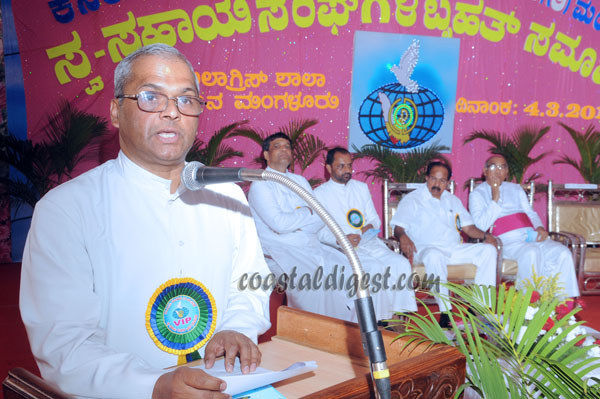
In his address Rev. Dr. Aloysius Paul D'Souza, Bishop of Mangalore, echoed Dr. Moily's view that no one should possess a feeling of inferiority and aim high. “If we keep thinking that there is no way forward, we will never develop”, the Bishop said. He also said that self-help groups must follow the footsteps of Mother Teresa and keep working for the poor, women, farmers, the weakest of the weak and those who are exploited by prostitution.

Representatives of associations and self-help groups who have made contributions through their work in various social developmental works such as RTI awareness, receipt of identity cards, arrangement of drinking water facilities and street lights etc, were felicitated on the occasion.

Rev. Fr. Fredrick D'Souza, Director, CARITAS India,New Delhi, Mr. Jimmy Mathew, Caritas India, Bangalore, were also present.

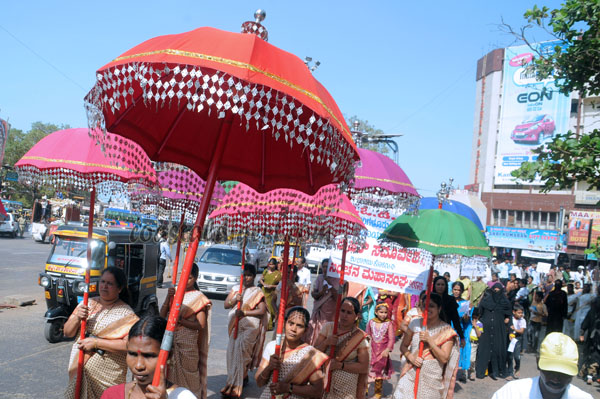
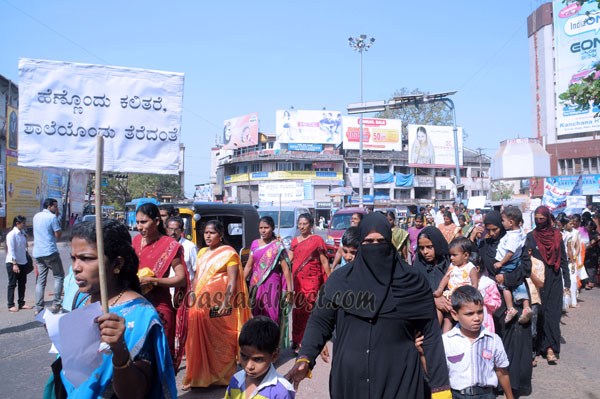
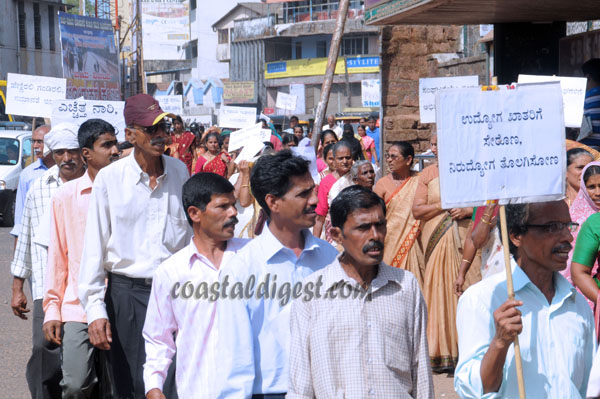
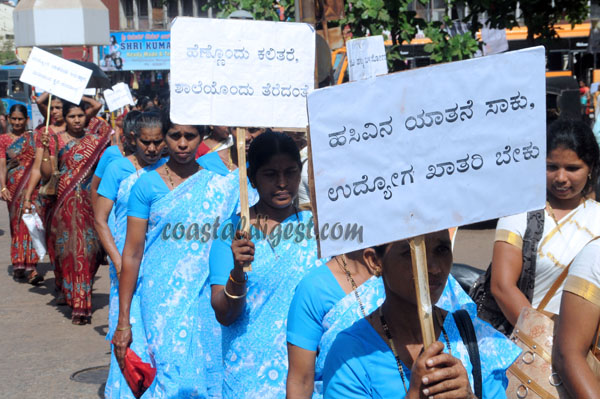
Prior to the formal inauguration, a procession was held by members of various self-help groups from Balmatta to Milagres school grounds.

Protest by Bajrang Dal

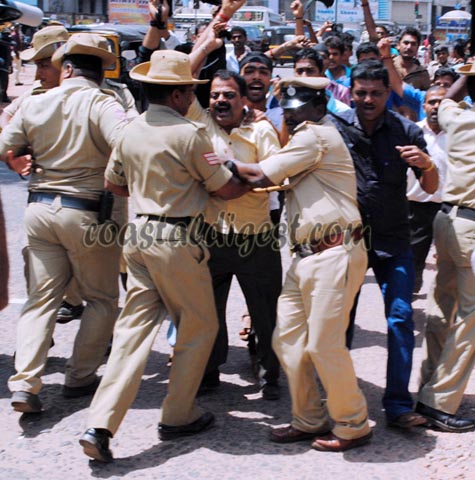
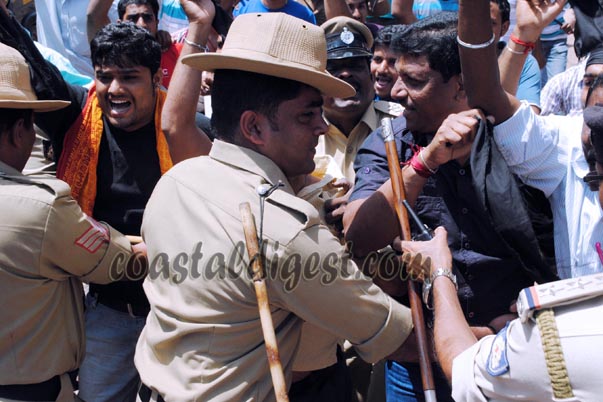
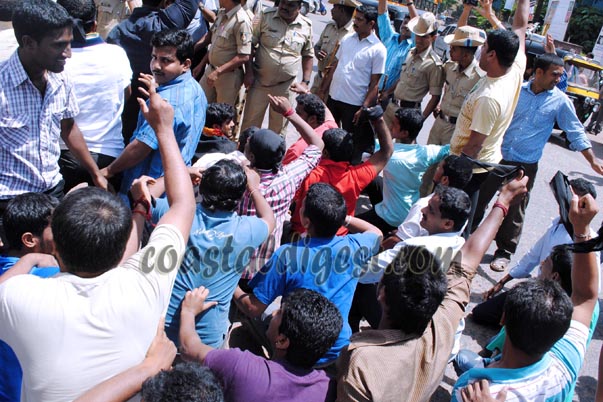
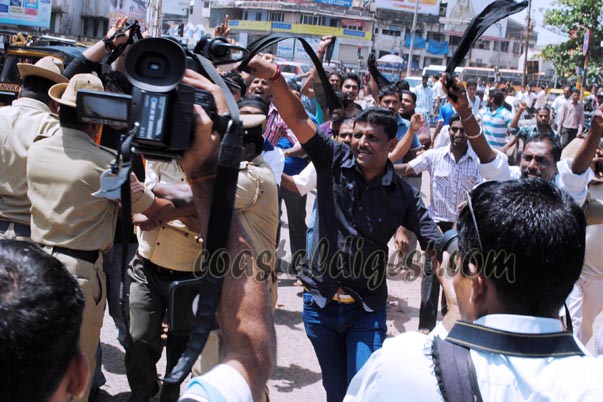
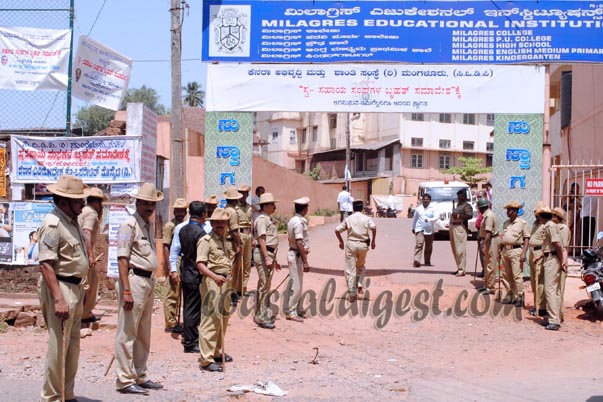
Meanwhile, outside the Milagres building, members of a saffron organisation held a protest against Dr. M Veerappa Moily for his remarks made recently, calling the saffron outfits as "evil forces".

Police forces which were in place, controlled the situation and dispersed the protestors.

It can be recalled here that many Bajrang Dal activists including Sharan Pumpwell had been briefly detained on Saturday after they attempted to gherao Dr Moily near Mangalore Airport in a bit to stop him from entering the city.

Moily_1

Moily_2

Moily_3

Moily_4

Moily_5

Moily_6

Moily_7

Moily_8

Moily_9

Moily_10

Moily_11

Moily_12

Moily_13

Moily_14

Moily_15

Moily_16

Moily_17

Moily_18

Moily_19

Moily_20

Moily_21

Moily_22

Moily_23

Moily_24

Moily_25

Baj_Moily_1

Baj_Moily_2

Baj_Moily_3

Baj_Moily_4

Baj_Moily_5

Baj_Moily_6

Baj_Moily_7

Baj_Moily_8

Baj_Moily_9

Comments

Add new comment

  • Coastaldigest.com reserves the right to delete or block any comments.
  • Coastaldigset.com is not responsible for its readers’ comments.
  • Comments that are abusive, incendiary or irrelevant are strictly prohibited.
  • Please use a genuine email ID and provide your name to avoid reject.
News Network
February 5,2026

In an era where digital distractions are the primary rival to academic excellence, the Karnataka Education Department is taking the fight directly to the living room. As the SSLC (Class 10) annual examinations loom, officials have launched a localized "digital strike" to ensure students aren't losing their competitive edge to scrolling or soap operas.

The 7-to-9 Lockdown

The department has issued a formal directive urging—and in some cases, enforcing via home visits—a total blackout of mobile phones and television sets between 7:00 PM and 9:00 PM. This two-hour window is being designated as "sacred study time" across the state until the examinations conclude on April 2.

Key Pillars of the Initiative:

•    Doorstep Advocacy: Teachers are transitioning from classrooms to living rooms, meeting parents to explain the psychological benefits of a distraction-free environment.

•    Parental Accountability: The campaign shifts the burden of discipline from the student to the household, asking parents to lead by example and switch off their own devices.

•    The Timeline: The focus remains sharp on the upcoming exam block, scheduled from March 18 to April 2.

"The objective is simple: uninterrupted focus. We are reclaiming the evening hours for the students, ensuring their environment is as prepared as their minds," stated a senior department official.

Student vs. Reality

While the student community has largely welcomed the "forced focus"—with many admitting they lack the willpower to ignore notifications—the move has sparked a debate on enforceability. Without a "TV Police," the success of this initiative rests entirely on the shoulders of parents and the persuasive power of visiting educators.

Comments

Add new comment

  • Coastaldigest.com reserves the right to delete or block any comments.
  • Coastaldigset.com is not responsible for its readers’ comments.
  • Comments that are abusive, incendiary or irrelevant are strictly prohibited.
  • Please use a genuine email ID and provide your name to avoid reject.
News Network
January 23,2026

Karnataka Governor Thaawarchand Gehlot read only three lines from the 122-paragraph address prepared by the Congress-led state government while addressing the joint session of the Legislature on Thursday, effectively bypassing large sections critical of the BJP-led Union government.

The omitted portions of the customary Governor’s address outlined what the state government described as a “suppressive situation in economic and policy matters” under India’s federal framework. The speech also sharply criticised the Centre’s move to replace the Mahatma Gandhi National Rural Employment Guarantee Act (MGNREGA) with the Viksit Bharat–Guarantee for Rozgar and Ajeevika Mission (Gramin) Act, commonly referred to as the VB-GRAM (G) Act.

Governor Gehlot had earlier conveyed his objection to several paragraphs that were explicitly critical of the Union government. On Thursday, he confined himself to the opening lines — “I extend a warm welcome to all of you to the joint session of the State legislature. I am extremely pleased to address this august House” — before jumping directly to the concluding sentence of the final paragraph.

He ended the address by reading the last line of paragraph 122: “Overall, my government is firmly committed to doubling the pace of the State’s economic, social and physical development. Jai Hind — Jai Karnataka.”

According to the prepared speech, the Karnataka government demanded the scrapping of the VB-GRAM (G) Act, describing it as “contractor-centric” and detrimental to rural livelihoods, and called for the full restoration of MGNREGA. The state government argued that the new law undermines decentralisation, weakens labour protections, and centralises decision-making in violation of constitutional norms.

Key points from the unread sections of the speech:

•    Karnataka facing a “suppressive” economic and policy environment within the federal system

•    Repeal of MGNREGA described as a blow to rural livelihoods

•    VB-GRAM (G) Act accused of protecting corporate and contractor interests

•    New law alleged to weaken decentralised governance

•    Decision-making said to be imposed by the Centre without consulting states

•    Rights of Adivasis, women, backward classes and agrarian communities curtailed

•    Labourers allegedly placed under contractor control

•    States facing mounting fiscal stress due to central policies

•    VB-GRAM (G) Act accused of enabling large-scale corruption

Comments

Add new comment

  • Coastaldigest.com reserves the right to delete or block any comments.
  • Coastaldigset.com is not responsible for its readers’ comments.
  • Comments that are abusive, incendiary or irrelevant are strictly prohibited.
  • Please use a genuine email ID and provide your name to avoid reject.
News Network
February 5,2026

Bengaluru: As air quality continues to worsen across several parts of the city, hospitals in Bengaluru are reporting a steady rise in patients suffering from respiratory illnesses such as asthma, bronchitis and Chronic Obstructive Pulmonary Disease (COPD), health officials and doctors said.

Data from the Suvarna Arogya Suraksha Trust (SAST) shows that 3,891 patients received treatment for respiratory ailments between April and November 2024. The figure rose to 4,187 during the same period in 2025.

Private hospitals, too, are witnessing a 10–15 per cent year-on-year increase in such cases.

While doctors caution that the rise cannot be attributed solely to air pollution, a significant number of patients are non-smokers with no prior history of respiratory disease.

“Nearly 70 per cent of the patients we see are non-smokers with no previous respiratory issues. When other causes are ruled out, air pollution emerges as the most likely factor,” said Dr Manjunath PH, consultant interventional pulmonologist at a hospital in Kengeri.

Doctors noted that patient footfall spikes during the winter months and around Deepavali, when air quality typically worsens.

“There is a clear correlation between poor air quality and the rise in cases. People commonly present with persistent cough, breathlessness and irritation of the respiratory tract, indicating the impact of polluted air on their health,” said Dr Sheetal Chaurasia, consultant in pulmonary medicine at a private hospital in Whitefield.

Dr Chaurasia added that respiratory tract infections are also on the rise.

“Poor air quality leads to chronic airway inflammation, making the airways more vulnerable to infections. We are seeing an increase in both upper and lower respiratory tract infections,” she said.

Patients with pre-existing respiratory conditions remain the worst affected.

“For those already diagnosed with respiratory illnesses, deteriorating air quality significantly worsens the condition. Both the frequency and severity of attacks increase sharply,” said Dr Vandana P, a pulmonologist at a hospital on Bannerghatta Road.

Doctors also flagged a worrying trend of rising respiratory problems among younger adults and children.

To reduce exposure, they advised people to wear masks while travelling on two-wheelers or autos and ensure adequate ventilation at home to minimise indoor air pollution.

Comments

Add new comment

  • Coastaldigest.com reserves the right to delete or block any comments.
  • Coastaldigset.com is not responsible for its readers’ comments.
  • Comments that are abusive, incendiary or irrelevant are strictly prohibited.
  • Please use a genuine email ID and provide your name to avoid reject.