Eradicate naxalism by helping the poor and weak: Moily

March 4, 2012

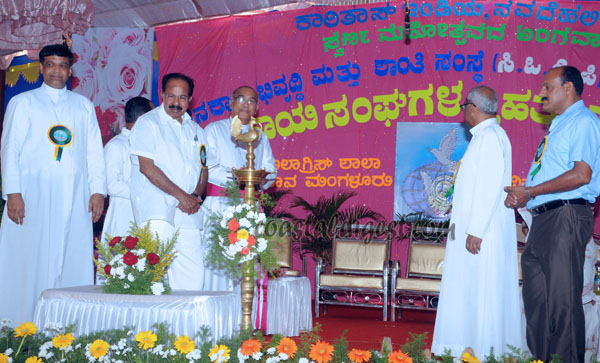
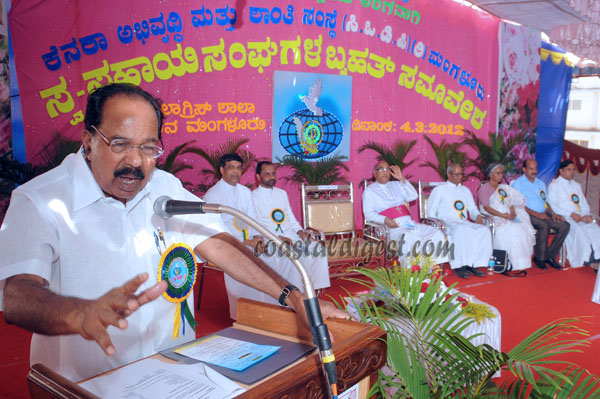
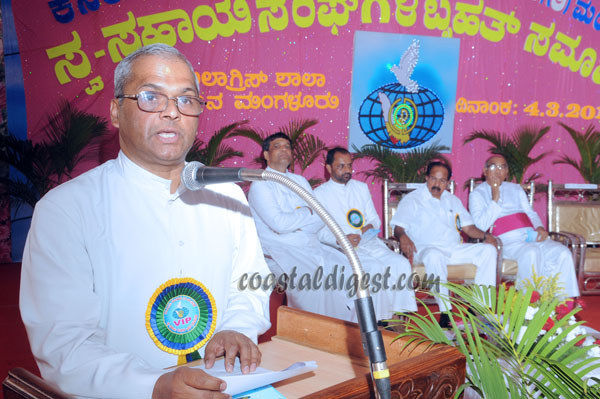
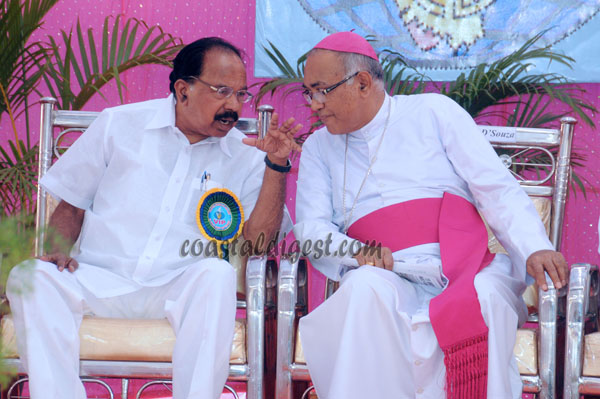
Mangalore, March 4: The only way to put an end to naxalism is to address the problems of the poor and the weaker sections of the society. Self-help groups have a role to play in reaching out to them and helping them in fulfilling their basic needs and empowering them, said Dr. M Veerappa Moily, Union Minister for Corporate Affairs.

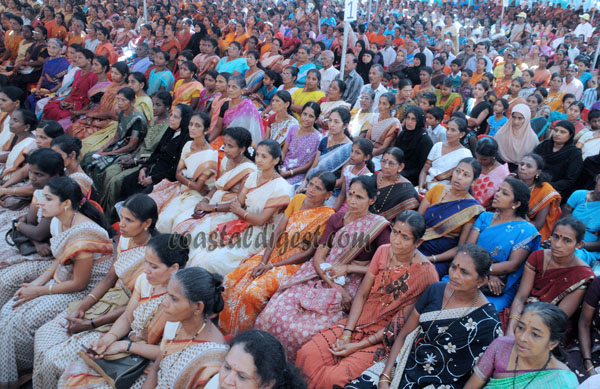
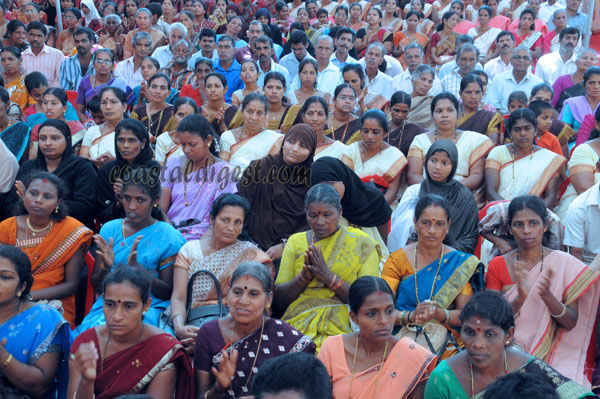
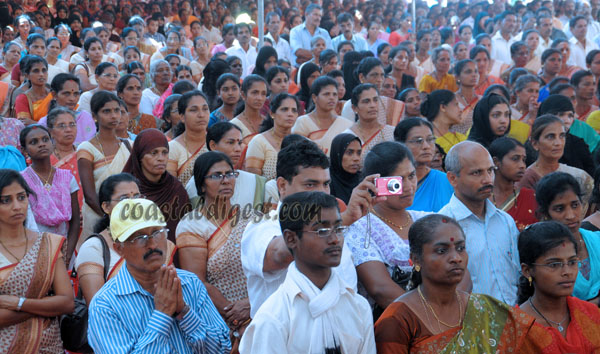
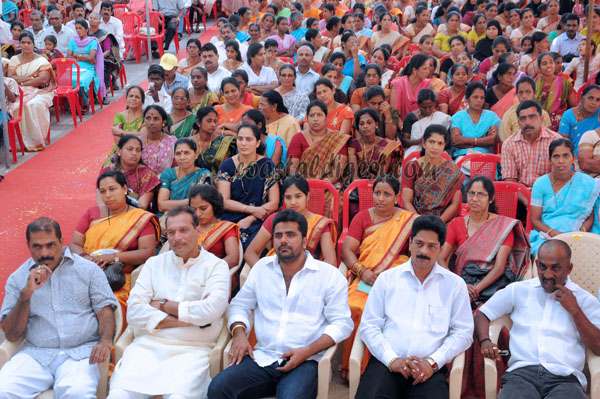
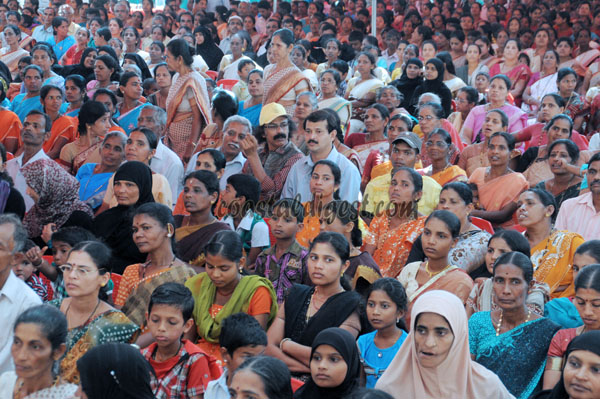
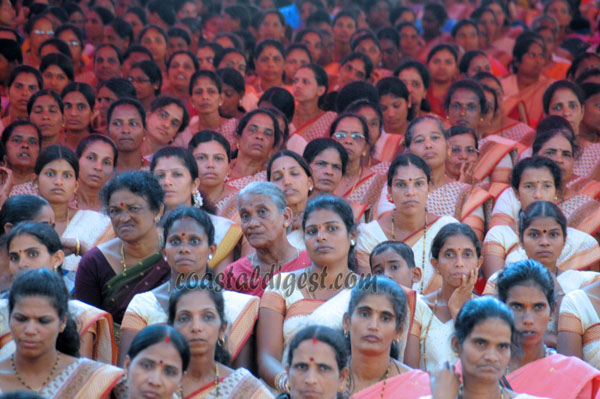
He was speaking at the mammoth convention of self-help groups organized by Canara Organisation for Development and Peace (CODP), Mangalore, on Sunday in the city.

Putting forth his observations on the growth of naxalism in quite a few parts of the country, Mr. Moily said “Backward classes in areas such as Jharkhand, Orissa etc have woken up and the naxals are taking advantage of it. Bodies such as CARITAS India and CODP must work in these places. The union government has released funds for such people and designed programmes for their basic healthcare, education etc and these groups can help the government in reaching out to them. There was no trace of naxalism after Indira Gandhi brought about land reforms which empowered the weak. But now, naxalism has returned due to a rise in social imbalance. The only way to eradicate naxalism is to provide basic facilities to the poor and empowering them”, he said.

Enlightening the gathering on the significance of the role played by women in shaping up a society, Mr. Moily said: “Womenfolk have it in them to light up not just their houses but also the entire society. My mother helped me study and inspired me although she was an illiterate. Never ignore your children and think that you cannot do anything. We introduced CET due to which thousands of poor students have now become engineers and doctors. Why can't there be a doctor or engineer in your house? About 40% of children discontinue their studies after class 4. This is because of the mental pressure they face owing to their family and societal problems. Gone are the days when people would tell their children that it is their destiny to remain poor and accept that they are of low socio-economic status. Act as a guiding force to them and help them concentrate on achieving success. You will find Einsteins and CV Ramans in them”, Mr. Moily advised.

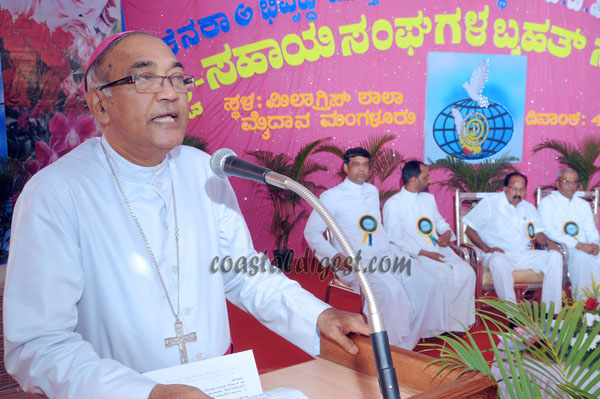
In his address Rev. Dr. Aloysius Paul D'Souza, Bishop of Mangalore, echoed Dr. Moily's view that no one should possess a feeling of inferiority and aim high. “If we keep thinking that there is no way forward, we will never develop”, the Bishop said. He also said that self-help groups must follow the footsteps of Mother Teresa and keep working for the poor, women, farmers, the weakest of the weak and those who are exploited by prostitution.

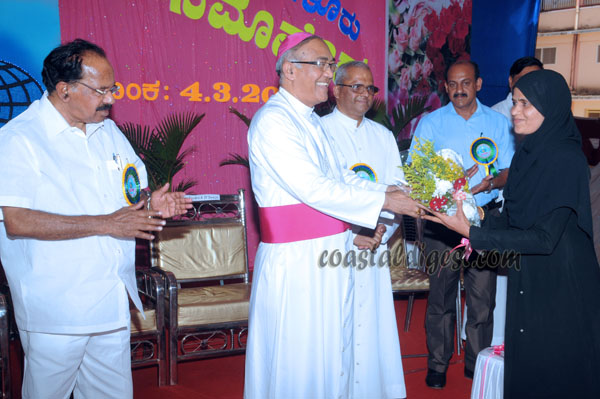
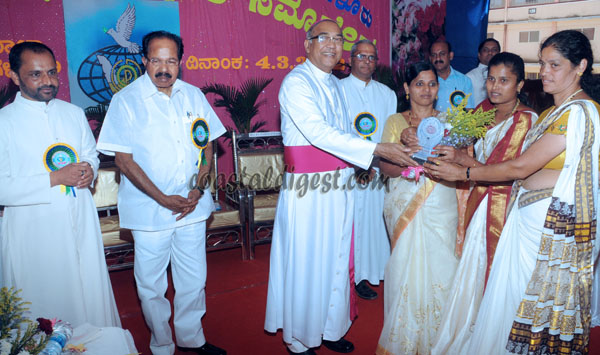
Representatives of associations and self-help groups who have made contributions through their work in various social developmental works such as RTI awareness, receipt of identity cards, arrangement of drinking water facilities and street lights etc, were felicitated on the occasion.

Rev. Fr. Fredrick D'Souza, Director, CARITAS India,New Delhi, Mr. Jimmy Mathew, Caritas India, Bangalore, were also present.

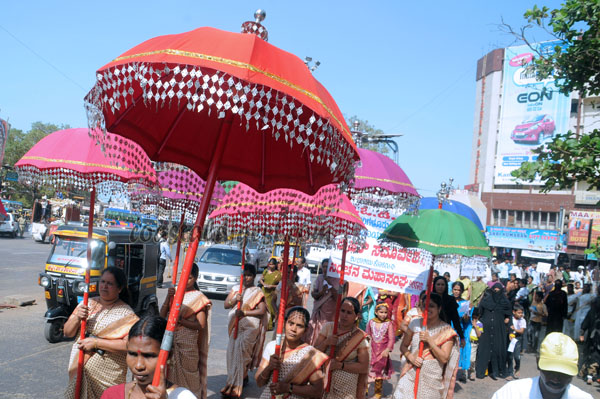
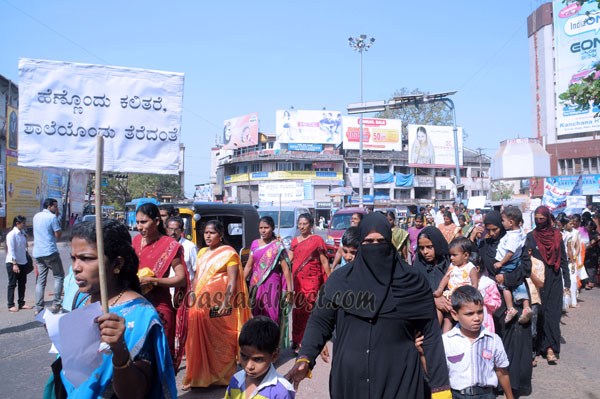
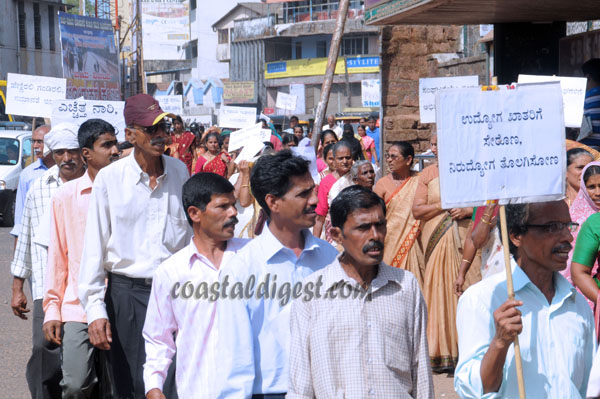
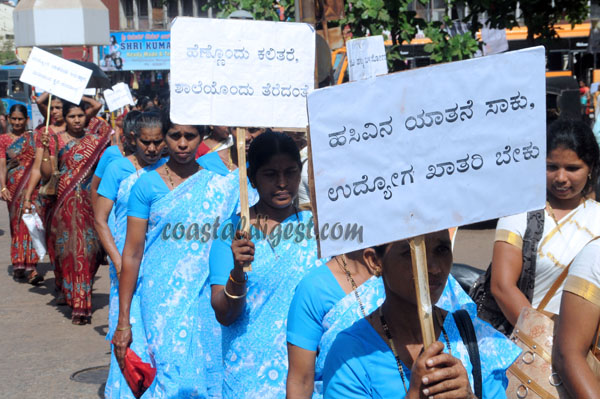
Prior to the formal inauguration, a procession was held by members of various self-help groups from Balmatta to Milagres school grounds.

Protest by Bajrang Dal

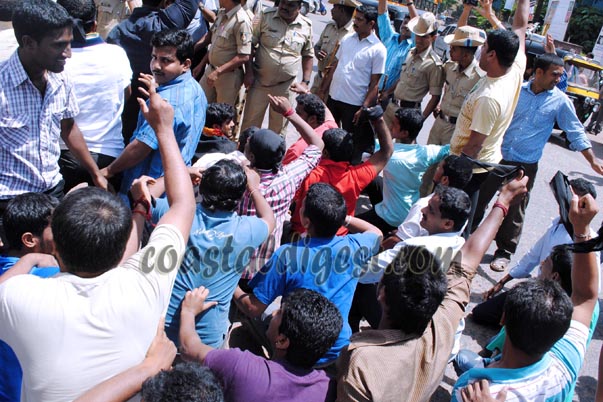
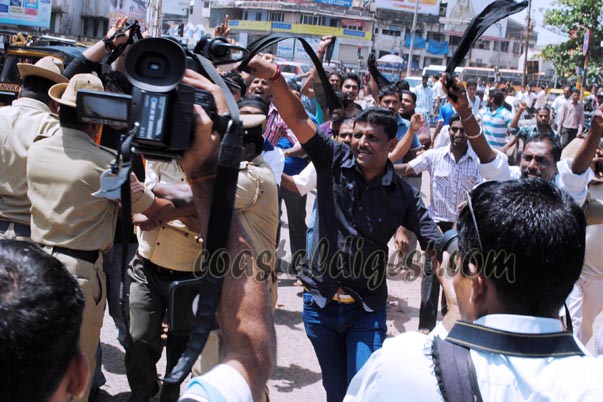
Meanwhile, outside the Milagres building, members of a saffron organisation held a protest against Dr. M Veerappa Moily for his remarks made recently, calling the saffron outfits as "evil forces".

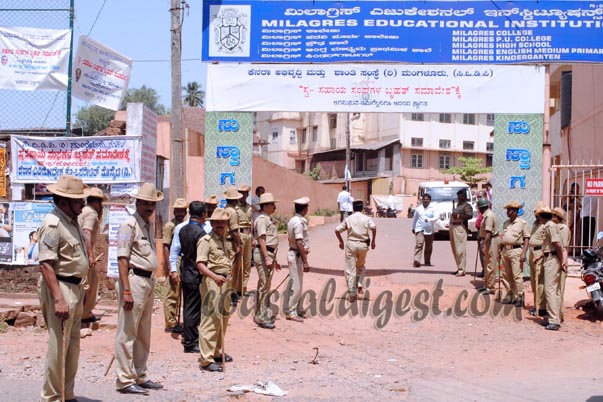
Police forces which were in place, controlled the situation and dispersed the protestors.

It can be recalled here that many Bajrang Dal activists including Sharan Pumpwell had been briefly detained on Saturday after they attempted to gherao Dr Moily near Mangalore Airport in a bit to stop him from entering the city.

Moily_1

Moily_2

Moily_3

Moily_4

Moily_5

Moily_6

Moily_7

Moily_8

Moily_9

Moily_10

Moily_11

Moily_12

Moily_13

Moily_14

Moily_15

Moily_16

Moily_17

Moily_18

Moily_19

Moily_20

Moily_21

Moily_22

Moily_23

Moily_24

Moily_25

Baj_Moily_1

Baj_Moily_2

Baj_Moily_3

Baj_Moily_4

Baj_Moily_5

Baj_Moily_6

Baj_Moily_7

Baj_Moily_8

Baj_Moily_9

Comments

Add new comment

  • Coastaldigest.com reserves the right to delete or block any comments.
  • Coastaldigset.com is not responsible for its readers’ comments.
  • Comments that are abusive, incendiary or irrelevant are strictly prohibited.
  • Please use a genuine email ID and provide your name to avoid reject.
News Network
February 4,2026

Mangaluru: Urban local bodies and gram panchayats should make the use of Kannada on signboards mandatory while issuing trade licences to commercial establishments, Dakshina Kannada Deputy Commissioner Darshan HV said. He also called for regular inspections to ensure compliance.

Presiding over the District Kannada Awareness Committee meeting at the deputy commissioner’s office, Darshan said the city corporation would be directed to ensure that shops operating in malls prominently display their names in Kannada. “All commercial establishments, including shops, companies, offices and hotels, must mandatorily display their names in Kannada on signboards,” he said.

The deputy commissioner added that the National Highways Authority of India (NHAI) would be instructed to include Kannada on signboards along national highways. Banks, he said, would be directed through committee meetings to provide application forms in Kannada.

“Even if English-medium schools and colleges impart education in English, their signboards must display the institution’s name in Kannada. Steps will also be taken to ensure that private buses display place names in Kannada,” Darshan said.

During the meeting, committee members raised concerns over the closure of Kannada-medium schools in rural areas due to a shortage of teachers and stressed the need for immediate corrective measures. They also pointed out that several industries employ workers from other states while overlooking local candidates.

Members further demanded that nationalised banks provide deposit and withdrawal slips in Kannada. It was brought to the deputy commissioner’s notice that the presence of staff without knowledge of Kannada in rural branches of nationalised banks is causing hardship to local customers.

Meanwhile, MP Srinath, president of the District Kannada Sahitya Parishat, urged the district administration to allot land for the construction of a district Kannada Bhavana in Mangaluru.

Comments

Add new comment

  • Coastaldigest.com reserves the right to delete or block any comments.
  • Coastaldigset.com is not responsible for its readers’ comments.
  • Comments that are abusive, incendiary or irrelevant are strictly prohibited.
  • Please use a genuine email ID and provide your name to avoid reject.
News Network
January 23,2026

Karnataka Governor Thaawarchand Gehlot read only three lines from the 122-paragraph address prepared by the Congress-led state government while addressing the joint session of the Legislature on Thursday, effectively bypassing large sections critical of the BJP-led Union government.

The omitted portions of the customary Governor’s address outlined what the state government described as a “suppressive situation in economic and policy matters” under India’s federal framework. The speech also sharply criticised the Centre’s move to replace the Mahatma Gandhi National Rural Employment Guarantee Act (MGNREGA) with the Viksit Bharat–Guarantee for Rozgar and Ajeevika Mission (Gramin) Act, commonly referred to as the VB-GRAM (G) Act.

Governor Gehlot had earlier conveyed his objection to several paragraphs that were explicitly critical of the Union government. On Thursday, he confined himself to the opening lines — “I extend a warm welcome to all of you to the joint session of the State legislature. I am extremely pleased to address this august House” — before jumping directly to the concluding sentence of the final paragraph.

He ended the address by reading the last line of paragraph 122: “Overall, my government is firmly committed to doubling the pace of the State’s economic, social and physical development. Jai Hind — Jai Karnataka.”

According to the prepared speech, the Karnataka government demanded the scrapping of the VB-GRAM (G) Act, describing it as “contractor-centric” and detrimental to rural livelihoods, and called for the full restoration of MGNREGA. The state government argued that the new law undermines decentralisation, weakens labour protections, and centralises decision-making in violation of constitutional norms.

Key points from the unread sections of the speech:

•    Karnataka facing a “suppressive” economic and policy environment within the federal system

•    Repeal of MGNREGA described as a blow to rural livelihoods

•    VB-GRAM (G) Act accused of protecting corporate and contractor interests

•    New law alleged to weaken decentralised governance

•    Decision-making said to be imposed by the Centre without consulting states

•    Rights of Adivasis, women, backward classes and agrarian communities curtailed

•    Labourers allegedly placed under contractor control

•    States facing mounting fiscal stress due to central policies

•    VB-GRAM (G) Act accused of enabling large-scale corruption

Comments

Add new comment

  • Coastaldigest.com reserves the right to delete or block any comments.
  • Coastaldigset.com is not responsible for its readers’ comments.
  • Comments that are abusive, incendiary or irrelevant are strictly prohibited.
  • Please use a genuine email ID and provide your name to avoid reject.
News Network
January 23,2026

Mangaluru: The Karnataka Government Polytechnic (KPT), Mangaluru, has achieved autonomous status from the All India Council for Technical Education (AICTE), becoming the first government polytechnic in the country to receive such recognition in its 78-year history. The status was granted by AICTE, New Delhi, and subsequently approved by the Karnataka Board of Technical Education in October last year.

Officials said the autonomy was conferred a few months ago. Until recently, AICTE extended autonomous status only to engineering colleges, excluding diploma institutions. However, with a renewed national focus on skill development, several government polytechnics across India have now been granted autonomy.

KPT, the second-largest polytechnic in Karnataka, was established in 1946 with four branches and has since expanded to offer eight diploma programmes, including computer science and polymer technology. The institution is spread across a 19-acre campus.

Ravindra M Keni, the first dean of the institution, told The Times of India that AICTE had proposed autonomous status for polytechnic institutions that are over 25 years old. “Many colleges applied. In the first round, 100 institutions were shortlisted, which was further narrowed down to 15 in the second round. We have already completed one semester after becoming an autonomous institution,” he said. He added that nearly 500 students are admitted annually across eight three-year diploma courses.

Explaining the factors that helped KPT secure autonomy, Keni said the institution has consistently recorded 100 per cent admissions and placements for its graduates. He also noted its strong performance in sports, with the college emerging champions for 12 consecutive years, along with active student participation in NCC and NSS activities.

Autonomous status allows KPT to design industry-oriented curricula, conduct examinations, prepare question papers, and manage academic documentation independently. The institution can also directly collaborate with industries and receive priority funding from AICTE or the Ministry of Education. While academic autonomy has been granted, financial control will continue to rest with the state government.

“There will be separate committees for examinations, question paper setting, boards of studies, and boards of examiners. The institution will now have the freedom to conduct admissions without government notifications and issue its own marks cards,” Keni said, adding that new academic initiatives would be planned after a year of functioning under the autonomous framework.

Comments

Add new comment

  • Coastaldigest.com reserves the right to delete or block any comments.
  • Coastaldigset.com is not responsible for its readers’ comments.
  • Comments that are abusive, incendiary or irrelevant are strictly prohibited.
  • Please use a genuine email ID and provide your name to avoid reject.