



Tug-of-war for 'Byari' glory: Sara Aboobaker hits out at producer

[email protected] (CD Network)
March 9, 2012
Mangalore, March 9: The controversy surrounding the authorship of the story of 'Byari' has surfaced again with noted Kannada writer Sara Aboobaker reiterating her claim that the National Award winning movie was based on her first book Chandragiri Thiradalli released in mid-80s.

The first-ever Beary film with the same title, shared the Best Feature Film award along with Marathi film Deol when the names were announced on Wednesday in New Delhi.

The film, produced by Mangalore-based producer Altaf Hussain Chokkabettu, was released in June last year with the director himself playing the lead male character.
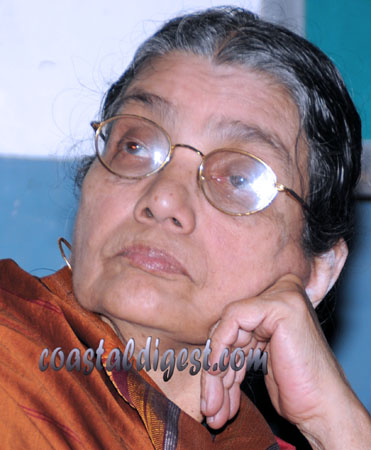
sara

Sara, who had raised her objections during and before the release of the movie, once again reiterated her stand that the movie was based on her successful novel, which narrated the plight of a young Muslim woman who 's life was shattered by the misuse of provisions of Talaq in Islam.

“Altaf Hussain Chokkabettu, the producer of the movie had asked her for the rights of the book. “I had already signed a agreement until 2015 with the National Film Development Corporation that I would not give the story to any visual media,” she told coastaldigest.com

Despite her telling the producer of Byari that he could not use the story, in Kerala, he had declared that his film was based on her book. “He even put up posters in Mangalore saying that the story was mine,” she said. “But when I raised objections he backtracked and, claimed that the story was written by Irfan Chokabettu”.

Sara, has in fact, approached court seeking justice, but had to withdraw since she was 'disillusioned' with the legal system of the country.

“Today lawyers don't take up cases on the basis of who's right or who's wrong. They want to ascertain how influential or financially sound the other party is before taking up one's case. Even otherwise, the judicial process is riddled with inordinate delays. At 75, I was not prepared for the long haul,” says Sara.

“I still have the clippings of his (Altaf) statements published in Malayalam newspapers. I also have a poster of the movie which has my name on it. I had produced them before the court. The court had asked the defendant to produce the book supposedly written by Irfan Chokkabettu,” she said, but insisted she had withdrawn the case since she was not sure of getting justice.

When asked about the marked difference in the climax of her novel and that of the movie, she said: “When you adopt a book to the visual media, you make certain changes. It has happened with all the great works of Kannada literature. It cannot be a mere coincidence that the names of characters of the movie and that of my book are same.”

Sara is also unhappy that fellow-writers did not come out in the open to support her fight against what she called an act of blatant plagiarism. “Of course I am pained by the marked silence of my fellow writers. They should have come out in the open to fight against the injustice. Even in the Karnataka Film Chamber, except Jayamala, no one took up my cause. If this had happened in United States or some other country, people would have reacted strongly,” she says.

When asked how she felt about a debut Beary film getting a top national award, she said: “Awards are not a big thing. The movie was about one of the worst practices in our religion. The portrayal of the evil practice will definitely fetch awards. I won the award for the best story for the same novel when it was made a film in Tamil. So it was quiet expected. And you know how the awards are decided these days. Lot of lobbying and behind-the-scene maneuvering goes into it.”

Reacting to a question if she was feeling betrayed that she had been denied the credit, Mrs. Sara said: “No, not at all. I have already secured awards and accolades for my work. My books have been made the textbook in some universities. I have been bestowed honorary doctorate by three universities in Karnataka. I am saddened by the way he (Altaf) cheated me and went on to claim that he did not even know me.”
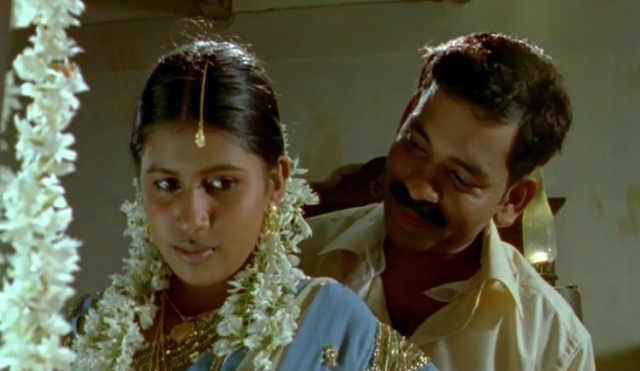
altaf

On the other hand producer Altaf Hussain refuted her claim and said the film was based on Quran and not on anyone's book.

“Just because the names of the characters are same, she cannot claim that the movie is based on her book. The movie has been created based on a real-life event. Our movie does not violate the tenets of Islam, while her book questions the Islamic customs,” he argues.

Altaf reiterated that he did not know Sara Aboobaker until the controversy broke out. “I did not know who this woman was. When I set out on the movie-making mission, I would have naturally spoken to writers in the Beary community. There are eminent writers like Boluvaru, Fakir Mohammed Katpad, Baddur who are well-versed in Beary culture and language. Sara Aboobaker does not belong to beary community. She is a Malayali. Their culture and our culture are different. So, I would not have met her even to get her advice,” he says.

Insisting that he had never spoken to the media in Trissur International Film Festival, nor printed any publicity material with her name on it, Altaf says, “the publicity material submitted by her (Sara) to the court is two years old. But we prepared the first poster only after we got the censor certificate from the concerned authorities. The movie was released in Mangalore on June 9. The only press meet we held in connection with the movie was in Mangalore on June 3.”

When asked if Irfan Chokkabettu's work has been published in the print media, he said: “Irfan is a talented writer. He has got a number of stories with him which are not published anywhere.”

Reacting sharply to Sara's criticism of plagiarism, Altaf said: “It is foolish to say that she withdrew her case because lawyers cheated her. The advancing age is clearily showing in her statements. Now that the film has won national award, she has started to blackmail us once again. But this will not succeed.”




Comments

Add new comment

  • Coastaldigest.com reserves the right to delete or block any comments.
  • Coastaldigset.com is not responsible for its readers’ comments.
  • Comments that are abusive, incendiary or irrelevant are strictly prohibited.
  • Please use a genuine email ID and provide your name to avoid reject.
News Network
February 1,2026

Bengaluru: Karnataka Deputy Chief Minister D K Shivakumar on Sunday criticised the Union Budget presented by Finance Minister Nirmala Sitharaman, claiming it offered no tangible benefit to the state.

Though he said he was yet to study the budget in detail, Shivakumar asserted that Karnataka had gained little from it. “There is no benefit for our state from the central budget. I was observing it. They have now named a programme after Mahatma Gandhi, after repealing the MGNREGA Act that was named after him,” he said.

Speaking to reporters here, the Deputy Chief Minister demanded the restoration of MGNREGA, and made it clear that the newly enacted rural employment scheme — VB-G RAM G — which proposes a 60:40 fund-sharing formula between the Centre and the states, would not be implemented in Karnataka.

“I don’t see any major share for our state in this budget,” he added.

Shivakumar, who also holds charge of Bengaluru development, said there were high expectations for the city from the Union Budget. “The Prime Minister calls Bengaluru a ‘global city’, but what has the Centre done for it?” he asked.

He also drew attention to the problems faced by sugar factories, particularly those in the cooperative sector, alleging a lack of timely decisions and support from the central government.

Noting that the Centre has the authority to fix the minimum support price (MSP) for agricultural produce, Shivakumar said the Union government must take concrete steps to protect farmers’ interests.

Comments

Add new comment

  • Coastaldigest.com reserves the right to delete or block any comments.
  • Coastaldigset.com is not responsible for its readers’ comments.
  • Comments that are abusive, incendiary or irrelevant are strictly prohibited.
  • Please use a genuine email ID and provide your name to avoid reject.
News Network
January 31,2026

Roy.jpg

Bengaluru: The shooting incident involving CJ Roy, founder of the Confident Group, has once again put the spotlight on a businessman whose life has swung between flamboyant global success and persistent controversy at home.

Though Roy’s business interests extended across continents, his roots lay firmly in Karnataka. An alumnus of Christ School in Bengaluru, he later moved to Tumakuru to pursue an engineering degree. Those familiar with his early years describe him as intensely ambitious, beginning his career as a salesman at a small electronics firm dealing in computers.

Roy’s entry into large-scale real estate came through the Crystal Group, where he worked closely with Latha Namboothiri and rose from manager to director. However, the launch of the Confident Group in 2005 was clouded by industry speculation. Insiders speak of a fallout involving alleged “benami” properties and claims of deception that ultimately led to his independent venture—an episode Roy spent years trying to distance himself from, according to associates.

A tale of two cities

Roy’s professional trajectory diverged sharply across geographies.

In Dubai, he built a reputation as a bold and efficient developer, completing massive luxury residential projects in record time—some reportedly within 11 months. His rapid project delivery and lavish lifestyle in the Emirates earned him admiration and visibility in the real estate sector.

In Bengaluru, however, his image remained far more fractured. Sources say Roy stayed away from the city for several years amid disputes over unpaid dues to vendors and suppliers. Several projects were allegedly stalled, with accusations of unfulfilled commitments to cement and steel suppliers continuing to follow him.

Roy’s return to Bengaluru’s business and social circles began around 2018, marked by a conscious attempt at rebranding. His appointment as Honorary Consul of the Slovak Republic added diplomatic legitimacy, which he complemented with visible CSR initiatives, including ambulance donations and high-profile charity events.

Heavy police presence in Langford Town

Following the incident, police personnel from the Central division were deployed outside the Confident Group building in Langford Town, which also houses the Slovak Honorary Consulate in Bengaluru.

The otherwise busy premises near Hosur Road wore a deserted look on Friday, reflecting the shock and uncertainty that followed the tragedy.

Comments

Add new comment

  • Coastaldigest.com reserves the right to delete or block any comments.
  • Coastaldigset.com is not responsible for its readers’ comments.
  • Comments that are abusive, incendiary or irrelevant are strictly prohibited.
  • Please use a genuine email ID and provide your name to avoid reject.
News Network
February 3,2026

Bengaluru: Following reports of fresh Nipah virus (NiV) cases in West Bengal and heightened vigilance across parts of Southeast Asia, the Karnataka Health Department has placed the state on high alert and activated emergency preparedness protocols.

Health officials said enhanced surveillance measures have been initiated after two healthcare workers in Barasat, West Bengal, tested positive for the virus earlier this month. While no cases have been reported in Karnataka so far, authorities said the state’s past exposure to Nipah outbreaks and high inter-state mobility warranted preventive action.

Officials have directed district health teams to intensify monitoring, particularly at hospitals and points of entry, and to ensure early detection and isolation of suspected cases.

High Mortality Virus with Multiple Transmission Routes

Nipah virus is a zoonotic disease that can spread from animals to humans and has a reported fatality rate ranging between 60 and 75 per cent. Fruit bats, also known as flying foxes, are the natural reservoirs of the virus and can transmit it by contaminating food sources with saliva or urine.

Known modes of transmission include:

•    Contaminated food: Consumption of fruits partially eaten by bats or raw date-palm sap
•    Animal contact: Exposure to infected pigs or other animals
•    Human-to-human transmission: Close contact with body fluids of infected persons, particularly in healthcare settings

Symptoms and Disease Progression

The incubation period typically ranges from 4 to 14 days, though delayed onset has also been reported. Early symptoms often resemble common viral infections, making prompt clinical suspicion critical.

•    Initial symptoms: Fever, headache, body aches, fatigue, sore throat
•    Progressive symptoms: Drowsiness, disorientation, altered mental state
•    Severe stage: Seizures, neck stiffness and acute encephalitis, which can rapidly progress to coma

Public Health Advisory

The Health Department has issued precautionary guidelines urging the public to adopt risk-avoidance practices to prevent any local spillover.

Do’s
•    Wash fruits thoroughly before consumption
•    Drink boiled and cooled water
•    Use protective equipment while handling livestock
•    Maintain strict hand hygiene

Don’ts
•    Avoid fruits found on the ground or showing bite marks
•    Do not consume beverages made from raw tree sap, including toddy
•    Avoid areas with dense bat populations
•    Do not handle sick or dead animals

Preparedness Measures

Officials confirmed that isolation wards are being readied in major government hospitals and that medical staff are being sensitised to identify early warning signs.

“There is no cause for panic, but there is a need for heightened vigilance,” a senior health official said, adding that there is currently no approved vaccine or specific antiviral treatment for Nipah, and care remains largely supportive.

Comments

Add new comment

  • Coastaldigest.com reserves the right to delete or block any comments.
  • Coastaldigset.com is not responsible for its readers’ comments.
  • Comments that are abusive, incendiary or irrelevant are strictly prohibited.
  • Please use a genuine email ID and provide your name to avoid reject.