II PU Examinations begin smoothly across DK

[email protected] (CD Network, Photos by Ahmed Anwar)
March 15, 2012

exam_copy
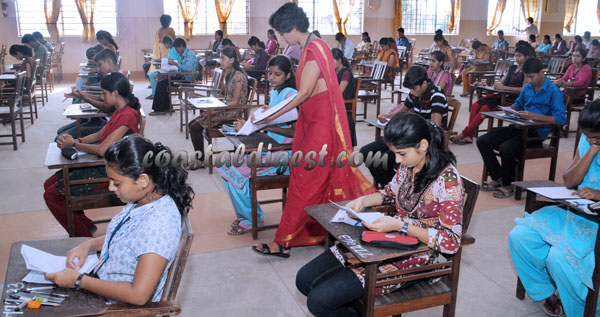
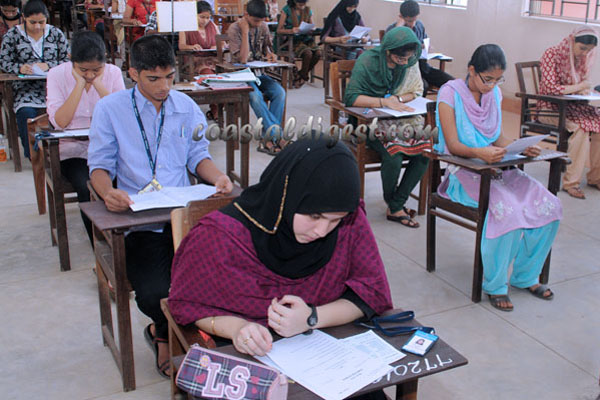
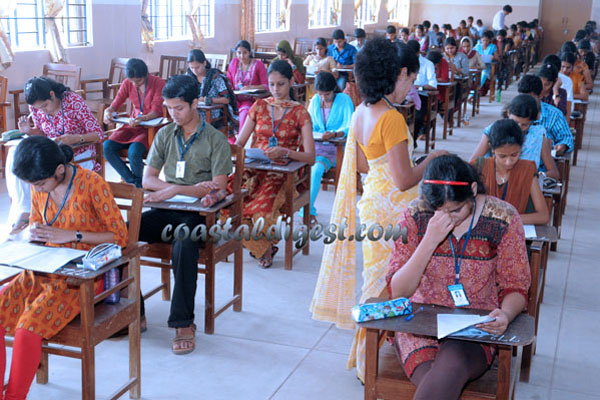
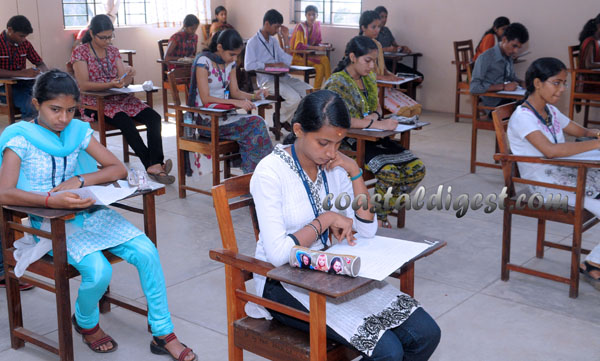
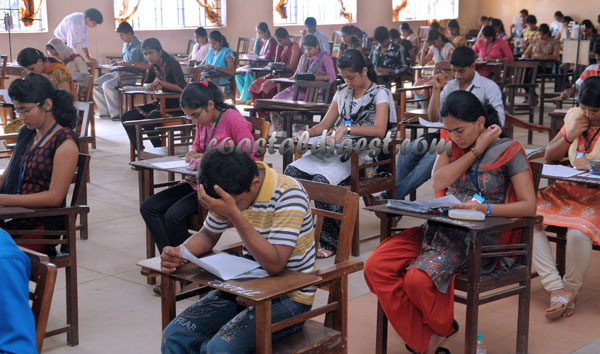
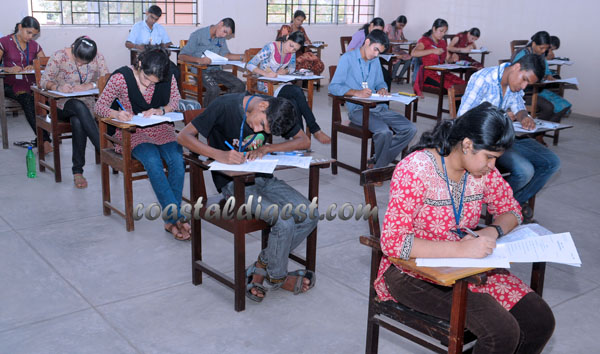
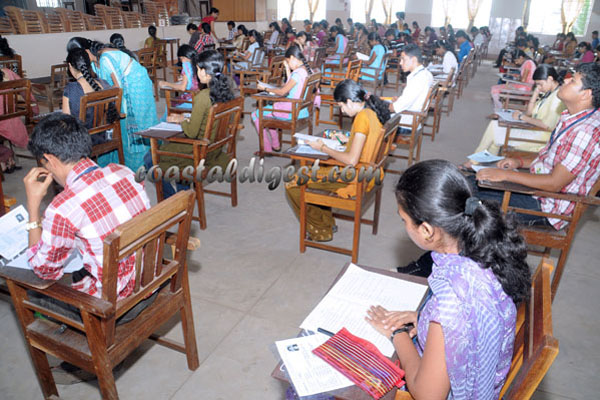
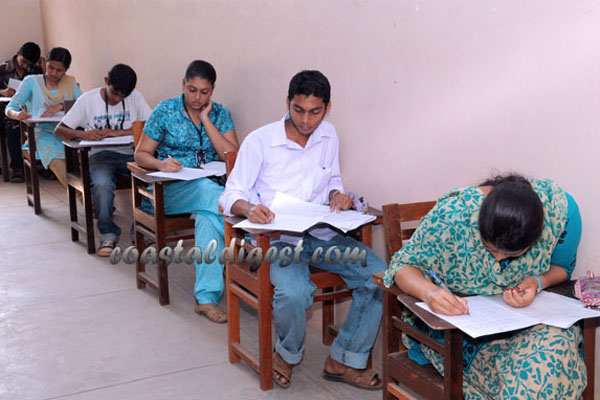
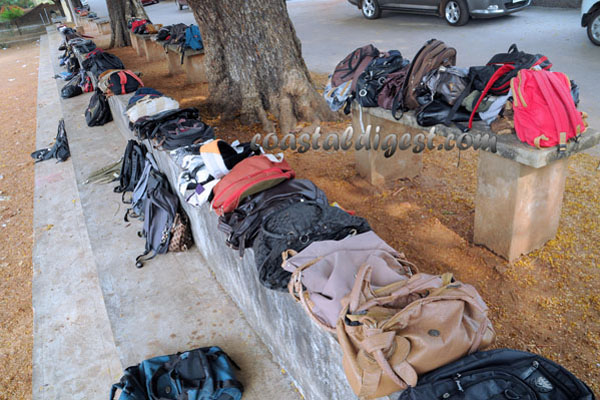
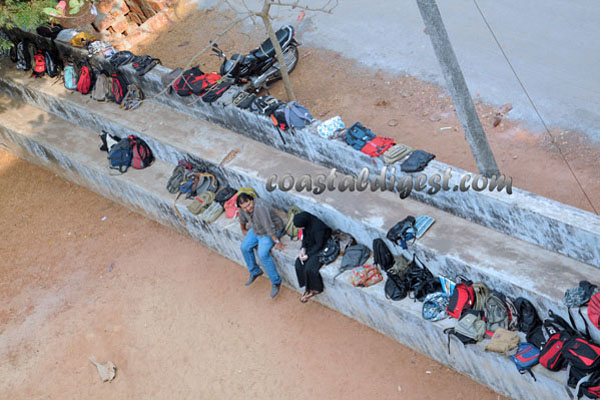
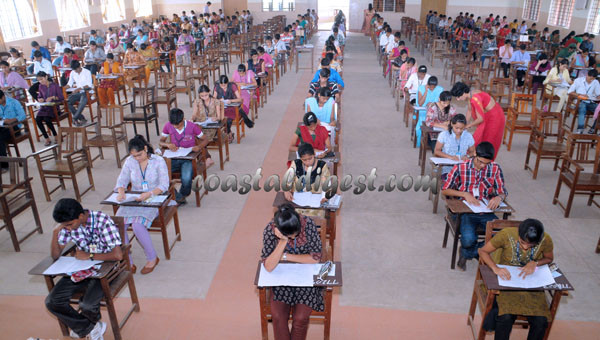
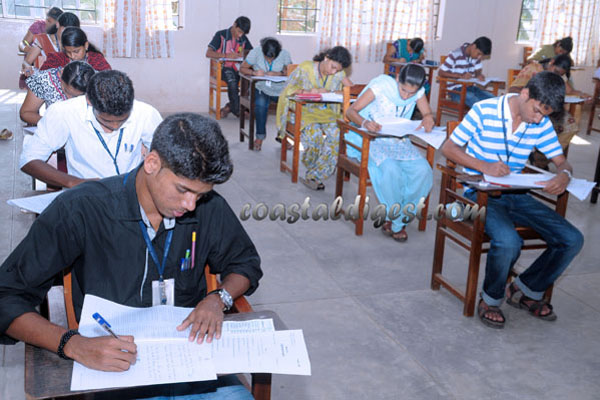
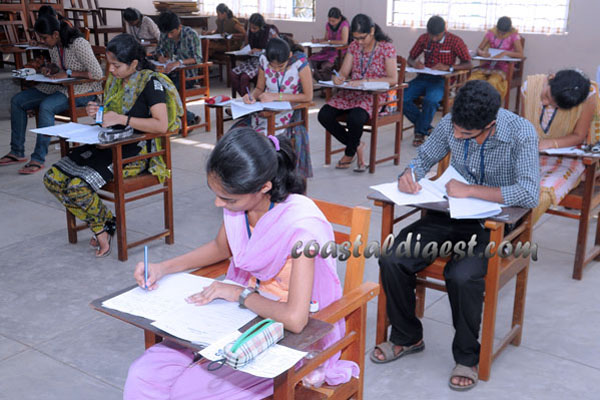
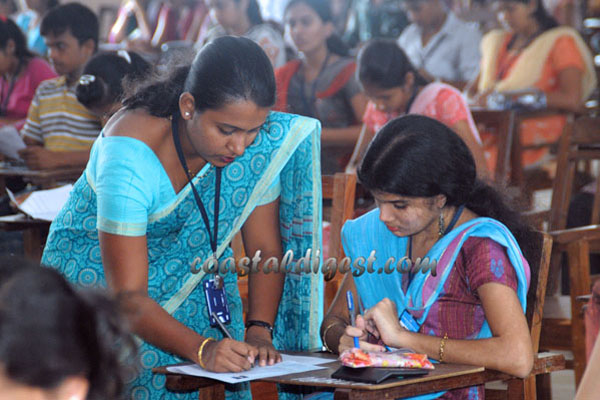
Mangalore, March 15: The final examinations of II year Pre University course began on Thursday in the Dakshina Kannada district, where 48 examination centres have been set up for 30,129 students.

While 25,736 students are freshers, 2,644 candidates are appearing for the examinations as private candidates and there are 1,749 repeaters writing this examination in the coastal district.

On the first day, computer science (for commerce and science streams) and history (for arts stream) exams are being held from 9 am to 12.15 pm.

Stricter Measures

For the smooth conduct of the examination, which will conclude on March 31, the PU board has already constituted district and taluk level vigilance squad, which will work towards preventing examination related malpractices and also ensure that the sanctity of the examination is upheld.

The City Police Commissioner, Deputy Directors of departments of Women and Child Welfare, Fisheries, and PUC education and Deputy Secretary of Zilla Panchayat are the members of the district level committee.

The second district level team is headed by chief executive officer of ZP and consists of Superintended of Police, Joint Director, Department of Agriculture, District Social Welfare Officer, and Deputy Director, Department of Public Instructions.

The taluk level committees for Mangalore, Moodbidri and Bantwal taluks headed by Assistant Commissioner, Mangalore, comprise five members. Likewise, the taluk level committees for Puttur, Sullia and Belthangady comprise five officers and headed by the Assistant Commissioner, Puttur.

The heads of the committees would submit daily reports to the DC, who has directed them to ensure there are no examination malpractice.

Prohibitory orders were in force within 200 metres radius of all exam centres. Besides, all photocopy shops near the exam centres were shut. Additional policemen were deployed in sensitive and hypersensitive centres.

6 Lakh Students

According to information released by PU Board, as many as 5.96 lakh students are appearing for the II PU examinations at 923 centres across the State of Karnataka. Among the students writing the exam, 3,20,869 are boys and 2,75,870 are girls.

The time tables for the II PU examinations are as follows;


Science

March 15 : Computer Science

March 16 : Biology, Electronics

March 20 : Mathematics

March 22 : Physics

March 26 : English

March 28 : Chemistry

March 29 : Marathi, Urdu, French

March 30 : Kannada, Tamil, Malayalam, Arabic

March 31 : Hindi, Telugu, Sanskrit
Commerce

March 15 : Computer Science

March 17 : Basic Maths

March 19 : Economics

March 20 : Mathematics

March 21 : Accountancy

March 24 : Statistics

March 26 : English

March 28 : Business Studies

March 29 : Marathi, Urdu, French

March 30 : Kannada, Tamil, Malayalam, Arabic

March 31 : Hindi, Telugu, Sanskrit
Arts Time Table

March 15 : History

March 17 : Political Science & Basic Maths

March 19 : Geology, Economics

March 20 : Geography

March 21 : Socialogy

March 22 : Karnatic Music, Hindustani Music, Psychology

March 24 : Optional Kannada, Home Science

March 26 : English

March 27 : Logic, Education

March 29 : Marathi, Urdu, French

March 30 : Kannada, Tamil, Malayalam, Arabic

March 31 : Hindi, Telugu, Sanskrit
PUC_Exam_1

PUC_Exam_2

PUC_Exam_3

PUC_Exam_4

PUC_Exam_5

PUC_Exam_6

PUC_Exam_7

PUC_Exam_8

PUC_Exam_9

PUC_Exam_10

PUC_Exam_11

PUC_Exam_12

PUC_Exam_13


Comments

Add new comment

  • Coastaldigest.com reserves the right to delete or block any comments.
  • Coastaldigset.com is not responsible for its readers’ comments.
  • Comments that are abusive, incendiary or irrelevant are strictly prohibited.
  • Please use a genuine email ID and provide your name to avoid reject.
News Network
February 5,2026

Bengaluru: As air quality continues to worsen across several parts of the city, hospitals in Bengaluru are reporting a steady rise in patients suffering from respiratory illnesses such as asthma, bronchitis and Chronic Obstructive Pulmonary Disease (COPD), health officials and doctors said.

Data from the Suvarna Arogya Suraksha Trust (SAST) shows that 3,891 patients received treatment for respiratory ailments between April and November 2024. The figure rose to 4,187 during the same period in 2025.

Private hospitals, too, are witnessing a 10–15 per cent year-on-year increase in such cases.

While doctors caution that the rise cannot be attributed solely to air pollution, a significant number of patients are non-smokers with no prior history of respiratory disease.

“Nearly 70 per cent of the patients we see are non-smokers with no previous respiratory issues. When other causes are ruled out, air pollution emerges as the most likely factor,” said Dr Manjunath PH, consultant interventional pulmonologist at a hospital in Kengeri.

Doctors noted that patient footfall spikes during the winter months and around Deepavali, when air quality typically worsens.

“There is a clear correlation between poor air quality and the rise in cases. People commonly present with persistent cough, breathlessness and irritation of the respiratory tract, indicating the impact of polluted air on their health,” said Dr Sheetal Chaurasia, consultant in pulmonary medicine at a private hospital in Whitefield.

Dr Chaurasia added that respiratory tract infections are also on the rise.

“Poor air quality leads to chronic airway inflammation, making the airways more vulnerable to infections. We are seeing an increase in both upper and lower respiratory tract infections,” she said.

Patients with pre-existing respiratory conditions remain the worst affected.

“For those already diagnosed with respiratory illnesses, deteriorating air quality significantly worsens the condition. Both the frequency and severity of attacks increase sharply,” said Dr Vandana P, a pulmonologist at a hospital on Bannerghatta Road.

Doctors also flagged a worrying trend of rising respiratory problems among younger adults and children.

To reduce exposure, they advised people to wear masks while travelling on two-wheelers or autos and ensure adequate ventilation at home to minimise indoor air pollution.

Comments

Add new comment

  • Coastaldigest.com reserves the right to delete or block any comments.
  • Coastaldigset.com is not responsible for its readers’ comments.
  • Comments that are abusive, incendiary or irrelevant are strictly prohibited.
  • Please use a genuine email ID and provide your name to avoid reject.
News Network
February 5,2026

In an era where digital distractions are the primary rival to academic excellence, the Karnataka Education Department is taking the fight directly to the living room. As the SSLC (Class 10) annual examinations loom, officials have launched a localized "digital strike" to ensure students aren't losing their competitive edge to scrolling or soap operas.

The 7-to-9 Lockdown

The department has issued a formal directive urging—and in some cases, enforcing via home visits—a total blackout of mobile phones and television sets between 7:00 PM and 9:00 PM. This two-hour window is being designated as "sacred study time" across the state until the examinations conclude on April 2.

Key Pillars of the Initiative:

•    Doorstep Advocacy: Teachers are transitioning from classrooms to living rooms, meeting parents to explain the psychological benefits of a distraction-free environment.

•    Parental Accountability: The campaign shifts the burden of discipline from the student to the household, asking parents to lead by example and switch off their own devices.

•    The Timeline: The focus remains sharp on the upcoming exam block, scheduled from March 18 to April 2.

"The objective is simple: uninterrupted focus. We are reclaiming the evening hours for the students, ensuring their environment is as prepared as their minds," stated a senior department official.

Student vs. Reality

While the student community has largely welcomed the "forced focus"—with many admitting they lack the willpower to ignore notifications—the move has sparked a debate on enforceability. Without a "TV Police," the success of this initiative rests entirely on the shoulders of parents and the persuasive power of visiting educators.

Comments

Add new comment

  • Coastaldigest.com reserves the right to delete or block any comments.
  • Coastaldigset.com is not responsible for its readers’ comments.
  • Comments that are abusive, incendiary or irrelevant are strictly prohibited.
  • Please use a genuine email ID and provide your name to avoid reject.
News Network
February 1,2026

Bengaluru: The Karnataka High Court has refused to quash an investigation against a WhatsApp group administrator accused of allowing the circulation of obscene and offensive images depicting Hindutva politicians and idols in 2021.

Justice M Nagaprasanna observed that, prima facie, the ingredients of the offence under Section 295A of the Indian Penal Code were made out. “The offence under Section 295A of the IPC is met to every word of its ingredient, albeit prima facie,” the judge said.

The petitioner, Sirajuddin, a resident of Belthangady taluk in Dakshina Kannada district, had challenged the FIR registered against him at the CEN (Cyber, Economics and Narcotics) police station, Mangaluru, for offences under Section 295A of the IPC and Section 67 of the Information Technology Act. Section 295A relates to punishment for deliberate and malicious acts intended to outrage the religious feelings of any class of citizens.

According to the complaint filed by K Jayaraj Salian, also a resident of Belthangady taluk, he received a WhatsApp group link from an unknown source and was added to the group after accessing it. The group reportedly had six administrators and around 250 participants, where obscene and offensive images depicting Hindu deities and certain political figures were allegedly circulated repeatedly.

Sirajuddin was arrested in connection with the case and later released on bail on February 16, 2021. He argued before the court that he was being selectively targeted, while other administrators—including the creator of the group—were neither arrested nor investigated. He also contended that the Magistrate could not have taken cognisance of the offence under Section 295A without prior sanction under Section 196(1) of the CrPC.

Rejecting the argument, Justice Nagaprasanna held that prior sanction is required only at the stage of taking cognisance, and not at the stage of registration of the crime or during investigation.

The judge noted that the State had produced the entire investigation material before the court. “A perusal of the material reveals depictions of Hindu deities in an extraordinarily obscene, demeaning and profane manner. The content is such that its reproduction in a judicial order would itself be inappropriate,” the court said, adding that the material, on its face, had the tendency to outrage religious feelings and disturb communal harmony.

Observing that the case was still at the investigation stage, the court said it could not interdict the probe at this juncture. However, it expressed concern that the investigating officer appeared to have not proceeded uniformly against all administrators. The court clarified that if the investigation revealed the active involvement of any member in permitting the circulation of such content, they must also be proceeded against.

“At this investigative stage, any further observation by this Court would be unnecessary,” the order concluded.

Comments

Add new comment

  • Coastaldigest.com reserves the right to delete or block any comments.
  • Coastaldigset.com is not responsible for its readers’ comments.
  • Comments that are abusive, incendiary or irrelevant are strictly prohibited.
  • Please use a genuine email ID and provide your name to avoid reject.