Soligas' dance enthrals Muchur villagers

March 17, 2012

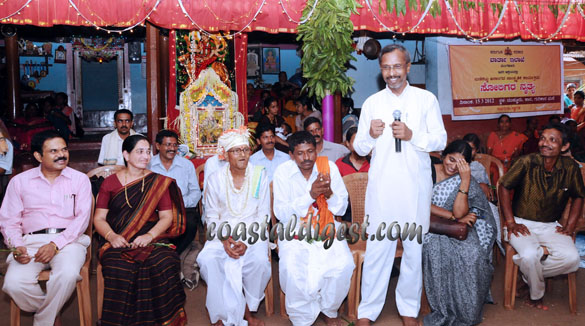
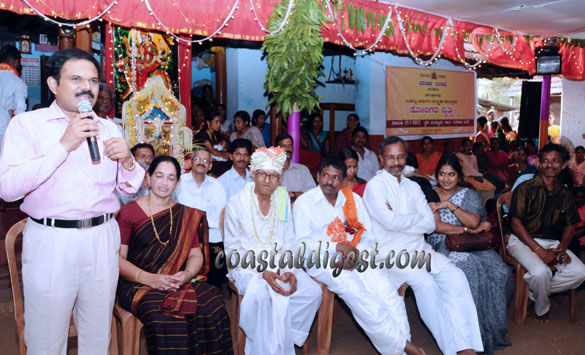
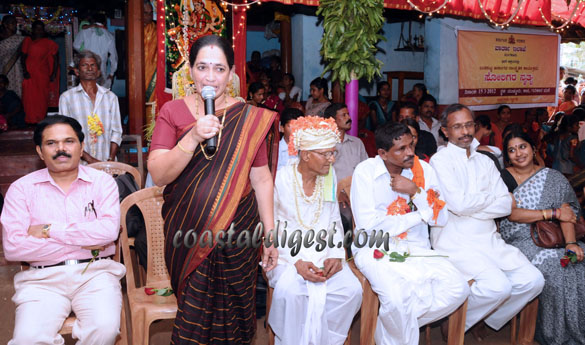
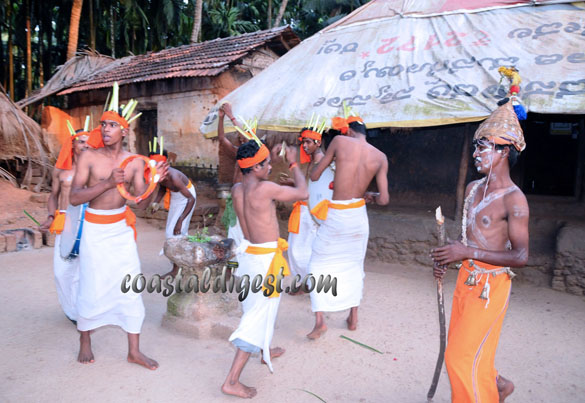
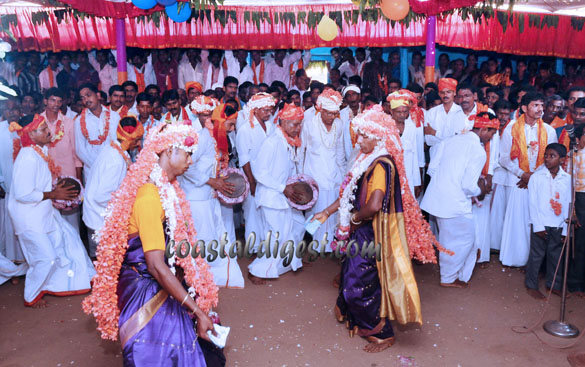
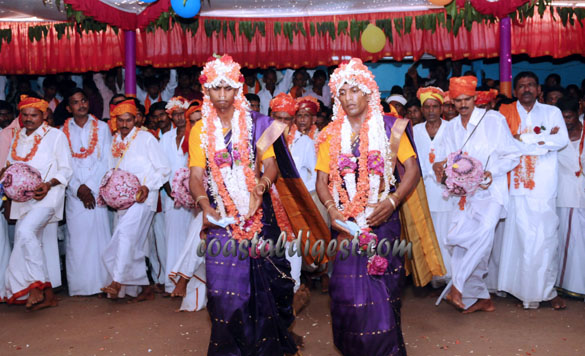
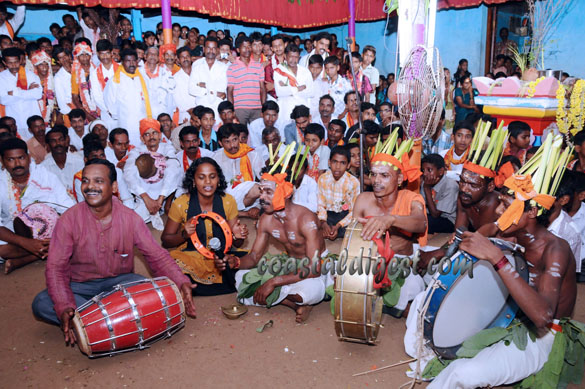
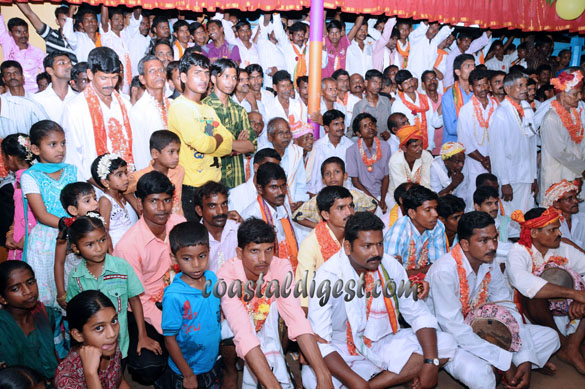
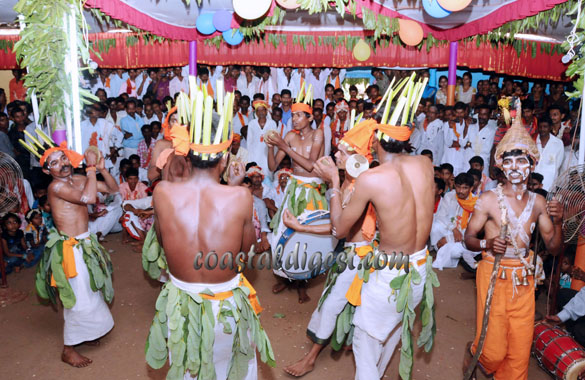
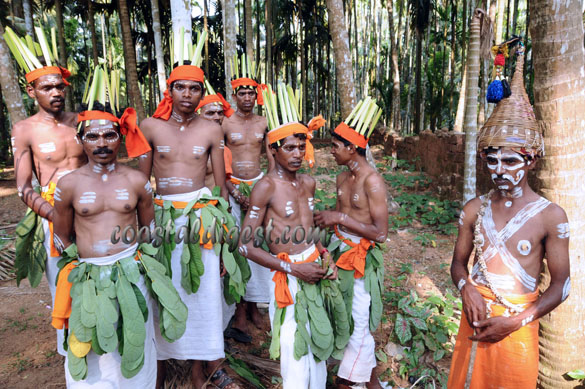
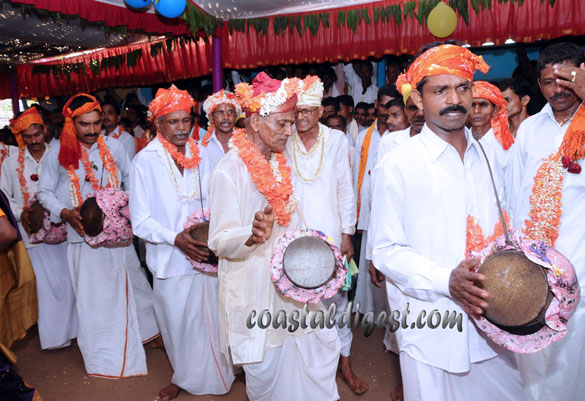
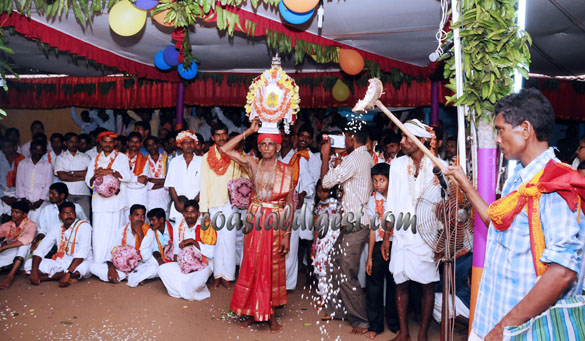
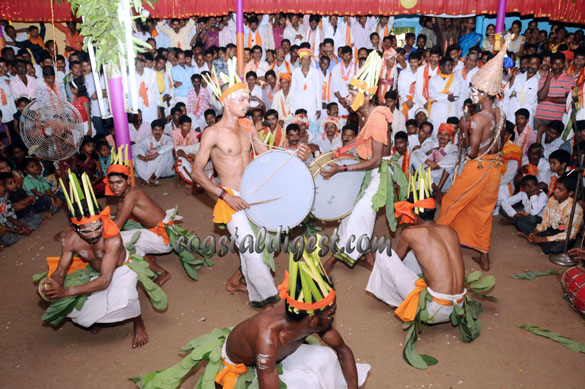
Mangalore, March 17: In a dance programme of a different kind, the Soliga community members from Chamarajanagar district who had come all the way to Mangalore performed attractive tribal dances at Muchur in Mangalore taluk on Thursday.

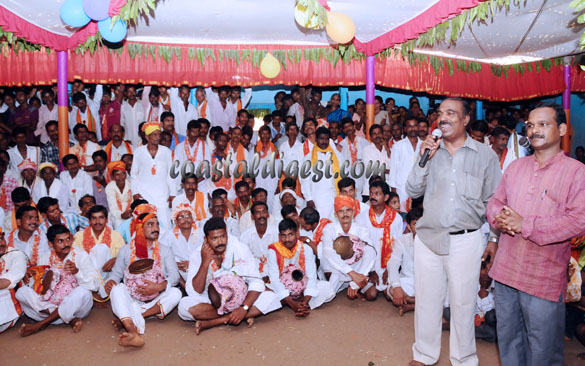
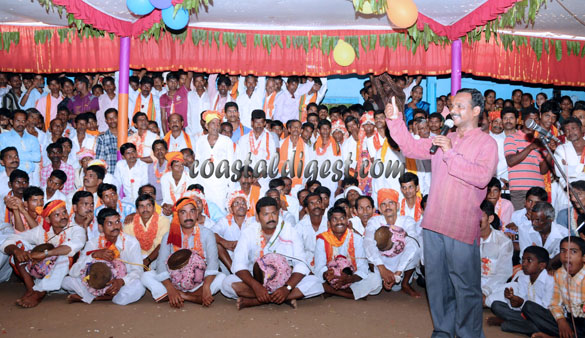
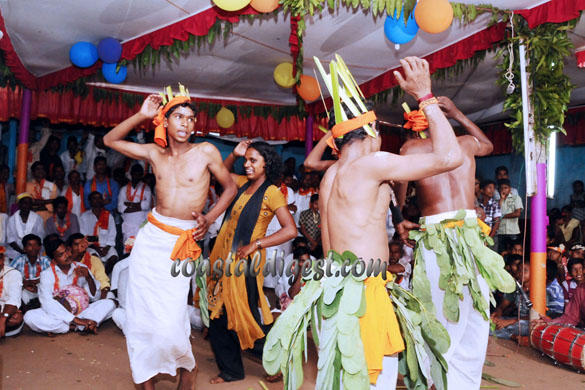
The Soliga community members presenting a tribal dance at Muchur on Thursday.In the programme jointly organised by Zilla Panchayat Standing Committee for Social Justice President Janardhan Gowda, Muchur Kana Gurikar and the Information Department, a team of 10 artistes from the Soliga Pusumale Kalaasangha from Ellandur in Chamarajanagar performed two dances including one dance of Jenu Kuruba community.

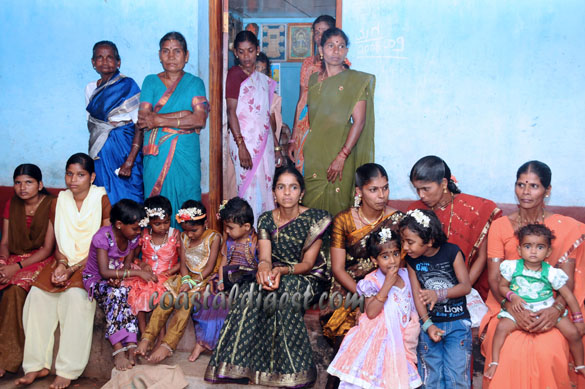
The dance programme was specially organised for the members of the Kudubi community on the occasion of Kudubi's traditional festival Holi Hunnime.

In order to communicate the performances to the audiences, the Soligas translated their songs into Kannada from the original Soliga language. The team led by Basavaraj danced to the tune of “Goru Goruka Gorukana,” Kaujalagi dance performed by Jenu Kurubas during harvest season and Mari Kunitha which entertained the audience.

Speaking about the interesting story of dance and marriage, Basavaraj informed that “Goru Goruka Gorukana” dance is performed by Soligas in March-April when rotti-habba is celebrated. In this type of dance, the men would dance in a circle and women would be seated around them. As the performance goes on, the men and women will be allowed to choose the man/woman of their choice whom they can carry.

The teams have already performed at Vishwa Kannada Sammelana held in New Delhi and won the hearts of the audience.

The programme was organised by the Information Department to inform about the art and culture of the tribes across the State. The teams will perform in Mangalore and Bantwal taluks till March 21.

ZP President Shailaja Bhat inaugurated the programme.
SLG_1

SLG_2

SLG_3

SLG_4

SLG_5

SLG_6

SLG_7

SLG_8

SLG_9

SLG_10

SLG_11

SLG_12

SLG_13

SLG_14

SLG_15

SLG_16

SLG_17

SLG_18

SLG_19

SLG_20

Comments

Add new comment

  • Coastaldigest.com reserves the right to delete or block any comments.
  • Coastaldigset.com is not responsible for its readers’ comments.
  • Comments that are abusive, incendiary or irrelevant are strictly prohibited.
  • Please use a genuine email ID and provide your name to avoid reject.
News Network
February 3,2026

Bengaluru: Following reports of fresh Nipah virus (NiV) cases in West Bengal and heightened vigilance across parts of Southeast Asia, the Karnataka Health Department has placed the state on high alert and activated emergency preparedness protocols.

Health officials said enhanced surveillance measures have been initiated after two healthcare workers in Barasat, West Bengal, tested positive for the virus earlier this month. While no cases have been reported in Karnataka so far, authorities said the state’s past exposure to Nipah outbreaks and high inter-state mobility warranted preventive action.

Officials have directed district health teams to intensify monitoring, particularly at hospitals and points of entry, and to ensure early detection and isolation of suspected cases.

High Mortality Virus with Multiple Transmission Routes

Nipah virus is a zoonotic disease that can spread from animals to humans and has a reported fatality rate ranging between 60 and 75 per cent. Fruit bats, also known as flying foxes, are the natural reservoirs of the virus and can transmit it by contaminating food sources with saliva or urine.

Known modes of transmission include:

•    Contaminated food: Consumption of fruits partially eaten by bats or raw date-palm sap
•    Animal contact: Exposure to infected pigs or other animals
•    Human-to-human transmission: Close contact with body fluids of infected persons, particularly in healthcare settings

Symptoms and Disease Progression

The incubation period typically ranges from 4 to 14 days, though delayed onset has also been reported. Early symptoms often resemble common viral infections, making prompt clinical suspicion critical.

•    Initial symptoms: Fever, headache, body aches, fatigue, sore throat
•    Progressive symptoms: Drowsiness, disorientation, altered mental state
•    Severe stage: Seizures, neck stiffness and acute encephalitis, which can rapidly progress to coma

Public Health Advisory

The Health Department has issued precautionary guidelines urging the public to adopt risk-avoidance practices to prevent any local spillover.

Do’s
•    Wash fruits thoroughly before consumption
•    Drink boiled and cooled water
•    Use protective equipment while handling livestock
•    Maintain strict hand hygiene

Don’ts
•    Avoid fruits found on the ground or showing bite marks
•    Do not consume beverages made from raw tree sap, including toddy
•    Avoid areas with dense bat populations
•    Do not handle sick or dead animals

Preparedness Measures

Officials confirmed that isolation wards are being readied in major government hospitals and that medical staff are being sensitised to identify early warning signs.

“There is no cause for panic, but there is a need for heightened vigilance,” a senior health official said, adding that there is currently no approved vaccine or specific antiviral treatment for Nipah, and care remains largely supportive.

Comments

Add new comment

  • Coastaldigest.com reserves the right to delete or block any comments.
  • Coastaldigset.com is not responsible for its readers’ comments.
  • Comments that are abusive, incendiary or irrelevant are strictly prohibited.
  • Please use a genuine email ID and provide your name to avoid reject.