



RTE: Passing the buck, assurances continue

[email protected] (Abrar Ahmed Khan)
March 19, 2012

In May 2011, Vishweshwara Hegde Kageri , State Minister for Primary and Secondary Education, had assured that the Right To Education (RTE) Act will be implemented “in a month's time”. Even after almost a year since he gave that assurance, when Mr. Kageri is asked about the delay in implementation of the Act, the response is similar – 'Very soon'.
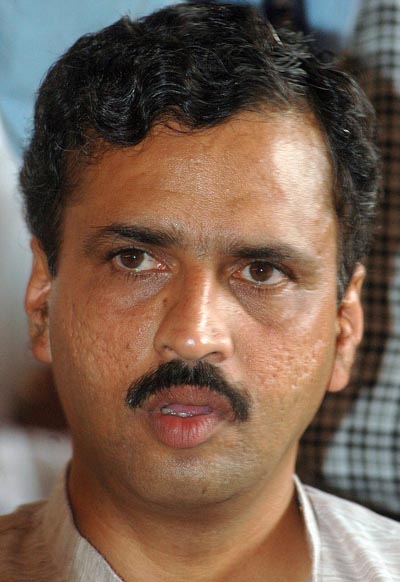
kageri

Speaking to Coastaldigest.com at the side lines of a function in Bhatkal on Sunday, Mr. Kageri said “My Ministry has done its job and we have forwarded the Act to the cabinet. It is now with them and they may pass it any time. We know that it is something that has to be implemented and the Centre has already given orders. It is with the state cabinet and very soon, it will be implemented”, Mr. Kageri reassured.

When asked if the Act would see implementation well before schools begin across the state, Mr. Kageri responded in the affirmative.

The snail paced action being taken by the state government to implement the Act has been a cause of concern. “Admissions in schools will begin in a few days and the evil of collecting capitation fees and donations are likely to continue if the Act is not implemented now. The Act has some strict laws in connection with collection of donations. Without it, the schools will behave as though there is no one to question them”, says Renny D'Souza, Director, VALORADE (Value Oriented Educational Project), and an education activist.

The Minister however informed that the state government has looked into the aspect of prescribing fee structures for not just government schools but private aided and unaided schools as well.

However, it is not just the donation menace but many other aspects of schooling that educational activists are looking for in the implementation of RTE. Apt changes have to be made in the Act as per the state's requirements, which the Minister says, has been done. “Although no major changes have been made in the Act passed by the centre, we have looked into certain aspects and made changes as per the requirements of our state”, Mr. Kageri said. He declined to reveal what sort of changes he was talking about.

It was being demanded that quota within the quota of the 25% set aside by the Act to avoid injustice to SC/STs and backward and lower sections of the society be also considered. When asked if it had been done, Mr. Kageri said: “I will reveal all these details when the Act is passed in the House”.

Saffronisation of text books

When asked about the stark criticism that the state government has been facing over the issue of saffronisation of school text books, the Minister said that the government is going according to the prescribed norms.

“We have a team of educationists and experts. They have looked into the norms and syllabus has been drafted as per the National Curriculum Framework (NCF) guidelines. There is nothing to worry about”, Mr. Kageri said.

However activists like Renny D'Souza refute this claim of the Minister. “What they are doing is clearly against the norms of the NCF and RTE itself which says that no syllabus imparting communal hatred should be taught to the students”, he says.


Comments

Add new comment

  • Coastaldigest.com reserves the right to delete or block any comments.
  • Coastaldigset.com is not responsible for its readers’ comments.
  • Comments that are abusive, incendiary or irrelevant are strictly prohibited.
  • Please use a genuine email ID and provide your name to avoid reject.
News Network
January 23,2026

Mangaluru: The Karnataka Government Polytechnic (KPT), Mangaluru, has achieved autonomous status from the All India Council for Technical Education (AICTE), becoming the first government polytechnic in the country to receive such recognition in its 78-year history. The status was granted by AICTE, New Delhi, and subsequently approved by the Karnataka Board of Technical Education in October last year.

Officials said the autonomy was conferred a few months ago. Until recently, AICTE extended autonomous status only to engineering colleges, excluding diploma institutions. However, with a renewed national focus on skill development, several government polytechnics across India have now been granted autonomy.

KPT, the second-largest polytechnic in Karnataka, was established in 1946 with four branches and has since expanded to offer eight diploma programmes, including computer science and polymer technology. The institution is spread across a 19-acre campus.

Ravindra M Keni, the first dean of the institution, told The Times of India that AICTE had proposed autonomous status for polytechnic institutions that are over 25 years old. “Many colleges applied. In the first round, 100 institutions were shortlisted, which was further narrowed down to 15 in the second round. We have already completed one semester after becoming an autonomous institution,” he said. He added that nearly 500 students are admitted annually across eight three-year diploma courses.

Explaining the factors that helped KPT secure autonomy, Keni said the institution has consistently recorded 100 per cent admissions and placements for its graduates. He also noted its strong performance in sports, with the college emerging champions for 12 consecutive years, along with active student participation in NCC and NSS activities.

Autonomous status allows KPT to design industry-oriented curricula, conduct examinations, prepare question papers, and manage academic documentation independently. The institution can also directly collaborate with industries and receive priority funding from AICTE or the Ministry of Education. While academic autonomy has been granted, financial control will continue to rest with the state government.

“There will be separate committees for examinations, question paper setting, boards of studies, and boards of examiners. The institution will now have the freedom to conduct admissions without government notifications and issue its own marks cards,” Keni said, adding that new academic initiatives would be planned after a year of functioning under the autonomous framework.

Comments

Add new comment

  • Coastaldigest.com reserves the right to delete or block any comments.
  • Coastaldigset.com is not responsible for its readers’ comments.
  • Comments that are abusive, incendiary or irrelevant are strictly prohibited.
  • Please use a genuine email ID and provide your name to avoid reject.