India must focus on agriculture for sound economy'

March 24, 2012

IB_1

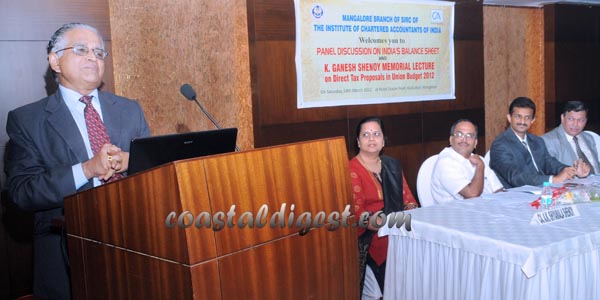
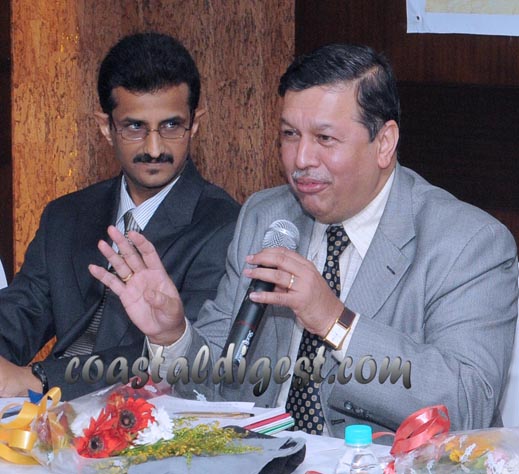
Mangalore, March 24: To ensure that India fares well in its economy, it must focus on agriculture said Firoze B Andhyarujina, Senior Counsel, Mumbai High Court and an eminent authority on tax laws.

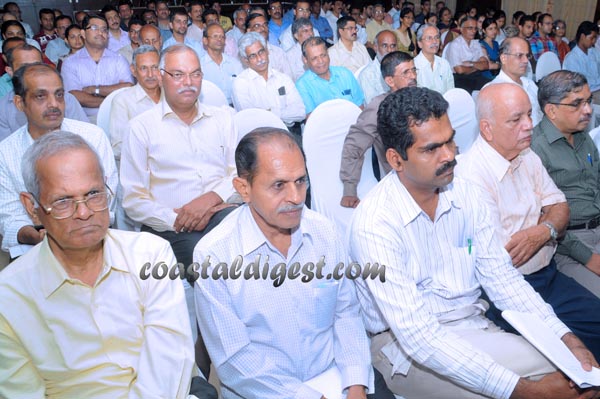
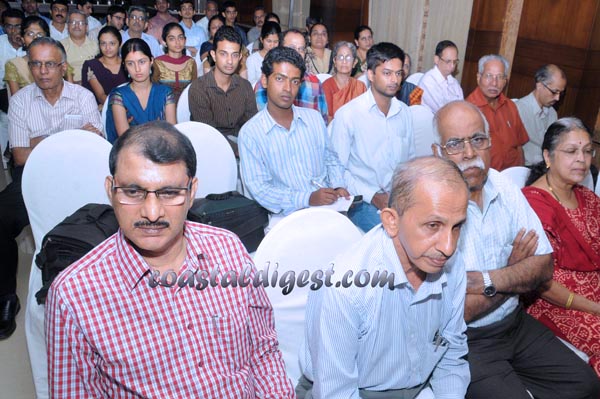
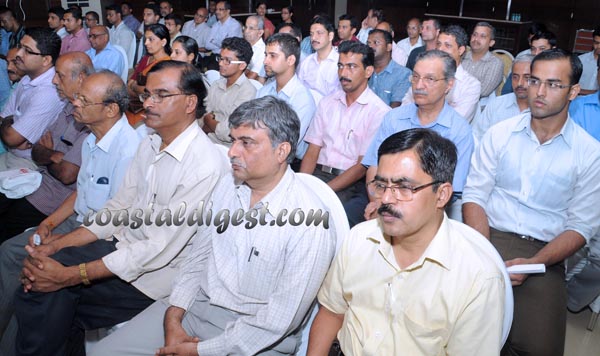
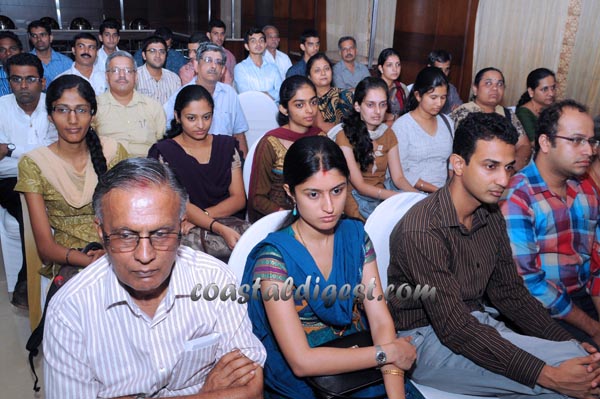
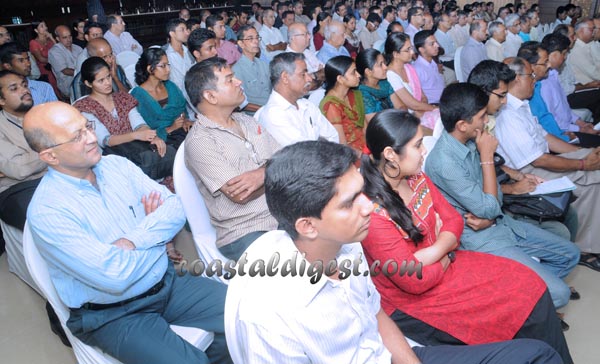
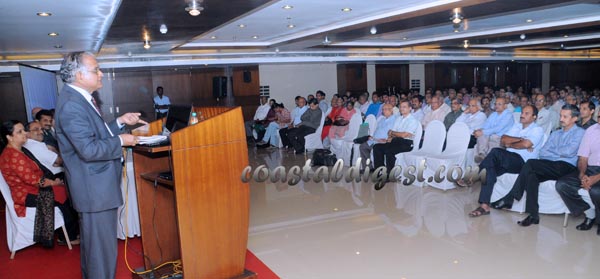
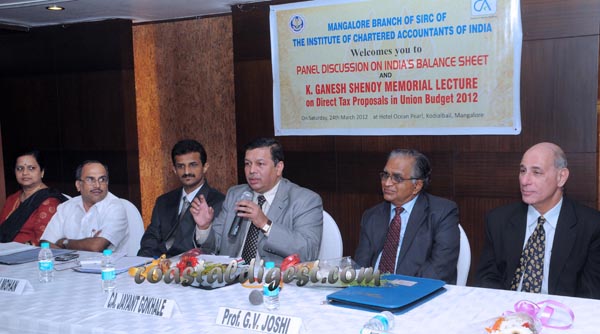
He was speaking at the panel discussion on 'India's Balance Sheet' organised by The Mangalore Branch of SIRC of ICAI in association with K Ganesh Shenoy Memorial Trust, Mangalore, in the city on Saturday.

Stressing that since India is basically an agricultural country, Mr. Andhyarujina said the government must look at agriculture as a means of improving its economy. “Focus should be on agriculture. The government must look at exporting the surplus agricultural produce after feeding our own people. Related aspects such as food storage and distribution must also be given attention to”, he said.

Raising the issue of poverty line, Mr. Andhyarujina said “India must ascertain as to who are the people belonging to the below poverty line (BPL). If the government places Rs 30 per day as the limit to identify people below poverty line, it does not even amount to 1 US Dollar. Where is the question of its impact on India's balance sheet then?” Terming service tax as a 'new phenomena, Mr. Andhyarujina said that Income Tax has become a 'tool of harassment of the common man'.

Observing that on the positive side, this year's budget has given scope for the development of infrastructure, Mr. Andhyarujina said that with proper channelization of resources and money, India can certainly progress. He added that India has an advantage as Indians possess qualities of innovation and thinking. “If India's balance sheet is ever drawn, the biggest intangible asset it would possess is the knowledge and patience of its people. India is on the path of betterment but it must look to contain inflation beforeit gets out of hand”, Mr. Andhyarujina said.

In his address, Prof G.V. Joshi, Professor of Economics at the Nitte-based Justice K.S. Hegde Institute of Management, said that Union Finance Minister admitted in his budget speech that fiscal deficit was on the rise. In a humourous remark, Prof. Joshi said “On that day, when Sachin Tendulkar continued his story of surplus, Pranab Mukherjee continued his story of deficit”. Stating that fiscal deficit is of recent origin, Prof. Joshi said that it has risen to 9.9% of the gross domestic product. Comparatively, he said, Karnataka's fiscal deficit which was highlighted in the stage budget presented by Chief Minister Sadananda Gowda is 2.8% of the gross domestic product calling it a 'marginal increase' which is not all that bad. “Economically Karnataka looks good although politically it is not”, Prof. Joshi remarked.

He also said that by trying to bring an amendment in an act concerning the fiscal deficits, the government will try to show non-plan expenditure as planned expenditure. Taking a dig at Pranab Mukherjee again, he said “Pranab quoted Shakespear in his speech saying that he is being cruel now to be kind later. Yes, he is being cruel this year and will be kind next year as next year elections will beround the corner”.

Murali Mohan, Chairman, Institute of Chartered Accountants of India (ICAI), Mangalore Chapter, moderated the session.
IB_2

IB_3

IB_4

IB_5

IB_6

IB_7

IB_8

IB_9

IB_10

Comments

Add new comment

  • Coastaldigest.com reserves the right to delete or block any comments.
  • Coastaldigset.com is not responsible for its readers’ comments.
  • Comments that are abusive, incendiary or irrelevant are strictly prohibited.
  • Please use a genuine email ID and provide your name to avoid reject.
News Network
February 1,2026

Bengaluru: Karnataka Deputy Chief Minister D K Shivakumar on Sunday criticised the Union Budget presented by Finance Minister Nirmala Sitharaman, claiming it offered no tangible benefit to the state.

Though he said he was yet to study the budget in detail, Shivakumar asserted that Karnataka had gained little from it. “There is no benefit for our state from the central budget. I was observing it. They have now named a programme after Mahatma Gandhi, after repealing the MGNREGA Act that was named after him,” he said.

Speaking to reporters here, the Deputy Chief Minister demanded the restoration of MGNREGA, and made it clear that the newly enacted rural employment scheme — VB-G RAM G — which proposes a 60:40 fund-sharing formula between the Centre and the states, would not be implemented in Karnataka.

“I don’t see any major share for our state in this budget,” he added.

Shivakumar, who also holds charge of Bengaluru development, said there were high expectations for the city from the Union Budget. “The Prime Minister calls Bengaluru a ‘global city’, but what has the Centre done for it?” he asked.

He also drew attention to the problems faced by sugar factories, particularly those in the cooperative sector, alleging a lack of timely decisions and support from the central government.

Noting that the Centre has the authority to fix the minimum support price (MSP) for agricultural produce, Shivakumar said the Union government must take concrete steps to protect farmers’ interests.

Comments

Add new comment

  • Coastaldigest.com reserves the right to delete or block any comments.
  • Coastaldigset.com is not responsible for its readers’ comments.
  • Comments that are abusive, incendiary or irrelevant are strictly prohibited.
  • Please use a genuine email ID and provide your name to avoid reject.
News Network
January 31,2026

Roy.jpg

Bengaluru: The shooting incident involving CJ Roy, founder of the Confident Group, has once again put the spotlight on a businessman whose life has swung between flamboyant global success and persistent controversy at home.

Though Roy’s business interests extended across continents, his roots lay firmly in Karnataka. An alumnus of Christ School in Bengaluru, he later moved to Tumakuru to pursue an engineering degree. Those familiar with his early years describe him as intensely ambitious, beginning his career as a salesman at a small electronics firm dealing in computers.

Roy’s entry into large-scale real estate came through the Crystal Group, where he worked closely with Latha Namboothiri and rose from manager to director. However, the launch of the Confident Group in 2005 was clouded by industry speculation. Insiders speak of a fallout involving alleged “benami” properties and claims of deception that ultimately led to his independent venture—an episode Roy spent years trying to distance himself from, according to associates.

A tale of two cities

Roy’s professional trajectory diverged sharply across geographies.

In Dubai, he built a reputation as a bold and efficient developer, completing massive luxury residential projects in record time—some reportedly within 11 months. His rapid project delivery and lavish lifestyle in the Emirates earned him admiration and visibility in the real estate sector.

In Bengaluru, however, his image remained far more fractured. Sources say Roy stayed away from the city for several years amid disputes over unpaid dues to vendors and suppliers. Several projects were allegedly stalled, with accusations of unfulfilled commitments to cement and steel suppliers continuing to follow him.

Roy’s return to Bengaluru’s business and social circles began around 2018, marked by a conscious attempt at rebranding. His appointment as Honorary Consul of the Slovak Republic added diplomatic legitimacy, which he complemented with visible CSR initiatives, including ambulance donations and high-profile charity events.

Heavy police presence in Langford Town

Following the incident, police personnel from the Central division were deployed outside the Confident Group building in Langford Town, which also houses the Slovak Honorary Consulate in Bengaluru.

The otherwise busy premises near Hosur Road wore a deserted look on Friday, reflecting the shock and uncertainty that followed the tragedy.

Comments

Add new comment

  • Coastaldigest.com reserves the right to delete or block any comments.
  • Coastaldigset.com is not responsible for its readers’ comments.
  • Comments that are abusive, incendiary or irrelevant are strictly prohibited.
  • Please use a genuine email ID and provide your name to avoid reject.
News Network
January 23,2026

Mangaluru: The Karnataka Government Polytechnic (KPT), Mangaluru, has achieved autonomous status from the All India Council for Technical Education (AICTE), becoming the first government polytechnic in the country to receive such recognition in its 78-year history. The status was granted by AICTE, New Delhi, and subsequently approved by the Karnataka Board of Technical Education in October last year.

Officials said the autonomy was conferred a few months ago. Until recently, AICTE extended autonomous status only to engineering colleges, excluding diploma institutions. However, with a renewed national focus on skill development, several government polytechnics across India have now been granted autonomy.

KPT, the second-largest polytechnic in Karnataka, was established in 1946 with four branches and has since expanded to offer eight diploma programmes, including computer science and polymer technology. The institution is spread across a 19-acre campus.

Ravindra M Keni, the first dean of the institution, told The Times of India that AICTE had proposed autonomous status for polytechnic institutions that are over 25 years old. “Many colleges applied. In the first round, 100 institutions were shortlisted, which was further narrowed down to 15 in the second round. We have already completed one semester after becoming an autonomous institution,” he said. He added that nearly 500 students are admitted annually across eight three-year diploma courses.

Explaining the factors that helped KPT secure autonomy, Keni said the institution has consistently recorded 100 per cent admissions and placements for its graduates. He also noted its strong performance in sports, with the college emerging champions for 12 consecutive years, along with active student participation in NCC and NSS activities.

Autonomous status allows KPT to design industry-oriented curricula, conduct examinations, prepare question papers, and manage academic documentation independently. The institution can also directly collaborate with industries and receive priority funding from AICTE or the Ministry of Education. While academic autonomy has been granted, financial control will continue to rest with the state government.

“There will be separate committees for examinations, question paper setting, boards of studies, and boards of examiners. The institution will now have the freedom to conduct admissions without government notifications and issue its own marks cards,” Keni said, adding that new academic initiatives would be planned after a year of functioning under the autonomous framework.

Comments

Add new comment

  • Coastaldigest.com reserves the right to delete or block any comments.
  • Coastaldigset.com is not responsible for its readers’ comments.
  • Comments that are abusive, incendiary or irrelevant are strictly prohibited.
  • Please use a genuine email ID and provide your name to avoid reject.