



1,000 people die every day in India due to TB'

[email protected] (CD Network)
March 25, 2012

tb

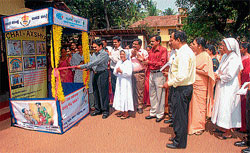
Mangalore, March 25: Tuberculosis is one of the leading infectious cause of death. There are nearly 1,000 deaths due to TB per day in India. Two people die in every three minutes. There are 3,30,000 deaths due to TB each year, said Dakshina Kannada Zilla Panchayat CEO Dr K N Vijayprakash after inaugurating 'World TB Day' awareness programme held in Mangalore on Saturday.

“Though TB is 100 per cent curable, one should know that it is a contagious disease. In India, people do not complete the full course of medicine. If one is diagnosed with a disease, he shall take the medicine till he gets a temporary relief and then return to the prior unhealthy life style of smoking and drinking,” he regretted and asked people to take care of their health.

Most of the health workers are women and she is known for her capacity in bringing effective change in the society, he said.

“Around 30 per cent of world's population and 40 per cent of India's population have been infected with the TB virus due to lack of immunity. In India, around 40,000 people are affected to TB virus daily and the symptoms of the disease can be seen in 5,000 people. Around 1,000 people may die due to this,” said District Health and Family Welfare Officer Dr O R Srirangappa.

However, this disease is curable. With Direct Observation Treatment Short Course (DOTS) one can get free treatment for 6 to 8 months in Government hospitals and medical colleges. There are also facilities of distributing medicines near the patients home, he said.

The slogan of this year's World TB Day is “Stop TB in my life time”. The department is all set to start the DOTS Plus (Treatment for Multi Drug Resistant TB cases) by October 2012. The DOTS Plus Site and Culture DST Site is being identified at present. The health workers who are working for TB will receive an honorarium of Rs 250 for healing every TB patient, he informed.Infant Mary's Convent and Spandana Trust Head Sr Mary Emma Joseph regretted that TB goes undiagnosed in children as the health workers fail to recognise the symptoms. In case care is taken, a lot of lives can be saved, she said.

Dr Vijayprakash inaugurated a 'canopy' (a small awareness booth) which will be installed in various places with an aim of spreading awareness and curbing TB.

1.96 million new cases annually

There are 1.96 million new cases of TB annually in India. In these, 0.8 million are infectious cases. The incidence is more in North India than the South. It is more in urban areas and more common in males.

Indian experts led by TRC (2000) say that there are 3.8 million bacteriologically positive cases and WHO estimate (2007) is that there are 3.3 million TB cases.40 per cent of the Indian population are affected with the tuberculosis bacteria and only 10 per cent will develop TB disease in lifetime. Co-infection with HIV increases risk of TB disease by 5 to 6 times. There are 2.31 million people living with HIV and nearly 1 million are co-infected with HIV and TB. About 5 per cent of TB patients are estimated to be HIV positive.

Comments

Add new comment

  • Coastaldigest.com reserves the right to delete or block any comments.
  • Coastaldigset.com is not responsible for its readers’ comments.
  • Comments that are abusive, incendiary or irrelevant are strictly prohibited.
  • Please use a genuine email ID and provide your name to avoid reject.
News Network
February 4,2026

shettigar.jpg

An Indian resident who won the Dh20 million (approximately Rs 50 crore) jackpot in Abu Dhabi's Big Ticket draw has told of his joy at sharing his life-changing fortune with a friend.

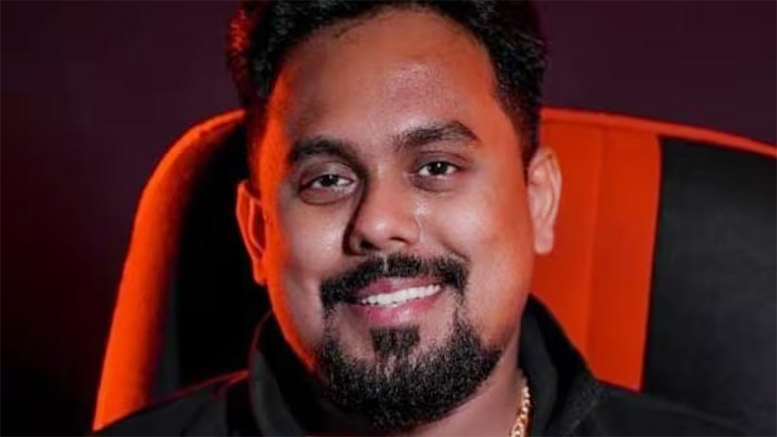
Shanthanu Shettigar, a shop manager in Muscat, regularly buys tickets for the monthly grand prize draw with one of his closest friends – and the pair won on February 3.

Mr Shettigar, 33, who is from Udyavar in Udupi district of the southern state of Karnataka and has lived in the Omani capital for eight years, said he was left speechless after learning of his success.

“When I first moved to Muscat, many of my colleagues were purchasing Big Ticket, which encouraged me to give it a try,” he said.

“I started buying tickets on my own, and later began sharing tickets with a close friend. The ticket that brought me this win was one we purchased together.”

“Like most people, I receive a lot of spam calls, and I was fully absorbed in my work as well. I knew the live draw was taking place tonight, but I never imagined my name would be announced,” he said.

“When I realised it was real and that I had won, I was honestly speechless. It still hasn’t fully sunk in, but I’m extremely happy.”

Mr Shettigar is not sure how he will spend his share of the money, but encouraged others to take part.

“This win was completely unexpected, so I want to take some time to think things through before deciding what to do next,” he said.

“I would definitely encourage others to participate with Big Ticket, whether with family or friends – you never know when your moment might come.”

The Big Ticket was established in 1992 with an initial first prize of Dh1 million. It is one of the most popular monthly raffles in the UAE.

It has transformed the lives of many people across the Emirates and beyond.

Entry to the Big Ticket Millionaire is Dh500. Tickets can be bought online or at counters at Zayed International Airport and Al Ain Airport.

Comments

Add new comment

  • Coastaldigest.com reserves the right to delete or block any comments.
  • Coastaldigset.com is not responsible for its readers’ comments.
  • Comments that are abusive, incendiary or irrelevant are strictly prohibited.
  • Please use a genuine email ID and provide your name to avoid reject.
News Network
February 4,2026

Mangaluru: Urban local bodies and gram panchayats should make the use of Kannada on signboards mandatory while issuing trade licences to commercial establishments, Dakshina Kannada Deputy Commissioner Darshan HV said. He also called for regular inspections to ensure compliance.

Presiding over the District Kannada Awareness Committee meeting at the deputy commissioner’s office, Darshan said the city corporation would be directed to ensure that shops operating in malls prominently display their names in Kannada. “All commercial establishments, including shops, companies, offices and hotels, must mandatorily display their names in Kannada on signboards,” he said.

The deputy commissioner added that the National Highways Authority of India (NHAI) would be instructed to include Kannada on signboards along national highways. Banks, he said, would be directed through committee meetings to provide application forms in Kannada.

“Even if English-medium schools and colleges impart education in English, their signboards must display the institution’s name in Kannada. Steps will also be taken to ensure that private buses display place names in Kannada,” Darshan said.

During the meeting, committee members raised concerns over the closure of Kannada-medium schools in rural areas due to a shortage of teachers and stressed the need for immediate corrective measures. They also pointed out that several industries employ workers from other states while overlooking local candidates.

Members further demanded that nationalised banks provide deposit and withdrawal slips in Kannada. It was brought to the deputy commissioner’s notice that the presence of staff without knowledge of Kannada in rural branches of nationalised banks is causing hardship to local customers.

Meanwhile, MP Srinath, president of the District Kannada Sahitya Parishat, urged the district administration to allot land for the construction of a district Kannada Bhavana in Mangaluru.

Comments

Add new comment

  • Coastaldigest.com reserves the right to delete or block any comments.
  • Coastaldigset.com is not responsible for its readers’ comments.
  • Comments that are abusive, incendiary or irrelevant are strictly prohibited.
  • Please use a genuine email ID and provide your name to avoid reject.
News Network
January 23,2026

Mangaluru: The Karnataka Government Polytechnic (KPT), Mangaluru, has achieved autonomous status from the All India Council for Technical Education (AICTE), becoming the first government polytechnic in the country to receive such recognition in its 78-year history. The status was granted by AICTE, New Delhi, and subsequently approved by the Karnataka Board of Technical Education in October last year.

Officials said the autonomy was conferred a few months ago. Until recently, AICTE extended autonomous status only to engineering colleges, excluding diploma institutions. However, with a renewed national focus on skill development, several government polytechnics across India have now been granted autonomy.

KPT, the second-largest polytechnic in Karnataka, was established in 1946 with four branches and has since expanded to offer eight diploma programmes, including computer science and polymer technology. The institution is spread across a 19-acre campus.

Ravindra M Keni, the first dean of the institution, told The Times of India that AICTE had proposed autonomous status for polytechnic institutions that are over 25 years old. “Many colleges applied. In the first round, 100 institutions were shortlisted, which was further narrowed down to 15 in the second round. We have already completed one semester after becoming an autonomous institution,” he said. He added that nearly 500 students are admitted annually across eight three-year diploma courses.

Explaining the factors that helped KPT secure autonomy, Keni said the institution has consistently recorded 100 per cent admissions and placements for its graduates. He also noted its strong performance in sports, with the college emerging champions for 12 consecutive years, along with active student participation in NCC and NSS activities.

Autonomous status allows KPT to design industry-oriented curricula, conduct examinations, prepare question papers, and manage academic documentation independently. The institution can also directly collaborate with industries and receive priority funding from AICTE or the Ministry of Education. While academic autonomy has been granted, financial control will continue to rest with the state government.

“There will be separate committees for examinations, question paper setting, boards of studies, and boards of examiners. The institution will now have the freedom to conduct admissions without government notifications and issue its own marks cards,” Keni said, adding that new academic initiatives would be planned after a year of functioning under the autonomous framework.

Comments

Add new comment

  • Coastaldigest.com reserves the right to delete or block any comments.
  • Coastaldigset.com is not responsible for its readers’ comments.
  • Comments that are abusive, incendiary or irrelevant are strictly prohibited.
  • Please use a genuine email ID and provide your name to avoid reject.