Steven Rego conferred Pa.Go. Award for his bid to save Nandini

March 26, 2012

Award1_copy

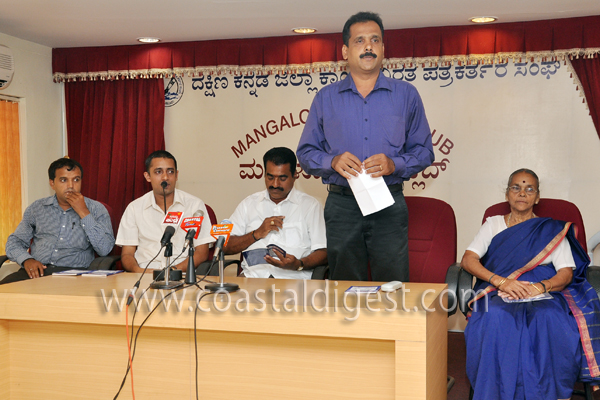
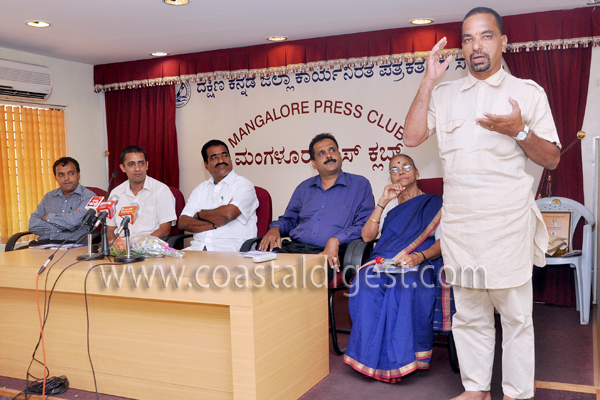
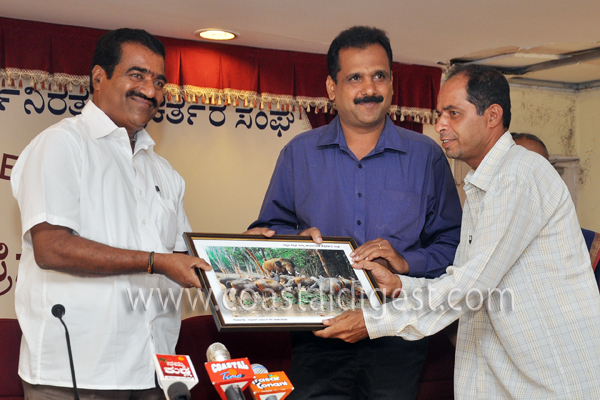
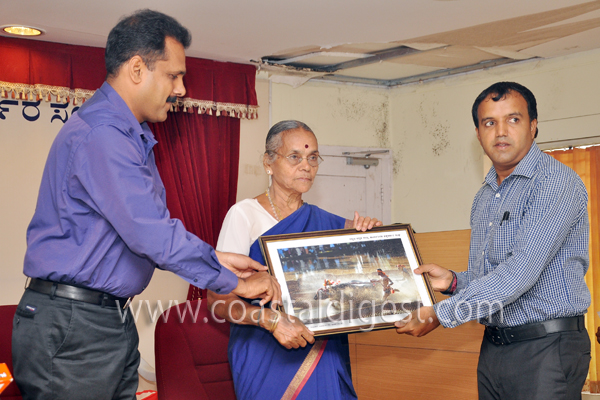
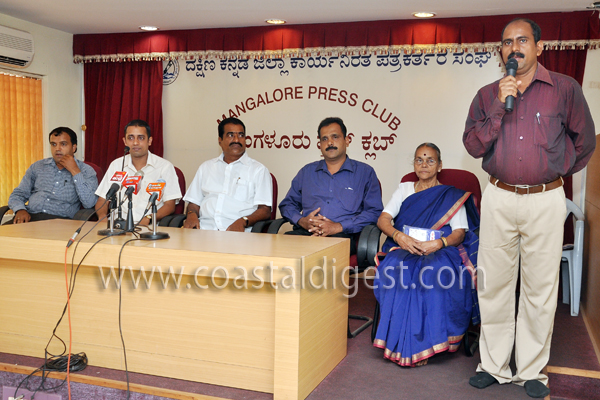
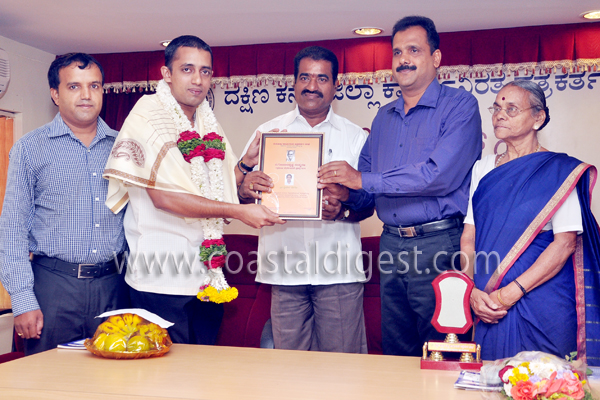
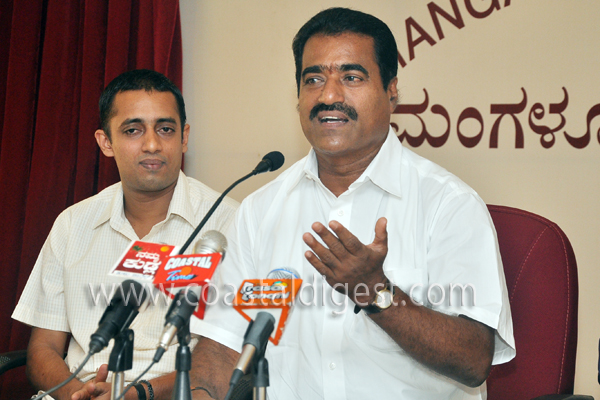
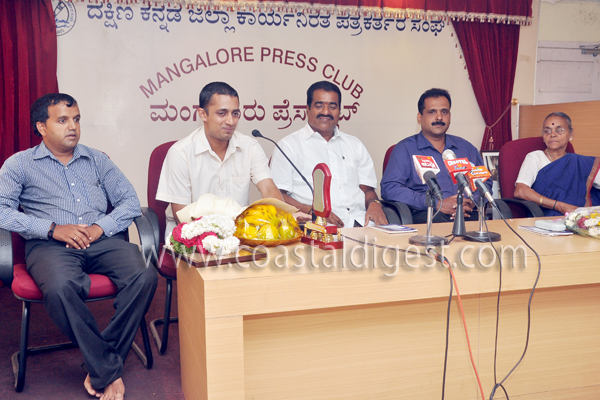
Mangalore, March 26: The Padyana Gopalkrishna award for meritorious rural journalism was conferred on Vijaya Karnataka reporter from Belthangady Steven Rego for his article titled 'Nandini Mayavaguva Munna' here on Monday.

His article was about the disappearing Nandini river and its impact on the environment. The award is instituted by the Dakshina Kannada Working Journalist' Union and has been sponsored by Dharmadhikari of Dharmastala Veerendra Heggade.

Umanath Kotian, president of Tulu Sahitya Academy was the chief guest and did the honours of presenting the award at a simple function at the Press Club.

Steven Rego was chosen for the award from a list of three articles. These three articles from various other reporters were shortlisted by the judges for the award. The judges for the award were Paramananda Salian, Nandagopal and Sachita Nandagopal. The award includes a cash prize of Rs 5001, a citation and a shawl.

Speaking on the occasion Mr. Kotian said, ”Journalism is a profession which brings about change and development to the society. Padyana Gopalkrishna was a man who showed how to influence the public through writing. He had laid down guidelines for the Journalists to emulate. He upheld the values of Truth in the profession. “If more articles of this type came out then a significant change can be brought about in the society,” he said.

One of the jury for the award Mr. Salian said,” We have selected Steven's article based on language and this must be an encouragement for other journalists. His article contained all the right facts and quotes from the right people and was well supported by statistics. The choice of the topic was also excellent.”

Another Jury Nandagopal , a former reporter of The Times Of India also informed the audience that, ”a Journalistic report will have many aspects of Literature and Journalism is Literature in a hurry.”

Special stories should have their own deadline. Instead of giving an award for the best article it is better to judge the Journalistic work by finding out the skills used by the reporter to get a story. This award must confine itself to the rural reporting.

Responding to the honour, Mr. Rego expressed his gratitude towards the jury and the Dakshina Kannada District Working Journalists Union for having acknowledged his work.

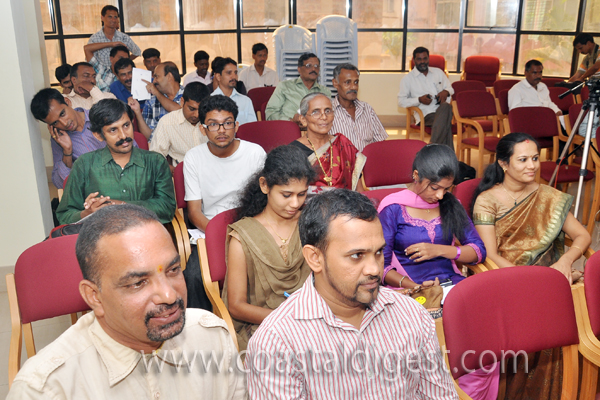
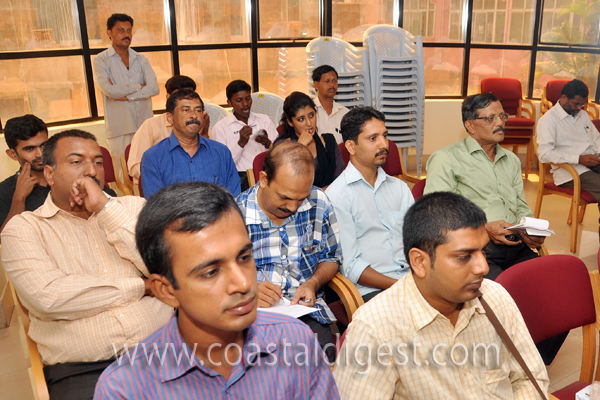
President of the Union Harish Rai welcomed the gathering. Office-bearers Srinivas Nayak Indaje, Ravindra Shetty were present.
Award2_copy

Award3

Award4

Award5

Award6

Award7

Award8

Award9

Award10

Comments

Add new comment

  • Coastaldigest.com reserves the right to delete or block any comments.
  • Coastaldigset.com is not responsible for its readers’ comments.
  • Comments that are abusive, incendiary or irrelevant are strictly prohibited.
  • Please use a genuine email ID and provide your name to avoid reject.
News Network
January 23,2026

Mangaluru: The Karnataka Government Polytechnic (KPT), Mangaluru, has achieved autonomous status from the All India Council for Technical Education (AICTE), becoming the first government polytechnic in the country to receive such recognition in its 78-year history. The status was granted by AICTE, New Delhi, and subsequently approved by the Karnataka Board of Technical Education in October last year.

Officials said the autonomy was conferred a few months ago. Until recently, AICTE extended autonomous status only to engineering colleges, excluding diploma institutions. However, with a renewed national focus on skill development, several government polytechnics across India have now been granted autonomy.

KPT, the second-largest polytechnic in Karnataka, was established in 1946 with four branches and has since expanded to offer eight diploma programmes, including computer science and polymer technology. The institution is spread across a 19-acre campus.

Ravindra M Keni, the first dean of the institution, told The Times of India that AICTE had proposed autonomous status for polytechnic institutions that are over 25 years old. “Many colleges applied. In the first round, 100 institutions were shortlisted, which was further narrowed down to 15 in the second round. We have already completed one semester after becoming an autonomous institution,” he said. He added that nearly 500 students are admitted annually across eight three-year diploma courses.

Explaining the factors that helped KPT secure autonomy, Keni said the institution has consistently recorded 100 per cent admissions and placements for its graduates. He also noted its strong performance in sports, with the college emerging champions for 12 consecutive years, along with active student participation in NCC and NSS activities.

Autonomous status allows KPT to design industry-oriented curricula, conduct examinations, prepare question papers, and manage academic documentation independently. The institution can also directly collaborate with industries and receive priority funding from AICTE or the Ministry of Education. While academic autonomy has been granted, financial control will continue to rest with the state government.

“There will be separate committees for examinations, question paper setting, boards of studies, and boards of examiners. The institution will now have the freedom to conduct admissions without government notifications and issue its own marks cards,” Keni said, adding that new academic initiatives would be planned after a year of functioning under the autonomous framework.

Comments

Add new comment

  • Coastaldigest.com reserves the right to delete or block any comments.
  • Coastaldigset.com is not responsible for its readers’ comments.
  • Comments that are abusive, incendiary or irrelevant are strictly prohibited.
  • Please use a genuine email ID and provide your name to avoid reject.