



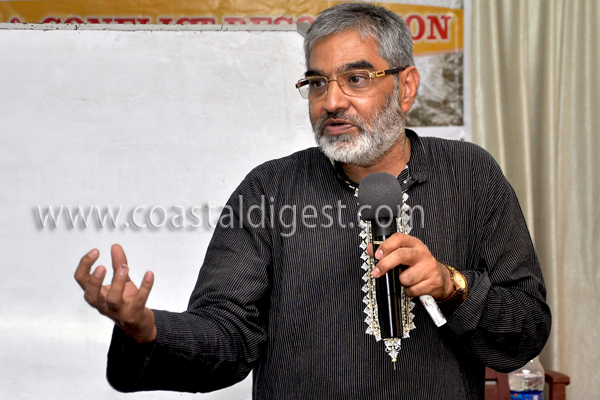
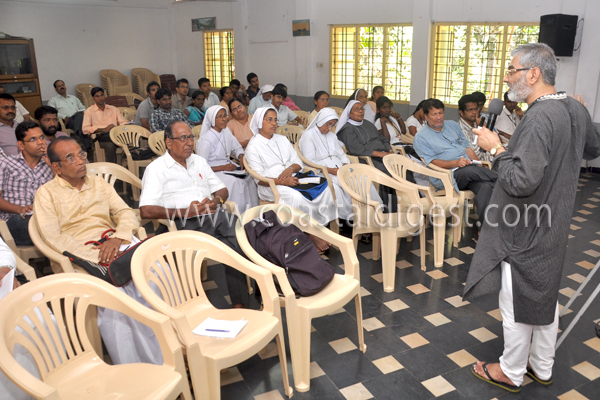
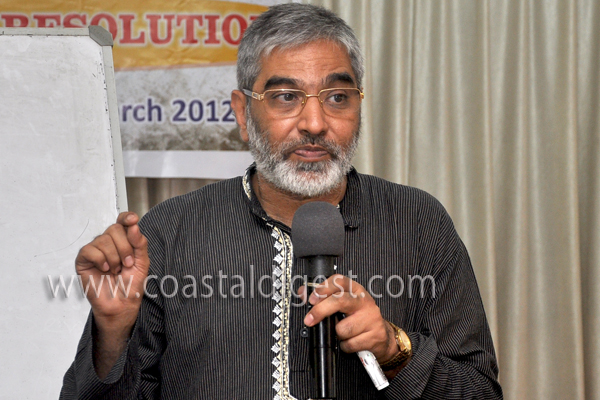
Mangalore, March 28: Communalism is rampant not just in India but in other South Asian countries like Pakistan and Bangladesh too. While condemning communalism, one must condemn the idea of communalism itself and not a particular type of communalism perpetrated by a particular group or religious ideology, said Irfan Engineer, advocate and Director, Institute for Peace Studies and Conflict, Mumbai.
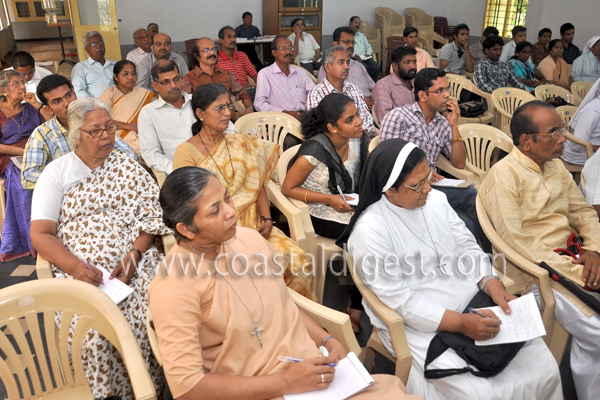
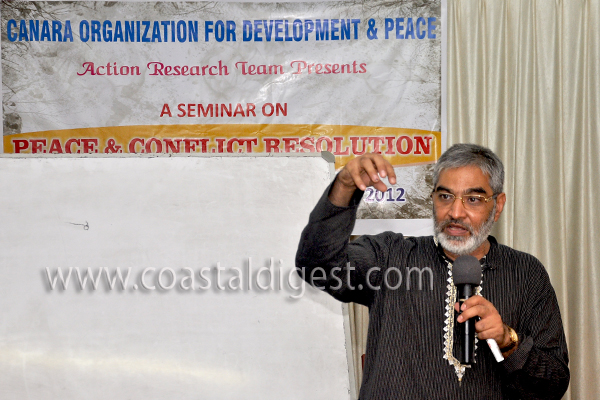
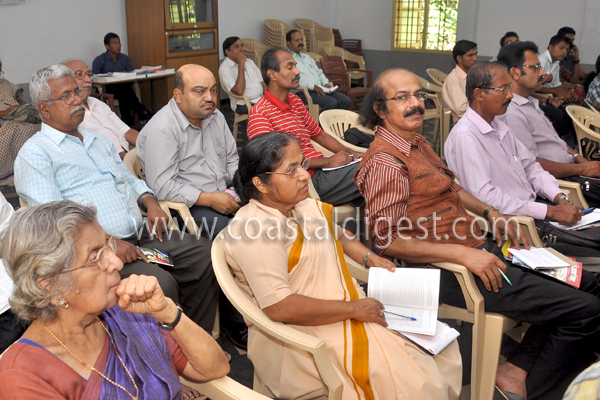
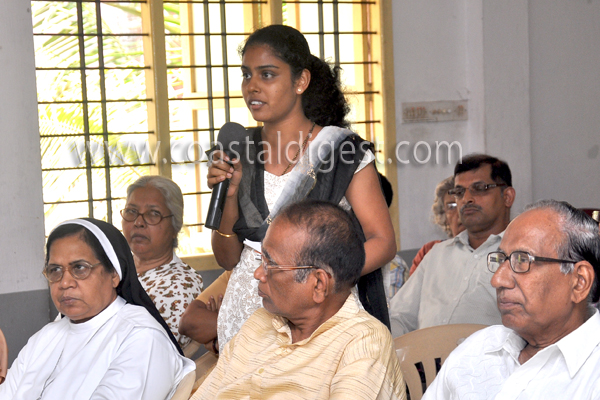
He was speaking at a seminar on Peace and Conflict Resolution organised by Canara Organisation for Development and Peace in Mangalore on Wednesday.
Stating that communalism exists in Pakistan and Bangladesh too, Mr. Engineer said “In Pakistan, the Taliban and Lashkar-e-Toiba are to be blamed for communalism. The rights of minority Hindus are not being protected there. In Bangladesh, I would condemn Jamaat-e-Islami for the communalism existing there. All those political organisations which victimize innocent people anywhere in the world are to be condemned”, he said.
Mr. Engineer also said that although he may not agree with the concept of M F Hussain's controversial painting or Salman Rushdie's controversial writings, he defends their right to say what they want to, as they are exercising the value of liberty that secular constitutions vouch for. “One should have the right to say things about me even if they offend me,” he said.
Shedding light on the concept of 'Hindutva' ideology, Mr. Engineer said that according to its own conceptualizers such as M S Golwalkar, V D Savarkar and others, it is 'a political strategy and has got nothing to do with religion'. He substantiated his claim by citing the tricolor hoisting issue at Eidgah Maidan at Hubli. “Show me one RSS office where the national tricolor is hoisted any day in the year. They have no regard for the tricolor as they are against the Constitution of India as a whole. The BJP which made a hue and cry about the issue then, forgot about it after coming to power,” he said.
Mr. Engineer said that the RSS 'creates' its targets and works accordingly. “If there are no terrorists they will create terrorists so that they get a pretext to attack Muslims. If there is no New Life Church, they will create one. They want New Life to exist. They will finance people to make sure that these things happen. The blast probes in Malegaon and other places have revealed that RSS made its men don Muslim appearances and carried out the bomb blasts. They 'create' Muslim and Christian extremists. They thrive on the idea of playing on emotions and projecting wrong history,” Mr. Engineer claimed.
Talking about communalism in the pre-Independence era, Mr. Engineer said that primarily two types of nationalism concepts emerged at the time to challenge the British imperialism. “On one hand, there was the feudal system that was followed in the country for long which had also traditional and religious affiliations to it. On the other hand, there was the secular inclusive nationalism. The Hindu Maha Sabha and the Muslim League were parties that represented this religious and traditional nationalism and parties such as the Indian National Congress of Gandhiji and Nehru, Dr Ambedkar's Republican Party of India, Bhagat Singh's Hindustan Socialist Republican Association, the Communist Party of India etc proposed secular nationalism. Even today, the former wants to defend their traditions which would mean inequality. However, India as a whole has a history of opposing hierarchy traditions. When people talk about 'Indian Nationalism' why don't they consider Buddhism, Jainism, Basavanna's and Charvaka's teachings? Aren't they part of Indian nationalism too?” Mr. Engineer questioned.
Stressing that there is a need to bring about a change in attitude as far as communalism is concerned, Mr. Engineer said “Although innocents are killed during communal riots, most people do not feel bad about the fact that lives have been lost. They see these losses of lives in the prism of communalism. If a Muslim dies in a communal riot, an average Hindu says that the country is now one terrorist less. A mindset has been created by communal forces which have resulted in people justifying the killings although they feel sorry when they see an innocent human die in a vehicle accident. This attitude and mindset needs to be changed,” he said.

Comments
Add new comment