Dalits flay police for labelling Vaittal as naxal

April 1, 2012
Mangalore, April 2: Dalitha Hakkugala Horata Samiti, Belthangady taluk president Shekhar l took police to task for labelling Dalit student Vittal Malekudiaya as a naxal supporter in the absence of proper evidence.

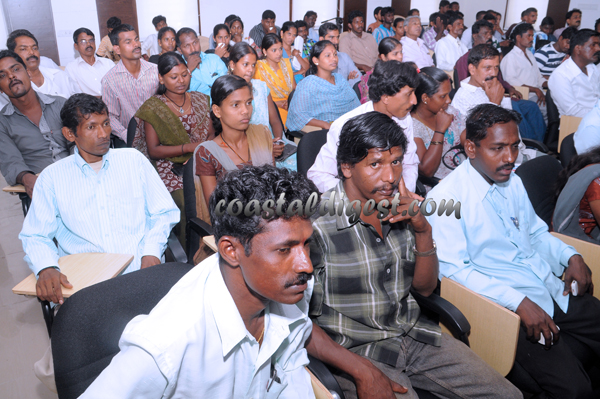
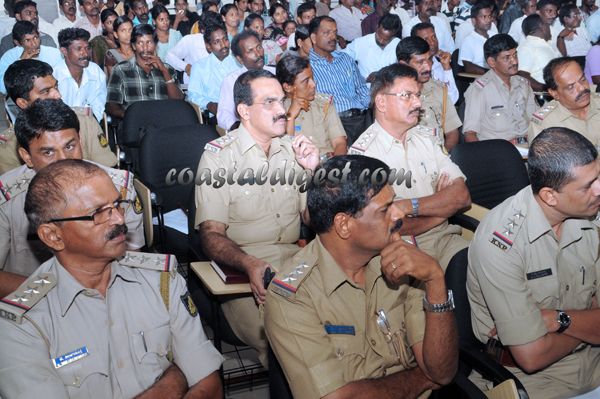
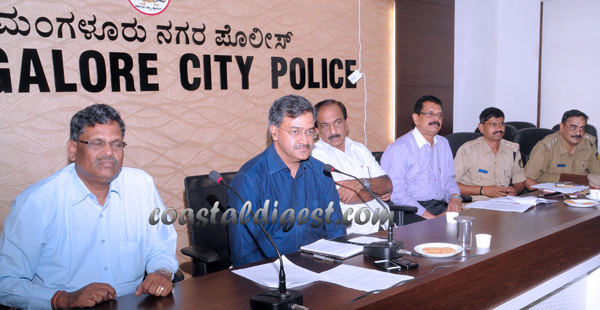
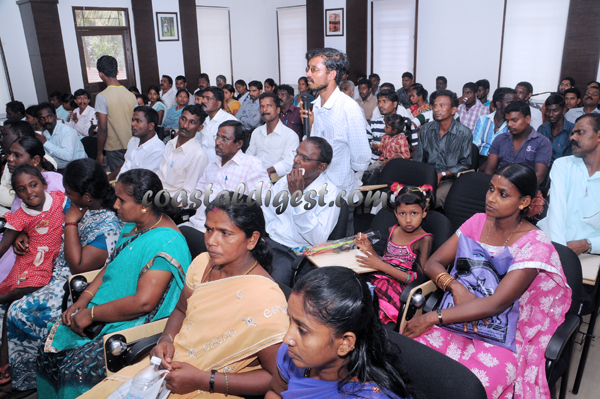
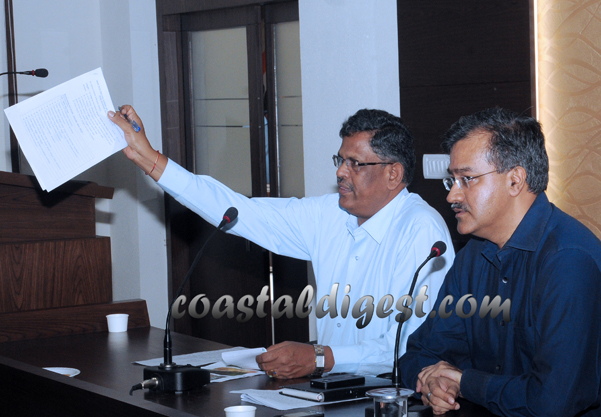
At the SC/ST monthly grievance meeting organized at the old commissioner office meeting hall on Sunday, he sought the status of the complaint lodged by one Ishwari against the circle inspector of Belthangady police station as he had verbally abused her when she stepped into the police station seeking justice.

Responding to this, SP Abhishek Goyal said no action has been taken due to lack of proper witnesses. On what grounds was the only graduate from Malekudiya community , Vittala Malekudiya arrested? Shekhar questioned . Is it wrong on the part of a person to store sugar, tea powder and other rations in his home? .The Anti Naxal Force (ANF)has traced only ration items and a book pertaining to the biography of freedom fighter Bhagath Singh.

How can they claim that Vittala was a strong supporter of Naxalites? He questioned, alleging that Anti Naxal Force had put Vitalla Malekudiya's name in the Naxalites list only to receive funds from the government. Responding to that, SP Abhishek Goyal said the ANF and Poilce department were two separate entities. ANF had arrested Vittala Malekudiya and handed him over to Belthangady police station. Blaming the police Department for the same is not fair as the district police is not connected to this at all. Whether he was a Naxal supporter or not will be decided by the court, he said.

The Police did not allow Vittala's mother to talk to him when he was in police custody, saying a court order was needed.

When Dalit leaders claimed that their life had worsened after the entry of the ANF team , SP Abhishek Goyal questioned Dalits about whether there were Naxalites in the Belthangady region or not.

Irked over the question ,Shekhar L said only the Police Department should answer such questions and not the public. If the SP is not able to answer the question , he should step down , he opined. Immediately ASP Prabhakar got up and warned him not to make such comments.
Though some leaders stood in favour of Shekhar many Dalit leaders said there were other issues that needed to be discussed and Vittala's arrest should be discussed separately.

Later, Dalit leaders placed some of their grievances at the meeting and received answers from the department. Civil Rights Enforcement cell (CREC) SP Sarvotham Pai and others were present at the meeting.

Complaints should be given FIR copy

Whether it is an atrocity case or any other case, a copy of the First Investigation Report should be given to each complainant. Every police station should follow this procedure, said Police Commissioner Seemanth Kumar Singh here on Sunday.

He was speaking at the SC/ST monthly grievance meeting at the Commissioner's Office.

When Dalith leader M A Naik revealed that Moodbidri police station had not provided a First Investigation Report copy to a complainant, Singh said the complainant should know the status of his case and police stations should instil confidence in the complainant by doing justice and give him a copy of the FIR.

Another Dalit leader, Vittal VB revealed that traffic police constable Jithin Kumar had collected Rs 1000 from him without giving him a receipt. Hearing this Seemanth Kumar Singh questioned why he had paid the constable such a huge amount without getting a receipt. He promised to inquire about the incident.

DSS district convener SP Anand alleged that a sub inspector at Mangalore South Police station threatened a dalith woman not to enter the station in future. However , when the Commissioner asked the particular sub inspector , she rubbished the complaint.
St_1

St_2

St_3

St_4

St_5

Comments

Add new comment

  • Coastaldigest.com reserves the right to delete or block any comments.
  • Coastaldigset.com is not responsible for its readers’ comments.
  • Comments that are abusive, incendiary or irrelevant are strictly prohibited.
  • Please use a genuine email ID and provide your name to avoid reject.
News Network
February 5,2026

In an era where digital distractions are the primary rival to academic excellence, the Karnataka Education Department is taking the fight directly to the living room. As the SSLC (Class 10) annual examinations loom, officials have launched a localized "digital strike" to ensure students aren't losing their competitive edge to scrolling or soap operas.

The 7-to-9 Lockdown

The department has issued a formal directive urging—and in some cases, enforcing via home visits—a total blackout of mobile phones and television sets between 7:00 PM and 9:00 PM. This two-hour window is being designated as "sacred study time" across the state until the examinations conclude on April 2.

Key Pillars of the Initiative:

•    Doorstep Advocacy: Teachers are transitioning from classrooms to living rooms, meeting parents to explain the psychological benefits of a distraction-free environment.

•    Parental Accountability: The campaign shifts the burden of discipline from the student to the household, asking parents to lead by example and switch off their own devices.

•    The Timeline: The focus remains sharp on the upcoming exam block, scheduled from March 18 to April 2.

"The objective is simple: uninterrupted focus. We are reclaiming the evening hours for the students, ensuring their environment is as prepared as their minds," stated a senior department official.

Student vs. Reality

While the student community has largely welcomed the "forced focus"—with many admitting they lack the willpower to ignore notifications—the move has sparked a debate on enforceability. Without a "TV Police," the success of this initiative rests entirely on the shoulders of parents and the persuasive power of visiting educators.

Comments

Add new comment

  • Coastaldigest.com reserves the right to delete or block any comments.
  • Coastaldigset.com is not responsible for its readers’ comments.
  • Comments that are abusive, incendiary or irrelevant are strictly prohibited.
  • Please use a genuine email ID and provide your name to avoid reject.
News Network
February 3,2026

Bengaluru: Following reports of fresh Nipah virus (NiV) cases in West Bengal and heightened vigilance across parts of Southeast Asia, the Karnataka Health Department has placed the state on high alert and activated emergency preparedness protocols.

Health officials said enhanced surveillance measures have been initiated after two healthcare workers in Barasat, West Bengal, tested positive for the virus earlier this month. While no cases have been reported in Karnataka so far, authorities said the state’s past exposure to Nipah outbreaks and high inter-state mobility warranted preventive action.

Officials have directed district health teams to intensify monitoring, particularly at hospitals and points of entry, and to ensure early detection and isolation of suspected cases.

High Mortality Virus with Multiple Transmission Routes

Nipah virus is a zoonotic disease that can spread from animals to humans and has a reported fatality rate ranging between 60 and 75 per cent. Fruit bats, also known as flying foxes, are the natural reservoirs of the virus and can transmit it by contaminating food sources with saliva or urine.

Known modes of transmission include:

•    Contaminated food: Consumption of fruits partially eaten by bats or raw date-palm sap
•    Animal contact: Exposure to infected pigs or other animals
•    Human-to-human transmission: Close contact with body fluids of infected persons, particularly in healthcare settings

Symptoms and Disease Progression

The incubation period typically ranges from 4 to 14 days, though delayed onset has also been reported. Early symptoms often resemble common viral infections, making prompt clinical suspicion critical.

•    Initial symptoms: Fever, headache, body aches, fatigue, sore throat
•    Progressive symptoms: Drowsiness, disorientation, altered mental state
•    Severe stage: Seizures, neck stiffness and acute encephalitis, which can rapidly progress to coma

Public Health Advisory

The Health Department has issued precautionary guidelines urging the public to adopt risk-avoidance practices to prevent any local spillover.

Do’s
•    Wash fruits thoroughly before consumption
•    Drink boiled and cooled water
•    Use protective equipment while handling livestock
•    Maintain strict hand hygiene

Don’ts
•    Avoid fruits found on the ground or showing bite marks
•    Do not consume beverages made from raw tree sap, including toddy
•    Avoid areas with dense bat populations
•    Do not handle sick or dead animals

Preparedness Measures

Officials confirmed that isolation wards are being readied in major government hospitals and that medical staff are being sensitised to identify early warning signs.

“There is no cause for panic, but there is a need for heightened vigilance,” a senior health official said, adding that there is currently no approved vaccine or specific antiviral treatment for Nipah, and care remains largely supportive.

Comments

Add new comment

  • Coastaldigest.com reserves the right to delete or block any comments.
  • Coastaldigset.com is not responsible for its readers’ comments.
  • Comments that are abusive, incendiary or irrelevant are strictly prohibited.
  • Please use a genuine email ID and provide your name to avoid reject.
News Network
February 1,2026

Bengaluru: Karnataka Deputy Chief Minister D K Shivakumar on Sunday criticised the Union Budget presented by Finance Minister Nirmala Sitharaman, claiming it offered no tangible benefit to the state.

Though he said he was yet to study the budget in detail, Shivakumar asserted that Karnataka had gained little from it. “There is no benefit for our state from the central budget. I was observing it. They have now named a programme after Mahatma Gandhi, after repealing the MGNREGA Act that was named after him,” he said.

Speaking to reporters here, the Deputy Chief Minister demanded the restoration of MGNREGA, and made it clear that the newly enacted rural employment scheme — VB-G RAM G — which proposes a 60:40 fund-sharing formula between the Centre and the states, would not be implemented in Karnataka.

“I don’t see any major share for our state in this budget,” he added.

Shivakumar, who also holds charge of Bengaluru development, said there were high expectations for the city from the Union Budget. “The Prime Minister calls Bengaluru a ‘global city’, but what has the Centre done for it?” he asked.

He also drew attention to the problems faced by sugar factories, particularly those in the cooperative sector, alleging a lack of timely decisions and support from the central government.

Noting that the Centre has the authority to fix the minimum support price (MSP) for agricultural produce, Shivakumar said the Union government must take concrete steps to protect farmers’ interests.

Comments

Add new comment

  • Coastaldigest.com reserves the right to delete or block any comments.
  • Coastaldigset.com is not responsible for its readers’ comments.
  • Comments that are abusive, incendiary or irrelevant are strictly prohibited.
  • Please use a genuine email ID and provide your name to avoid reject.