No religion advocates greed over need: Justice Hegde

April 7, 2012

Naif_2

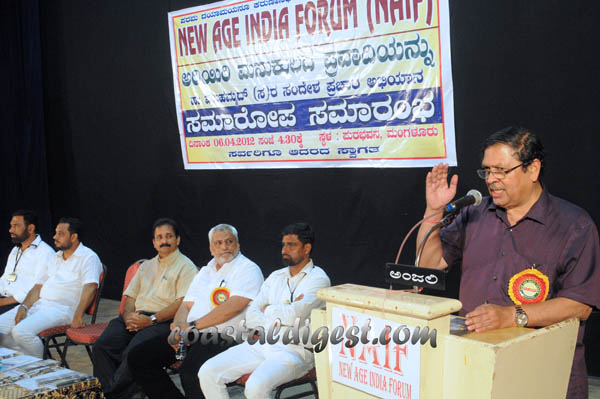
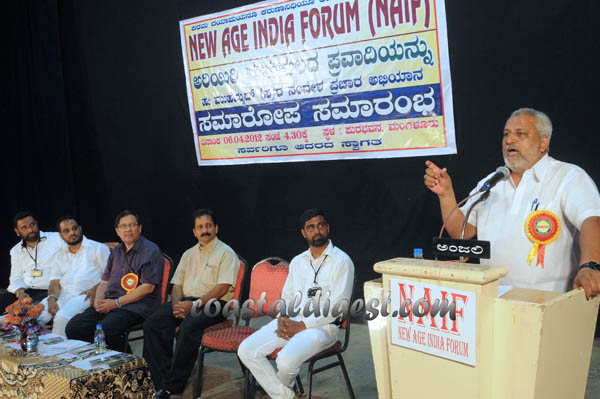
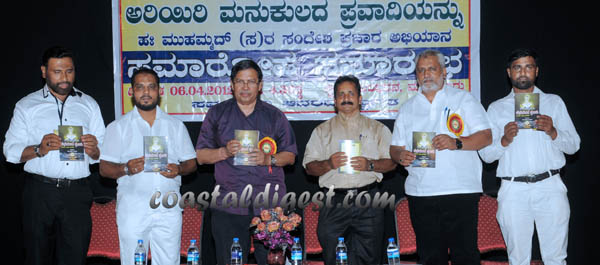
Mangalore, April 7: No religion advocates snatching of others' property for one's own selfish needs said Justice N Santosh Hegde, Former Lokayukta.

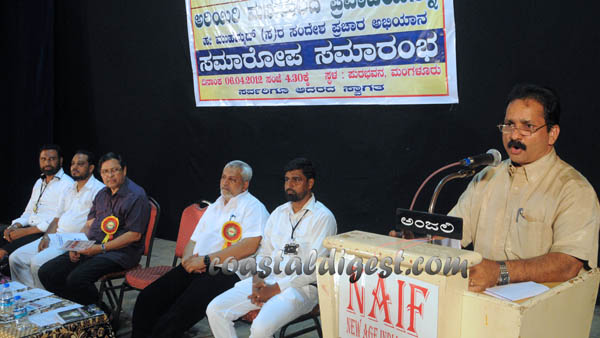
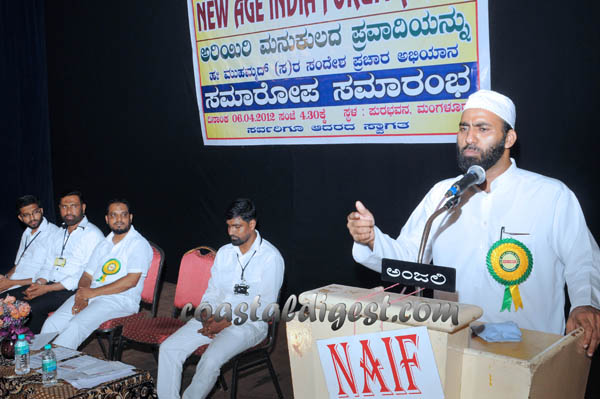
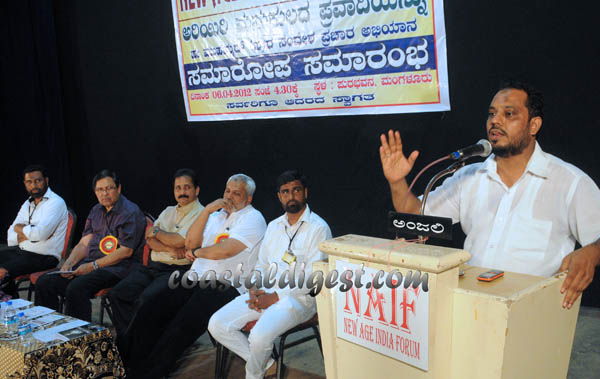
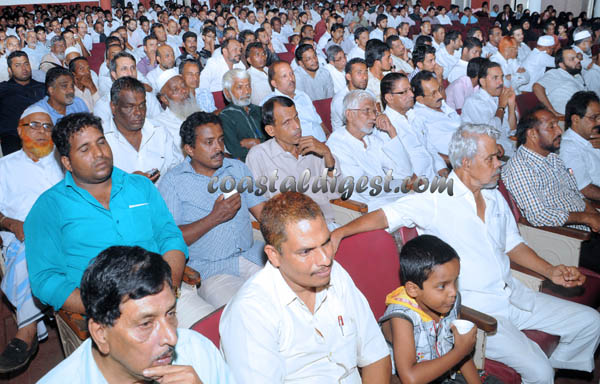
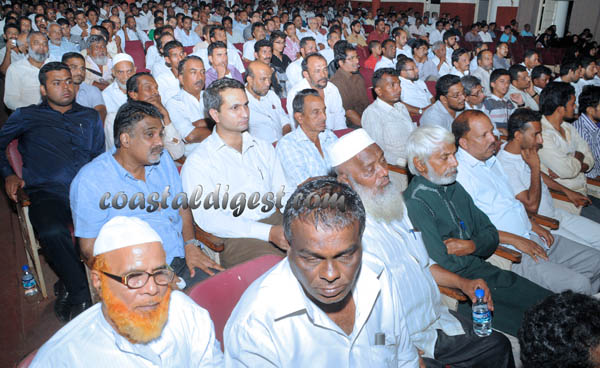
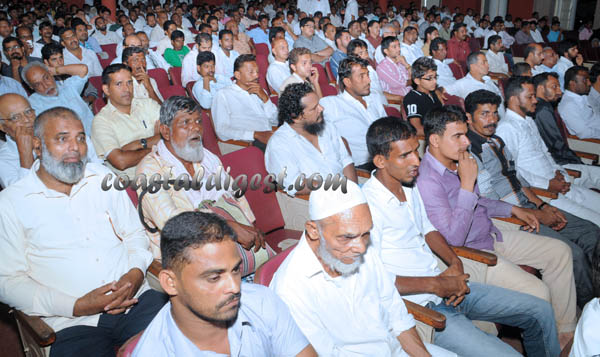
He was speaking at the valedictory programme of the month-long 'Know the Prophet (pbuh) of Mankind' campaign held by New Age India Forum (NAIF) in Mangalore on Friday.

People, especially youth, must understand the real meaning of contentment. The satisfaction one gets by pocketing someone else's property is not real. The feeling you get in whatever little you earn by way of legitimate means is contentment in the true sense of the term, Mr. Hegde said.

He also said that when people stop being human, they actually do not represent their respective religions. “They are not followers of 'dharma' at all”, he said.

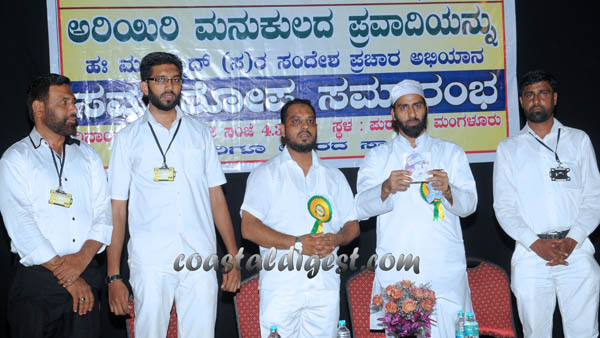
Mr. Hegde also released a book on Prophet Muhammad (peace be upon him) in Kannada penned by Rafiyuddin Kudroli, Chief of NAIF.

Dr. M M James, Director, BTL Institute, said that Prophet Muhammad (pbuh) worked towards removal of caste system in the society and transformed people. “A community is different from a crowd. Prophet Muhammad (pbuh) built a community. He removed economic inequality too through the system of Zakath and abolition of interest. I feel the credit for initiation of cooperative principles should also be given to him”, Dr. James said.

In his presidential address, Abdussalam Puthige, Editor in chief, Vartha Bharathi, said that today social and economic imbalance is widespread across the globe. “Every day about 50,000 people die due to poverty and malnourishment all over the world. To tackle poverty, what our politicians do is push down the poverty line”, he said.

Stating that mere orations and speeches do not transform a society, Mr. Puthige said that was the case, India would have been the most problem free and poverty free country in the world as no country in the world possesses orators and preachers in the world in such a big number as India. Comparing Prophet Muhammad's (pbuh) idea of social justice with that of Karl Marx, Mr. Puthige said that unlike Marx, Prophet Muhammad (pbuh) gave equal importance to all three components i.e. person, society and system.


“Prophet Muhammad (pbuh) opposed traditional values and blind beliefs that were being followed in Arabia from generations. Even after becoming a head of the state, he lived a poor man's life. He did not like people standing up for him in reverence. He called his followers as 'sahabas' which means companions and not students. By saying that one need not bow down and touch one's parents' feet, he taught human dignity to people in the sense that he/she need not bow down or budge to anyone, not even to the ruler of the state. He introduced the concept of 'Khilafat' wherein he gave rights to people to question the Caliph even with regard to his expenses of his food and clothing. The 'Khalifa' is not a ruler. He is a representative. The Prophet (pbuh) introduced the system of Zakath and made it clear that members of his family and lineage will not be eligible for the Zakath money”, Mr. Puthige said.

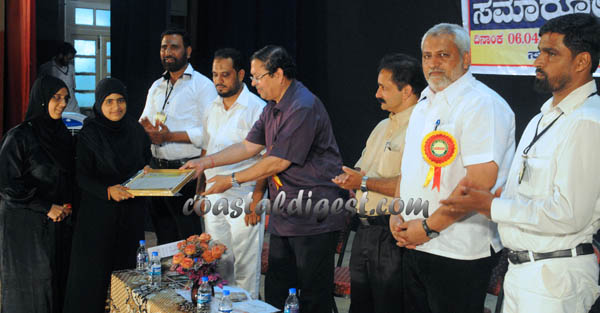
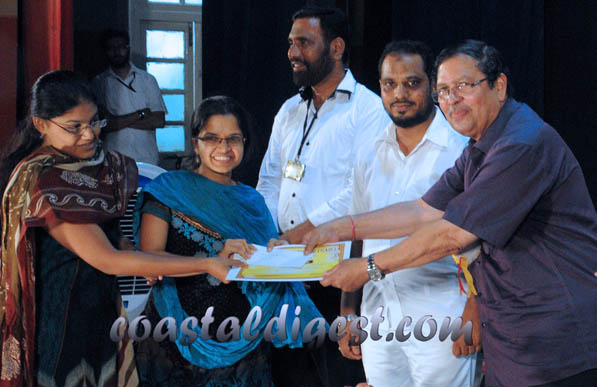
Prizes were given away on the occasion to winners of quiz and essay competitions conducted by NAIF as part of the campaign. Competitions were held in separate categories for Muslims and non-Muslims.


Winners of quiz competition (Non-Muslim category):

I Place: Navya Shetty, Shruthi (St Agnes College, Mangalore)

II Place: Michelle Vineet D'Souza, Savitha Suvarna (Yenepoya Nursing College, Mangalore)

III Place: Smitha, Navya (PA Engineering College, Deralakatte)

Winners of quiz competition (Muslim category):

I Place: Muzahath, Tasneema (St Agnes College, Mangalore)

II Place: Bibi Shahina, Ashirabi (Govt. First Grade College, Balmatta)

Winners of essay competition:

I Place: Satish KUmar Pundikai

Naif_1

Naif_3

Naif_4

Naif_5

Naif_6

Naif_7

Naif_8

Naif_9

Naif_10

Naif_11

Naif_12

Naif_13

Naif_14

Naif_15

Comments

Add new comment

  • Coastaldigest.com reserves the right to delete or block any comments.
  • Coastaldigset.com is not responsible for its readers’ comments.
  • Comments that are abusive, incendiary or irrelevant are strictly prohibited.
  • Please use a genuine email ID and provide your name to avoid reject.
News Network
February 4,2026

shettigar.jpg

An Indian resident who won the Dh20 million (approximately Rs 50 crore) jackpot in Abu Dhabi's Big Ticket draw has told of his joy at sharing his life-changing fortune with a friend.

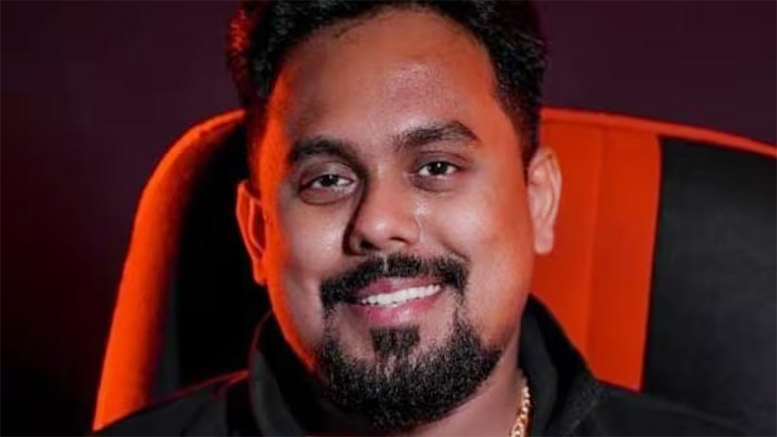
Shanthanu Shettigar, a shop manager in Muscat, regularly buys tickets for the monthly grand prize draw with one of his closest friends – and the pair won on February 3.

Mr Shettigar, 33, who is from Udyavar in Udupi district of the southern state of Karnataka and has lived in the Omani capital for eight years, said he was left speechless after learning of his success.

“When I first moved to Muscat, many of my colleagues were purchasing Big Ticket, which encouraged me to give it a try,” he said.

“I started buying tickets on my own, and later began sharing tickets with a close friend. The ticket that brought me this win was one we purchased together.”

“Like most people, I receive a lot of spam calls, and I was fully absorbed in my work as well. I knew the live draw was taking place tonight, but I never imagined my name would be announced,” he said.

“When I realised it was real and that I had won, I was honestly speechless. It still hasn’t fully sunk in, but I’m extremely happy.”

Mr Shettigar is not sure how he will spend his share of the money, but encouraged others to take part.

“This win was completely unexpected, so I want to take some time to think things through before deciding what to do next,” he said.

“I would definitely encourage others to participate with Big Ticket, whether with family or friends – you never know when your moment might come.”

The Big Ticket was established in 1992 with an initial first prize of Dh1 million. It is one of the most popular monthly raffles in the UAE.

It has transformed the lives of many people across the Emirates and beyond.

Entry to the Big Ticket Millionaire is Dh500. Tickets can be bought online or at counters at Zayed International Airport and Al Ain Airport.

Comments

Add new comment

  • Coastaldigest.com reserves the right to delete or block any comments.
  • Coastaldigset.com is not responsible for its readers’ comments.
  • Comments that are abusive, incendiary or irrelevant are strictly prohibited.
  • Please use a genuine email ID and provide your name to avoid reject.
News Network
February 5,2026

Bengaluru: As air quality continues to worsen across several parts of the city, hospitals in Bengaluru are reporting a steady rise in patients suffering from respiratory illnesses such as asthma, bronchitis and Chronic Obstructive Pulmonary Disease (COPD), health officials and doctors said.

Data from the Suvarna Arogya Suraksha Trust (SAST) shows that 3,891 patients received treatment for respiratory ailments between April and November 2024. The figure rose to 4,187 during the same period in 2025.

Private hospitals, too, are witnessing a 10–15 per cent year-on-year increase in such cases.

While doctors caution that the rise cannot be attributed solely to air pollution, a significant number of patients are non-smokers with no prior history of respiratory disease.

“Nearly 70 per cent of the patients we see are non-smokers with no previous respiratory issues. When other causes are ruled out, air pollution emerges as the most likely factor,” said Dr Manjunath PH, consultant interventional pulmonologist at a hospital in Kengeri.

Doctors noted that patient footfall spikes during the winter months and around Deepavali, when air quality typically worsens.

“There is a clear correlation between poor air quality and the rise in cases. People commonly present with persistent cough, breathlessness and irritation of the respiratory tract, indicating the impact of polluted air on their health,” said Dr Sheetal Chaurasia, consultant in pulmonary medicine at a private hospital in Whitefield.

Dr Chaurasia added that respiratory tract infections are also on the rise.

“Poor air quality leads to chronic airway inflammation, making the airways more vulnerable to infections. We are seeing an increase in both upper and lower respiratory tract infections,” she said.

Patients with pre-existing respiratory conditions remain the worst affected.

“For those already diagnosed with respiratory illnesses, deteriorating air quality significantly worsens the condition. Both the frequency and severity of attacks increase sharply,” said Dr Vandana P, a pulmonologist at a hospital on Bannerghatta Road.

Doctors also flagged a worrying trend of rising respiratory problems among younger adults and children.

To reduce exposure, they advised people to wear masks while travelling on two-wheelers or autos and ensure adequate ventilation at home to minimise indoor air pollution.

Comments

Add new comment

  • Coastaldigest.com reserves the right to delete or block any comments.
  • Coastaldigset.com is not responsible for its readers’ comments.
  • Comments that are abusive, incendiary or irrelevant are strictly prohibited.
  • Please use a genuine email ID and provide your name to avoid reject.
News Network
February 5,2026

In an era where digital distractions are the primary rival to academic excellence, the Karnataka Education Department is taking the fight directly to the living room. As the SSLC (Class 10) annual examinations loom, officials have launched a localized "digital strike" to ensure students aren't losing their competitive edge to scrolling or soap operas.

The 7-to-9 Lockdown

The department has issued a formal directive urging—and in some cases, enforcing via home visits—a total blackout of mobile phones and television sets between 7:00 PM and 9:00 PM. This two-hour window is being designated as "sacred study time" across the state until the examinations conclude on April 2.

Key Pillars of the Initiative:

•    Doorstep Advocacy: Teachers are transitioning from classrooms to living rooms, meeting parents to explain the psychological benefits of a distraction-free environment.

•    Parental Accountability: The campaign shifts the burden of discipline from the student to the household, asking parents to lead by example and switch off their own devices.

•    The Timeline: The focus remains sharp on the upcoming exam block, scheduled from March 18 to April 2.

"The objective is simple: uninterrupted focus. We are reclaiming the evening hours for the students, ensuring their environment is as prepared as their minds," stated a senior department official.

Student vs. Reality

While the student community has largely welcomed the "forced focus"—with many admitting they lack the willpower to ignore notifications—the move has sparked a debate on enforceability. Without a "TV Police," the success of this initiative rests entirely on the shoulders of parents and the persuasive power of visiting educators.

Comments

Add new comment

  • Coastaldigest.com reserves the right to delete or block any comments.
  • Coastaldigset.com is not responsible for its readers’ comments.
  • Comments that are abusive, incendiary or irrelevant are strictly prohibited.
  • Please use a genuine email ID and provide your name to avoid reject.