



New Delhi, Feb 8: Asserting that nuclear security remains a continuing concern, India today said terrorism, especially nuclear terrorism is an international threat that should not serve national strategy and pitched for a global response in this regard.
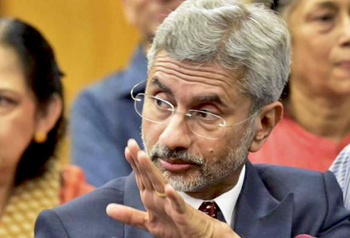
"Events that have unfolded around us, more so in the past couple of decades, have highlighted that terrorism remains the most pervasive and serious challenge to international security. If access to nuclear technology changes State behaviour, it is only to be expected that it would also impact on non-state calculations.
"Nuclear security, therefore, will be a continuing concern, especially as terrorist groups and non-state actors strike deeper roots and explore different avenues to spread terror. Developing a comprehensive global response is the highest priority," he said.
Maintaining that nuclear energy will continue to play an important role in tackling challenges of inclusive growth and climate change, he said, "On the other hand, the negative consequences of atomic power also cannot be ignored. The world has witnessed the immense destructive power of the atom.
"We hope that such horrors will never be repeated and cannot overstate the importance of countries with nuclear weapons to be responsible."
Jaishankar also warned of the dangers of discriminating among terrorists -– good or bad or even yours and mine -- are increasingly recognised. "Terrorism is an international threat that should not serve national strategy. Nuclear terrorism even more so," he said.
During his address at the meeting, which is being attended by delegates from over 100 countries including the US, the UK, France and Pakistan, he also referred to the strong credentials of India, which is looking for a membership in Nuclear Suppliers Group (NSG), in promoting the peaceful use of nuclear energy.
Advocating a two-pronged strategy, Jaishankar said the first is to clamp down on terrorism in general and the second to restrict unauthorised access to nuclear technology and material.
"Responsible States provide political commitments to assure each other that they will protect nuclear material under their control from falling into the wrong hands... "However, political commitments alone cannot ensure the safety and security of nuclear material," the foreign secretary said while referring to several treaty instruments which provide a firm basis for translating broader political commitments into legally binding measures.
The treaties include the International Convention for the Suppression of Acts of Nuclear Terrorism (ICSANT) and the Convention on the Physical Protection of Nuclear Material (CPPNM) and its Amendment, he said.
Talking about history of nuclear technology, he said, "The power of the atom is wondrous. It has benefited mankind in myriad ways. The scientific community has played a vital role in harnessing nuclear energy and radiological sources for societal needs. The ancient Indian philosopher and sage, Kanada, propounded the concept of 'atom' in the sixth century.
"Today, two-and-a-half millennia later, as a country possessing advanced nuclear technologies, India is at the forefront in promoting the peaceful use of nuclear energy. We have actively associated with and contributed to the IAEA and other multilateral forums dealing with all aspects of nuclear material."
Talking about international obligations adhered to by India, he said every year at the First Committee of the UN General Assembly, India co-sponsors a resolution on "measures to prevent terrorists from acquiring weapons of mass destruction" that has been adopted by consensus since 2002.
As a State Party to these instruments, India has demonstrated its faith in these instruments and believes that their universalisation is a global good, he said, adding effective implementation of the obligations under UN Security Council Resolutions 1540 and 1373 is another important pillar in the fight against terrorism and proliferation of weapons of mass destruction (WMD).
Stressing that Indian experts have contributed positively and substantively to the drafting of various documents and playbooks of the GICNT, Jaishankar said India remains committed to furthering the objectives of the global initiative.
"We have been contributing to the Nuclear Security Fund of the IAEA. India's Global Centre for Nuclear Energy Partnership (GCNEP) is available to interested States for training courses and capacity building programmes in the field of nuclear and radiological security," he said.
Observing that there are 13 instruments that are widely accepted as benchmarks for a State's commitment to combat terrorism, Jaishankar said, "What is more important is that adhering parties display the required sincerity to implement their commitment.
"The existence of a number of conventions and treaties dealing with nuclear terrorism underscores the fact that there is no one instrument that can deal with this issue in a holistic manner.
"The march of globalisation means that combating nuclear terrorism in isolation or as part of a small group is unlikely to yield the desired results," he said, adding in this the GICNT plays an important role as it works towards building worldwide communities of experts and practitioners in order to have a consistent and coherent approach towards the issue of nuclear terrorism.
He further said given its impressive membership of 86 partner countries and five international organisations, the GICNT is expected to play an important role in providing an effective international platform for consolidating and disseminating the technical expertise and best practices to respond to malicious acts by terrorists.
The Implementation and Assessment Group (IAG) and the other working groups of the GICNT, namely, Nuclear Detection Working Group (NDWG), Response and Mitigation Working Group (RMWG) and Nuclear and Forensics Working Group (NFWG) have established themselves as the drivers for taking forward the important work of the Global Initiative, Jaishankar said.
The membership of these groups represent the entire spectrum of relevant stakeholders -- the scientific community, law enforcement agencies, first responders to nuclear security events, prosecutors and the judicial fraternity and of course, key decision-makers from the diplomatic community, he said. He also hoped the Comprehensive Convention on International Terrorism which was proposed by India in 1996, would be adopted soon.


Comments
Add new comment