



Oxford professor, Islamic scholar Tariq Ramadan held in France on rape charge

Agencies
February 3, 2018

Paris, Feb 3: Tariq Ramadan, a prominent Swiss academic and renowned professor of contemporary Islamic studies at the University of Oxford, was charged in France with rape on Friday, based on accusations made against him four months ago by two women.

The 55-year-old theologian and philosopher, was placed under formal investigation on charges of rape and rape of a vulnerable person, according to a spokesman for the French judiciary. He was taken into custody on Wednesday as part of a preliminary inquiry in Paris.

Ramadan, a Swiss citizen is also the grandson of Hassan al-Banna, the founder of Egypt’s Muslim Brotherhood movement. A regular face on French television, he is the most prominent figure to be held in France after the women, emboldened by the #MeToo campaign to stamp out sexual assault and harassment, went to the police. According to those two women, Ramadan violently assaulted them in hotel rooms in Lyon and Paris in 2009 and 2012 after conferences.

The professor – who made his name as an author and commentator on modern Islam, as well as advising successive British governments on Islam and society – has denied the separate accusations by the two women.

After two days of questioning Ramadan, who is married with four children, was brought before three magistrates who have been assigned to the case, suggesting that he is facing an extensive investigation, judicial sources told AFP. In the full investigation opened this week, French magistrates must establish whether he should stand trial.

The first police complaint against Ramadan was made by Henda Ayari, 41, a feminist activist who previously practised a conservative strain of Islam and now heads the women’s organisation Les Libératrices.

She filed a complaint with prosecutors in Rouen in October 2017 alleging rape, sexual violence, harassment and intimidation by Ramadan. She said she was assaulted by him in a Paris hotel room after a conference in 2012.

“He choked me so hard that I thought I was going to die,” she told Le Parisien newspaper. “He slapped me because I resisted. He raped me. I felt I was in extreme danger.” She said she had gone to talk to him at his hotel after the conference as a kind of “big brother figure”.

Ayari had described the rape in a chapter of her 2016 book, I Chose to be Free, giving her assailant a made-up name and saying that an intellectual had attacked her in a hotel room. She fought back but was insulted, slapped and treated violently, she wrote.

After the Harvey Weinstein sexual assault and harassment scandal broke in the autumn of 2017 Ayari said she had decided to go public and name Ramadan. She made a formal complaint on October 20.

A few days later an anonymous disabled woman, a Muslim convert, accused the academic of raping and violently assaulting her in a hotel room in the south-eastern city of Lyon in 2009.

The French edition of Vanity Fair magazine, whose staff met the 45-year-old woman, said her lawsuit against Ramadan described “blows to the face and body, forced sodomy, rape with an object and various humiliations, including being dragged by the hair to the bathtub and urinated on”.

The woman said Ramadan had asked to meet her in the bar of the Hilton hotel in Lyon, where he was taking part in a conference in 2009. She had previously been in contact with him online for some months, seeking advice.

In online messages and chats, Ramadan had told the woman he was living separately from his wife, the French newspaper Le Monde reported.

In the hotel bar Ramadan had complained that people had recognised him and were staring at him, suggesting they instead go to his room. He took the stairs while the woman, who walks with a crutch after a car accident, took the lift. The woman said she was attacked very soon after entering the room, sustaining blows to the face, arms, breasts and stomach before being repeatedly raped.

During three hours of testimony in Paris on Thursday, the woman — referred to in the media by the pseudonym “Christelle” — recounted her allegations to the judge in Ramadan’s presence.

Rejecting her testimony outright, Ramadan refused to sign the official summary of the account, sources close to the case said. “Both sides maintained their positions,” a legal source said.

Eric Morain, Christelle’s lawyer, said the charges were “an important step” after what he called “a painstaking three-month investigation, 48 hours of police questioning and a confrontation with my client”.

Police have interviewed dozens of people close to both Ramadan and the two women, and examined email and social media exchanges between them.

Ramadan, a senior research fellow of St Antony’s College, took leave of absence from Oxford University last November “by mutual agreement” after the two women filed complaints.

He continues to head the Islamic Institute for Ethical Training in France. Ayari was placed under police protection in November after receiving death threats.

Comments

Add new comment

  • Coastaldigest.com reserves the right to delete or block any comments.
  • Coastaldigset.com is not responsible for its readers’ comments.
  • Comments that are abusive, incendiary or irrelevant are strictly prohibited.
  • Please use a genuine email ID and provide your name to avoid reject.
News Network
February 1,2026

Bengaluru: Karnataka Deputy Chief Minister D K Shivakumar on Sunday criticised the Union Budget presented by Finance Minister Nirmala Sitharaman, claiming it offered no tangible benefit to the state.

Though he said he was yet to study the budget in detail, Shivakumar asserted that Karnataka had gained little from it. “There is no benefit for our state from the central budget. I was observing it. They have now named a programme after Mahatma Gandhi, after repealing the MGNREGA Act that was named after him,” he said.

Speaking to reporters here, the Deputy Chief Minister demanded the restoration of MGNREGA, and made it clear that the newly enacted rural employment scheme — VB-G RAM G — which proposes a 60:40 fund-sharing formula between the Centre and the states, would not be implemented in Karnataka.

“I don’t see any major share for our state in this budget,” he added.

Shivakumar, who also holds charge of Bengaluru development, said there were high expectations for the city from the Union Budget. “The Prime Minister calls Bengaluru a ‘global city’, but what has the Centre done for it?” he asked.

He also drew attention to the problems faced by sugar factories, particularly those in the cooperative sector, alleging a lack of timely decisions and support from the central government.

Noting that the Centre has the authority to fix the minimum support price (MSP) for agricultural produce, Shivakumar said the Union government must take concrete steps to protect farmers’ interests.

Comments

Add new comment

  • Coastaldigest.com reserves the right to delete or block any comments.
  • Coastaldigset.com is not responsible for its readers’ comments.
  • Comments that are abusive, incendiary or irrelevant are strictly prohibited.
  • Please use a genuine email ID and provide your name to avoid reject.
News Network
February 5,2026

In an era where digital distractions are the primary rival to academic excellence, the Karnataka Education Department is taking the fight directly to the living room. As the SSLC (Class 10) annual examinations loom, officials have launched a localized "digital strike" to ensure students aren't losing their competitive edge to scrolling or soap operas.

The 7-to-9 Lockdown

The department has issued a formal directive urging—and in some cases, enforcing via home visits—a total blackout of mobile phones and television sets between 7:00 PM and 9:00 PM. This two-hour window is being designated as "sacred study time" across the state until the examinations conclude on April 2.

Key Pillars of the Initiative:

•    Doorstep Advocacy: Teachers are transitioning from classrooms to living rooms, meeting parents to explain the psychological benefits of a distraction-free environment.

•    Parental Accountability: The campaign shifts the burden of discipline from the student to the household, asking parents to lead by example and switch off their own devices.

•    The Timeline: The focus remains sharp on the upcoming exam block, scheduled from March 18 to April 2.

"The objective is simple: uninterrupted focus. We are reclaiming the evening hours for the students, ensuring their environment is as prepared as their minds," stated a senior department official.

Student vs. Reality

While the student community has largely welcomed the "forced focus"—with many admitting they lack the willpower to ignore notifications—the move has sparked a debate on enforceability. Without a "TV Police," the success of this initiative rests entirely on the shoulders of parents and the persuasive power of visiting educators.

Comments

Add new comment

  • Coastaldigest.com reserves the right to delete or block any comments.
  • Coastaldigset.com is not responsible for its readers’ comments.
  • Comments that are abusive, incendiary or irrelevant are strictly prohibited.
  • Please use a genuine email ID and provide your name to avoid reject.
News Network
January 23,2026

oscar.jpg

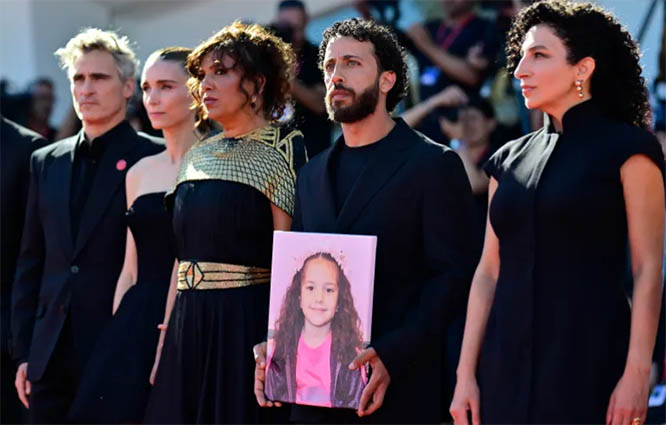
The Voice of Hind Rajab, inspired by the tragic final moments of a young Palestinian girl killed by Israeli fire in Gaza, has been nominated for an Academy Award in the Best International Feature Film category.

Directed by Tunisian filmmaker Kaouther Ben Hania, the film recounts the true story of five-year-old Hind Rajab, who lost her life in January 2024 while fleeing Israeli bombardment with her family.

The film features the real audio of Hind’s desperate call to the Palestinian Red Crescent Society, where she pleaded for help moments before the vehicle she was in was struck by 355 bullets.

The haunting narrative begins with a brief call made from the besieged Tel al-Hawa neighborhood of Gaza, where gunfire and armored vehicles drowned out every sound.

After witnessing the brutal killing of her family, she made a trembling call, her voice reduced to a whisper as she spoke of the massacre and her unbearable loneliness as the sole survivor.

Premiering at the Venice International Film Festival in September 2025, The Voice of Hind Rajab garnered widespread acclaim, receiving a record-setting 23-minute standing ovation and the Silver Lion Grand Jury Prize, the festival’s second-highest honor.

In her acceptance speech, Ben Hania dedicated the film to humanitarian workers and first responders in Gaza, emphasizing that Hind's voice symbolizes countless civilians affected by war.

She aims to give voice to victims often reduced to mere statistics, highlighting the broader suffering of civilians in war zones.

The film’s Oscar nomination underscores its powerful storytelling and ethical approach to depicting real-life tragedy, making it a crucial piece of contemporary cinema.

It serves not only as a narration of individual tragedy but also as an artistic and documentary response to the silence and censorship that often overshadow West Asian struggles and wars.

Using an innovative method she calls docufiction, Ben Hania bridges unvarnished reality and narrative structure, creating a work that is both artistically valuable and socially impactful.

Born in 1977 in Sidi Bouzid—later the epicenter of the Arab revolution—her background profoundly influenced her worldview and artistic approach.

She is a graduate of the Higher School of Audiovisual Arts of Tunis, Pantheon-Sorbonne University, and La Fémis in Paris, where her studies equipped her with the technical and theoretical tools needed to address complex subjects. 

Comments

Add new comment

  • Coastaldigest.com reserves the right to delete or block any comments.
  • Coastaldigset.com is not responsible for its readers’ comments.
  • Comments that are abusive, incendiary or irrelevant are strictly prohibited.
  • Please use a genuine email ID and provide your name to avoid reject.