



Palestinian expatriates exempt from labor action

November 25, 2013

Palestinian_expatriates

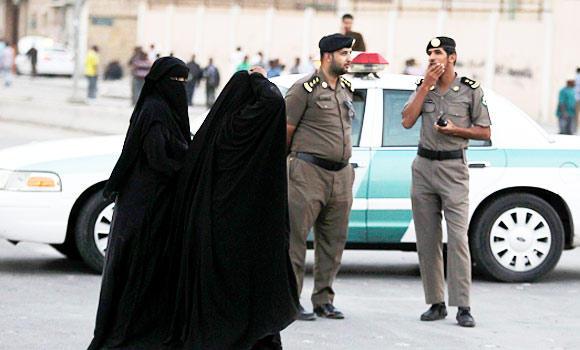
Jeddah, Nov 25: Saudi Arabia has exempted Palestinian and Burmese nationals who are found to be in violation of the new labor laws from deportation.

Palestinian and Burmese nationals comprise the bulk of expatriates who are unable to return to their countries due to internal strife in their countries.

Over half a million Palestinian expatriates currently live and work in the Kingdom, mainly in administrative positions and in professional categories.

Most Palestinians hold travel documents from Jordan, Lebanon, Syria, Iraq and Egypt.

Ambassador Imad Shaath, consul general of Palestine in Jeddah, told Arab News on Sunday that Palestinian expatriates who are in possession of Egyptian passports are exempted from the deportation process. The envoy expressed gratitude to the Saudi government for the kind gesture. He said that Palestinians with travel documents issued by Egypt would be able to apply for renewals at the Egyptian Consulate in Jeddah upon recommendation from the Palestinian Consulate.

He also thanked the Egyptian authorities for processing the documents of the huge number of Palestinian expatriates, saying that a sizable number of Palestinians had regularized their status.

He hailed Labor Minister Adel Fakeih for allocating a special quota for Palestinian expats under the Nitaqat scheme in the private sector.

The vast majority of Palestinians live in the Western region, some of whom have lived in the Kingdom for 60 years. Many of them have Egyptian passports.

Comments

Add new comment

  • Coastaldigest.com reserves the right to delete or block any comments.
  • Coastaldigset.com is not responsible for its readers’ comments.
  • Comments that are abusive, incendiary or irrelevant are strictly prohibited.
  • Please use a genuine email ID and provide your name to avoid reject.
News Network
November 28,2025

fire.jpg

Several Syrians were killed and more than two dozen others injured in Israeli strikes on the outskirts of Damascus, amid intensified incursions by the occupying regime since the fall of former president Bashar al-Assad and the rise of Hayat Tahrir al-Sham (HTS) rule.

Syrian state TV reported that the casualties occurred during an overnight Israeli assault involving helicopters and drones on the town of Beit Jinn in the Damascus countryside. The attack followed an Israeli military unit’s entry into the town, where they were surrounded by local residents, leading to gunfire and direct confrontations.

According to the report, “The occupation army’s helicopters and artillery shelled Beit Jinn, located at the foothills of Mount Hermon, resulting in 13 martyrs and 25 injured civilians.” The broadcaster did not specify the full extent of damage.

Al-Ikhbariyah Syria confirmed that the shelling coincided with Israeli soldiers entering Beit Jinn, while artillery pounded surrounding areas. The broadcaster stated that the escalation began after local residents clashed with an Israeli patrol that had infiltrated the southern town and “kidnapped” three young men.

Following a two-hour exchange of heavy fire, Israeli forces withdrew and repositioned on the hill of Butt al-Warda at the town’s outskirts.

Israeli media acknowledged that six soldiers were wounded in the clashes—three of them seriously—describing the confrontation as a “sudden ambush” that forced the deployment of reserve units and air support to secure an exit route. No further details were provided.

The aggression has fueled renewed displacement from Beit Jinn, with residents fleeing to nearby villages amid increasingly frequent Israeli attacks.

The raid came just a day after Israeli troops carried out another ground incursion into Umm al-Luqas village in Quneitra province. According to SANA, an Israeli unit in four vehicles entered the village, raided several homes, and later withdrew.

Syria condemned the repeated incursions as violations of the 1974 Disengagement Agreement and UN resolutions, urging the international community to enforce compliance and pressure Israel to halt its operations and withdraw fully.

Israel has expanded its attacks across Syrian territory following the collapse of the Assad government last year. Prime Minister Benjamin Netanyahu has reportedly instructed his forces to push deeper into Syrian territory and seize strategic positions.

Meanwhile, critics say the HTS-led interim government’s inaction and growing normalization gestures toward Israel have emboldened Tel Aviv to intensify its military operations. HTS, formerly linked to al-Qaeda, seized control of Damascus last December, formally ending Assad’s rule.

Comments

Add new comment

  • Coastaldigest.com reserves the right to delete or block any comments.
  • Coastaldigset.com is not responsible for its readers’ comments.
  • Comments that are abusive, incendiary or irrelevant are strictly prohibited.
  • Please use a genuine email ID and provide your name to avoid reject.