PM Modi Arrives In Manila To Attend ASEAN-India, East Asia Summits

Agencies
November 12, 2017

Manila, Nov 12:  Prime Minister Narendra Modi arrived in Manila today on a three-day visit to attend the ASEAN-India and East Asia summits where he is likely to reassert India's push for crafting a global approach to deal with growing challenge of terrorism and radicalisation besides pitching for steps to boost regional trade.

The thorny issue of China's aggressive military maneuver in the disputed South China Sea, North Korea's nuclear missile tests and overall security architecture in the region will come up for discussion during the ASEAN summit on Tuesday, diplomats said.

On the sidelines of the main events, Prime Minister Modi is likely to have a series of bilateral meetings with a number of leaders including US President Donald Trump, Japanese Prime Minister Shinzo Abe, Australian Prime Minister Malcolm Turnbull and Russian Premier Dmitry Medvedev.

A host of leaders including Myanmar State Counsellor Aung San Suu Kyi, Cambodian Prime Minister Hun Sen, Malaysian Prime Minister Najib Razak, Singaporean Prime Minister Lee Hsien Loong and New Zealand Prime Minister Jacinda Ardern have already arrived in the city to attend deliberations at the ASEAN (Association of Southeast Asia Nations), a grouping of 10 influential countries.

The ties between India and ASEAN have been on an upswing in the last few years with focus being on ramping up cooperation in the areas of trade and investment as well as security and defence.

"Every single country in the ASEAN region wants India to be more engaged in the region in every possible way. That is the real synergy we have with ASEAN," Indian Ambassador to Philippines Jaideep Mazumdar told PTI.

The US, France and Japan have been pitching for a larger role by India in the strategically key Indo-Pacific region where China has been trying to increase its military presence.

Mr Majumdar said terrorism is going to be one of the issues that will be discussed not only during the ASEAN summit but also at the East Asia summit. He said several documents are going to be adopted with an aim to contain terrorism including one on stopping money laundering for the purpose of terrorism.

While ASEAN summit is likely to focus more on trade and investment related issues, leaders at the East Asia Summit are expected to delve deep into issues relating to maritime security, terrorism, non-proliferation and migration.

Apart from the 10 ASEAN Member states, East Asia Summit includes India, China, Japan, Republic of Korea, Australia, New Zealand, the United States and Russia.

PM Modi will address the ASEAN-India and East Asia summits on Tuesday. He would also take part in special celebrations of the 50th anniversary of ASEAN.

The ASEAN region along with India together comprises combined population of 1.85 billion people, which is one fourth of the global population and their combined GDP has been estimated at over USD 3.8 trillion.

Investment from ASEAN to India has been over USD 70 billion in the last 17 years accounting for more than 17 per cent of India's total FDI. India's investment in ASEAN during the same period has been more than USD 40 billion.

India's proposal to host an international conference on countering radicalisation may also be discussed during the deliberations at Manila as New Delhi is now looking at finalising the dates for the conclave.

Prime minister Modi will also participate in the ASEAN business and investment summit as well as a meeting of leaders of Regional Comprehensive Economic Partnership (RCEP).

The RCEP, comprising 10-member ASEAN bloc and six other countries - India, China, Japan, South Korea, Australia and New Zealand - is engaged in negotiations for a free trade pact.

In his maiden visit to the Philippines as the prime minister, PM Modi will also attend a reception by the Indian community and visit the International Rice Research Institute (IRRI) and Mahavir Philippines Foundation.

Comments

Add new comment

  • Coastaldigest.com reserves the right to delete or block any comments.
  • Coastaldigset.com is not responsible for its readers’ comments.
  • Comments that are abusive, incendiary or irrelevant are strictly prohibited.
  • Please use a genuine email ID and provide your name to avoid reject.
News Network
February 3,2026

wind.jpg

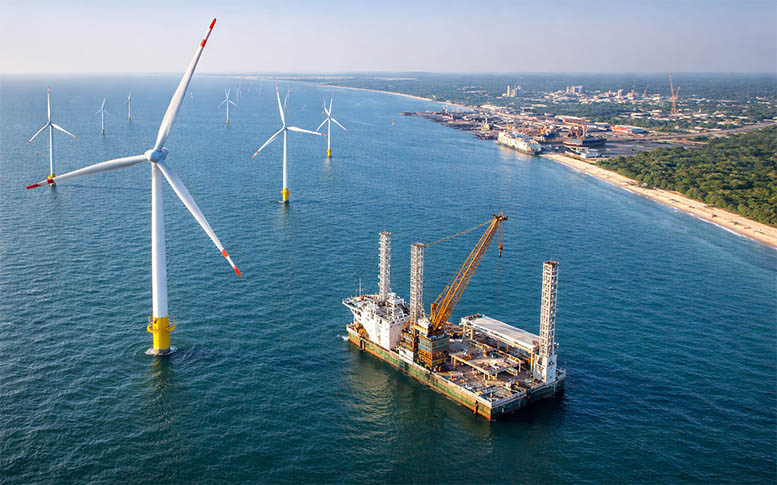
Dakshina Kannada MP Capt Brijesh Chowta has urged the Centre to give high priority to offshore wind energy generation along the Mangaluru coast, citing its strategic importance to India’s green energy and port-led development goals.

Raising the issue in the Lok Sabha under Rule 377, Chowta said studies by the National Institute of Oceanography have identified the Mangaluru coastline as part of India’s promising offshore wind ‘Zone-2’, covering nearly 6,490 sq km. He noted that the region’s relatively low exposure to cyclones and earthquakes makes it suitable for long-term offshore wind projects and called for its development as a dedicated offshore wind energy zone.

Highlighting the role of New Mangalore Port, Chowta said its modern infrastructure, multiple berths and heavy cargo-handling capacity position it well as a logistics hub for transporting and assembling large wind energy equipment.

He also pointed to the presence of major industrial units such as MRPL, OMPL, UPCL and the Mangaluru SEZ, which could serve as direct buyers of green power through power purchase agreements, improving project viability and speeding up execution.

With Karnataka’s peak power demand crossing 18,000 MW in early 2025, Chowta stressed the need to diversify renewable energy sources. He added that offshore wind projects in the Arabian Sea are strategically safer compared to the cyclone-prone Bay of Bengal.

Calling the project vital to India’s target of 500 GW of renewable energy by 2030, Chowta urged the Ministry of New and Renewable Energy to initiate resource assessments, pilot projects and stakeholder consultations at the earliest.

Comments

Add new comment

  • Coastaldigest.com reserves the right to delete or block any comments.
  • Coastaldigset.com is not responsible for its readers’ comments.
  • Comments that are abusive, incendiary or irrelevant are strictly prohibited.
  • Please use a genuine email ID and provide your name to avoid reject.
News Network
January 23,2026

oscar.jpg

The Voice of Hind Rajab, inspired by the tragic final moments of a young Palestinian girl killed by Israeli fire in Gaza, has been nominated for an Academy Award in the Best International Feature Film category.

Directed by Tunisian filmmaker Kaouther Ben Hania, the film recounts the true story of five-year-old Hind Rajab, who lost her life in January 2024 while fleeing Israeli bombardment with her family.

The film features the real audio of Hind’s desperate call to the Palestinian Red Crescent Society, where she pleaded for help moments before the vehicle she was in was struck by 355 bullets.

The haunting narrative begins with a brief call made from the besieged Tel al-Hawa neighborhood of Gaza, where gunfire and armored vehicles drowned out every sound.

After witnessing the brutal killing of her family, she made a trembling call, her voice reduced to a whisper as she spoke of the massacre and her unbearable loneliness as the sole survivor.

Premiering at the Venice International Film Festival in September 2025, The Voice of Hind Rajab garnered widespread acclaim, receiving a record-setting 23-minute standing ovation and the Silver Lion Grand Jury Prize, the festival’s second-highest honor.

In her acceptance speech, Ben Hania dedicated the film to humanitarian workers and first responders in Gaza, emphasizing that Hind's voice symbolizes countless civilians affected by war.

She aims to give voice to victims often reduced to mere statistics, highlighting the broader suffering of civilians in war zones.

The film’s Oscar nomination underscores its powerful storytelling and ethical approach to depicting real-life tragedy, making it a crucial piece of contemporary cinema.

It serves not only as a narration of individual tragedy but also as an artistic and documentary response to the silence and censorship that often overshadow West Asian struggles and wars.

Using an innovative method she calls docufiction, Ben Hania bridges unvarnished reality and narrative structure, creating a work that is both artistically valuable and socially impactful.

Born in 1977 in Sidi Bouzid—later the epicenter of the Arab revolution—her background profoundly influenced her worldview and artistic approach.

She is a graduate of the Higher School of Audiovisual Arts of Tunis, Pantheon-Sorbonne University, and La Fémis in Paris, where her studies equipped her with the technical and theoretical tools needed to address complex subjects. 

Comments

Add new comment

  • Coastaldigest.com reserves the right to delete or block any comments.
  • Coastaldigset.com is not responsible for its readers’ comments.
  • Comments that are abusive, incendiary or irrelevant are strictly prohibited.
  • Please use a genuine email ID and provide your name to avoid reject.
News Network
January 23,2026

Mangaluru: The Karnataka Government Polytechnic (KPT), Mangaluru, has achieved autonomous status from the All India Council for Technical Education (AICTE), becoming the first government polytechnic in the country to receive such recognition in its 78-year history. The status was granted by AICTE, New Delhi, and subsequently approved by the Karnataka Board of Technical Education in October last year.

Officials said the autonomy was conferred a few months ago. Until recently, AICTE extended autonomous status only to engineering colleges, excluding diploma institutions. However, with a renewed national focus on skill development, several government polytechnics across India have now been granted autonomy.

KPT, the second-largest polytechnic in Karnataka, was established in 1946 with four branches and has since expanded to offer eight diploma programmes, including computer science and polymer technology. The institution is spread across a 19-acre campus.

Ravindra M Keni, the first dean of the institution, told The Times of India that AICTE had proposed autonomous status for polytechnic institutions that are over 25 years old. “Many colleges applied. In the first round, 100 institutions were shortlisted, which was further narrowed down to 15 in the second round. We have already completed one semester after becoming an autonomous institution,” he said. He added that nearly 500 students are admitted annually across eight three-year diploma courses.

Explaining the factors that helped KPT secure autonomy, Keni said the institution has consistently recorded 100 per cent admissions and placements for its graduates. He also noted its strong performance in sports, with the college emerging champions for 12 consecutive years, along with active student participation in NCC and NSS activities.

Autonomous status allows KPT to design industry-oriented curricula, conduct examinations, prepare question papers, and manage academic documentation independently. The institution can also directly collaborate with industries and receive priority funding from AICTE or the Ministry of Education. While academic autonomy has been granted, financial control will continue to rest with the state government.

“There will be separate committees for examinations, question paper setting, boards of studies, and boards of examiners. The institution will now have the freedom to conduct admissions without government notifications and issue its own marks cards,” Keni said, adding that new academic initiatives would be planned after a year of functioning under the autonomous framework.

Comments

Add new comment

  • Coastaldigest.com reserves the right to delete or block any comments.
  • Coastaldigset.com is not responsible for its readers’ comments.
  • Comments that are abusive, incendiary or irrelevant are strictly prohibited.
  • Please use a genuine email ID and provide your name to avoid reject.