PM Modi arrives in UK for bilateral meetings, CHOGM

Agencies
April 18, 2018

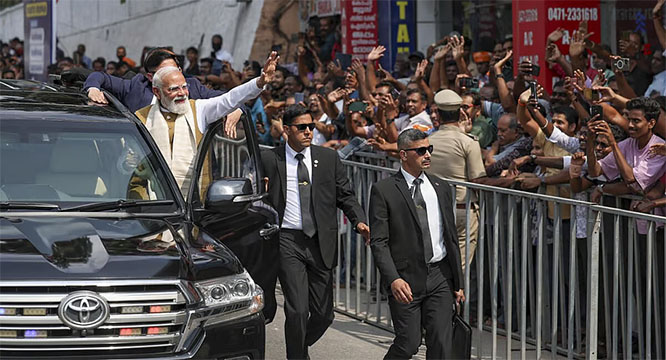
London, Apr 18: Prime Minister Narendra Modi arrived in the UK today for a four-day visit of bilateral engagements as well as multilateral discussions as part of the Commonwealth Heads of Government Meeting (CHOGM).

UK Foreign Secretary Boris Johnson received Modi at the Heathrow airport here.

Johnson said he was "excited" about the growing India-UK bilateral trade and that the visit will help build on "huge economic advantages".

"..thanks to our shared history, we have a living bridge between us… and now we want to build on the incredible tech sector where both India and the UK are making giant strides together," Johnson said in a statement.

Modi is set for a packed day of official engagements today, starting with his bilateral meeting with British Prime Minister Theresa May at 10 Downing Street.

The two leaders are expected to discuss a wide range of issues of mutual interest, including separatism, cross-border terrorism, visas and immigration.

A memorandum of understanding (MoU) on the return of illegal immigrants, which had expired in 2014, will be officially renewed to take into account biometric and other developments in the field, along with a range of nearly a dozen MoUs across different sectors.

Modi will then head to the Science Museum in London to visit the '5000 Years of Science and Innovation' exhibition where he will interact with Indian-origin and other scientists and innovators based in the UK.

The event, hosted by Prince Charles, will include the launch of a new Ayurvedic Centre of Excellence, aimed at creating a first-of-its-kind global network for evidence-based research on yoga and Ayurveda.

A brief stop to garland the Basaveshwara statue -- which Modi had inaugurated during his last visit to the UK in 2015 -- on the banks of the river Thames will then be followed by his second meeting with May at an event hosted by the British prime minister at the Francis Crick Institute.

After an interaction with Indian-origin scientists working on cancer research, malaria and other tropical diseases, both leaders will initiate the India-UK CEOs Forum.

Modi is then scheduled for a private audience with Queen Elizabeth II at Buckingham Palace before the 'Bharat Ki Baat, Sabke Saath' diaspora event, to be telecast live from the iconic Central Hall Westminster in London today.

The event billed as the centrepiece of the 'Living Bridge' theme of the India-UK bilateral visit, will involve Modi addressing questions from across the world which have already been received via social media.

At the end of the live telecast, he will join Heads of Government from 52 other Commonwealth countries at a dinner hosted by the British prime minister as a formal welcome to CHOGM.

This will be followed by the executive session of the heads in London tomorrow before they head to Windsor for the CHOGM retreat, where the world leaders will interact on an informal basis.

This will conclude Modi's UK visit after which he will leave for India.

According to official estimates, the India-UK bilateral trade stands at USD 13 billion, with the UK among the largest G20 investors in India.

Modi's visit will have a particular focus on the India-UK technological partnership as well as an enhanced role in the Commonwealth.

"India's engagement is absolutely brilliant… there is a recognition that the Commonwealth offers a great opportunity for India and within that opportunity lies an opportunity for the rest of the Commonwealth," says Lord Marland, chairman of the Commonwealth Enterprise and Investment Council (CWEIC).

An Indian prime minister will attend the Commonwealth summit, which is held every two years, after a hiatus of nearly a decade, having last attended the 2009 CHOGM in Trinidad and Tobago.

The Indian government has said that Modi's attendance at the summit this year symbolises the country's wider efforts to step up its role across global forums. This stepped-up engagement is likely to take the form of increased activity within the Commonwealth, including greater resources and manpower as well as financial contributions.

Comments

ali
 - 
Wednesday, 18 Apr 2018

feku in uk and daaku in karnataka.

Add new comment

  • Coastaldigest.com reserves the right to delete or block any comments.
  • Coastaldigset.com is not responsible for its readers’ comments.
  • Comments that are abusive, incendiary or irrelevant are strictly prohibited.
  • Please use a genuine email ID and provide your name to avoid reject.
News Network
January 23,2026

Karnataka Governor Thaawarchand Gehlot read only three lines from the 122-paragraph address prepared by the Congress-led state government while addressing the joint session of the Legislature on Thursday, effectively bypassing large sections critical of the BJP-led Union government.

The omitted portions of the customary Governor’s address outlined what the state government described as a “suppressive situation in economic and policy matters” under India’s federal framework. The speech also sharply criticised the Centre’s move to replace the Mahatma Gandhi National Rural Employment Guarantee Act (MGNREGA) with the Viksit Bharat–Guarantee for Rozgar and Ajeevika Mission (Gramin) Act, commonly referred to as the VB-GRAM (G) Act.

Governor Gehlot had earlier conveyed his objection to several paragraphs that were explicitly critical of the Union government. On Thursday, he confined himself to the opening lines — “I extend a warm welcome to all of you to the joint session of the State legislature. I am extremely pleased to address this august House” — before jumping directly to the concluding sentence of the final paragraph.

He ended the address by reading the last line of paragraph 122: “Overall, my government is firmly committed to doubling the pace of the State’s economic, social and physical development. Jai Hind — Jai Karnataka.”

According to the prepared speech, the Karnataka government demanded the scrapping of the VB-GRAM (G) Act, describing it as “contractor-centric” and detrimental to rural livelihoods, and called for the full restoration of MGNREGA. The state government argued that the new law undermines decentralisation, weakens labour protections, and centralises decision-making in violation of constitutional norms.

Key points from the unread sections of the speech:

•    Karnataka facing a “suppressive” economic and policy environment within the federal system

•    Repeal of MGNREGA described as a blow to rural livelihoods

•    VB-GRAM (G) Act accused of protecting corporate and contractor interests

•    New law alleged to weaken decentralised governance

•    Decision-making said to be imposed by the Centre without consulting states

•    Rights of Adivasis, women, backward classes and agrarian communities curtailed

•    Labourers allegedly placed under contractor control

•    States facing mounting fiscal stress due to central policies

•    VB-GRAM (G) Act accused of enabling large-scale corruption

Comments

Add new comment

  • Coastaldigest.com reserves the right to delete or block any comments.
  • Coastaldigset.com is not responsible for its readers’ comments.
  • Comments that are abusive, incendiary or irrelevant are strictly prohibited.
  • Please use a genuine email ID and provide your name to avoid reject.
News Network
February 3,2026

wind.jpg

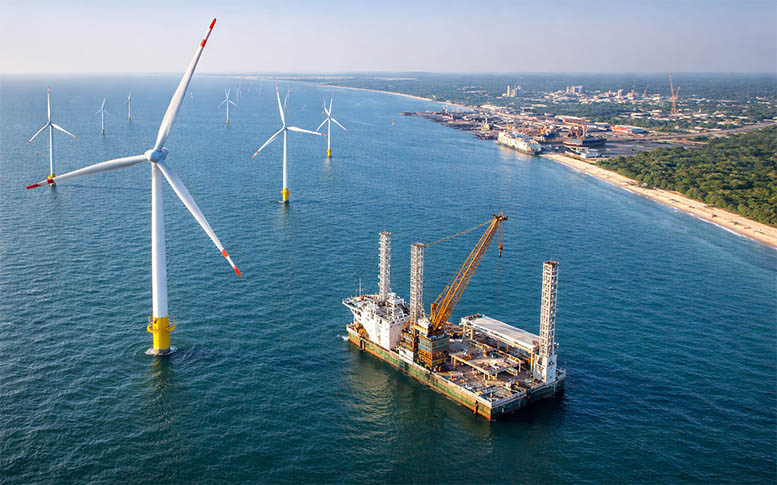
Dakshina Kannada MP Capt Brijesh Chowta has urged the Centre to give high priority to offshore wind energy generation along the Mangaluru coast, citing its strategic importance to India’s green energy and port-led development goals.

Raising the issue in the Lok Sabha under Rule 377, Chowta said studies by the National Institute of Oceanography have identified the Mangaluru coastline as part of India’s promising offshore wind ‘Zone-2’, covering nearly 6,490 sq km. He noted that the region’s relatively low exposure to cyclones and earthquakes makes it suitable for long-term offshore wind projects and called for its development as a dedicated offshore wind energy zone.

Highlighting the role of New Mangalore Port, Chowta said its modern infrastructure, multiple berths and heavy cargo-handling capacity position it well as a logistics hub for transporting and assembling large wind energy equipment.

He also pointed to the presence of major industrial units such as MRPL, OMPL, UPCL and the Mangaluru SEZ, which could serve as direct buyers of green power through power purchase agreements, improving project viability and speeding up execution.

With Karnataka’s peak power demand crossing 18,000 MW in early 2025, Chowta stressed the need to diversify renewable energy sources. He added that offshore wind projects in the Arabian Sea are strategically safer compared to the cyclone-prone Bay of Bengal.

Calling the project vital to India’s target of 500 GW of renewable energy by 2030, Chowta urged the Ministry of New and Renewable Energy to initiate resource assessments, pilot projects and stakeholder consultations at the earliest.

Comments

Add new comment

  • Coastaldigest.com reserves the right to delete or block any comments.
  • Coastaldigset.com is not responsible for its readers’ comments.
  • Comments that are abusive, incendiary or irrelevant are strictly prohibited.
  • Please use a genuine email ID and provide your name to avoid reject.
News Network
January 23,2026

modIKERALA.jpg

Prime Minister Narendra Modi, during his visit to Thiruvananthapuram on Friday, January 23, indicated that the Bharatiya Janata Party (BJP) is aiming to expand its political footprint in Kerala ahead of the Assembly elections scheduled in the coming months.

Speaking at a BJP-organised public meeting, Modi drew parallels between the party’s early electoral gains in Gujarat and its recent victory in the Thiruvananthapuram Municipal Corporation. The civic body win, which ended decades of Left control, was cited by the Prime Minister as a possible starting point for the party’s broader ambitions in the state.

Recalling BJP’s political trajectory in Gujarat, Modi said the party was largely insignificant before 1987 and received little media attention. He pointed out that the BJP’s first major breakthrough came with its victory in the Ahmedabad Municipal Corporation that year.

“Just as our journey in Gujarat began with one city, Kerala’s journey has also started with a single city,” Modi said, suggesting that the party’s municipal-level success could translate into wider electoral acceptance.

The Prime Minister alleged that successive governments led by the Left Democratic Front (LDF) and the United Democratic Front (UDF) had failed to adequately develop Thiruvananthapuram. He accused both fronts of corruption and neglect, claiming that basic infrastructure and facilities were denied to the capital city for decades.

According to Modi, the BJP’s control of the civic body represents a shift driven by public dissatisfaction with the existing political alternatives. He asserted that the BJP administration in Thiruvananthapuram had begun working towards development, though no specific details or timelines were outlined.

Addressing the gathering at Putharikandam Maidan, Modi said the BJP intended to project Thiruvananthapuram as a “model city,” reiterating his party’s commitment to governance-led change.

The Prime Minister’s visit to Kerala also included the inauguration of several development projects and the flagging off of new train services, as the BJP intensifies its political outreach in the poll-bound state.

Comments

Add new comment

  • Coastaldigest.com reserves the right to delete or block any comments.
  • Coastaldigset.com is not responsible for its readers’ comments.
  • Comments that are abusive, incendiary or irrelevant are strictly prohibited.
  • Please use a genuine email ID and provide your name to avoid reject.