For PM Modi-Xi Meet After Tension, India And China Set Aside Formalities

Agencies
April 24, 2018

Apr 24: Prime Minister Narendra Modi will travel to meet Chinese President Xi Jinping this week, as the world's two most-populous countries seek to reduce tensions after a tense border dispute last year.

The "informal summit" between Xi Jinping and PM Modiwill be held Friday and Saturday in Wuhan, the capital of the central province of Hubei, Chinese Foreign Minister Wang Yi said Sunday at a news conference with India External Affairs Minister Sushma Swaraj.

The meeting is part of an intensifying dialogue between the two leaders whose countries comprise more than one-third of the world's population and 18 percent of global gross domestic product. It comes as both powers seek to reduce risk in their regional environments as China faces down U.S. President Donald Trump's threatened trade actions and PM Modi seeks to keep India's economy on track ahead of the 2019 election.

"It is very rare for two major countries like China and India to meet together so frequently," said Qian Feng, a researcher on international relations with Tsinghua University in Beijing. "For both sides, a peaceful border and a mutually beneficial trading partnership are obviously more in line with their interests. For this reason, the two sides are tacitly recovering bilateral relations rapidly."

Xi and PM Modi met last September and are scheduled to meet again in June for the Shanghai Cooperation Organization meeting in China's eastern port city of Qingdao. Both leaders have strong domestic reasons to put tensions aside.

"For China, the ongoing trade war with the U.S. prompted Beijing to adopt a more sensible attitude towards India," Qian Feng said, adding that PM Modi's economic and social reforms have slowed. "The turbulent global economic situation has increased economic risk in India."

The countries' foreign ministers emphasised the broader strategic context behind the meeting. Xi and PM Modi would have "communications of a strategic nature concerning big changes happening in the world," Mr Wang told reporters in Beijing. "They will also exchange views on overall, long-term and strategic matters concerning the future of China-India relations."

The two sides are setting aside formalities for the meeting in the hope of a breakthrough before border tensions resurface, according to Shailesh Kumar, political risk firm Eurasia Group's Asia director.

"The informal nature and timing of the summit indicates that first, both sides want to be able to discuss all topics in a free and cordial manner without the standard formalities," Kumar said. "Second, they want to meet before the summer, when many worry tensions between both armies in the mountain areas could rise again as the weather is less hostile."

The move toward rapprochement was facilitated by a meeting between Xi and PM Modi last September, when they held their first talks since defusing a border stand-off in remote region between India, Bhutan and China's Tibet region. Ms Swaraj, the Indian foreign minister, described peace and tranquility on the countries' border areas as an "essential prerequisite for the smooth development of bilateral relations."

The summit was good news in the short-term for investors in Asia, Mr Kumar said. "Priorities will be to build deeper ties to mitigate any security related disagreements while also establishing a framework to handle any issues as they arise," he said.

Longer term, though, differences between the two powers are likely to resurface. "Distrust is high and tensions will remain, particularly given China's financial involvement in Pakistan, which India sees as a strategic rather than economic engagement that can hurt India," Mr Kumar said.

Tensions have lingered since China defeated India in a brief border war in 1962. The residence of the Tibetan religious leader, the Dalai Lama, in the mountain town of Dharamsala in Northern India has also long angered Beijing.

They've been exacerbated by Beijing's rapid expansion of its political and economic ties in India's backyard through Xi's ambitious Belt and Road infrastructure initiative. Projects include railway building in Pakistan and port projects in Sri Lanka.

Against that backdrop, former Indian foreign secretary S. Jaishankar told India's Asian News International that the summit was "certainly a very bold step."

"The fact that they have agreed on an informal summit shows that the two leaders realise the importance of this relationship," he said. "They have taken on the responsibility themselves on putting it on a better course."

Comments

Add new comment

  • Coastaldigest.com reserves the right to delete or block any comments.
  • Coastaldigset.com is not responsible for its readers’ comments.
  • Comments that are abusive, incendiary or irrelevant are strictly prohibited.
  • Please use a genuine email ID and provide your name to avoid reject.
News Network
January 23,2026

modIKERALA.jpg

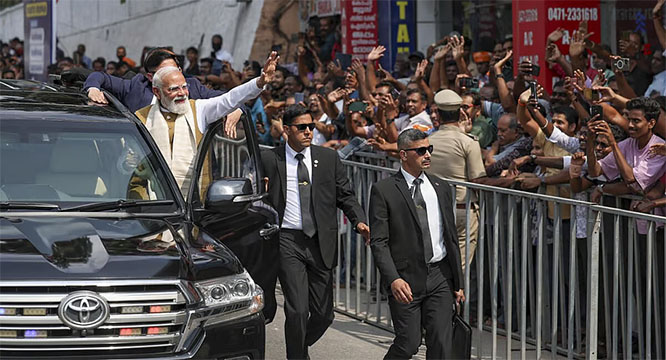
Prime Minister Narendra Modi, during his visit to Thiruvananthapuram on Friday, January 23, indicated that the Bharatiya Janata Party (BJP) is aiming to expand its political footprint in Kerala ahead of the Assembly elections scheduled in the coming months.

Speaking at a BJP-organised public meeting, Modi drew parallels between the party’s early electoral gains in Gujarat and its recent victory in the Thiruvananthapuram Municipal Corporation. The civic body win, which ended decades of Left control, was cited by the Prime Minister as a possible starting point for the party’s broader ambitions in the state.

Recalling BJP’s political trajectory in Gujarat, Modi said the party was largely insignificant before 1987 and received little media attention. He pointed out that the BJP’s first major breakthrough came with its victory in the Ahmedabad Municipal Corporation that year.

“Just as our journey in Gujarat began with one city, Kerala’s journey has also started with a single city,” Modi said, suggesting that the party’s municipal-level success could translate into wider electoral acceptance.

The Prime Minister alleged that successive governments led by the Left Democratic Front (LDF) and the United Democratic Front (UDF) had failed to adequately develop Thiruvananthapuram. He accused both fronts of corruption and neglect, claiming that basic infrastructure and facilities were denied to the capital city for decades.

According to Modi, the BJP’s control of the civic body represents a shift driven by public dissatisfaction with the existing political alternatives. He asserted that the BJP administration in Thiruvananthapuram had begun working towards development, though no specific details or timelines were outlined.

Addressing the gathering at Putharikandam Maidan, Modi said the BJP intended to project Thiruvananthapuram as a “model city,” reiterating his party’s commitment to governance-led change.

The Prime Minister’s visit to Kerala also included the inauguration of several development projects and the flagging off of new train services, as the BJP intensifies its political outreach in the poll-bound state.

Comments

Add new comment

  • Coastaldigest.com reserves the right to delete or block any comments.
  • Coastaldigset.com is not responsible for its readers’ comments.
  • Comments that are abusive, incendiary or irrelevant are strictly prohibited.
  • Please use a genuine email ID and provide your name to avoid reject.
News Network
January 31,2026

Roy.jpg

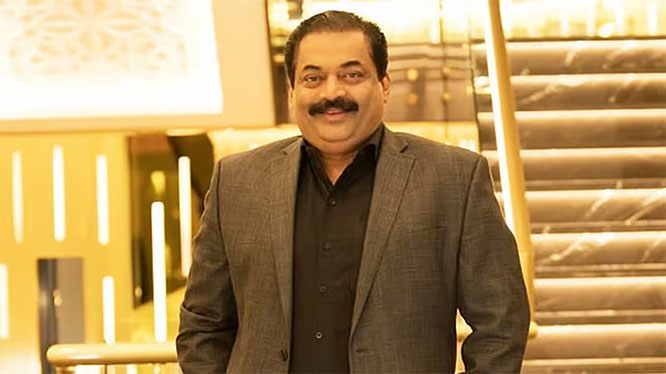
Bengaluru: The shooting incident involving CJ Roy, founder of the Confident Group, has once again put the spotlight on a businessman whose life has swung between flamboyant global success and persistent controversy at home.

Though Roy’s business interests extended across continents, his roots lay firmly in Karnataka. An alumnus of Christ School in Bengaluru, he later moved to Tumakuru to pursue an engineering degree. Those familiar with his early years describe him as intensely ambitious, beginning his career as a salesman at a small electronics firm dealing in computers.

Roy’s entry into large-scale real estate came through the Crystal Group, where he worked closely with Latha Namboothiri and rose from manager to director. However, the launch of the Confident Group in 2005 was clouded by industry speculation. Insiders speak of a fallout involving alleged “benami” properties and claims of deception that ultimately led to his independent venture—an episode Roy spent years trying to distance himself from, according to associates.

A tale of two cities

Roy’s professional trajectory diverged sharply across geographies.

In Dubai, he built a reputation as a bold and efficient developer, completing massive luxury residential projects in record time—some reportedly within 11 months. His rapid project delivery and lavish lifestyle in the Emirates earned him admiration and visibility in the real estate sector.

In Bengaluru, however, his image remained far more fractured. Sources say Roy stayed away from the city for several years amid disputes over unpaid dues to vendors and suppliers. Several projects were allegedly stalled, with accusations of unfulfilled commitments to cement and steel suppliers continuing to follow him.

Roy’s return to Bengaluru’s business and social circles began around 2018, marked by a conscious attempt at rebranding. His appointment as Honorary Consul of the Slovak Republic added diplomatic legitimacy, which he complemented with visible CSR initiatives, including ambulance donations and high-profile charity events.

Heavy police presence in Langford Town

Following the incident, police personnel from the Central division were deployed outside the Confident Group building in Langford Town, which also houses the Slovak Honorary Consulate in Bengaluru.

The otherwise busy premises near Hosur Road wore a deserted look on Friday, reflecting the shock and uncertainty that followed the tragedy.

Comments

Add new comment

  • Coastaldigest.com reserves the right to delete or block any comments.
  • Coastaldigset.com is not responsible for its readers’ comments.
  • Comments that are abusive, incendiary or irrelevant are strictly prohibited.
  • Please use a genuine email ID and provide your name to avoid reject.
News Network
February 3,2026

Bengaluru: Following reports of fresh Nipah virus (NiV) cases in West Bengal and heightened vigilance across parts of Southeast Asia, the Karnataka Health Department has placed the state on high alert and activated emergency preparedness protocols.

Health officials said enhanced surveillance measures have been initiated after two healthcare workers in Barasat, West Bengal, tested positive for the virus earlier this month. While no cases have been reported in Karnataka so far, authorities said the state’s past exposure to Nipah outbreaks and high inter-state mobility warranted preventive action.

Officials have directed district health teams to intensify monitoring, particularly at hospitals and points of entry, and to ensure early detection and isolation of suspected cases.

High Mortality Virus with Multiple Transmission Routes

Nipah virus is a zoonotic disease that can spread from animals to humans and has a reported fatality rate ranging between 60 and 75 per cent. Fruit bats, also known as flying foxes, are the natural reservoirs of the virus and can transmit it by contaminating food sources with saliva or urine.

Known modes of transmission include:

•    Contaminated food: Consumption of fruits partially eaten by bats or raw date-palm sap
•    Animal contact: Exposure to infected pigs or other animals
•    Human-to-human transmission: Close contact with body fluids of infected persons, particularly in healthcare settings

Symptoms and Disease Progression

The incubation period typically ranges from 4 to 14 days, though delayed onset has also been reported. Early symptoms often resemble common viral infections, making prompt clinical suspicion critical.

•    Initial symptoms: Fever, headache, body aches, fatigue, sore throat
•    Progressive symptoms: Drowsiness, disorientation, altered mental state
•    Severe stage: Seizures, neck stiffness and acute encephalitis, which can rapidly progress to coma

Public Health Advisory

The Health Department has issued precautionary guidelines urging the public to adopt risk-avoidance practices to prevent any local spillover.

Do’s
•    Wash fruits thoroughly before consumption
•    Drink boiled and cooled water
•    Use protective equipment while handling livestock
•    Maintain strict hand hygiene

Don’ts
•    Avoid fruits found on the ground or showing bite marks
•    Do not consume beverages made from raw tree sap, including toddy
•    Avoid areas with dense bat populations
•    Do not handle sick or dead animals

Preparedness Measures

Officials confirmed that isolation wards are being readied in major government hospitals and that medical staff are being sensitised to identify early warning signs.

“There is no cause for panic, but there is a need for heightened vigilance,” a senior health official said, adding that there is currently no approved vaccine or specific antiviral treatment for Nipah, and care remains largely supportive.

Comments

Add new comment

  • Coastaldigest.com reserves the right to delete or block any comments.
  • Coastaldigset.com is not responsible for its readers’ comments.
  • Comments that are abusive, incendiary or irrelevant are strictly prohibited.
  • Please use a genuine email ID and provide your name to avoid reject.