Russian ‘cannibal couple’ killed and eaten 30 people?

Agencies
September 27, 2017

Sept, 27: Investigators believe a Russian couple knocked their victims out with sedatives, then skinned them alive. Afterward, police say, they ate parts of their victims, froze the remains or packed them in jars filled with saline solution.
At times, the couple tried to turn soldiers at the military academy where they worked into unwitting cannibals, slipping "canned human meat" into their food.

And the people in the city of Krasnodar may never have known about any of that if not for a broken cellphone lying on a city street, authorities say.

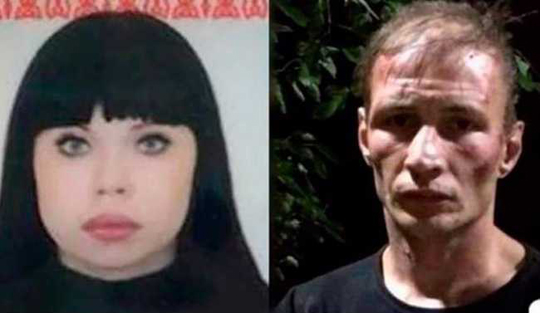
City police have arrested the couple - Natalia Baksheeva and her husband, 35-year-old Dmitry Baksheev - who authorities say may be responsible for the death or disappearance of as many as 30 people in the city of 750,000 in the southwestern tip of Russia, about five hours from Sochi. So far, Baksheev has been charged with one count of murder, and the investigation is ongoing.

If all the killings are confirmed, the Russian couple would rank among the country's worst serial killers.

The investigation started on Sept. 11, according to the Moscow Times, when crews repairing a road found a discarded cellphone. It still worked, so they swiped through the photos.

What they found made them dash to the police station. On the phone were "photos of a man with different parts of a dismembered human body in his mouth," the Russian Ministry of Internal Affairs said in a statement.

Around the same time that investigators were poring over the phone, officers found the dismembered corpse of a 35-year-old woman near the state-run aviation academy where the couple lived, according to Vice News.

Investigators were able to determine the phone's owner via "special technical measures," and arrested Baksheev, according to a news release.

In police custody, he told authorities that he and his wife had practiced cannibalism at least 30 times in the past two decades, according to the BBC.

The investigation ballooned from there. The details are still spotty, but some have seeped out as the story has rocketed around the world.

The earliest potential killing, based on the time stamps of photos the couple had, dates back to 1999.
For years, the couple had been living at what the BBC called a "hostel accommodation" at the site of a military base in the city. One or both had at one point worked on the base, in the kitchen.

Investigators have not said how they believe the couple chose their victims, only how they rendered them unconscious - and what came after.

"In the place of residence of the suspects, the investigators discovered fragments of the human body in saline solution in the dormitory . . . Frozen meat parts of unknown origin were seized in the kitchen," investigators said, according to CBS News.

According to CNN, one police source said, "at the moment, law enforcement had discovered a glass jar with a canned hand."

Unofficially, officials have designated the pair the "cannibal couple," but they have not released many details about them.

Russian news stations released video of the police search, apparently from the couple's home.

The footage showed a messy, disheveled room, with trash, debris and clothes scattered on the floor and draped over furniture. There were also wigs on top of a small freezer and dozens of pictures on a bed.

The pictures were telling, Russian investigators said. One photograph is dated Dec. 28, 1999 and appears to show a dismembered human head on a serving plate with fruit.

Earlier this year, former Siberian policeman Mikhail Popkov - nicknamed "the werewolf of Siberia" for his brutal killings - confessed to killing 81 people.

According to The Washington Post, Popkov's victims ranged in age from 17 to 38. He started his spree as a police officer, offering women rides in his car, then taking them to remote locations and raping and killing them.


Comments

Add new comment

  • Coastaldigest.com reserves the right to delete or block any comments.
  • Coastaldigset.com is not responsible for its readers’ comments.
  • Comments that are abusive, incendiary or irrelevant are strictly prohibited.
  • Please use a genuine email ID and provide your name to avoid reject.
coastaldigest.com news network
February 5,2026

protestkerala.jpg

Mangaluru: The KSRTC Mangaluru division has rolled back the fare hike on buses operating on the Mangaluru–Kasaragod route following the suspension of toll collection at the Arikkady toll plaza near Kumbala in Kasaragod district.

The fare revision had been implemented after the National Highways Authority of India (NHAI) began toll collection at the Arikkady plaza on NH-66. As a result, fares for ordinary and Rajahamsa services were increased by ₹7 and ₹10, respectively, raising the bus fare from Mangaluru to Kasaragod from ₹81 to ₹88.

Senior Divisional Controller of KSRTC’s Mangaluru division, Rajesh Shetty, said the fares were reduced after toll collection at the Arikkady plaza was stopped. “The tollgate began operations on January 13, and the toll amount was deducted from the FASTag accounts of KSRTC buses operating on the route. Following an order from the central government to suspend toll collection, KSRTC has also withdrawn the additional fare with immediate effect,” he said.

At present, vehicles travelling on the Mangaluru–Kasaragod route pay toll only at the Talapady toll plaza. The toll for light motor vehicles (LMVs) at Talapady is ₹80 for a same-day return, while heavy vehicles, including buses, are charged ₹250. At Arikkady, the toll rates were ₹130 for LMVs (same-day return) and ₹450 for buses.

Protests against Arikkady toll plaza

The Arikkady toll plaza witnessed widespread protests from January 12, the day toll collection commenced. On the second day, an action committee led by Manjeshwar MLA A K M Ashraf launched an indefinite protest at the site. Except for the BJP, leaders and workers of most major political parties participated in the agitation.

On the night of January 14, a large number of protesters gathered at the plaza and vandalised property, following which authorities temporarily suspended toll operations. The BJP later also expressed opposition to the toll plaza and criticised NHAI’s decision. 

Comments

Add new comment

  • Coastaldigest.com reserves the right to delete or block any comments.
  • Coastaldigset.com is not responsible for its readers’ comments.
  • Comments that are abusive, incendiary or irrelevant are strictly prohibited.
  • Please use a genuine email ID and provide your name to avoid reject.
News Network
January 23,2026

oscar.jpg

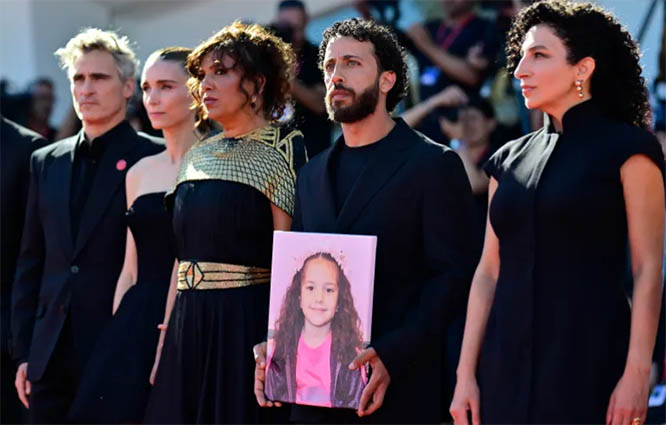
The Voice of Hind Rajab, inspired by the tragic final moments of a young Palestinian girl killed by Israeli fire in Gaza, has been nominated for an Academy Award in the Best International Feature Film category.

Directed by Tunisian filmmaker Kaouther Ben Hania, the film recounts the true story of five-year-old Hind Rajab, who lost her life in January 2024 while fleeing Israeli bombardment with her family.

The film features the real audio of Hind’s desperate call to the Palestinian Red Crescent Society, where she pleaded for help moments before the vehicle she was in was struck by 355 bullets.

The haunting narrative begins with a brief call made from the besieged Tel al-Hawa neighborhood of Gaza, where gunfire and armored vehicles drowned out every sound.

After witnessing the brutal killing of her family, she made a trembling call, her voice reduced to a whisper as she spoke of the massacre and her unbearable loneliness as the sole survivor.

Premiering at the Venice International Film Festival in September 2025, The Voice of Hind Rajab garnered widespread acclaim, receiving a record-setting 23-minute standing ovation and the Silver Lion Grand Jury Prize, the festival’s second-highest honor.

In her acceptance speech, Ben Hania dedicated the film to humanitarian workers and first responders in Gaza, emphasizing that Hind's voice symbolizes countless civilians affected by war.

She aims to give voice to victims often reduced to mere statistics, highlighting the broader suffering of civilians in war zones.

The film’s Oscar nomination underscores its powerful storytelling and ethical approach to depicting real-life tragedy, making it a crucial piece of contemporary cinema.

It serves not only as a narration of individual tragedy but also as an artistic and documentary response to the silence and censorship that often overshadow West Asian struggles and wars.

Using an innovative method she calls docufiction, Ben Hania bridges unvarnished reality and narrative structure, creating a work that is both artistically valuable and socially impactful.

Born in 1977 in Sidi Bouzid—later the epicenter of the Arab revolution—her background profoundly influenced her worldview and artistic approach.

She is a graduate of the Higher School of Audiovisual Arts of Tunis, Pantheon-Sorbonne University, and La Fémis in Paris, where her studies equipped her with the technical and theoretical tools needed to address complex subjects. 

Comments

Add new comment

  • Coastaldigest.com reserves the right to delete or block any comments.
  • Coastaldigset.com is not responsible for its readers’ comments.
  • Comments that are abusive, incendiary or irrelevant are strictly prohibited.
  • Please use a genuine email ID and provide your name to avoid reject.
News Network
February 4,2026

shettigar.jpg

An Indian resident who won the Dh20 million (approximately Rs 50 crore) jackpot in Abu Dhabi's Big Ticket draw has told of his joy at sharing his life-changing fortune with a friend.

Shanthanu Shettigar, a shop manager in Muscat, regularly buys tickets for the monthly grand prize draw with one of his closest friends – and the pair won on February 3.

Mr Shettigar, 33, who is from Udyavar in Udupi district of the southern state of Karnataka and has lived in the Omani capital for eight years, said he was left speechless after learning of his success.

“When I first moved to Muscat, many of my colleagues were purchasing Big Ticket, which encouraged me to give it a try,” he said.

“I started buying tickets on my own, and later began sharing tickets with a close friend. The ticket that brought me this win was one we purchased together.”

“Like most people, I receive a lot of spam calls, and I was fully absorbed in my work as well. I knew the live draw was taking place tonight, but I never imagined my name would be announced,” he said.

“When I realised it was real and that I had won, I was honestly speechless. It still hasn’t fully sunk in, but I’m extremely happy.”

Mr Shettigar is not sure how he will spend his share of the money, but encouraged others to take part.

“This win was completely unexpected, so I want to take some time to think things through before deciding what to do next,” he said.

“I would definitely encourage others to participate with Big Ticket, whether with family or friends – you never know when your moment might come.”

The Big Ticket was established in 1992 with an initial first prize of Dh1 million. It is one of the most popular monthly raffles in the UAE.

It has transformed the lives of many people across the Emirates and beyond.

Entry to the Big Ticket Millionaire is Dh500. Tickets can be bought online or at counters at Zayed International Airport and Al Ain Airport.

Comments

Add new comment

  • Coastaldigest.com reserves the right to delete or block any comments.
  • Coastaldigset.com is not responsible for its readers’ comments.
  • Comments that are abusive, incendiary or irrelevant are strictly prohibited.
  • Please use a genuine email ID and provide your name to avoid reject.