



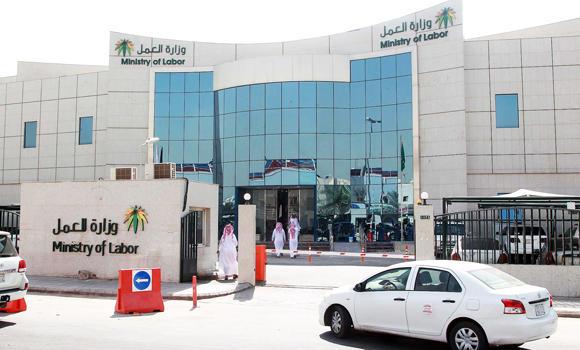
Saudi: Labour ministry plans program to protect rights of domestic workers

March 15, 2014

Ministry-of-labor

Jeddah, Mar 15: The Ministry of Labor announced plans to launch a program next week to ensure the rights of domestic workers and to ascertain the responsibilities of employers toward their employees.

The program will introduce and discuss the rights that domestic workers are entitled to receive from their employers, including health care, contract renewals, paid sick leaves and days off.

In addition, the program will also provide information on service providers, such as recruitment offices and the commission responsible for the settlement of labor disputes.

“I believe that domestic workers will benefit immensely through this program,” said Mohammad Nazmul Islam, consul general of Bangladesh. “It does not only benefit domestic workers, but will also raise awareness among sponsors of their rights over domestic workers. I hope this will be implemented as soon as possible.”

The Ministry of Labor also recently announced that their customer service center now provides services in eight different languages in order to spread a clear understanding of labor rights and make it easier to lodge complaints or report irregularities to authorities.

This service is set to serve all employees and domestic workers in the Kingdom. The ministry states that with the help of the ministry’s toll free number, workers are now able to report of any violation or mistreatment they receive from their sponsors.

Islam said that the ministry has taken up the initiative in providing customer services in eight different languages. “Not many domestic workers are able to converse in either Arabic or English. There is always a language barrier when they try explaining things to authorities.”

According to M.B.M Zarook, first secretary at the Sri Lankan Consulate in Jeddah, the Ministry of Labor has taken considerable steps to protect the rights of migrant workers compared with last year.

“I appreciate the Saudi government’s efforts and the Labor Ministry’s decision to implement such a program,” said Zarook. “Sri Lanka has already signed a memorandum of understanding for the protection of domestic workers from the island nation in the Kingdom. The agreement includes provisions that stipulate that contracts should be in a language that is understood by the worker and that the worker must be informed of what to do and whom to turn to in case of an emergency.”

According to the memorandum, workers also must be made aware of the facilities available to them, especially when it comes to health and personal safety. “They are also entitled to full health care and paid sick leave,” he said.

Zarook said that the ministry’s customer service in eight languages is highly appreciated since most domestic workers can’t speak the Arabic language. “Communicating with officers and lodging complaints will be much easier in their native language,” he said.

Ali Al-Qurashi, an investor in the recruitment sector, confirmed that there are more than a million domestic workers in the Kingdom. He said that the agreements signed between the Ministry of Labor and other countries to import workers must be balanced and guarantee the rights of the parties.

He stressed the importance of treating workers fairly, paying salaries on time and refraining from making laborers work long hours.

Comments

Keiko Derrico
 - 
Friday, 8 Apr 2016

My business partners were looking for a form a few days ago and were informed of an online platform that has 6 million forms . If others are searching for it too , here's http://pdf.ac/3oDBV0

Add new comment

  • Coastaldigest.com reserves the right to delete or block any comments.
  • Coastaldigset.com is not responsible for its readers’ comments.
  • Comments that are abusive, incendiary or irrelevant are strictly prohibited.
  • Please use a genuine email ID and provide your name to avoid reject.
News Network
November 28,2025

fire.jpg

Several Syrians were killed and more than two dozen others injured in Israeli strikes on the outskirts of Damascus, amid intensified incursions by the occupying regime since the fall of former president Bashar al-Assad and the rise of Hayat Tahrir al-Sham (HTS) rule.

Syrian state TV reported that the casualties occurred during an overnight Israeli assault involving helicopters and drones on the town of Beit Jinn in the Damascus countryside. The attack followed an Israeli military unit’s entry into the town, where they were surrounded by local residents, leading to gunfire and direct confrontations.

According to the report, “The occupation army’s helicopters and artillery shelled Beit Jinn, located at the foothills of Mount Hermon, resulting in 13 martyrs and 25 injured civilians.” The broadcaster did not specify the full extent of damage.

Al-Ikhbariyah Syria confirmed that the shelling coincided with Israeli soldiers entering Beit Jinn, while artillery pounded surrounding areas. The broadcaster stated that the escalation began after local residents clashed with an Israeli patrol that had infiltrated the southern town and “kidnapped” three young men.

Following a two-hour exchange of heavy fire, Israeli forces withdrew and repositioned on the hill of Butt al-Warda at the town’s outskirts.

Israeli media acknowledged that six soldiers were wounded in the clashes—three of them seriously—describing the confrontation as a “sudden ambush” that forced the deployment of reserve units and air support to secure an exit route. No further details were provided.

The aggression has fueled renewed displacement from Beit Jinn, with residents fleeing to nearby villages amid increasingly frequent Israeli attacks.

The raid came just a day after Israeli troops carried out another ground incursion into Umm al-Luqas village in Quneitra province. According to SANA, an Israeli unit in four vehicles entered the village, raided several homes, and later withdrew.

Syria condemned the repeated incursions as violations of the 1974 Disengagement Agreement and UN resolutions, urging the international community to enforce compliance and pressure Israel to halt its operations and withdraw fully.

Israel has expanded its attacks across Syrian territory following the collapse of the Assad government last year. Prime Minister Benjamin Netanyahu has reportedly instructed his forces to push deeper into Syrian territory and seize strategic positions.

Meanwhile, critics say the HTS-led interim government’s inaction and growing normalization gestures toward Israel have emboldened Tel Aviv to intensify its military operations. HTS, formerly linked to al-Qaeda, seized control of Damascus last December, formally ending Assad’s rule.

Comments

Add new comment

  • Coastaldigest.com reserves the right to delete or block any comments.
  • Coastaldigset.com is not responsible for its readers’ comments.
  • Comments that are abusive, incendiary or irrelevant are strictly prohibited.
  • Please use a genuine email ID and provide your name to avoid reject.