



South African President Jacob Zuma resigns

Agencies
February 15, 2018

Johannesburg, Feb 15: South African President Jacob Zuma resigned on Wednesday in a televised address to the nation, ending a turbulent tenure marred by corruption scandals that sapped the popularity of the ruling African National Congress and hurt one of Africa’s biggest economies.

The resignation signaled an imminent end to a leadership crisis in South Africaand set the stage for Mr. Zuma to be replaced by Deputy President Cyril Ramaphosa, who has promised a robust campaign against corruption but will quickly face pressure to produce results in a country struggling with unemployment, economic inequity and other problems. Ahead of 2019 elections, Mr. Ramaphosa also has the tough task of rebuilding a ruling party whose moral stature has diminished since it took power at the end of white minority rule in 1994.

“I have therefore come to the decision to resign as president of the republic with immediate effect,” said Mr. Zuma, who added that he took the decision even though he disagreed with the ruling party’s demand that he quit immediately or face a motion of no confidence in the parliament on Thursday. Mr. Zuma, 75, had said he was willing to resign early from his second five-year term but wanted to stay in office for several more months.

“Of course, I must accept that if my party and my compatriots wish that I be removed from office, they must exercise that right and do so in the manner prescribed by the constitution,” Mr. Zuma said.

The African National Congress welcomed the resignation, expressing gratitude for Mr. Zuma’s “loyal service” during his nearly 10 years as president and encouraging party members to support Mr. Ramaphosa, now the country’s acting president. By the end of the week, Ramaphosa is likely to be elected president by the ANC-dominated parliament and to give a state of the nation address that had been postponed during the political turmoil.

South Africa’s biggest opposition party, the Democratic Alliance, said the ruling party must act against associates of Zuma who are also suspected of wrongdoing and mismanagement.

“Zuma built a deep system of corruption that has penetrated every part of the government and the criminal prosecution system,” Democratic Alliance leader Mmusi Maimane said.

“Now the country looks to Cyril Ramaphosa to save us from a man that he and the ANC protected and supported. We must never allow this to happen again,” said Maimane, who wants parliament to be dissolved so that early elections can be held.

Mr. Ramaphosa, a union leader during apartheid, was a key negotiator of the transition from white minority rule to democracy in the 1990s and later became a wealthy businessman. He replaced Mr. Zuma as leader of the ANC in December and has been consolidating his control, while also raising his international profile with a visit last month to the World Economic Forum in Davos, Switzerland.

On Wednesday morning, South African police raided the home of prominent business associates of Mr. Zuma who are accused of being at the center of corruption scandals that have infuriated the country. An elite police unit entered the compound of the Gupta family, which has been accused of using its connections to the president to influence Cabinet appointments and win state contracts.

Several people were arrested during police operations, South African media reported.

Both Mr. Zuma and the Guptas deny any wrongdoing, though legal challenges are looming. As the Gupta-linked investigation proceeds, Mr. Zuma also could face corruption charges tied to an arms deal two decades ago. South Africa’s chief prosecutor is expected to make a decision on whether to prosecute Zuma on the old charges, which were reinstated last year after being thrown out in 2009.

In another scandal, South Africa’s top court ruled in 2016 that Zuma violated the constitution following an investigation of multi-million-dollar upgrades to his private home using state funds. He paid back some of the money.

Still, Mr. Zuma, a former anti-apartheid activist who spent a decade at the Robben Island prison where Nelson Mandela was held, was popular among some South Africans for his personal warmth and populist policies.

In 2006, while being tried on charges of raping an HIV-positive family friend, Mr. Zuma was widely criticized after testifying he took a shower after extramarital sex to lower the risk of AIDS. He was acquitted of rape. But during his tenure, he called for earlier and expanded treatment for HIV-positive South Africans that helped to curb the death rate and urged his countrymen to get tested for HIV.

The former president was defiant in a television interview earlier Wednesday, saying he had done nothing wrong despite the ANC’s demand for his resignation.

“I’m being victimized here,” Mr. Zuma told state broadcaster SABC. He complained that Ramaphosa and other ANC leaders had not given him clear reasons about why he should go.

“Why do you look serious? You can’t even say, ‘Good evening,’” a beaming Mr. Zuma said to weary journalists. “What’s happening ... you are tired. We are working, aren’t we?”

Comments

Add new comment

  • Coastaldigest.com reserves the right to delete or block any comments.
  • Coastaldigset.com is not responsible for its readers’ comments.
  • Comments that are abusive, incendiary or irrelevant are strictly prohibited.
  • Please use a genuine email ID and provide your name to avoid reject.
coastaldigest.com news network
February 5,2026

protestkerala.jpg

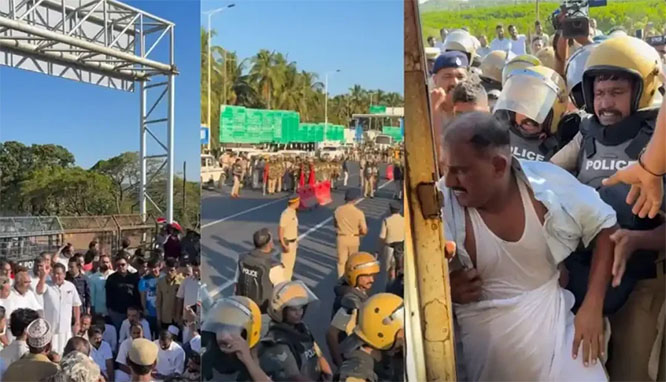
Mangaluru: The KSRTC Mangaluru division has rolled back the fare hike on buses operating on the Mangaluru–Kasaragod route following the suspension of toll collection at the Arikkady toll plaza near Kumbala in Kasaragod district.

The fare revision had been implemented after the National Highways Authority of India (NHAI) began toll collection at the Arikkady plaza on NH-66. As a result, fares for ordinary and Rajahamsa services were increased by ₹7 and ₹10, respectively, raising the bus fare from Mangaluru to Kasaragod from ₹81 to ₹88.

Senior Divisional Controller of KSRTC’s Mangaluru division, Rajesh Shetty, said the fares were reduced after toll collection at the Arikkady plaza was stopped. “The tollgate began operations on January 13, and the toll amount was deducted from the FASTag accounts of KSRTC buses operating on the route. Following an order from the central government to suspend toll collection, KSRTC has also withdrawn the additional fare with immediate effect,” he said.

At present, vehicles travelling on the Mangaluru–Kasaragod route pay toll only at the Talapady toll plaza. The toll for light motor vehicles (LMVs) at Talapady is ₹80 for a same-day return, while heavy vehicles, including buses, are charged ₹250. At Arikkady, the toll rates were ₹130 for LMVs (same-day return) and ₹450 for buses.

Protests against Arikkady toll plaza

The Arikkady toll plaza witnessed widespread protests from January 12, the day toll collection commenced. On the second day, an action committee led by Manjeshwar MLA A K M Ashraf launched an indefinite protest at the site. Except for the BJP, leaders and workers of most major political parties participated in the agitation.

On the night of January 14, a large number of protesters gathered at the plaza and vandalised property, following which authorities temporarily suspended toll operations. The BJP later also expressed opposition to the toll plaza and criticised NHAI’s decision. 

Comments

Add new comment

  • Coastaldigest.com reserves the right to delete or block any comments.
  • Coastaldigset.com is not responsible for its readers’ comments.
  • Comments that are abusive, incendiary or irrelevant are strictly prohibited.
  • Please use a genuine email ID and provide your name to avoid reject.
News Network
February 3,2026

Bengaluru: Following reports of fresh Nipah virus (NiV) cases in West Bengal and heightened vigilance across parts of Southeast Asia, the Karnataka Health Department has placed the state on high alert and activated emergency preparedness protocols.

Health officials said enhanced surveillance measures have been initiated after two healthcare workers in Barasat, West Bengal, tested positive for the virus earlier this month. While no cases have been reported in Karnataka so far, authorities said the state’s past exposure to Nipah outbreaks and high inter-state mobility warranted preventive action.

Officials have directed district health teams to intensify monitoring, particularly at hospitals and points of entry, and to ensure early detection and isolation of suspected cases.

High Mortality Virus with Multiple Transmission Routes

Nipah virus is a zoonotic disease that can spread from animals to humans and has a reported fatality rate ranging between 60 and 75 per cent. Fruit bats, also known as flying foxes, are the natural reservoirs of the virus and can transmit it by contaminating food sources with saliva or urine.

Known modes of transmission include:

•    Contaminated food: Consumption of fruits partially eaten by bats or raw date-palm sap
•    Animal contact: Exposure to infected pigs or other animals
•    Human-to-human transmission: Close contact with body fluids of infected persons, particularly in healthcare settings

Symptoms and Disease Progression

The incubation period typically ranges from 4 to 14 days, though delayed onset has also been reported. Early symptoms often resemble common viral infections, making prompt clinical suspicion critical.

•    Initial symptoms: Fever, headache, body aches, fatigue, sore throat
•    Progressive symptoms: Drowsiness, disorientation, altered mental state
•    Severe stage: Seizures, neck stiffness and acute encephalitis, which can rapidly progress to coma

Public Health Advisory

The Health Department has issued precautionary guidelines urging the public to adopt risk-avoidance practices to prevent any local spillover.

Do’s
•    Wash fruits thoroughly before consumption
•    Drink boiled and cooled water
•    Use protective equipment while handling livestock
•    Maintain strict hand hygiene

Don’ts
•    Avoid fruits found on the ground or showing bite marks
•    Do not consume beverages made from raw tree sap, including toddy
•    Avoid areas with dense bat populations
•    Do not handle sick or dead animals

Preparedness Measures

Officials confirmed that isolation wards are being readied in major government hospitals and that medical staff are being sensitised to identify early warning signs.

“There is no cause for panic, but there is a need for heightened vigilance,” a senior health official said, adding that there is currently no approved vaccine or specific antiviral treatment for Nipah, and care remains largely supportive.

Comments

Add new comment

  • Coastaldigest.com reserves the right to delete or block any comments.
  • Coastaldigset.com is not responsible for its readers’ comments.
  • Comments that are abusive, incendiary or irrelevant are strictly prohibited.
  • Please use a genuine email ID and provide your name to avoid reject.
News Network
January 31,2026

Roy.jpg

Bengaluru: The shooting incident involving CJ Roy, founder of the Confident Group, has once again put the spotlight on a businessman whose life has swung between flamboyant global success and persistent controversy at home.

Though Roy’s business interests extended across continents, his roots lay firmly in Karnataka. An alumnus of Christ School in Bengaluru, he later moved to Tumakuru to pursue an engineering degree. Those familiar with his early years describe him as intensely ambitious, beginning his career as a salesman at a small electronics firm dealing in computers.

Roy’s entry into large-scale real estate came through the Crystal Group, where he worked closely with Latha Namboothiri and rose from manager to director. However, the launch of the Confident Group in 2005 was clouded by industry speculation. Insiders speak of a fallout involving alleged “benami” properties and claims of deception that ultimately led to his independent venture—an episode Roy spent years trying to distance himself from, according to associates.

A tale of two cities

Roy’s professional trajectory diverged sharply across geographies.

In Dubai, he built a reputation as a bold and efficient developer, completing massive luxury residential projects in record time—some reportedly within 11 months. His rapid project delivery and lavish lifestyle in the Emirates earned him admiration and visibility in the real estate sector.

In Bengaluru, however, his image remained far more fractured. Sources say Roy stayed away from the city for several years amid disputes over unpaid dues to vendors and suppliers. Several projects were allegedly stalled, with accusations of unfulfilled commitments to cement and steel suppliers continuing to follow him.

Roy’s return to Bengaluru’s business and social circles began around 2018, marked by a conscious attempt at rebranding. His appointment as Honorary Consul of the Slovak Republic added diplomatic legitimacy, which he complemented with visible CSR initiatives, including ambulance donations and high-profile charity events.

Heavy police presence in Langford Town

Following the incident, police personnel from the Central division were deployed outside the Confident Group building in Langford Town, which also houses the Slovak Honorary Consulate in Bengaluru.

The otherwise busy premises near Hosur Road wore a deserted look on Friday, reflecting the shock and uncertainty that followed the tragedy.

Comments

Add new comment

  • Coastaldigest.com reserves the right to delete or block any comments.
  • Coastaldigset.com is not responsible for its readers’ comments.
  • Comments that are abusive, incendiary or irrelevant are strictly prohibited.
  • Please use a genuine email ID and provide your name to avoid reject.
