South Korean court jails former president Park for 24 years

Agencies
April 6, 2018

Seoul, Apr 6: A South Korean court jailed former President Park Geun-hye for 24 years on Friday over a scandal that exposed webs of corruption between political leaders and the country’s conglomerates.

Park became South Korea’s first democratically elected leader to be forced from office last year when the Constitutional Court ordered her out over a scandal that landed the heads of two conglomerates in jail.

The court also fined Park, the daughter of a former military dictator, 18 billion won ($16.9 million) after finding her guilty of charges including bribery, abuse of power and coercion.

“The defendant abused her presidential power entrusted by the people, and as a result, brought massive chaos to the order of state affairs and led to the impeachment of the president, which was unprecedented,” judge Kim Se-yoon said as he handed down the sentence.

The court ruled that Park colluded with her old friend, Choi Soon-sil, to receive 23.1 billion won from major conglomerates including Samsung and Lotte to help Choi’s family and bankroll non-profit foundations owned by her.

Prosecutors sought a 30-year sentence and a 118.5 billion won ($112 million) fine for Park.

Park, 66, who has been in jail since March 31 last year, has denied wrongdoing and was not present in court.

The judge said Park had shown “no sign of repentance” but had instead tried to shift the blame to Choi and her secretaries.

“We cannot help but sternly hold her accountable,” Kim said.

Park apologized at her trial for seeking help from Choi, who had no policy or political experience, but that was as close as Park came to admitting any guilt.

The sentence will be a bitter blow for Park, who returned to the presidential palace in 2012 as the country’s first woman leader, more than three decades after she left it following the assassination of her father.

Her ouster from office last year led to a presidential election won by the liberal Moon Jae-in, whose conciliatory stand on North Korea has underpinned a significant warming of ties between the rival neighbors.

Moon’s office said Park’s fate was “heartbreaking” not only for herself but for the country, and added that history that was not remembered history would be repeated.

“We will not forget today,” the office said.

Up to 1,000 Park supporters gathered outside the court, holding national flags and signs calling for an end to “political revenge” against her.

SUPPORTERS, OPPONENTS

Prosecutors accused Park of colluding with Choi to receive 7 billion won from Lotte Group for favors, while pressuring big businesses to bankroll non-profit foundations run by Choi’s family and confidants.

Park was also charged with taking bribes totaling 29.8 billion won from Samsung, the world’s biggest maker of smartphones and semiconductors.

Choi was convicted and jailed for 20 years after a separate trial in February.

The chairman of the Lotte Group, the country’s fifth-largest conglomerate, Shin Dong-bin, was jailed for two years and six months.

Samsung Group heir Jay Y. Lee was jailed for a similar term on charges of bribery and embezzlement but in a surprise decision in February, an appeals court freed him after a year in detention.

Park’s supporters and opponents reflect divisions in a society still haunted by Cold War antagonism.

Most supporters are older conservatives who remember her father’s authoritarian 18-year rule, beginning in 1961, when their country began its remarkable surge towards becoming an economic power.

Younger, liberal voters, who staged months of protests against Park before her ouster, will be hoping the verdict will mark a major step towards ending the self-serving collusion between political leaders and the chaebol conglomerates.

Park is the latest former leader of South Korea to run afoul of the law.

Her predecessor, Lee Myung-bak, is also being investigated for corruption.

Chun Doo-hwan, a former military dictator, was found guilty of mutiny, treason and corruption in 1996. He was sentenced to death but released after two years under a presidential pardon.

Chun’s successor, Roh Tae-woo, was also convicted of treason, mutiny and corruption in 1996 and jailed for more than 22 years but served just over two years before being released.

Comments

Add new comment

  • Coastaldigest.com reserves the right to delete or block any comments.
  • Coastaldigset.com is not responsible for its readers’ comments.
  • Comments that are abusive, incendiary or irrelevant are strictly prohibited.
  • Please use a genuine email ID and provide your name to avoid reject.
coastaldigest.com news network
February 5,2026

protestkerala.jpg

Mangaluru: The KSRTC Mangaluru division has rolled back the fare hike on buses operating on the Mangaluru–Kasaragod route following the suspension of toll collection at the Arikkady toll plaza near Kumbala in Kasaragod district.

The fare revision had been implemented after the National Highways Authority of India (NHAI) began toll collection at the Arikkady plaza on NH-66. As a result, fares for ordinary and Rajahamsa services were increased by ₹7 and ₹10, respectively, raising the bus fare from Mangaluru to Kasaragod from ₹81 to ₹88.

Senior Divisional Controller of KSRTC’s Mangaluru division, Rajesh Shetty, said the fares were reduced after toll collection at the Arikkady plaza was stopped. “The tollgate began operations on January 13, and the toll amount was deducted from the FASTag accounts of KSRTC buses operating on the route. Following an order from the central government to suspend toll collection, KSRTC has also withdrawn the additional fare with immediate effect,” he said.

At present, vehicles travelling on the Mangaluru–Kasaragod route pay toll only at the Talapady toll plaza. The toll for light motor vehicles (LMVs) at Talapady is ₹80 for a same-day return, while heavy vehicles, including buses, are charged ₹250. At Arikkady, the toll rates were ₹130 for LMVs (same-day return) and ₹450 for buses.

Protests against Arikkady toll plaza

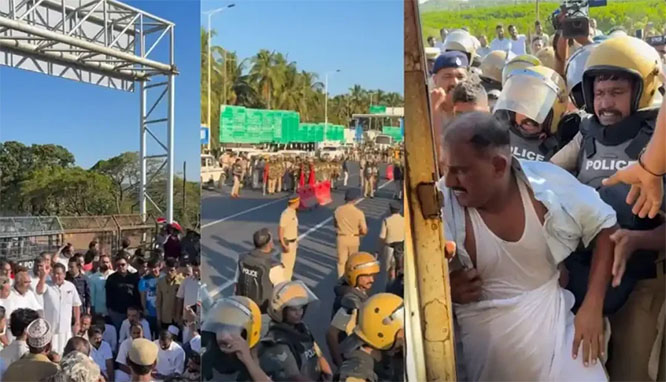
The Arikkady toll plaza witnessed widespread protests from January 12, the day toll collection commenced. On the second day, an action committee led by Manjeshwar MLA A K M Ashraf launched an indefinite protest at the site. Except for the BJP, leaders and workers of most major political parties participated in the agitation.

On the night of January 14, a large number of protesters gathered at the plaza and vandalised property, following which authorities temporarily suspended toll operations. The BJP later also expressed opposition to the toll plaza and criticised NHAI’s decision. 

Comments

Add new comment

  • Coastaldigest.com reserves the right to delete or block any comments.
  • Coastaldigset.com is not responsible for its readers’ comments.
  • Comments that are abusive, incendiary or irrelevant are strictly prohibited.
  • Please use a genuine email ID and provide your name to avoid reject.
News Network
February 3,2026

wind.jpg

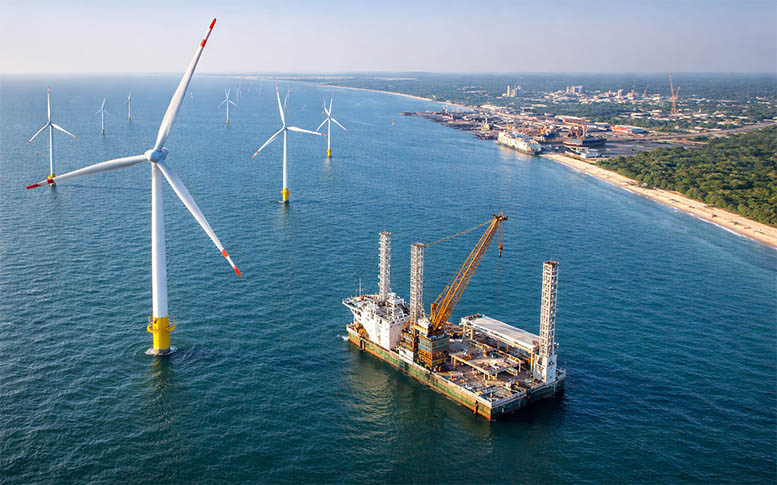
Dakshina Kannada MP Capt Brijesh Chowta has urged the Centre to give high priority to offshore wind energy generation along the Mangaluru coast, citing its strategic importance to India’s green energy and port-led development goals.

Raising the issue in the Lok Sabha under Rule 377, Chowta said studies by the National Institute of Oceanography have identified the Mangaluru coastline as part of India’s promising offshore wind ‘Zone-2’, covering nearly 6,490 sq km. He noted that the region’s relatively low exposure to cyclones and earthquakes makes it suitable for long-term offshore wind projects and called for its development as a dedicated offshore wind energy zone.

Highlighting the role of New Mangalore Port, Chowta said its modern infrastructure, multiple berths and heavy cargo-handling capacity position it well as a logistics hub for transporting and assembling large wind energy equipment.

He also pointed to the presence of major industrial units such as MRPL, OMPL, UPCL and the Mangaluru SEZ, which could serve as direct buyers of green power through power purchase agreements, improving project viability and speeding up execution.

With Karnataka’s peak power demand crossing 18,000 MW in early 2025, Chowta stressed the need to diversify renewable energy sources. He added that offshore wind projects in the Arabian Sea are strategically safer compared to the cyclone-prone Bay of Bengal.

Calling the project vital to India’s target of 500 GW of renewable energy by 2030, Chowta urged the Ministry of New and Renewable Energy to initiate resource assessments, pilot projects and stakeholder consultations at the earliest.

Comments

Add new comment

  • Coastaldigest.com reserves the right to delete or block any comments.
  • Coastaldigset.com is not responsible for its readers’ comments.
  • Comments that are abusive, incendiary or irrelevant are strictly prohibited.
  • Please use a genuine email ID and provide your name to avoid reject.
News Network
January 23,2026

Mangaluru: The Karnataka Government Polytechnic (KPT), Mangaluru, has achieved autonomous status from the All India Council for Technical Education (AICTE), becoming the first government polytechnic in the country to receive such recognition in its 78-year history. The status was granted by AICTE, New Delhi, and subsequently approved by the Karnataka Board of Technical Education in October last year.

Officials said the autonomy was conferred a few months ago. Until recently, AICTE extended autonomous status only to engineering colleges, excluding diploma institutions. However, with a renewed national focus on skill development, several government polytechnics across India have now been granted autonomy.

KPT, the second-largest polytechnic in Karnataka, was established in 1946 with four branches and has since expanded to offer eight diploma programmes, including computer science and polymer technology. The institution is spread across a 19-acre campus.

Ravindra M Keni, the first dean of the institution, told The Times of India that AICTE had proposed autonomous status for polytechnic institutions that are over 25 years old. “Many colleges applied. In the first round, 100 institutions were shortlisted, which was further narrowed down to 15 in the second round. We have already completed one semester after becoming an autonomous institution,” he said. He added that nearly 500 students are admitted annually across eight three-year diploma courses.

Explaining the factors that helped KPT secure autonomy, Keni said the institution has consistently recorded 100 per cent admissions and placements for its graduates. He also noted its strong performance in sports, with the college emerging champions for 12 consecutive years, along with active student participation in NCC and NSS activities.

Autonomous status allows KPT to design industry-oriented curricula, conduct examinations, prepare question papers, and manage academic documentation independently. The institution can also directly collaborate with industries and receive priority funding from AICTE or the Ministry of Education. While academic autonomy has been granted, financial control will continue to rest with the state government.

“There will be separate committees for examinations, question paper setting, boards of studies, and boards of examiners. The institution will now have the freedom to conduct admissions without government notifications and issue its own marks cards,” Keni said, adding that new academic initiatives would be planned after a year of functioning under the autonomous framework.

Comments

Add new comment

  • Coastaldigest.com reserves the right to delete or block any comments.
  • Coastaldigset.com is not responsible for its readers’ comments.
  • Comments that are abusive, incendiary or irrelevant are strictly prohibited.
  • Please use a genuine email ID and provide your name to avoid reject.